A kiss of death tattoo pairs a human kiss with imagery of mortality, most often a skull, to mark betrayal, doomed love, or survival after both. The meaning shifts sharply depending on which story you borrow: Judas greeting Jesus, a Mafia boss sentencing a man with a pressed cheek, or a couple sealing a relationship they already know is finished. What keeps the design from sliding into generic skull art is the tension at the moment of contact, the intimacy that carries the threat.
Kiss of Judas
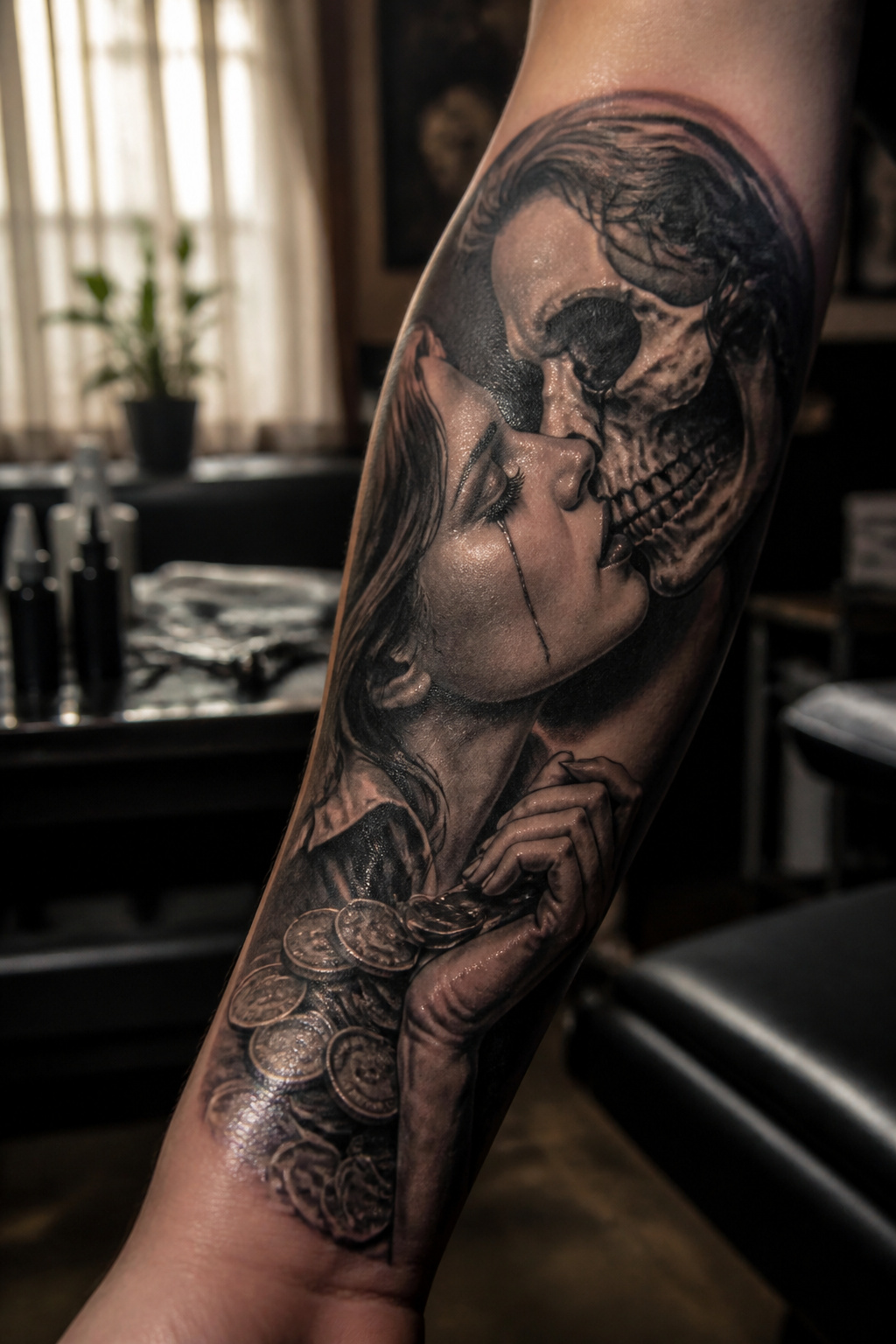
The kiss of death started with Judas Iscariot, who singled out Jesus to the soldiers with a kiss in the Garden of Gethsemane. That greeting, normally a mark of friendship, became the signal for arrest and execution. In tattoo work, this story translates into one of the heavier ways people carry personal betrayal on skin.
Designs usually pair two faces in close contact: one trusting, the other concealing intent. Some artists add thirty pieces of silver somewhere in the composition, or a rope suggesting the end Judas met. The noose in particular turns the design toward consequence rather than simple victimhood, which shifts how the piece reads on a forearm or ribcage.
What draws people to this imagery is rarely the religious narrative itself. Most who request it have a specific deception in mind, a relationship where intimacy became weaponized. The tattoo functions as both confession and warning, the wearer marking themselves as someone who recognized the pattern. A Judas kiss piece demands more technical skill than a simple skull or dagger version of the same idea; getting the emotional charge into two expressions without sliding into melodrama is difficult work, and the best examples I have seen keep the palette restrained, letting the narrative tension do the heavy lifting.

SAFE HALLOWEEN TATTOO STICKERS: Leoars halloween red lip print face temporary tattoos are printed with high quality tattoo ink and paper meeting rigid safety and materials requirements. Do not apply to sensitive skin, near eyes, or if you are allergic to adhesives

Great Value Pack:You will get 120 pcs glitter lip print temporary tattoos, featuring 60 unique kiss designs in red, pink, purple, and more. Individually wrapped for hygiene and easy sharing—perfect for party favors and fun decorations.
Mafia Kiss of Death
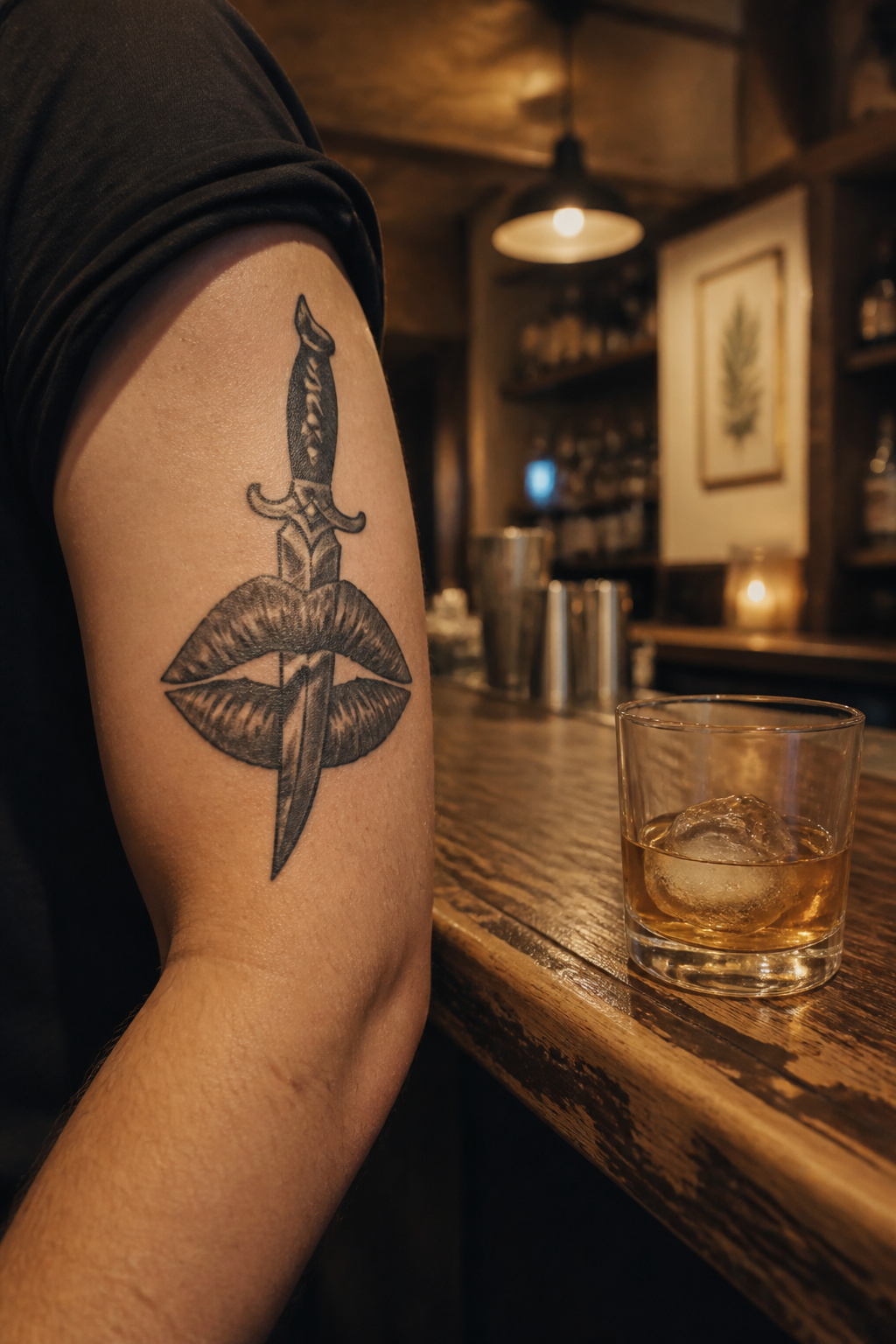
The Sicilian Mafia’s kiss of death worked as a quiet signal: a boss pressing his lips to a marked man’s cheek, and that man knew the execution order had already gone out. No words, no public scene. Just the intimacy of greeting turned into a death sentence.
Francis Ford Coppola put this on screen in The Godfather Part II, and the image stuck. Fredo Corleone gets that kiss on the lake in Nevada, and the audience understands before he does. The scene turned a private ritual into something anyone with a television could read.
Tattoo wearers borrow that weight for several reasons. Some who have survived violence or betrayal use the design as a record: they were marked, and they are still here. Others wear it as code within crews or neighborhoods, a sign that they understand the rules and accept the stakes. A few flip the meaning entirely, placing the image where enemies can see it as warning that they too know how the old signal worked, and they are not the ones who should be kissed.
The design usually pairs the kiss with something sharp, a blade or a skull, so the meaning does not soften into romance. Black and gray ink carries it better than color; the reference is to old newsprint and film stock, not to fresh blood.
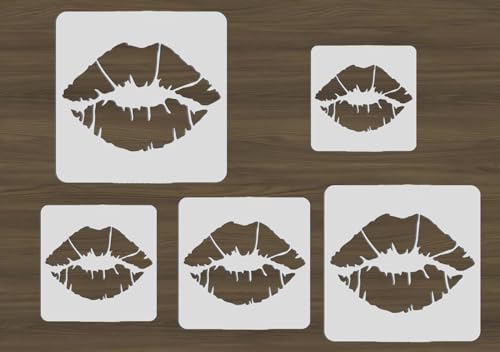

Contains THREE - 3.5″ x 7″ laser cut mylar stencil, oval in shape. 🇺🇸MADE IN USA

The Kisses stencil is great for creating a sexy look that makes you appear as someone kissed you! The stencil includes several kiss marks in varying sizes. 🇺🇸MADE IN USA
Romantic Danger
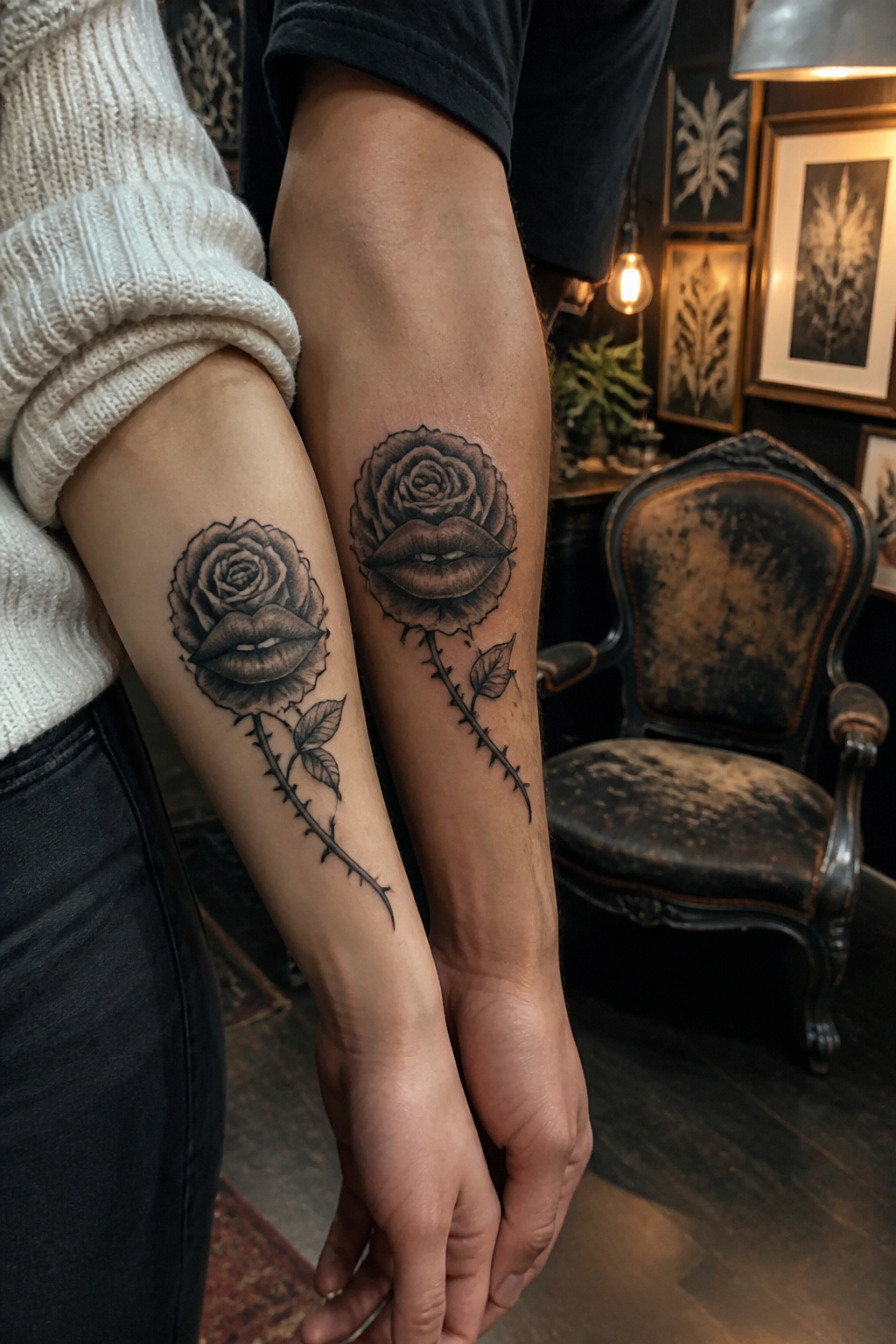
Some couples walk into a shop asking for matching kiss of death tattoos the way other people pick out rings. The design usually pairs lips with something that kills the romance: a skull emerging from the mouth, a rose with thorns threading through the stem, a vial of poison held between two faces. The attraction is the same one that keeps people in relationships they already know are finished. Marking the skin with an ending you have not reached yet turns the anxiety into something you control.
The most effective pieces do not separate the symbols. A lip line that fades into jawbone, a kiss where one partner’s mouth opens onto a clock face and the other’s shows only gears: these designs make the love and the loss share the same space. That is the point. The tattoo works because the person wearing it wanted the warning and the warmth in the same image.
I have watched this choice go two ways in the work I have studied. Some split the design across two bodies, each carrying half the skull or half the rose, so the full meaning only exists when they stand together. Others put the whole image on one person, usually after the relationship has already ended, using the appointment itself as the ritual that closes it. The second version tends to heal better, in both senses. The first one requires a conversation about what happens to half a tattoo when the other half stops returning calls.
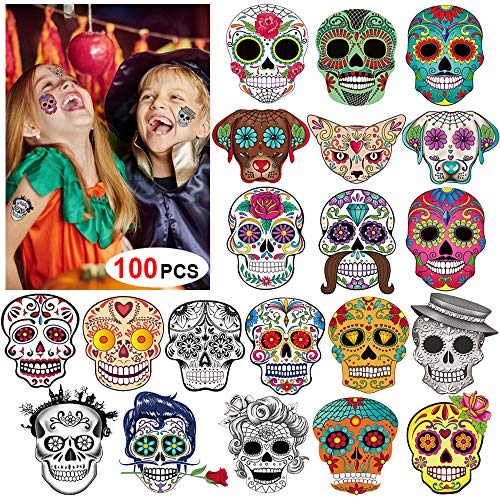
You will receive 25 sheets totally 100pcs in 20 different designs day of the dead skeleton face temporary tattoo face kit, black white blue pink brown gold silver fluorescence multicolor apply in to create more interesting experiences and celebrate life! each pattern measures 4.6*4.6cm/ 1.82*1.82inch , one size fit all girls boys kids Women Men Adult and Kids
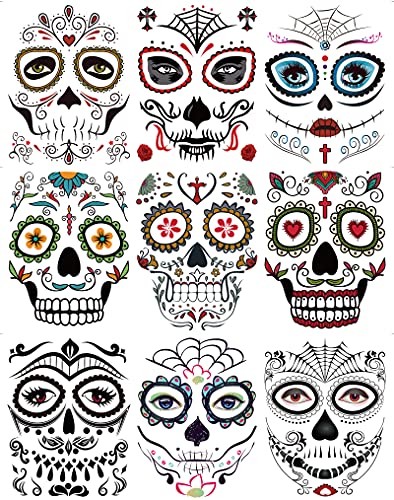
PERFECT FOR HALLOWEEN: These face tattoos are perfect for Halloween,Day of The Dead,Night Party,for women,men,girls,boys,kids
Artistic Representations
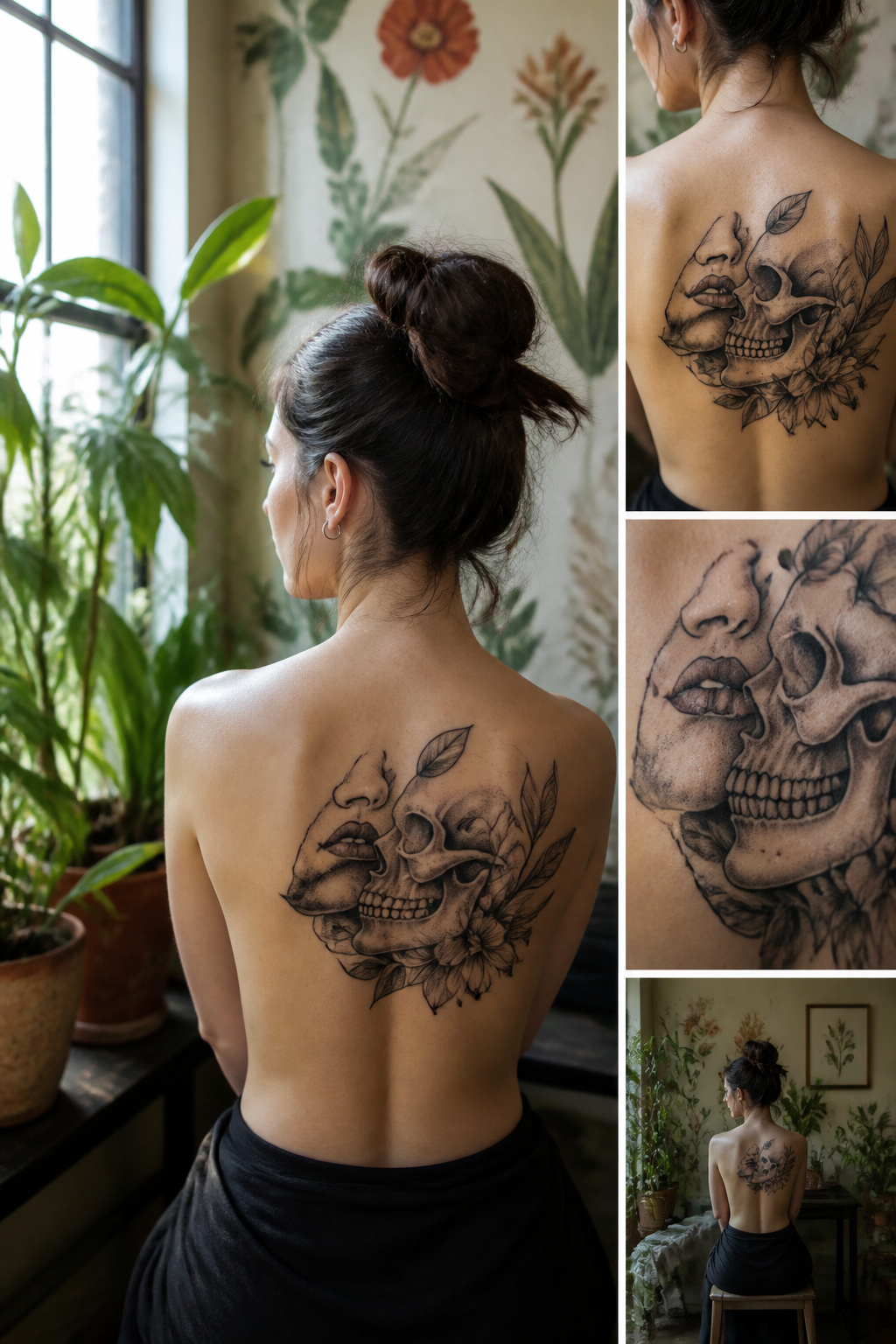
The most striking kiss of death tattoos pair a human mouth with bone. Some designs show full lips pressed against a grinning skull, the softness of the kiss literally touching what remains after life ends. Others go further, rendering two faces in half-skeleton form so the kiss itself happens between jawbones and cheekbones that are still somehow tender.
Artists working this concept constantly mix symbols from opposite camps. A living rose tucked behind a skull’s ear, a heartbeat line threading through cracked teeth, or a single tear drawn in red ink on otherwise monochrome bone all do the same work: they make death participate in life rather than simply end it. The more hybrid the image, the more personal the reading becomes.
Color choices split the mood cleanly. Black-and-grey gives the design a weight that feels historical, almost documentary, as if the image were pulled from an old print. Color, especially saturated reds for the lips or a single gold tooth, pushes toward seduction and danger rather than mourning. Neither choice is more correct; they simply answer different questions about whether the kiss is a warning or a memory.
Placement shifts the story in ways collectors rarely expect at first. A kiss of death across the chest reads as something carried, almost a burden. The same design on the back of the neck, visible only when the hair is up, turns the wearer into the one who delivers it. The thigh or ribcage, more private territory, keeps the meaning for the person who chose it rather than broadcasting it outward.

Kiss Tattoos Pack: Kiss temporary tattoos elevate your spooky look instantly! Lip print temporary tattoos set features 180pcs of red lip print temporary tattoos in 30 unique designs (6 sheets per style). Packed with distinct lip shapes, different sizes, and realistic kiss marks, glitter lip print temporary tattoos offer an effortless way to achieve a professional festive makeup look


【Packing Include】Packing include 10 Sheets Red Lip tattoo stickers, and the size is 8 x 4.13 inch. You can be applied to various parts of the body, such as the face, arms, legs, shoulder, wrist, chest, hip or anywhere you like.
Personal Symbolism

A woman I tattooed last spring chose a single pair of lips, no skull, no dagger, just a small mark above her heart. She had lost her brother to an overdose the winter before. The design meant nothing to anyone who saw it casually, and that was exactly the point. The power of a kiss of death tattoo lives in what the wearer does not explain.
Some carry it after surviving their own darkest moment, a suicide attempt or an overdose they walked away from changed. The tattoo marks the day something in them ended and something else, harder to name, took its place. Others use it to seal off a chapter, a marriage, a career, a version of themselves they needed to bury. The imagery varies wildly because the common thread is not visual. It is the act of choosing permanence for something invisible.
Recognition from strangers holds no value here. A stranger guessing the meaning would miss by miles, and the wearer usually prefers that. The tattoo functions as a private contract, a reminder that sits under clothing and surfaces only when the person needs to feel the weight of what they have carried through.

4PCS & 4 Sizes: About 6×6inch/150x150mm, 7.9×7.9inch/200x200mm, 7.9×9.8inch/200x250mm,11.8×11.8inch/300x300mm. The thickness of each template is 1mm. Please refer to the picture for detailed pattern size.

171 PCS Different Styles Halloween Tattoos Stencil: Our hallloween temporary tattoo stencils sheet comes with 171 different hallloween design such as pumpkin lamps, black cats, skulls, wizards, witch hats, ghoost, witch, Spider Web, Skeleton more halloween Style in 12 sheets A5 size. Perfect for couple halloween party and decoration.

【 575+ Fun Assorted Tattoo Stencils 】-The ChurlChurl tattoo stencils collection includes 575 high quality stencils with multiple themes. enjoy cute trendy tattoo stencil designs like butterflies, words, flowers, symbols, totem, Egypt style patterns and more.
Cultural References
The Godfather Part II put the kiss of death on screen in a way that still shapes tattoo choices decades later. When Michael Corleone takes his brother Fredo out on the lake, the gesture lands because the audience already knows the phrase, already feels the weight of betrayal dressed up as affection. Film gave the concept its visual vocabulary, and people choosing this design often reference that scene without needing to explain much further.
Documentary series on organized crime have kept the mafia association alive for younger viewers who never saw Coppola’s films in theaters. The pattern repeats: a made man, a greeting, a sentence passed in silence. That shared reference point lets two strangers with the same tattoo recognize each other across a room.
Music picked up the thread differently. The Ramones made "The KKK Took My Baby Away," but their broader catalog and punk lineage touched on doomed romance and fatal gestures enough that the phrase circulates in lyric databases fans search when brainstorming ink. Modern metal bands went darker, literal even, with track titles that pair the kiss and the coffin outright. Someone with a band name worked into their design usually finds the conversation starts itself; the reference does the explaining.

Package content: Contains 4 sheets Halloween face temporary tattoos
VALENTINES THEME BUNDLE FOR YOUR KIDS PARTY: Valentines Kiss party tattoos design contain 50pcs in the package. Super adorable and fun kids temporary tattoos. This tattoos sticker set contains many Lip Print Kiss and Valentine elements that kids will like (lip, kiss, rose, heart, love ..). A series of valentines themed style to provide big fun for both children and adults alike!

LARGE SIZE AND MORE QUANY -- Total 77 Sheets Temporary Tattoo Stickers for Men and Women Adults Including 17 Sheets Large Size (7.48*3.74 inches) and 60 Sheets Small Size (3.85*2.28 inches), The large size can cover more arm area and the small size can show your personality
Symbolism Across Designs
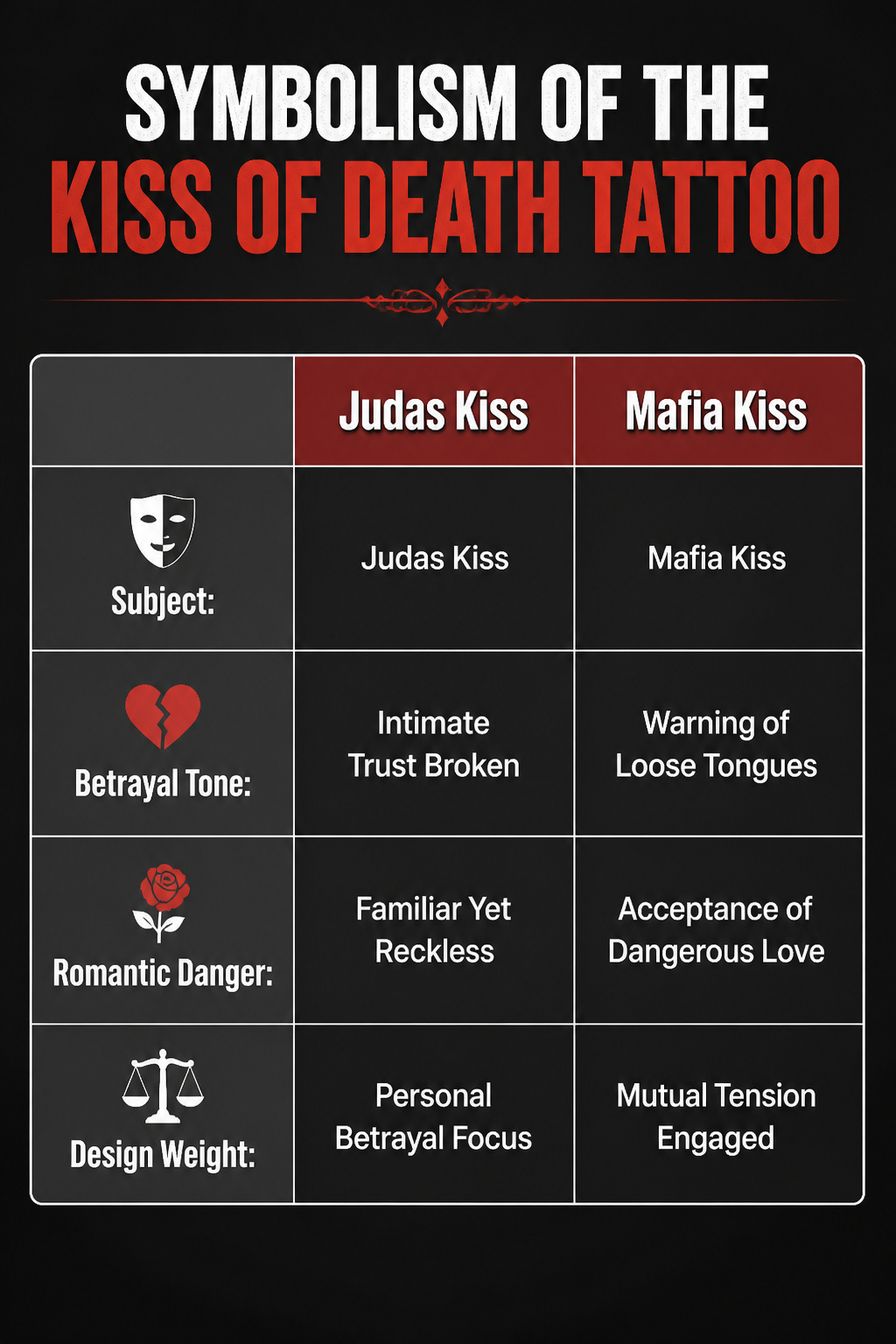
Betrayal shows up differently depending on which story you are telling. A Judas kiss carries the sting of trust broken by someone close; the mafia version turns that intimacy into a warning about loose tongues. Both rely on the same cruel irony: the gentlest gesture becomes the trigger.
Romantic danger twists the knife the other way. The lovers know the ending before they begin, yet they lean in anyway. That is the pull for people who have outlived a destructive relationship or who want to mark the beauty they found inside the damage. The kiss itself does not change; what shifts is who gives it and whether they mean harm or simply accept it.
Doomed love sits at the center of most designs I have seen work well. It is less about the other person and more about the wearer’s own recklessness, the pattern they recognize too late. Someone choosing this meaning usually knows exactly which cycle they are naming.
The best placement and style choices come after you settle which thread is yours. A design built on personal betrayal needs different weight than one about loving danger itself. Most people who sit in the chair know within a few minutes of talking it through; the ones who do not know yet are the ones who end up covering it later.

Package: You will receive 10 Sheet cute temporary tattoos. There are enough quantities that you can share with your familes and friends

✅【8 Sheets of Bold Red-Lip Art】Each sheet is filled with large, sexy red-lip & kiss prints designed for face and body — a statement look for date night, parties and photo ops, not tiny filler stickers.
Kissable Trendsetters: Are you looking for a fun and temporary way to make a bold statement? Try Yazhiji adorable world of kissy lip tattoos! These playful and cute lip temporary tattoos allow you to rock a fierce lip design without the commitment of a permanent tattoos. Read on to discover more about lip mark tattoo and find out how they can help you become the center of attention at any gathering.
Design Elements That Carry Meaning
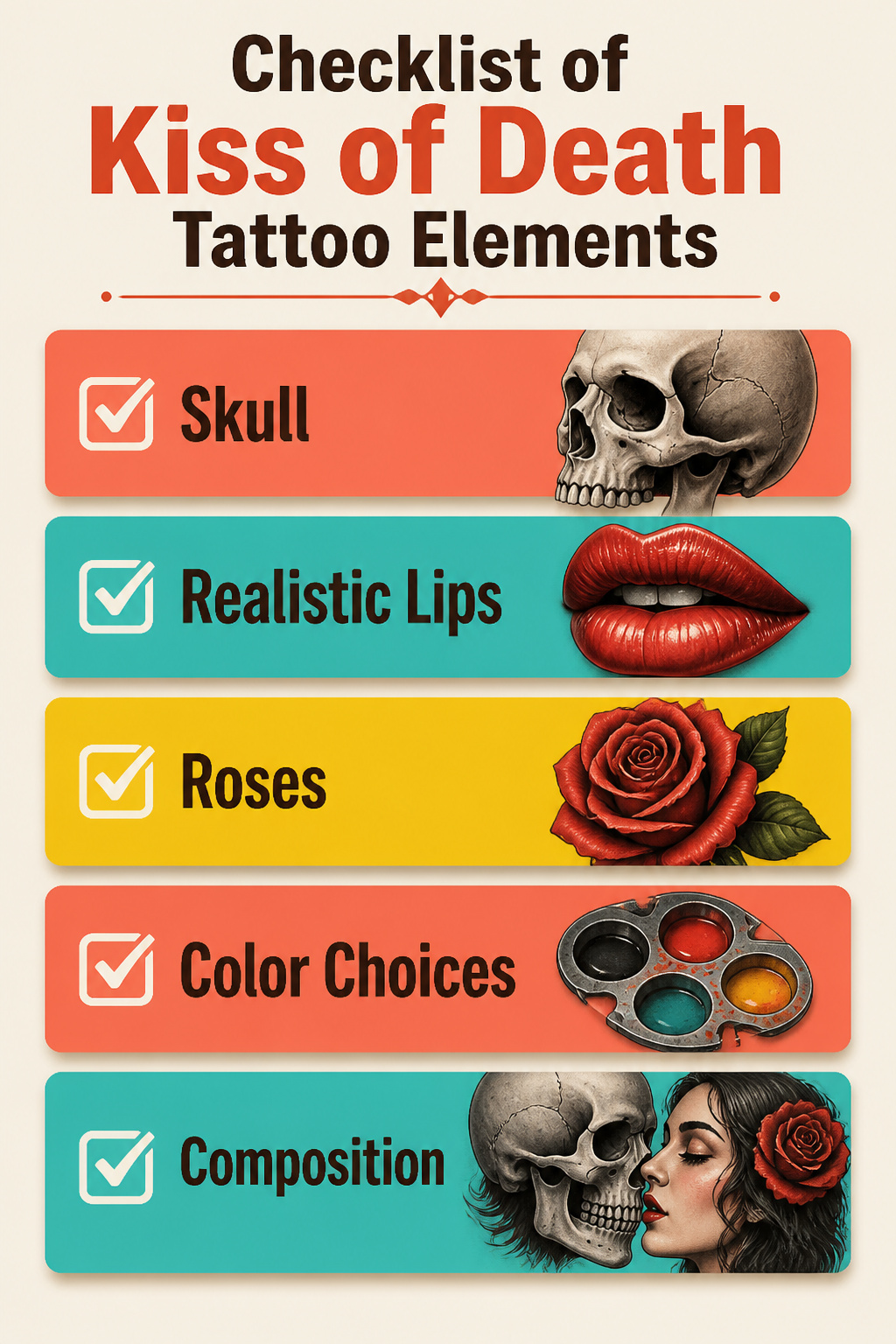
Most kiss of death tattoos pull from a small set of visual building blocks. Knowing what each one does lets you walk into a consultation speaking the same language as your artist.
- The skull carries the obvious mortality reference, but placement changes the tone. A skull receiving the kiss reads as passive fate; a skull delivering it turns the wearer into the threat. Jaw detail matters too: a gaping, theatrical skull feels cartoonish, while closed or partially shadowed bone reads heavier.
- Lips are where the "kiss" lives. Realistic lips with soft shading create a jarring intimacy against hard bone; stylized or cracked lips push more toward horror imagery. The moment of contact, or the space just before it, carries more tension than the full press.
- Roses complicate the message. A rose held between the teeth of a skull softens the brutality into something almost romantic; a rose wilting or dropping petals next to the pair adds a time limit, decay happening now rather than abstractly later.
- Color choices shift the weight dramatically. Black and gray keeps the piece grounded in classic tattoo tradition and reads more serious. Red limited to the lips or a single rose petal creates a focal point that the eye cannot escape. Full color risks looking illustrative in a way that undermines the subject’s gravity.
- Composition decides who owns the power. A skull dwarfing the lips suggests death as the larger force; equal sizing frames the act as a transaction or mutual choice. Negative space between the two elements, even a thin gap, stretches the moment into something the viewer completes in their own head.

183PCS Different Styles Tattoos Stencil: Our temporary tattoo stencils forkids comes with 183 temporary tattoo stencils painting set design such as flowers, cats, hearts, skulls, dinosaurs, fruits, deer, scorpions, Hannah, unicorns, whales, cars, rainbows, telescopes, ships, too fast, astronauts, pirates, letters, stars and more Style in 12 sheets A5 size. Perfect for festivals, parties, or daily fashion.

⯁ 400+ Reusable Henna Stencils: Get 24 sheets of high-quality, self-adhesive hollow templates featuring over 400 unique patterns. These temporary tattoo stencils allow you to create stunning body art including mandalas, butterflies, and dragons. Perfect for practicing techniques without permanence

▶ Henna Tattoo Kit: 16 sheets tattoo stencils. airbrush tattoo stencils suitable for tattoo lovers. Experience the effects of tattooing without the pain of tattooing.
Where People Place It
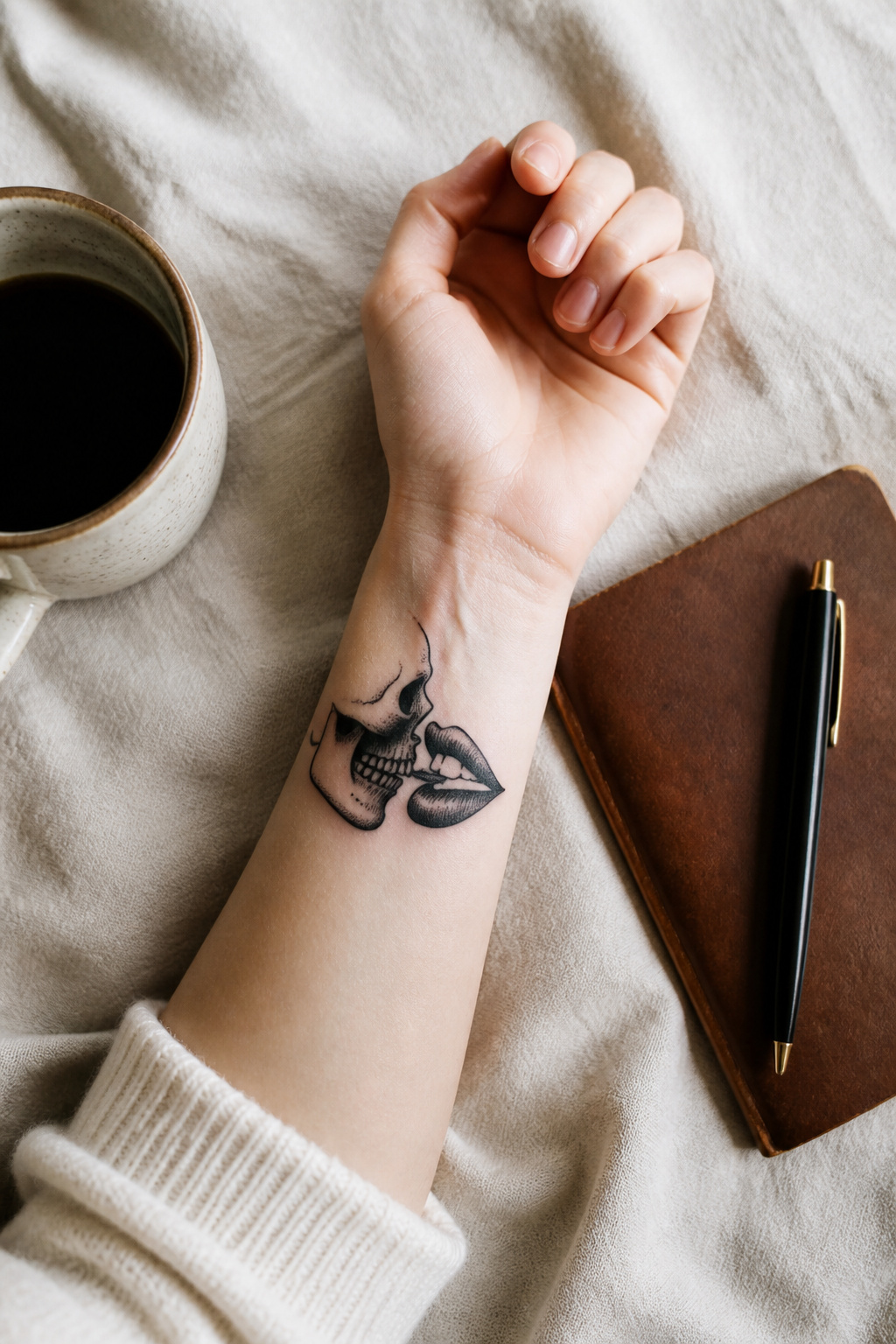
A kiss of death tattoo on the hand or neck stops people before they speak. The placement turns the image into a warning, not just decoration, and the people who choose these spots usually know they are starting conversations they may not want to finish. The hand leaves nowhere to hide in a handshake or a handed drink, which is the point.
Smaller versions work on the wrist or behind the ear when someone wants the symbol close but not broadcasting. The design scales down better than most figure pieces because a single pair of lips or a simple skull profile stays readable at palm size. What gets lost is the surrounding detail, the roses or the Judas reference that fills out a larger composition.
The ribs, the upper thigh, the shoulder blade, these are the private placements. People who choose them often treat the tattoo as grief work or a marker of something survived, not a warning to strangers. The canvas is larger there, so the image can open up into a scene, the kiss given, the receiver falling.
A full back piece is rare but possible. The spine gives you a vertical stage for the moment of contact, the giver above and the doomed figure below. Most artists will push for at least a hand-sized minimum, anything smaller and the lips blur into a smudge inside of five years.

LARGE SIZE AND MORE QUANY -- Total 77 Sheets Temporary Tattoo Stickers for Men and Women Adults Including 17 Sheets Large Size (7.48*3.74 inches) and 60 Sheets Small Size...
Frequently Asked Questions
What does a kiss of death tattoo symbolize?
It can symbolize betrayal, danger, or passionate love, depending on which story the wearer is telling. A Judas kiss marks personal betrayal by someone close; the mafia version turns intimacy into a warning about loose tongues; romantic designs name the beauty found inside damage or the recklessness of loving anyway. The common thread is that a gentle gesture becomes the trigger for something fatal.
Is getting a spouse’s name tattoo bad luck for the relationship?
No. The idea that a partner’s name tattoo dooms the relationship is a myth without any real basis. While some people joke about it or regret the ink after a breakup, the tattoo itself does not cause the split. A kiss of death design is sometimes chosen after the fact as a way to mark the ending, not as a curse that created it.