The 9 sneaker tattoo ideas below run from a single line of black ink to full color packed in two sessions, and the deciding factor is how much room you have and how much motion the skin sees.
A trefoil behind a shoe needs clear overlap and space to breathe, while a continuous sole-to-heart line only asks for skin that holds one-millimeter detail.
Black and grey realism with a street sign takes multiple sessions; a solid black Jumpman above the ankle bone keeps it readable with shorts and no touch-ups.
1. High-top Sneakers Hanging by Tied Laces
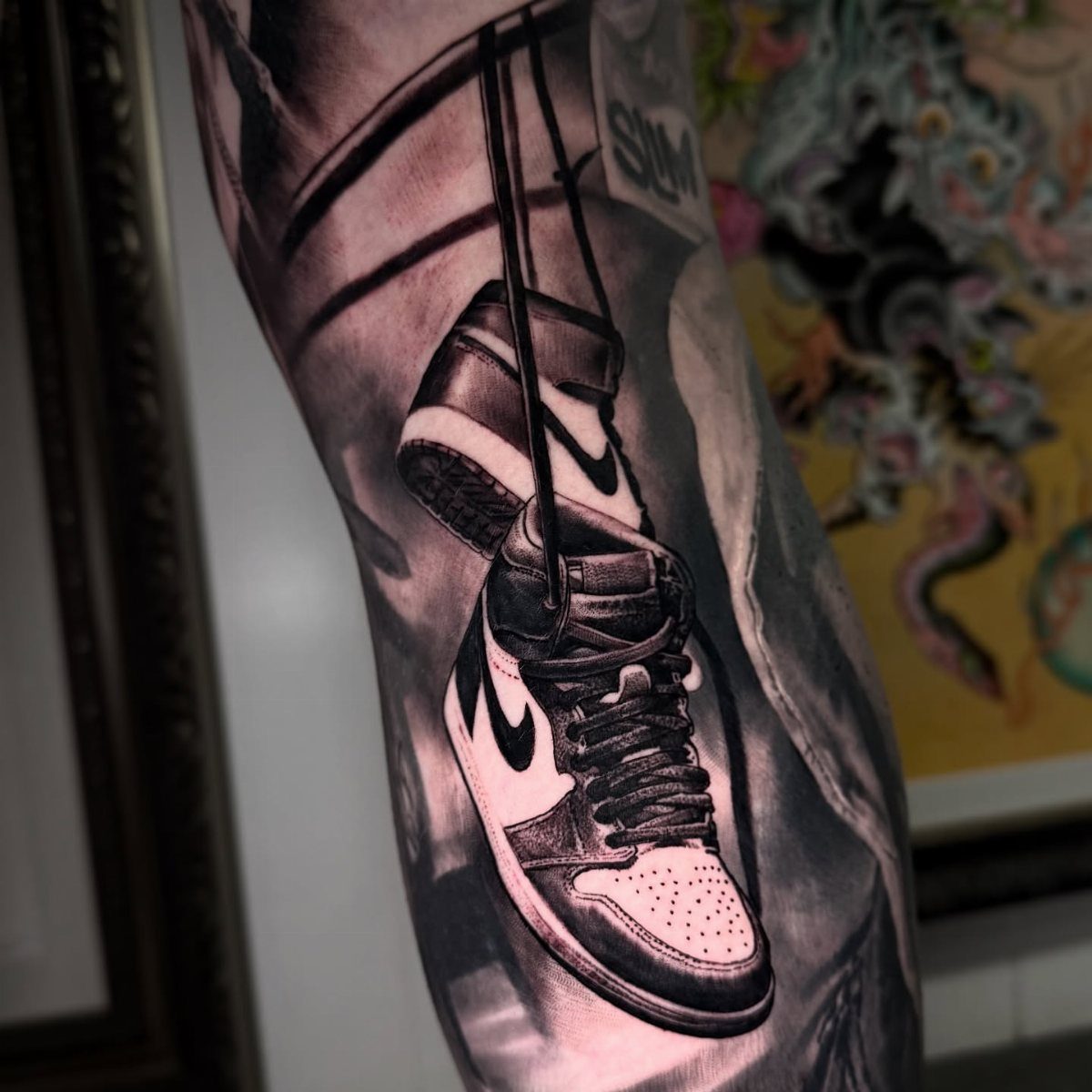
High-tops dangling by their laces carry the same urban sign they do on actual wire: youth, rivalry, memorial.
The tied-together loop reads like a finished story, which is why this image works best in black and grey rather than bright color.
Black and grey leather panels ground the design in real shoe history rather than generic shape.
Faint background lettering, something like a partial "SUM" or block of graffiti, lets you fit a neighborhood or crew initials in without stealing focus from the shoes.
Placement on the arm or leg gives the laces room to hang; too small and the knot turns to mud.
Proper panel shading asks enough of your artist that you will want to budget for a longer session than a small walk-in piece.
2. Low-top Sneaker with Flowers
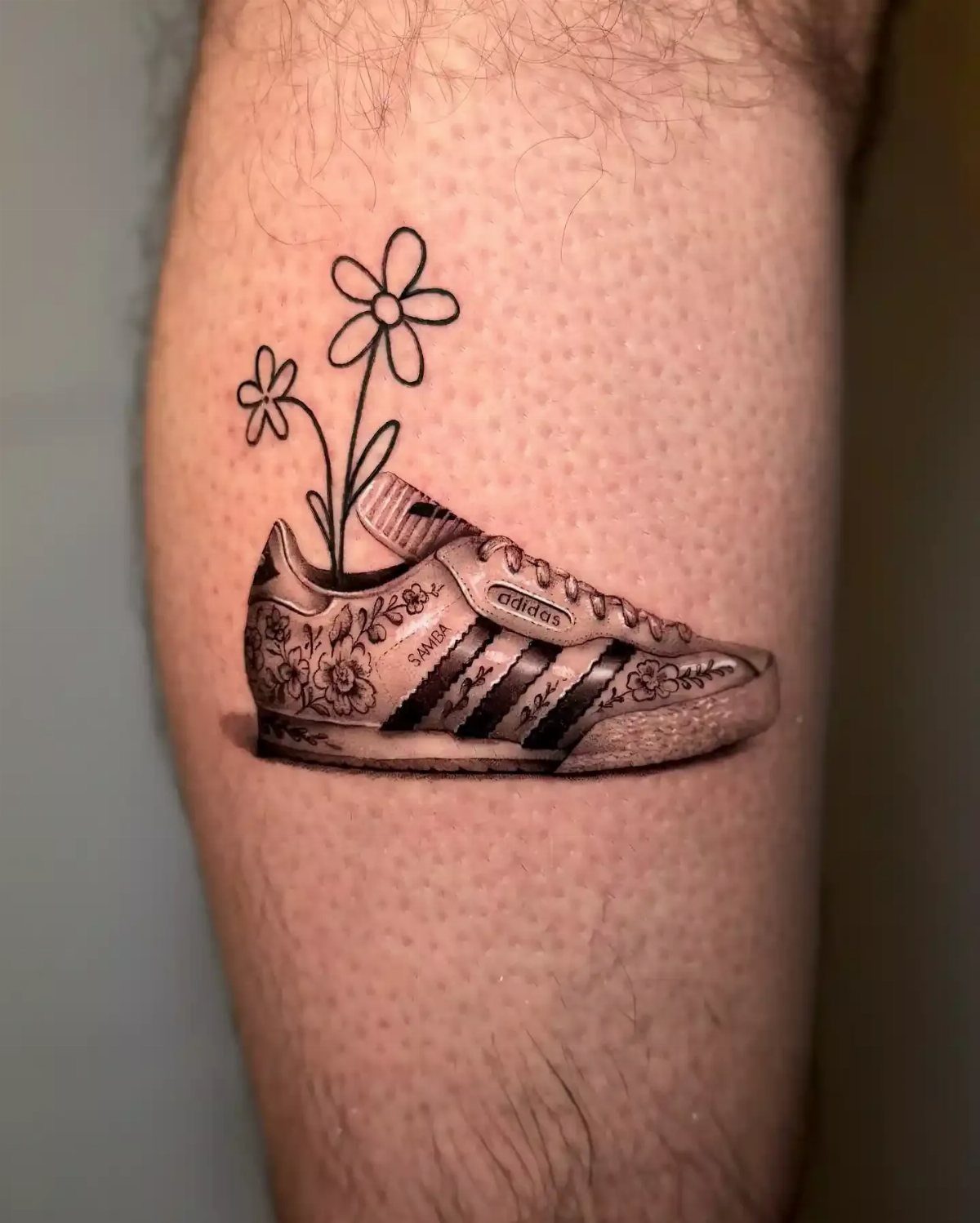
Wildflowers growing from a Samba opening soften a shoe usually read as terrace culture or football casual. The black ink outline keeps the contrast sharp, while stems and leaves spill out where tongues normally sit.
Black ink suits this better than color for one reason: flowers in a tattoo often age to blotches if over-saturated, and the shoe structure needs to stay readable.
The Adidas shape, with its slim toe and long three-stripe flank, gives the botanical elements a frame they would lack on a bulkier high-top.
Ask the artist to vary line weight, heavier on the shoe body, lighter on petals, so the eye hits the sneaker first then travels upward.
Without the full shading load, this style sits lighter on the skin and on the clock.
3. Sneakers in a Cityscape
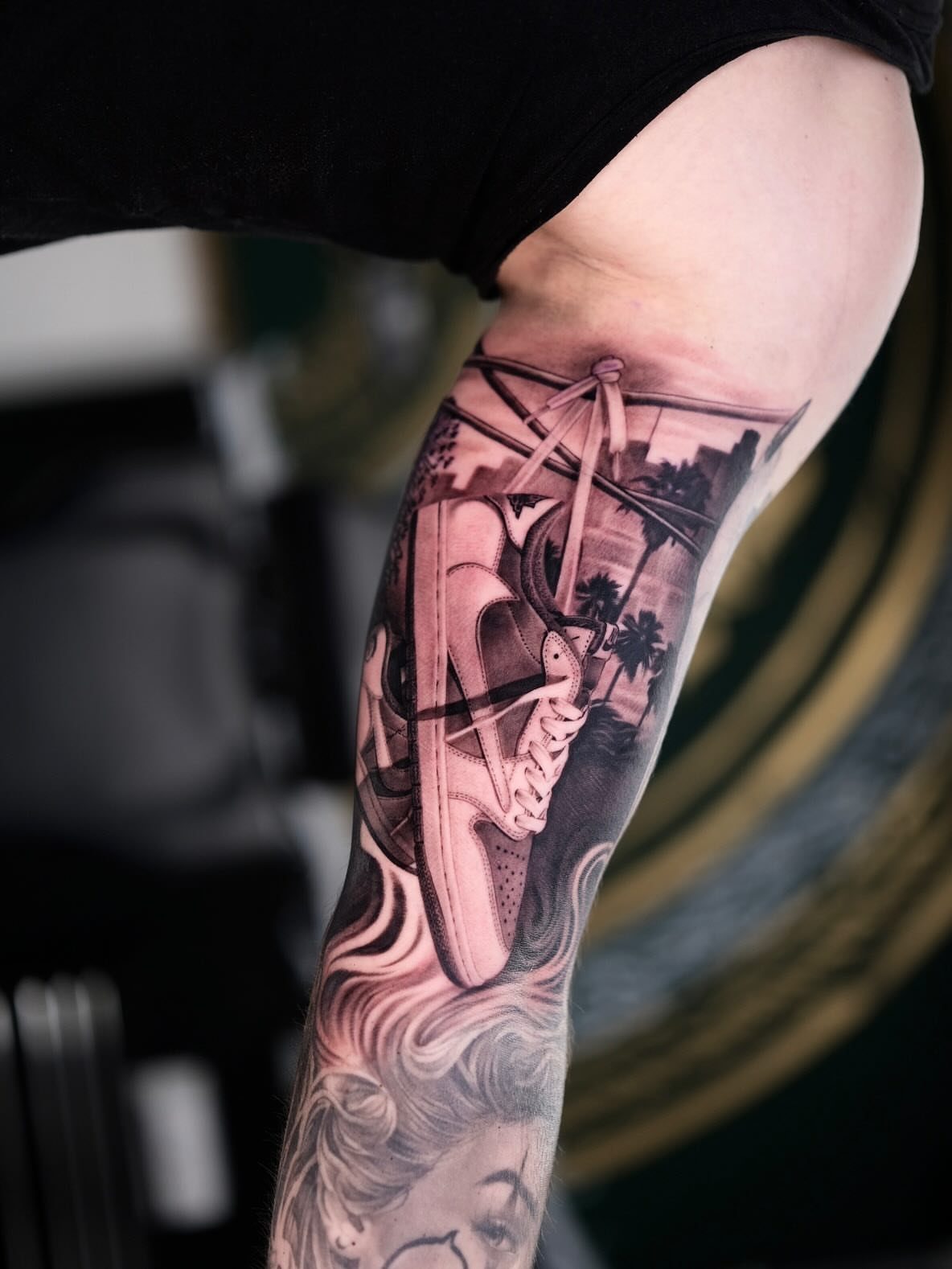
Layering sneakers over cityscape pulls the shoe out of product-shot isolation and gives it somewhere to belong. Grayscale keeps the two elements, shoe and skyline, in one tonal family rather than fighting for attention.
Utility poles and wires echo the hanging-lace motif without repeating it, and palm trees place the scene somewhere coastal, Los Angeles or Miami by feel.
The high-top sits forward, sole and laces in sharper focus, while buildings recede; that depth needs a flat surface like the upper arm or thigh to read properly.
A good artist builds the city first, then overlays the shoe so shadows fall consistently.
Without that planning, the piece looks collaged rather than composed. No figures needed, the image carries its own scale.
4. Sneaker with Heart Shape
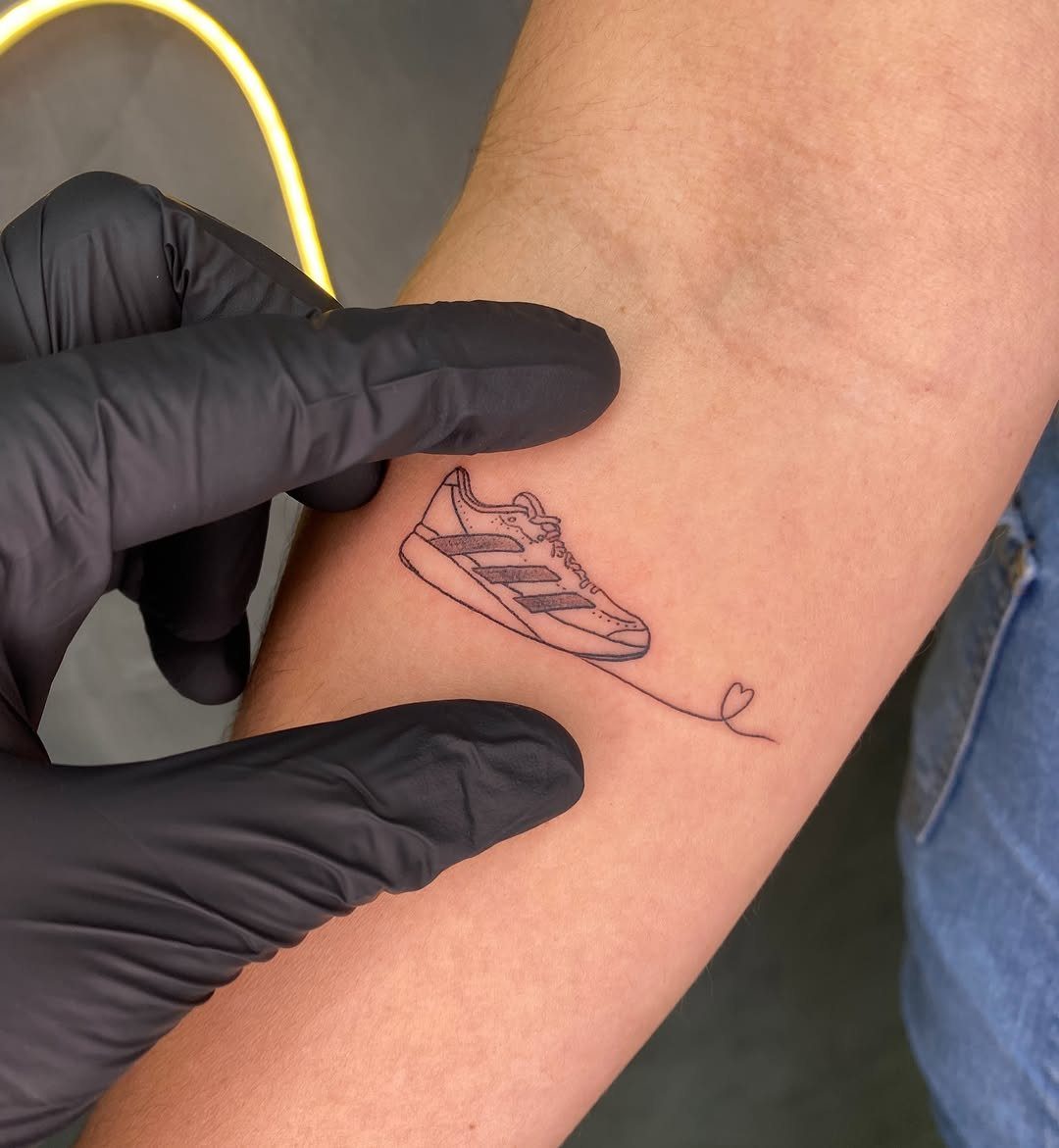
One continuous line from sole to heart turns a shoe tattoo into something quieter, more gift than statement. The fine-line technique demands a steady hand, thinner needles, and skin that will hold detail, forearm inner or outer works best.
3 stripes mark this as athletic heritage without naming a brand, and the heart loop at the end of the sole line keeps the gesture small enough for someone who wants the reference recognized only by those already looking.
Black ink only, no fill, because a line this thin with shading inside would close up within a few years.
Check the artist’s healed work before committing; one-millimeter lines spread fast on the wrong skin or with poor aftercare.
5. Sneakers with a Trefoil Logo
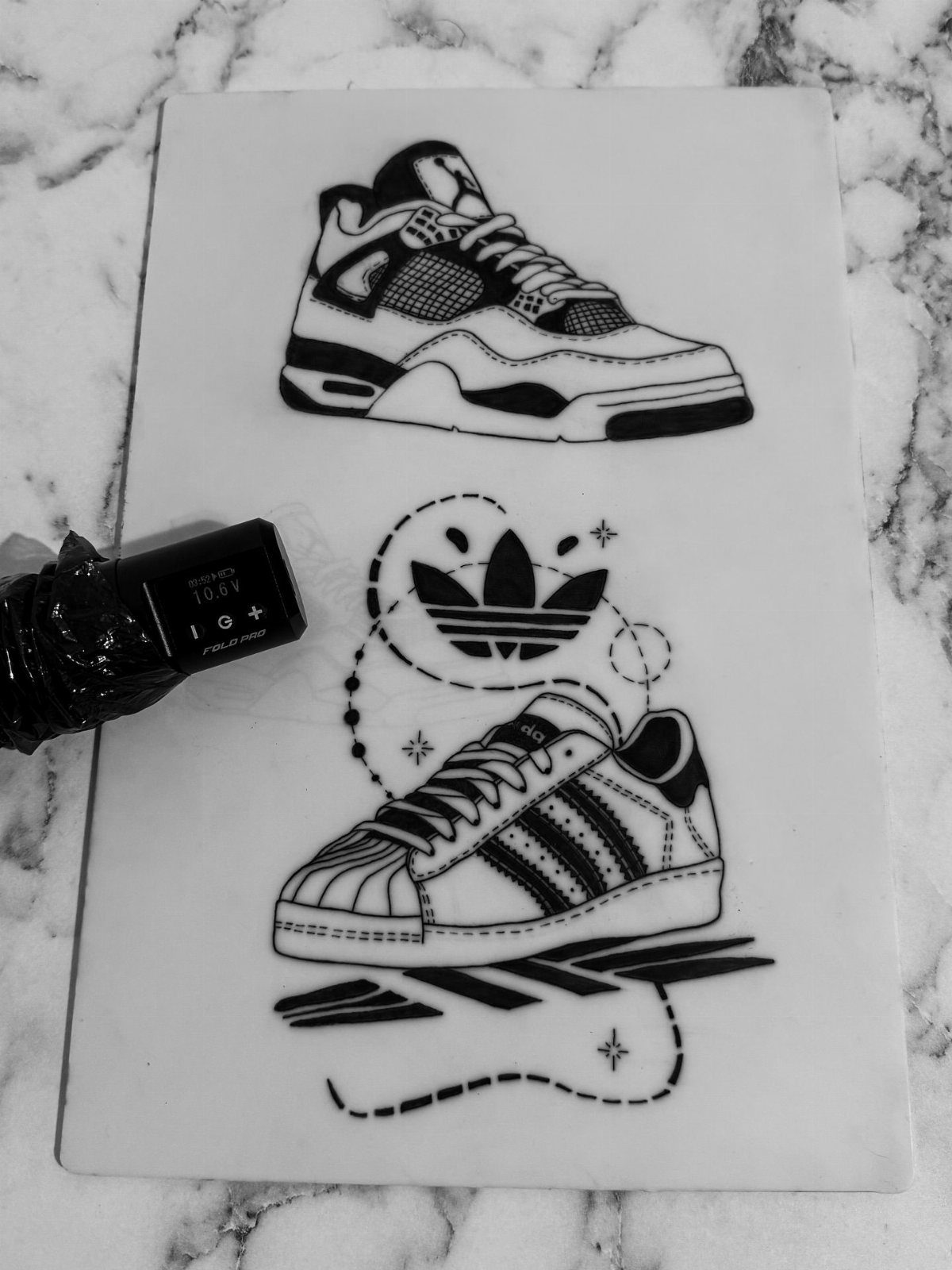
The trefoil behind the shoe reads as cred rather than advertisement when the logo is treated as background shape, oversized and half-faded, with the sneaker cast in sharper relief.
Black and grey shading on the shoe itself, laces and stripes and panel texture, keeps the front-back relationship clear.
Positioning matters: the shoe should overlap the trefoil at one point minimum, otherwise they read as two separate tattoos sharing skin. The logo needs room to breathe; at small scale the 3 leaves compress to a blur.
This suits someone already collecting Adidas references, or beginning a leg piece that will gather more. Session time runs longer, shading that clean takes patience.
6. High-top Sneaker with Basketball
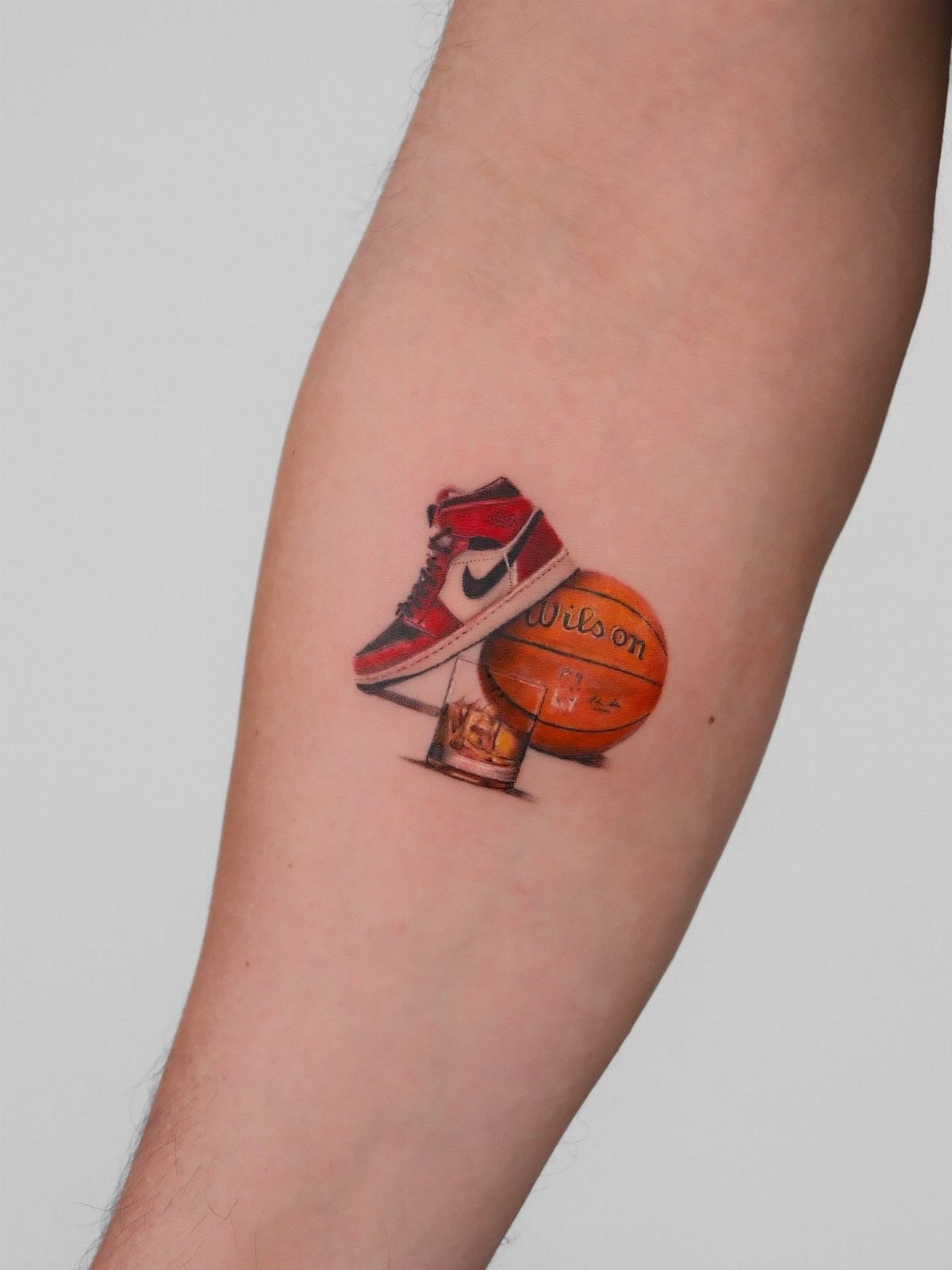
Red, black and white high-top resting atop a basketball names the sport outright, no ambiguity left for the viewer. The Wilson label on the ball adds a second specific reference, which keeps the design from generic sneaker-tattoo territory.
Colorably dense work like this needs a larger canvas, upper arm or calf, and an artist comfortable packing saturated pigment.
The whiskey glass occasionally paired in these compositions, one version shows it, adds a post-game narrative but crowds the image; I would separate that to its own piece rather than shrink all three elements to fit.
Basketball texture, the pebbled surface, reads as noise if underworked and mud if overworked: ask to see healed examples of ball tattoos specifically. Expect two sessions minimum, color heals unevenly when packed in one marathon sitting.
7. Barbed Wire Swoosh Logo
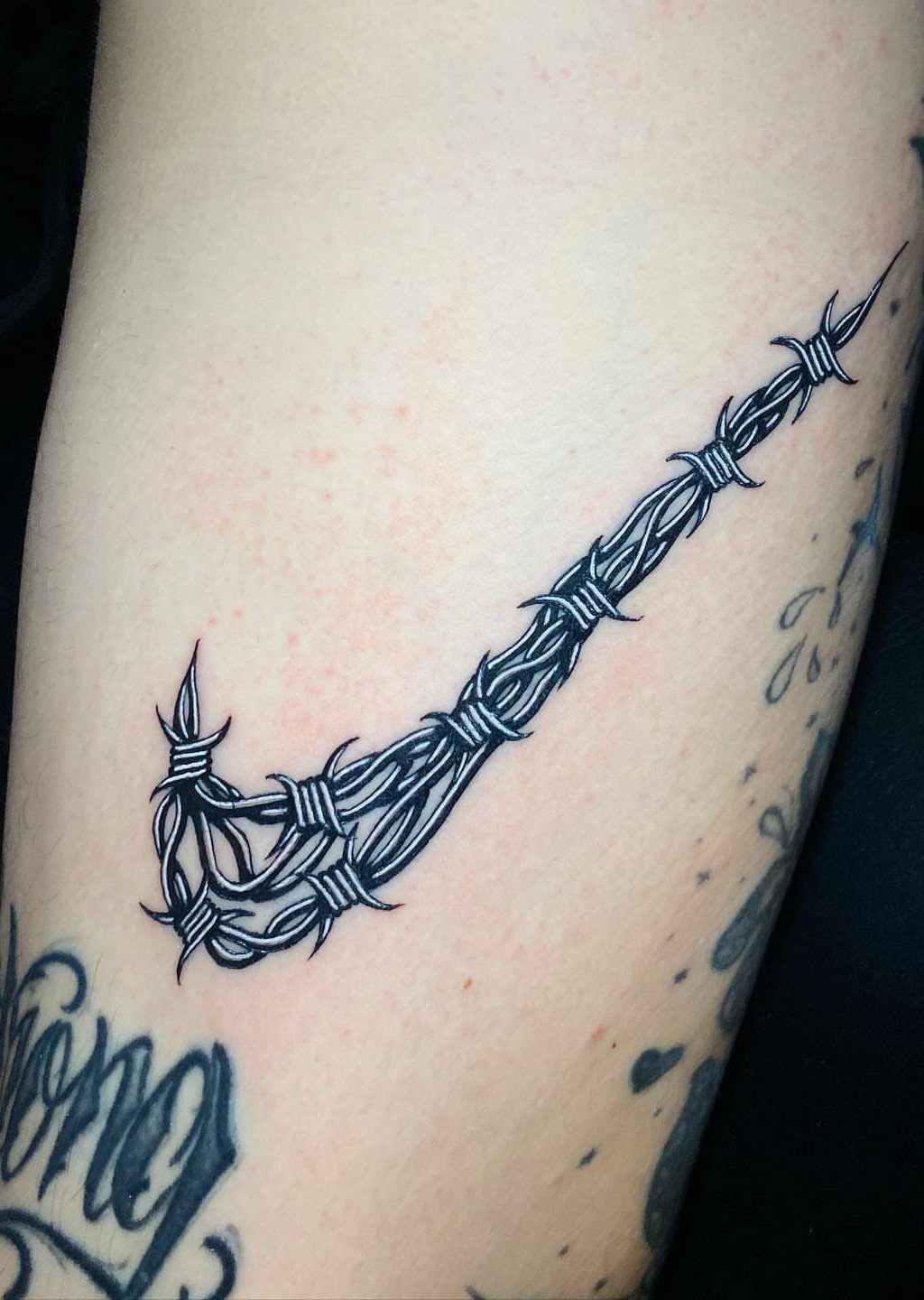
Wire wrapped into a brand swoosh borrows from 2 vocabularies at once: military fencing and sport heritage. The barbs read as resistance, which only works if the wire tension looks physically believable; loose loops collapse into scribble.
Black and grey keeps the metal reading as metal, no color needed.
Thicker gauges in the swoosh body, finer strands at the tips, sell the pressure holding the shape together. Check that the artist has healed photos of anything mechanical; barbed wire done soft goes decorative and loses the edge entirely.
Ankle or forearm, where the curve follows a muscle line, stops the logo from looking stamped on flat.
8. Jumpman Logo Silhouette
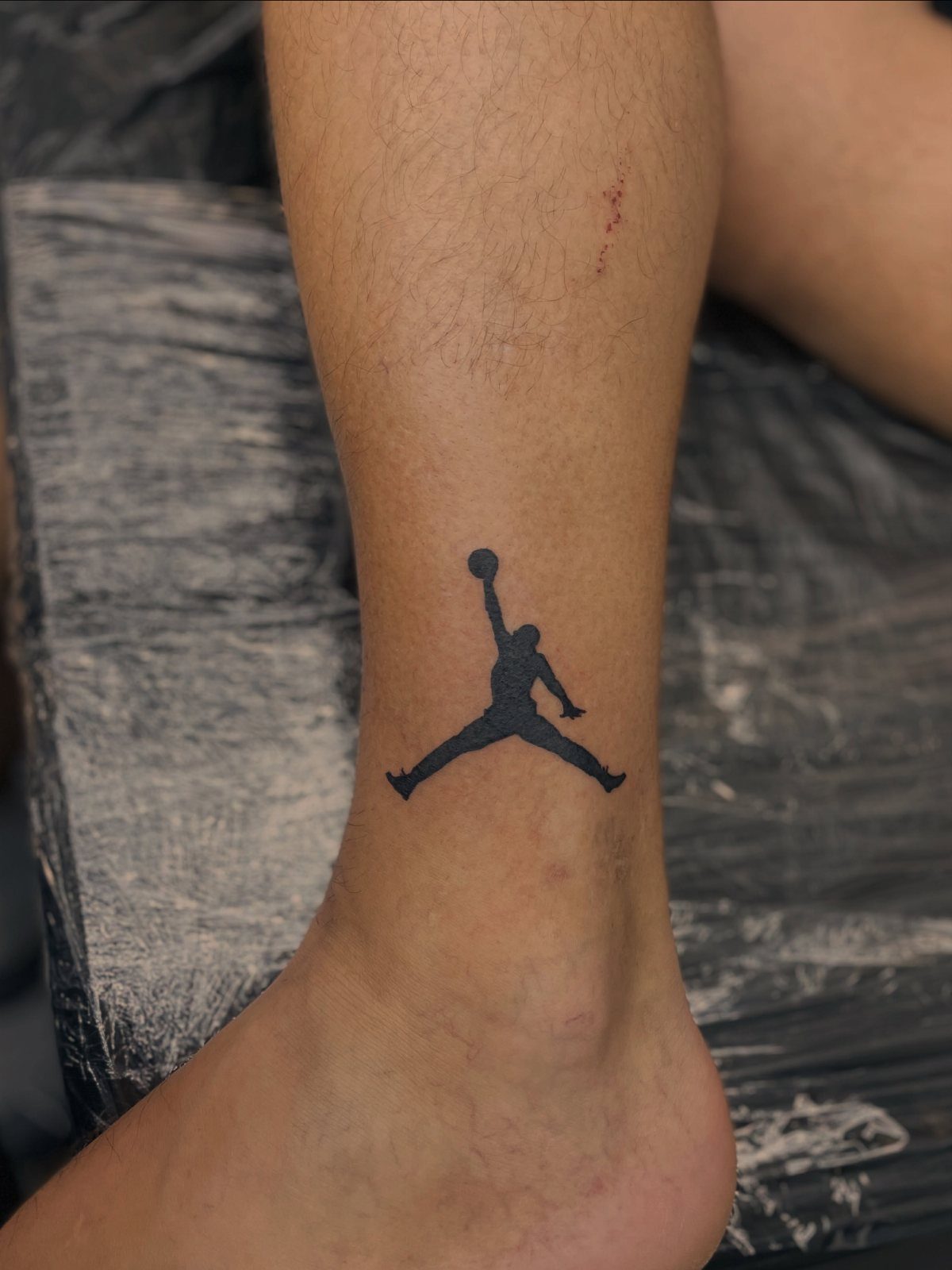
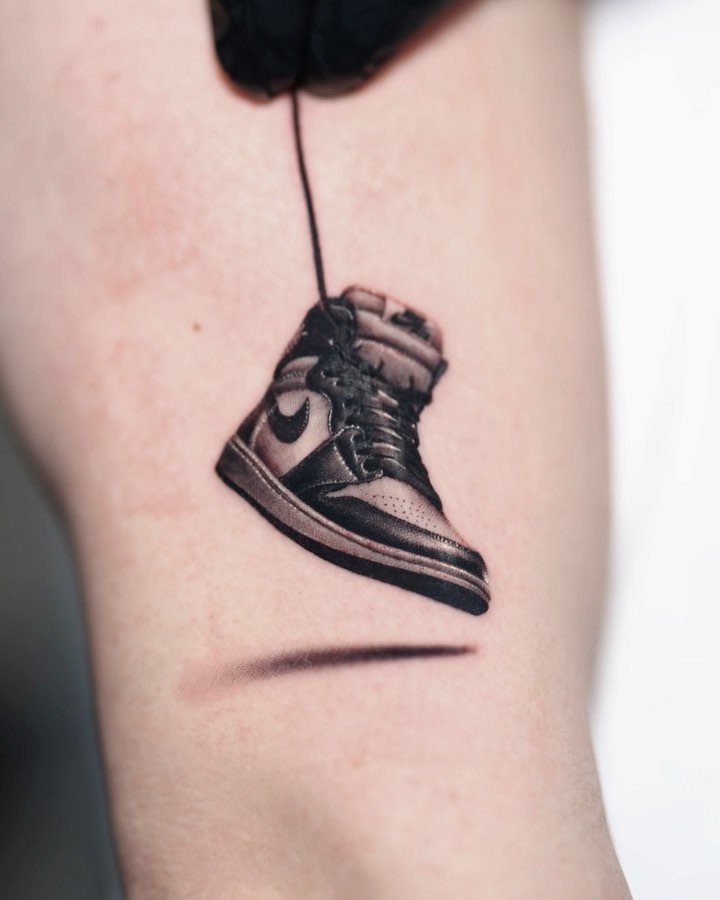
Solid black silhouette above the ankle is the purest version: no panel lines, no color debate, just the pose that named a brand.
The logo is small enough that detail would blur anyway, so the flat fill is a practical choice dressed as minimalism.
Position matters for longevity. The lower leg moves, flexes, catches sun; above the ankle bone avoids the worst friction while staying visible with shorts.
Black ink fades slower than color, but even black spreads on thin skin, ask to see healed ankle work from this artist specifically.
This suits someone who wants the reference legible at arm’s length, not up close enough to touch.
9. Sneaker and Street Sign Scene
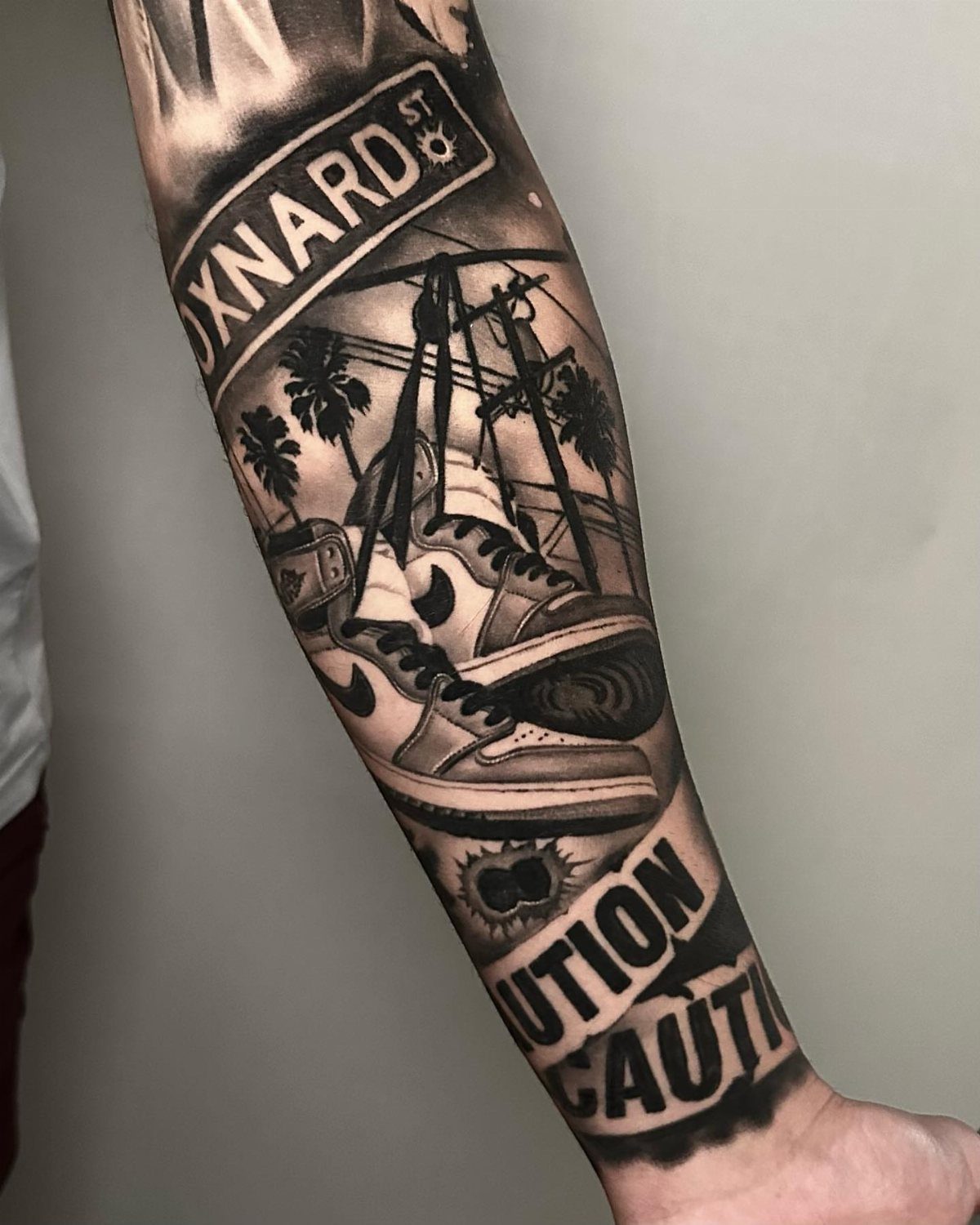
A scene this busy asks the eye to travel: sneakers on wires first, then palm trunks, then the street name that places it. Black and grey realism needs the space between objects to breathe, otherwise the grey values mash together.
The sign text is the reader’s own insertion point; "OXNARD ST" or your own corner, one word or two maximum, letters too small to read heal to dust.
Size the piece to the forearm’s width, not wrapping around, so the horizon stays flat and readable.
Expect multiple sessions, full detail at this density in one sitting swells and loses half the subtlety.
Frequently Asked Questions
What is the 1/3 rule tattoo?
There is no single 1/3 rule tattoo that artists or collectors widely reference.
What are the top tattoo ideas?
For sneaker tattoos, black and grey realism works better than color in most cases.
High-tops hanging by their laces carry an urban story, low-tops with wildflowers soften the mechanical lines, and brand logos read best as background shapes rather than clean advertisements.
Fine-line single-needle work suits small gestures like a heart linked to a sole, while dense color pieces need larger canvases and multiple sessions to heal properly.
What does a Nike tattoo mean?
Nike tattoos, like the Jumpman silhouette or barbed-wire Swoosh covered here, read as athletic heritage and motivation rather than pure brand loyalty.
The Jumpman pose stays tiny enough that fine detail would blur, so flat black fill becomes the practical choice, while a wire-wrapped Swoosh adds resistance and tension to the athletic reference.