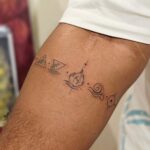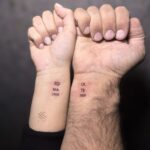
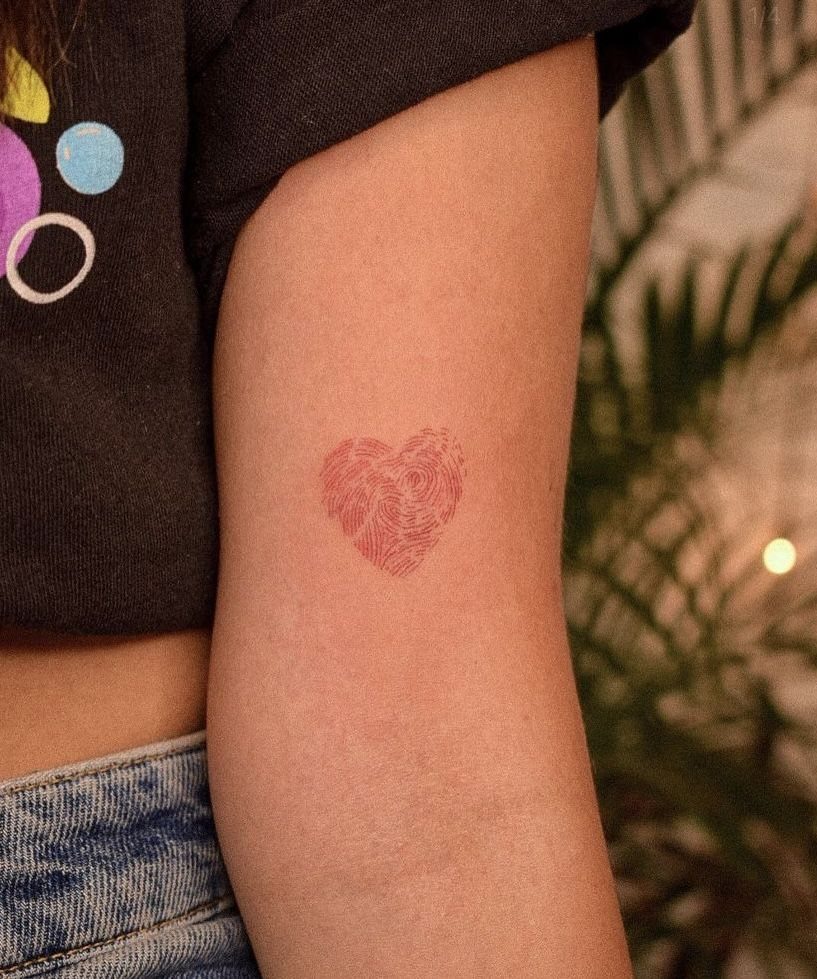
These 6 thumbprint heart tattoo ideas range from a quick single-black-ink sitting to a multi-session anatomical piece, and the deciding factor is how much detail your skin and your schedule can hold.
1. Two Black Ink Thumbprints Heart
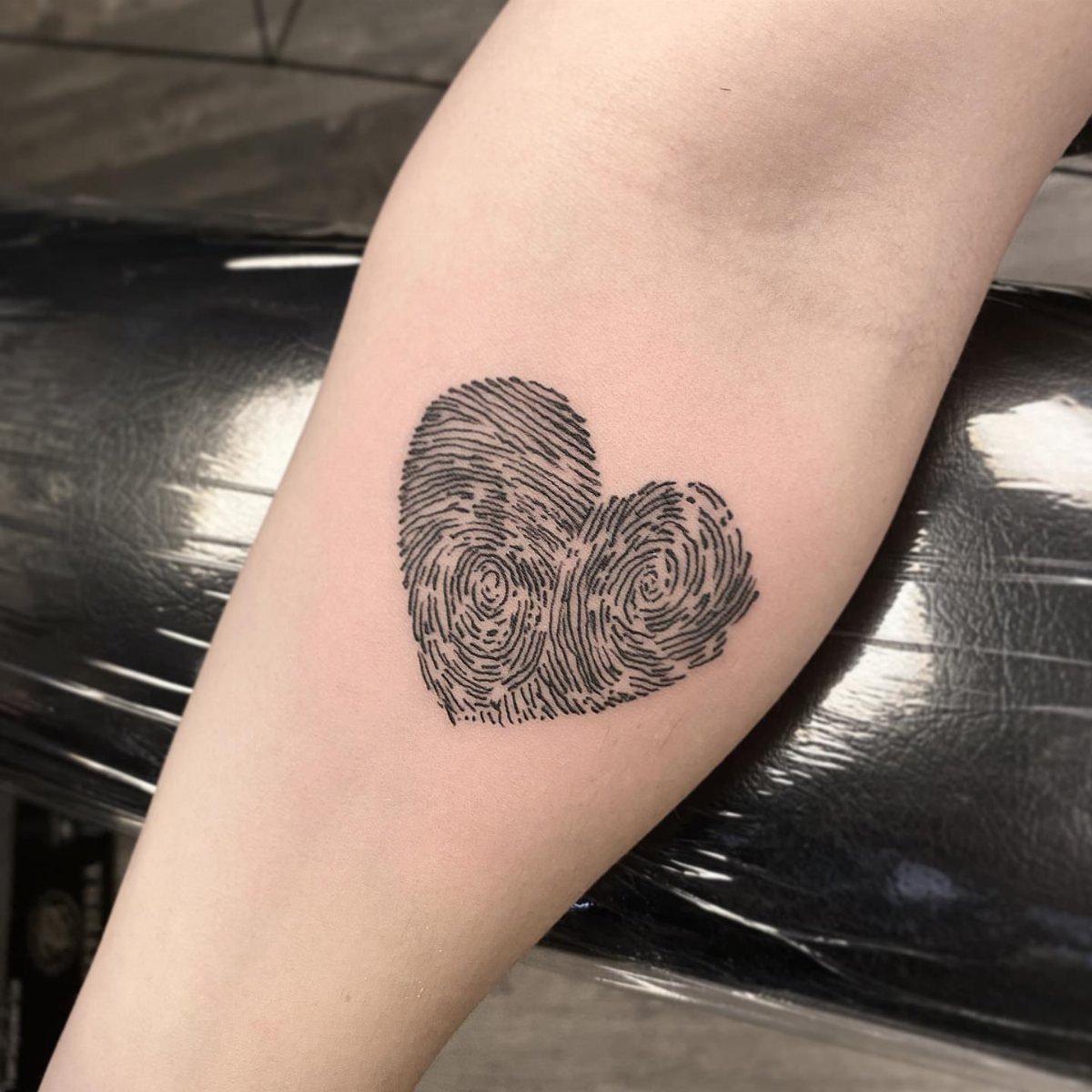
Two black ink thumbprints pressed together at the angle where whorls meet form the heart shape. The ridges stay visible, not filled in, so the print reads as a print first and a heart second.
This one suits someone who wants the design to sit quietly.
No dates, no names, just the 2 prints and the line between them. The tattoo ages cleanly because black ink holds and fingerprint ridges give the eye texture to follow even as the edges soften slightly over time.
Ask your artist to take your prints with black stamping ink, not digital scan: the slight pressure variation in a real thumb pressed to paper carries over into the stencil better than a flat file.
2. Fingerprint Heart with Cursive Text
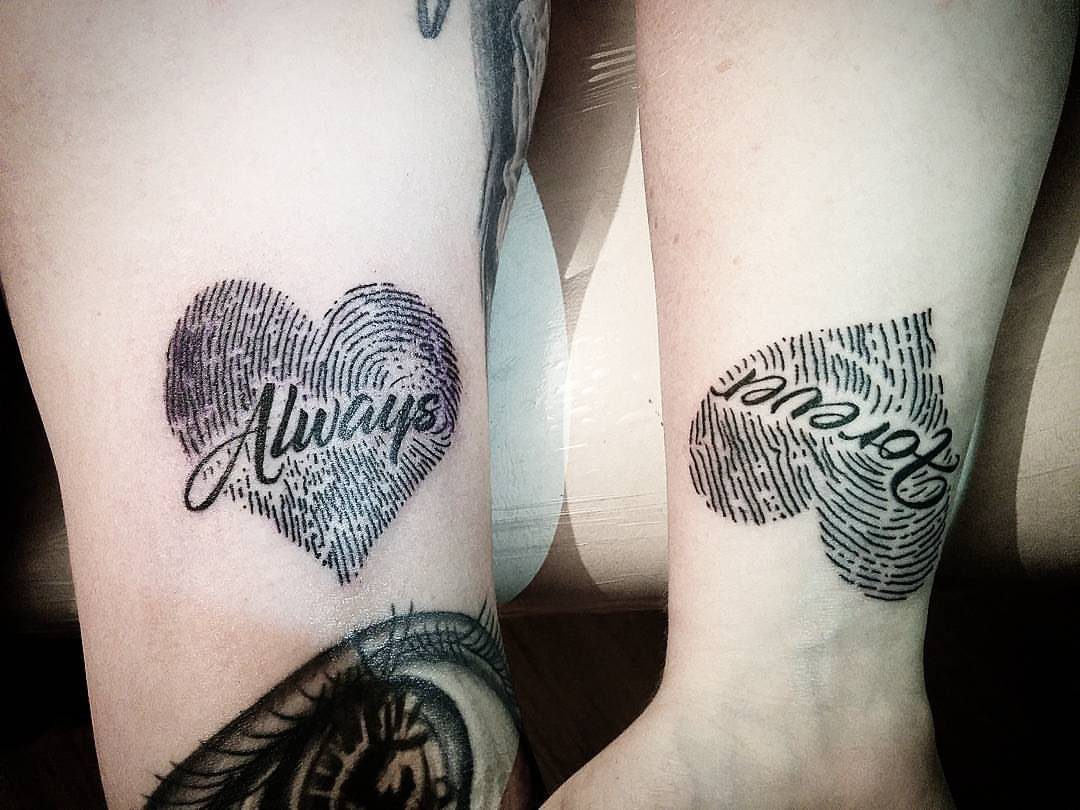
Cursive text below or across a fingerprint heart turns the print into a signature.
The word "love" with the "o" replaced by a heart-shaped whorl, or matching pairs that read "Always" and "Forever," keeps the image and the message in one field.
The script needs to be sized to the print, not the other way around. Too large a word throws off the scale; too small and the loops collapse into gray blur within a few years.
A skilled artist will draw the text to follow the curve of the heart’s lower point rather than sitting straight across it.
Couples often choose paired phrases that only make sense together, which means planning placement so both tattoos show side by side when you stand shoulder to shoulder.
3. Fingerprint Heart with Dates
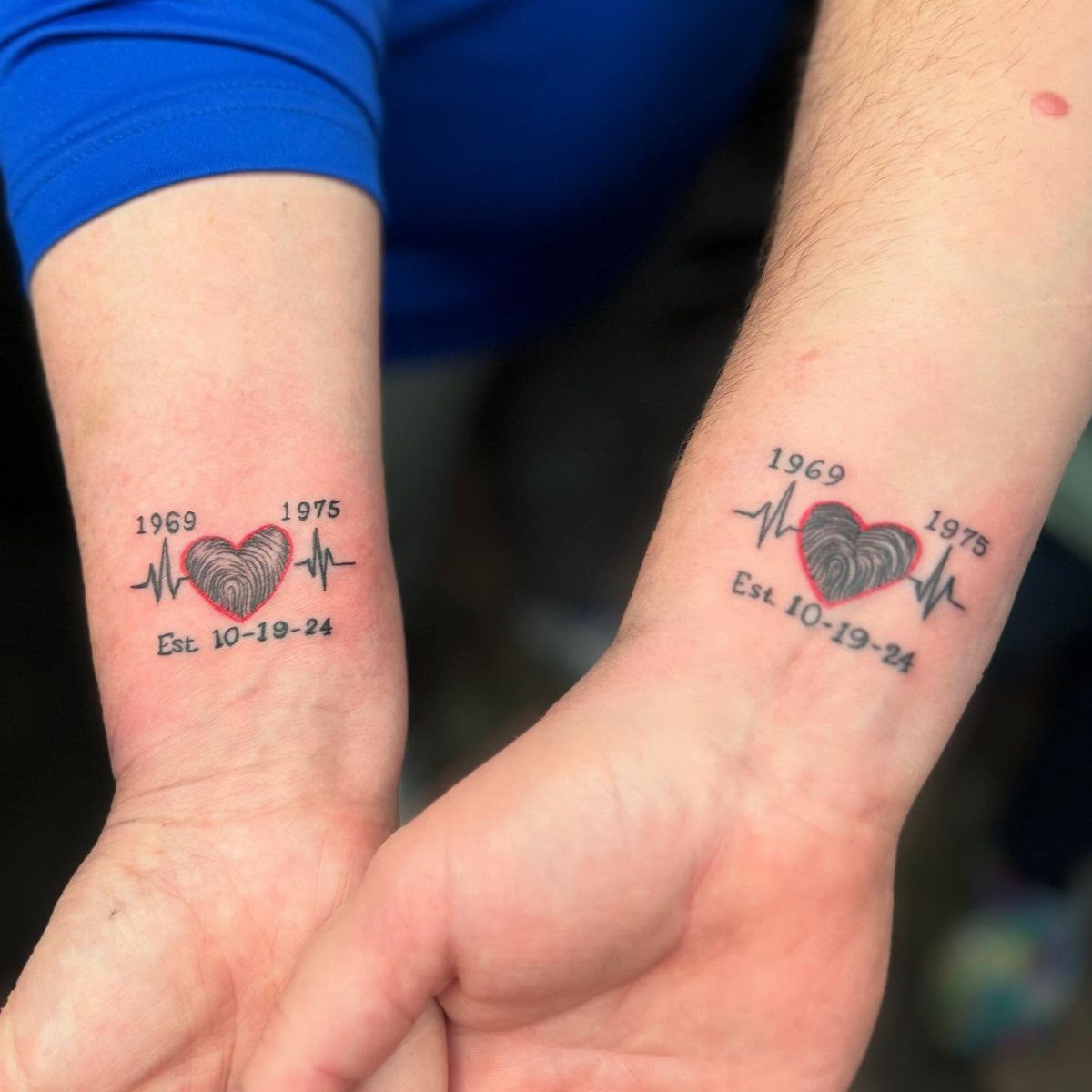
Dates added to a fingerprint heart mark the specific day: a wedding, a birth, a loss. The numbers sit best in fine line, either tucked beneath the heart or threaded along one edge like a stem.
Red outlines the fingerprint heart while the date sits inside in matching ink, giving one reading from across the room and another up close.
Some add an infinity symbol or a small butterfly near the date, though each extra element competes for attention with the fingerprint itself. Start with the heart and the date, then decide if the space still asks for more.
A single date fits cleaner than a span; "Est. 10-19-24" tells its own story without needing an end point.
4. Thumbprints Heart with Small Hearts
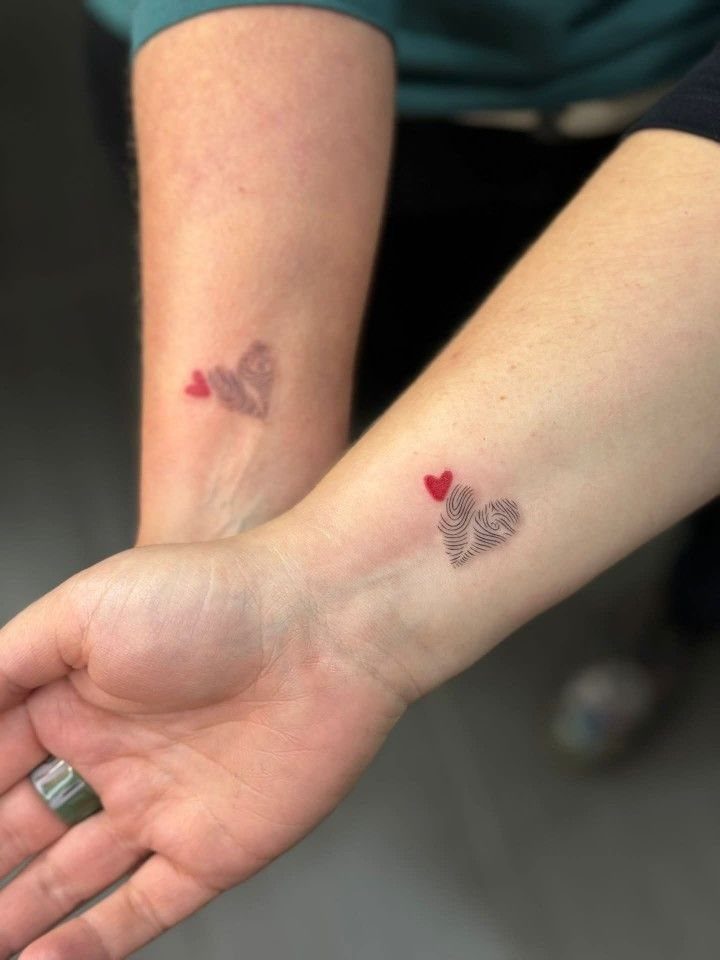
Small satellite hearts orbit the main fingerprint shape: one in red below, or a pair flanking like quotation marks.
The extra hearts are simple, solid, and quick to place, so they work well if the main tattoo already carries 2 names or dates and you want color without adding more text.
Thin curved lines that connect the small hearts to the main print keep the composition from looking scattered.
On the inner wrist, where this design often goes, the curve follows the natural line of the tendon toward the thumb or the pinky.
The black thumbprint heart stays dominant; the red hearts read as accents, not competitors.
5. Anatomical Heart with Thumbprint
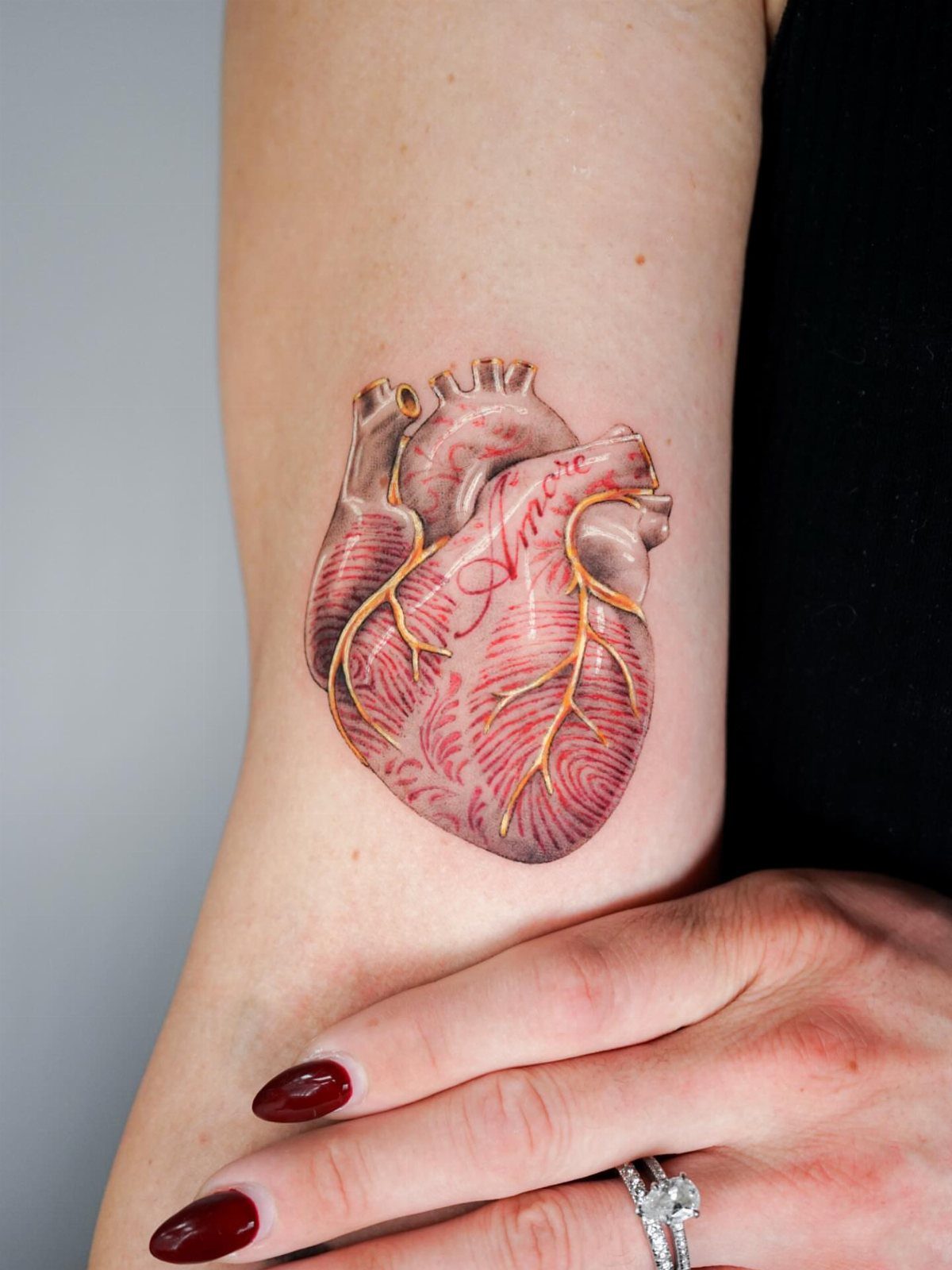
An anatomical heart opens at the top, chambers visible, veins threading through, with a thumbprint laid across the muscle or worked into the center.
The print usually shows in red against black fine-line shading, or in gold if the artist is building a brighter piece.
This version demands more skin and more time than the simple pressed-print designs. The anatomy has to read correctly from the first day, which means an artist comfortable with medical illustration or at least with heavy reference.
The thumbprint becomes the personal insertion: the literal heart and the symbolic one occupying the same space.
Not for a first tattoo or a lunch-break appointment. The layering of texture over structure needs healing room and a placement that does not twist or stretch the fine lines badly.
6. Overlapping Thumbprints Heart with Tiny Heart
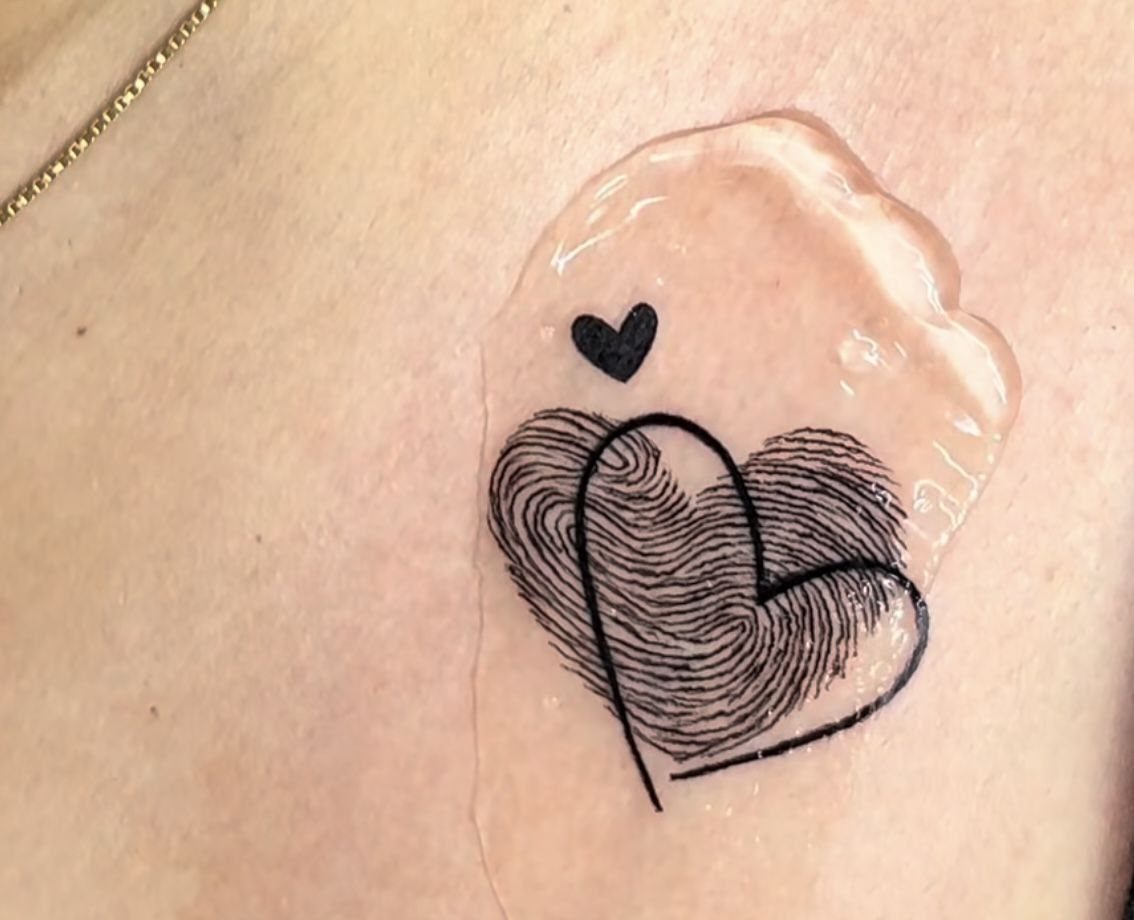
Overlapping prints, both thumbs from the same person or one from each of two, form a heart that carries a tiny solid black heart at its upper center.
The overlap creates depth: one print reads as behind, one as in front, though both are the same ink and the same sitting.
Line weight matters here.
A crisp outline around the overlapping prints separates them from the tiny heart, which sits slightly above the point where the 2 prints meet. Without that outline, the shapes merge into a dark blob as they age.
The tiny heart is a mark you could fill later with a date or a letter, or leave as the plain punctuation it already is. The design works at small scale, which keeps it affordable and fast to heal.
Symbolism of Fingerprint Tattoos
A fingerprint tattoo marks one person and no other, which is why the design turns up in pieces about family bonds and love. Pressed into a heart shape, the print keeps that meaning while it adds the obvious one.
The "nature’s signature" line you see pinned to designs is accurate biology and fair sentiment both. Friction ridge detail forms in the womb, stays fixed through life, and outlasts the body itself in the right conditions.
Family bond versions usually place one parent’s print above a child’s, or two parental prints overlapping to frame the smaller one.
Whether the bond is blood or chosen, the symbol works the same; the print is evidence, not decoration, and the heart is the argument it supports.
Most designs leave out the butterfly or infinity add-ons that clutter the reference photos. The print and the heart do the work.
Placement Ideas for Tattoos
Wrist placement lets a thumbprint heart face outward or inward, a choice that changes who sees it and when.
Outward, it shows in handshake and gesture; inward, the wearer reads it first. Inner wrist skin heals slower and blurs faster than the outer surface, which matters for ridge detail that already runs fine.
Arm placement gives more room for the anatomical and overlapping versions that need space to breathe. The back of the arm, below the elbow where tendons run straight, holds line work steady through movement.
Ankle tattoos sit low and cross a joint that flexes constantly. Fine lines there age hard; a simple pressed-print heart with no extra text survives better than a dense overlapping design.
The side belly sits where skin stretches and shifts most, so a tattoo there needs careful thought about how the lines will age.
That skin stretches and releases with weight change, and a fingerprint heart distorted across a curve reads as accident, not design. Small scale and minimal detail help, but the underlying issue is the canvas, not the art.
Frequently Asked Questions
What does a fingerprint heart tattoo symbolize?
A fingerprint heart tattoo symbolizes one specific person and the bond you share with them.
No two people share the same ridge pattern; even identical twins diverge at the detail level, which is why the print works as shorthand for one specific person being irreplaceable.
Pressed into a heart shape, that biological fact becomes the argument for love or family connection.
Which tattoo to avoid?
The dense overlapping designs and anatomical versions with fine-line shading need enough skin that is stable and enough time that the healing goes right.
Ankle placement is rough on fine lines because the joint flexes constantly. Weight swings pull at the skin along the flank, and a heart shape etched there can elongate or blur until it looks like damage instead of ink.