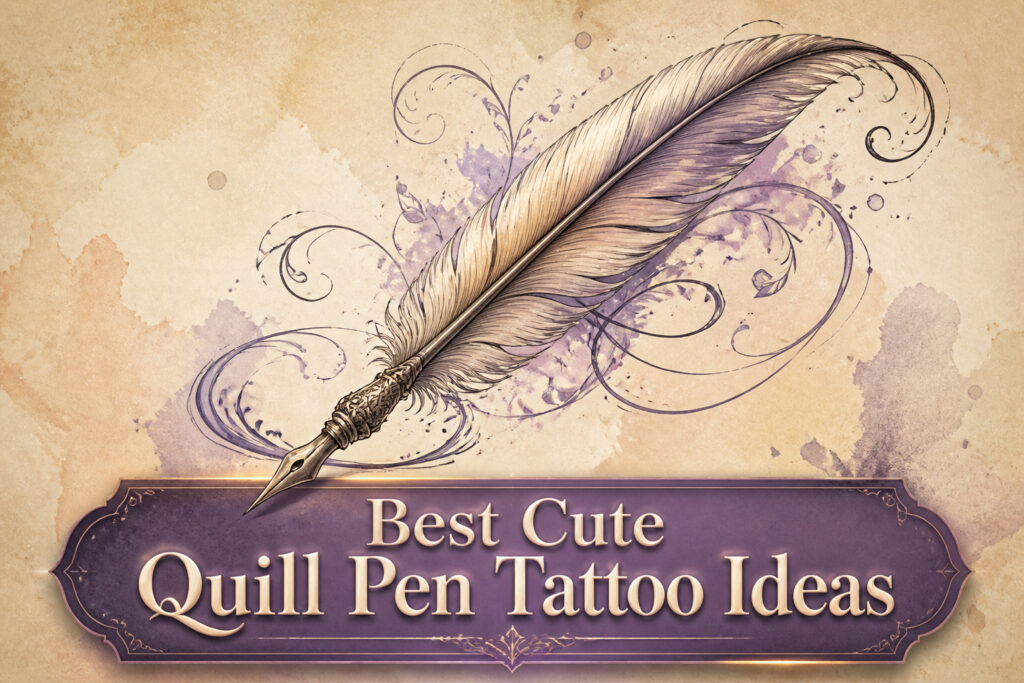
The best cute quill pen tattoo for you depends on how much symbolism you want packed into a single feather. A minimalist line drawing behind the ear carries the same creative meaning as a full watercolor sleeve, but only if you resist crowding the design with extra scrollwork that fights the quill’s natural silhouette. The watercolor style in particular demands a flat, low-friction placement like the shoulder blade; without it, those delicate pigment washes blur into a smear within a few years of daily abrasion.
1. Quill Pen Tattoo
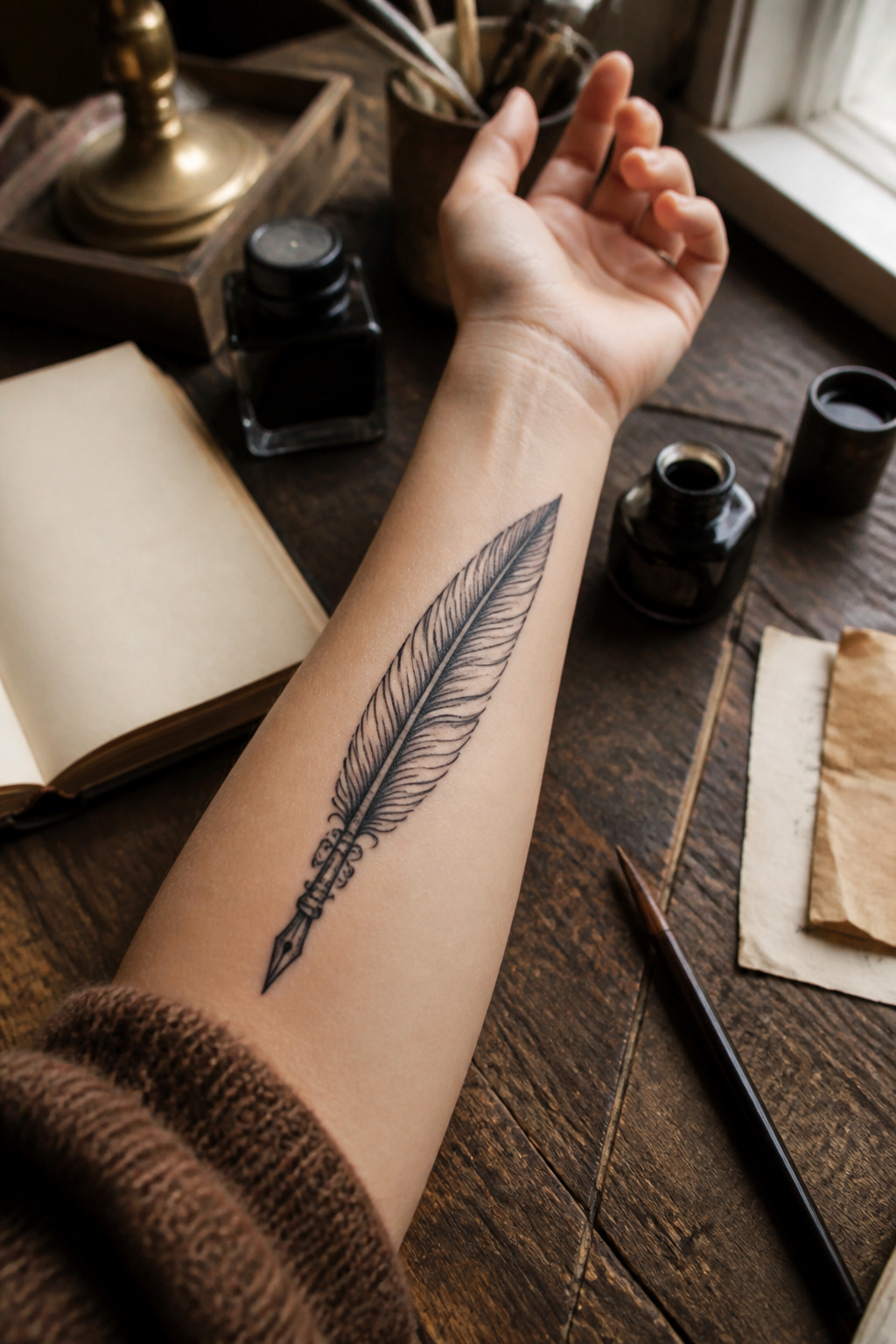
The classic quill pen tattoo is where every other style starts. A single feathered quill in bold black ink, usually placed on the forearm or upper arm, carries the clean symbolism that drew most of us to this design in the first place: creativity, knowledge, and the act of putting something permanent into words.
This is the foundational image writers and artists keep returning to. No book, no inkwell, no watercolor wash. Just the tool itself, rendered in fine lines that read as sophistication rather than clutter. The forearm placement works because you see it while you work; the shoulder or upper back carries that heavier idea of bearing the weight of what you write.
What separates this design from the variants that follow is its refusal to specialize. A peacock quill screams ornament. A minimalist quill whispers. The classic version simply states: this person values self-expression through language, full stop. That broad appeal is exactly why it anchors every list of quill ideas, and why three decades of clients still ask for it unchanged.
2. Minimalist Quill Tattoo
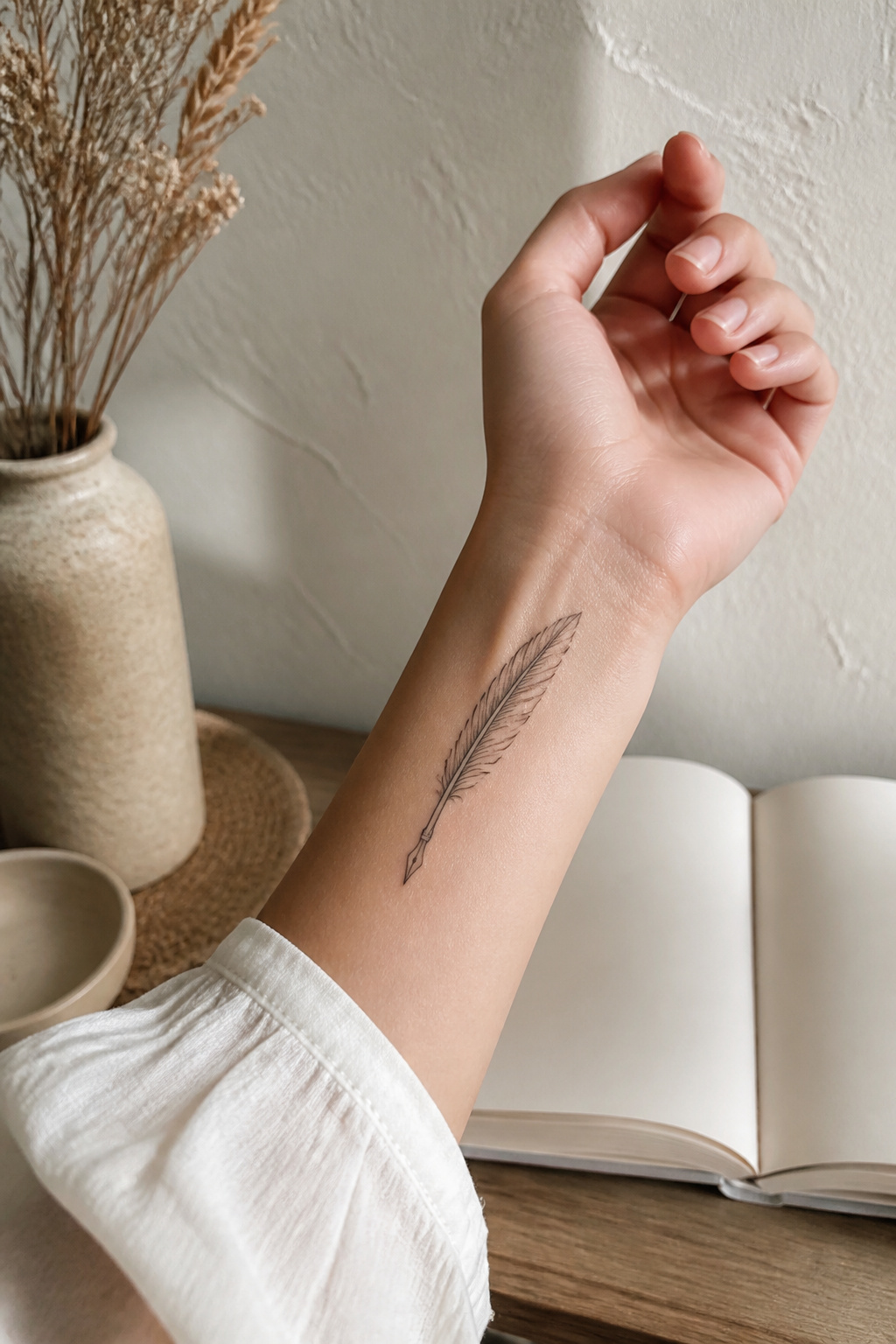
A minimalist quill tattoo relies on slender black lines and almost nothing else. The shape stays recognizable because the quill’s silhouette already carries so much meaning; extra shading or ornament only competes with that economy.
The appeal sits in placement. A piece this spare reads cleanly on a wrist, behind an ear, or along a collarbone where larger work would feel crowded. The body carries it without the wearer having to stage an outfit around it.
What drew me to this style, paging through designs, was how differently two artists handled the same restraint. One kept the line weight uniform from base to tip, almost calligraphic; another let the line swell slightly where the feather would fan, implying texture without drawing it. The second approach won me over. That single variation gave the quill weight and motion where the first version looked like a symbol from a typeface. For someone who wants the idea of writing and creativity without the drama of a full sleeve or a watercolor wash, the spare version leaves room for the meaning to shift as the wearer does.
3. Feather Quill and Ink Tattoo
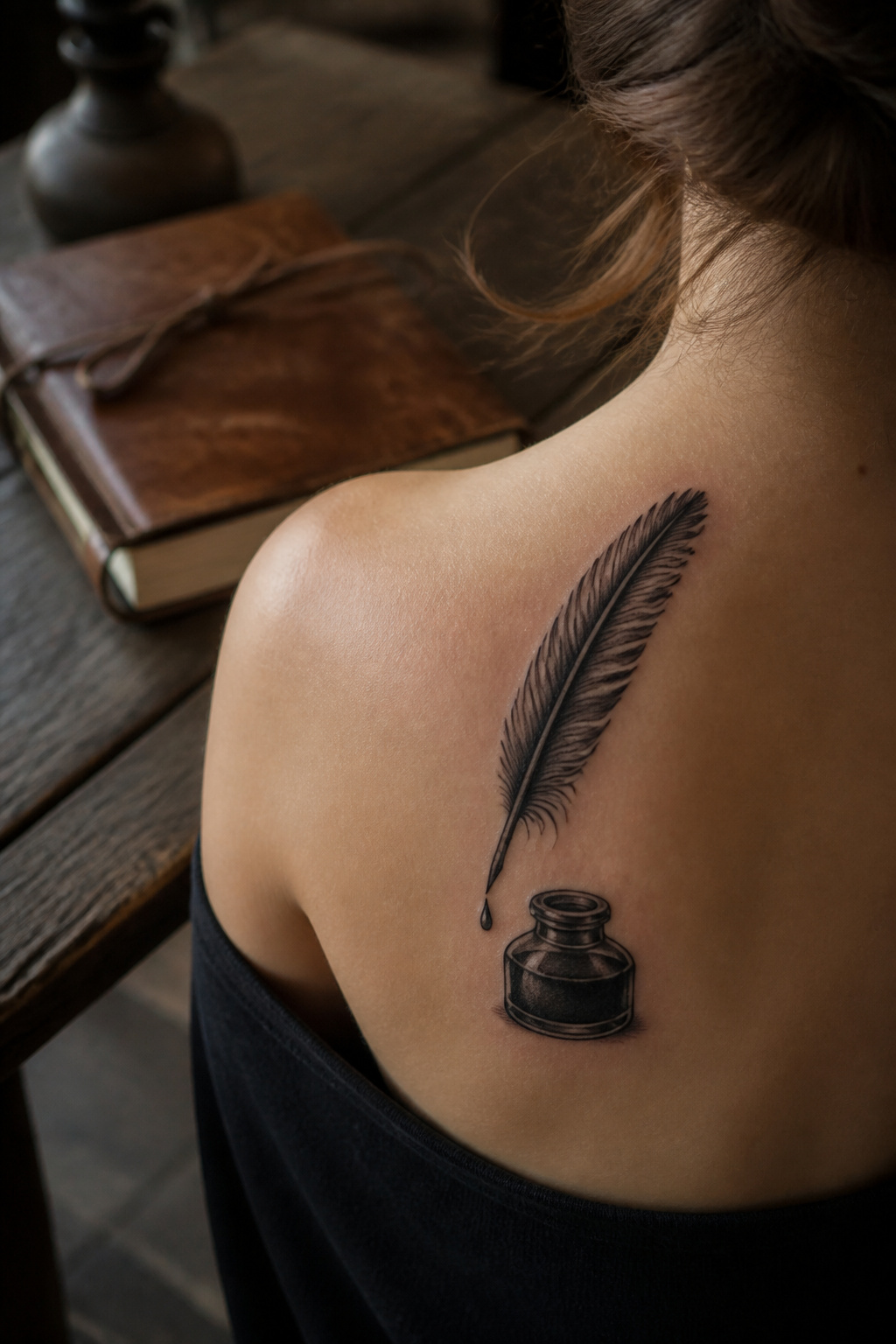
A feather quill paired with an inkwell or trailing ink drops carries the quiet promise of stories still unwritten. The composition works best when the quill angles upward as if mid-sentence, with a single drop suspended below or a small well tucked at its base. Some versions use gradient shading to give the feather barbs real depth, darkening the shaft to near-black while letting the edges soften to gray. That technique keeps the design from flattening into a simple silhouette against the skin. Black ink dominates the classic take, though the gradient work is what separates a flat sketch from something that looks ready to move. For placement, the forearm or shoulder blade gives the quill enough room to breathe; crowding it onto a finger loses the detail that makes the piece worth the chair time. The meaning stays personal, writer or not: it marks the moment before the first word hits the page.
4. Tattoo of a Book and Quill

A book and quill pairing carries more weight than either image alone. The open book grounds the design in something tangible: pages that age, spines that crack, stories that outlast their authors. The quill suspended above them becomes the instrument that filled those pages, not merely a decorative feather.
Stacked volumes work well for anyone who wants the tattoo to read as a life in progress rather than a single moment. Each book can mark a phase, a discipline, or simply the passage of years spent reading. Aged pages, rendered in soft browns against black ink, give the whole piece the warmth of vintage manuscripts without drifting into costume-drama excess.
The meaning shifts noticeably with the book’s position. An open book suggests active engagement, the writer still at work. Closed volumes hint at knowledge accumulated, perhaps even guarded. One approach I keep returning to is the fine-line style: a delicate quill hovering just above the page, mid-stroke, as if caught in the act of writing a single word. It keeps the composition light enough for a forearm or shoulder placement while still carrying the full intellectual association.
For color, the brown-and-black palette from traditional manuscript illustration holds up better long-term than brighter alternatives. The gradient shading on the quill’s shaft gives it dimension without turning the whole tattoo into a dark blob as it ages.
5. Traditional Quill Tattoo
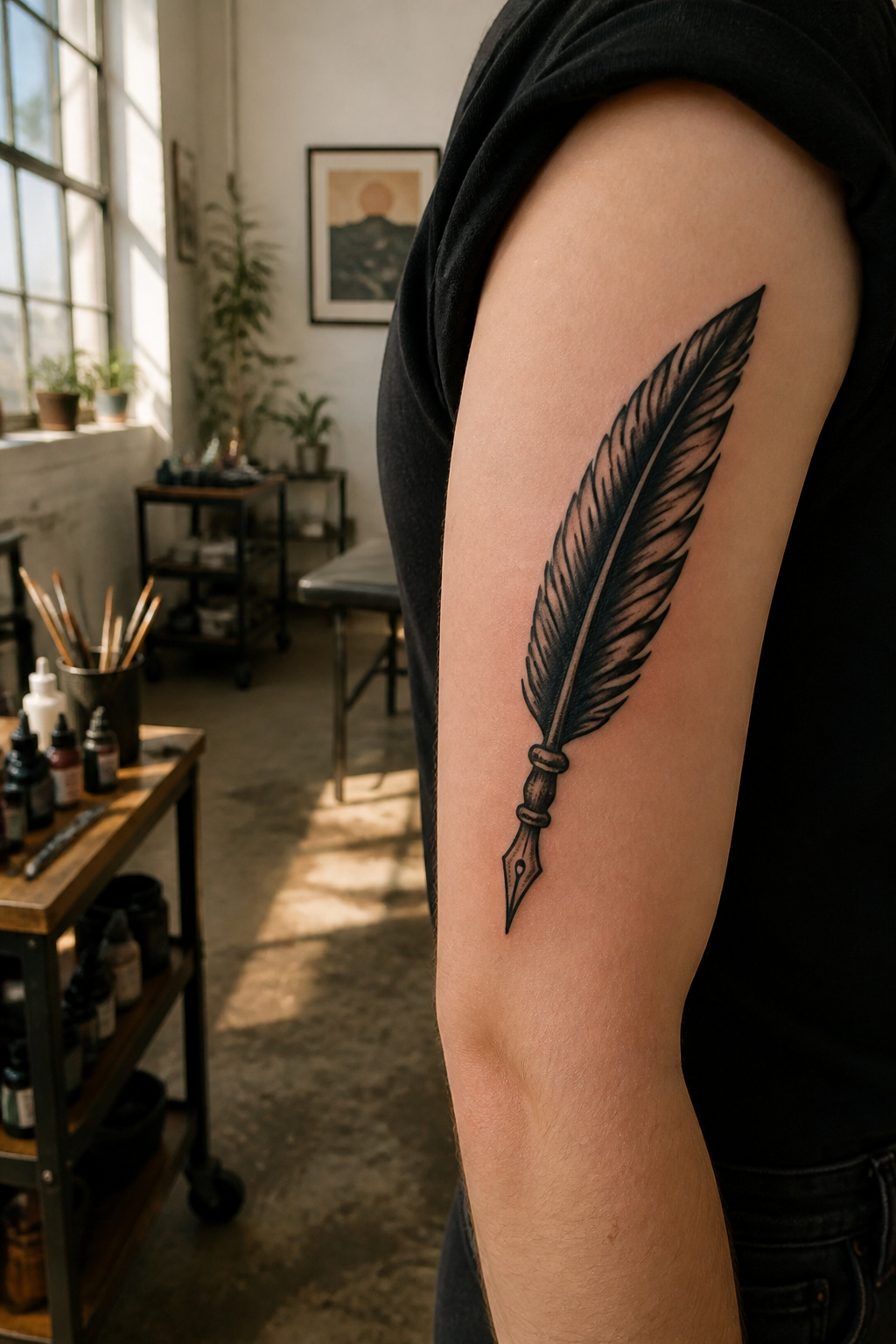
Bold black lines and a deliberately narrow palette give the traditional quill tattoo its staying power. This style leans on the conventions of classic Americana tattooing, thick outlines and solid fills with little to no shading, to evoke the same permanence that old writing instruments once held. The quill itself, a tool that carried law, literature, and private correspondence across centuries, sits naturally in this visual language. Both tattooing and writing started as hand-worked trades, and the pairing honors that shared history without needing to announce it.
What separates a traditional quill from trendier alternatives is restraint. A limited color palette keeps the focus on form and line weight rather than decoration. The design reads instantly from a distance, which matters for a symbol meant to last decades. Placement tends toward the forearm or upper arm, spots where the bold silhouette can age cleanly and remain readable.
For readers already checking ingredient lists and judging results over promises, this style offers something measurable: proven longevity in both concept and execution. The traditional quill does not chase novelty. It commits.
6. Black Quill Tattoo
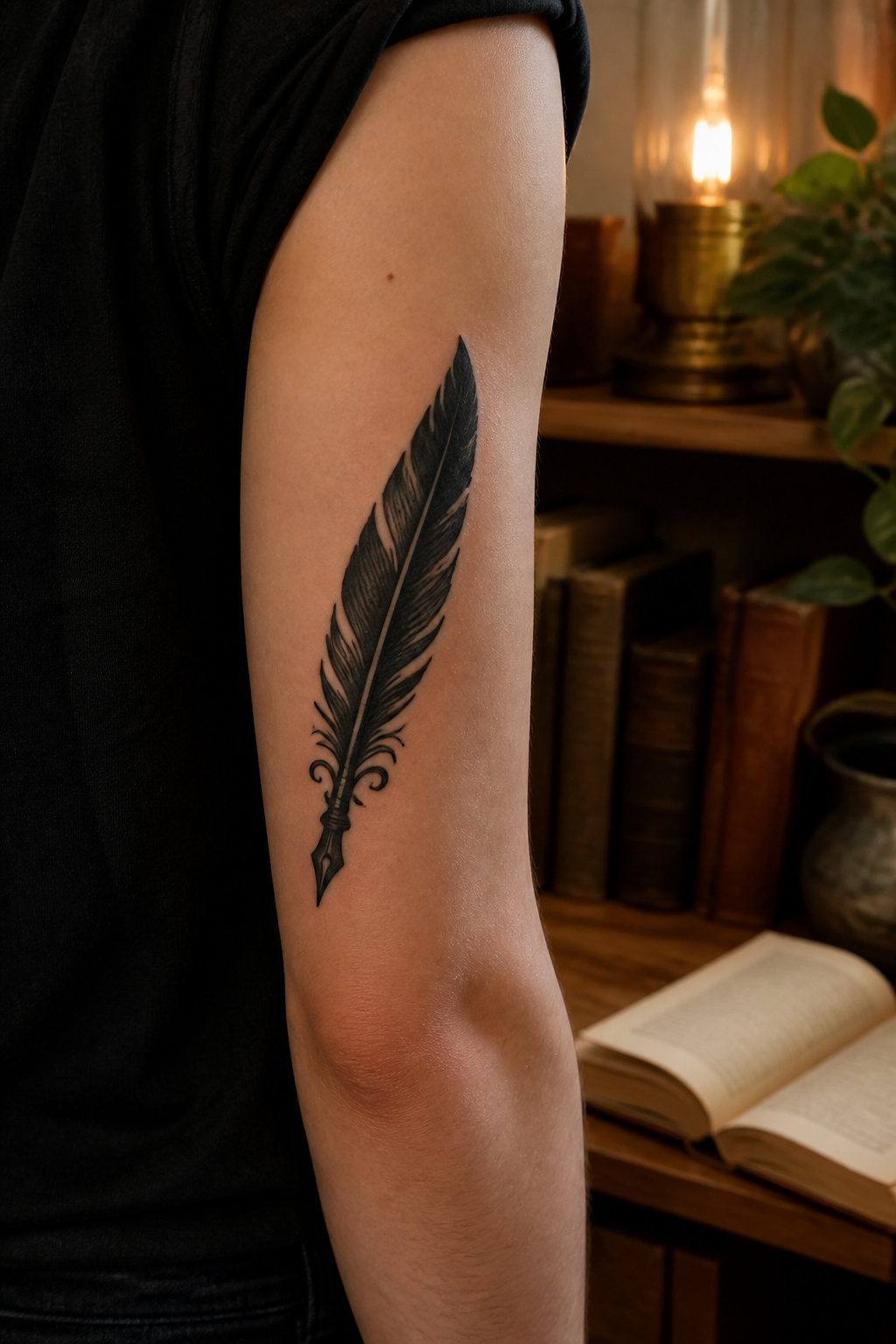
A black quill tattoo strips the design down to solid black ink and the negative space around it. The monochromatic palette puts form first, letting the curve of the feather and the sharp line of the nib carry the whole piece. This restraint reads as elegance rather than simplicity, especially on skin where color might compete with natural undertones.
The negative space does the work that shading or secondary colors would do elsewhere. Skin tone becomes part of the design itself, with the black sitting distinctly against lighter complexions and holding its contrast on deeper ones. Sources describe this as a "humble design with subtle aesthetics," but the effect is more deliberate than that wording suggests. The black ink ages predictably, avoiding the fading or color drift that can blur finer details over time.
Placement matters for the silhouette. The upper arm gets mentioned often, and for good reason. The length of a quill follows the vertical line of the muscle well, and the design stays readable at the scale most people want. Smaller versions lose the negative-space balance that makes the black version work, so this is one case where going slightly larger pays off.
7. Watercolor Quill Tattoo
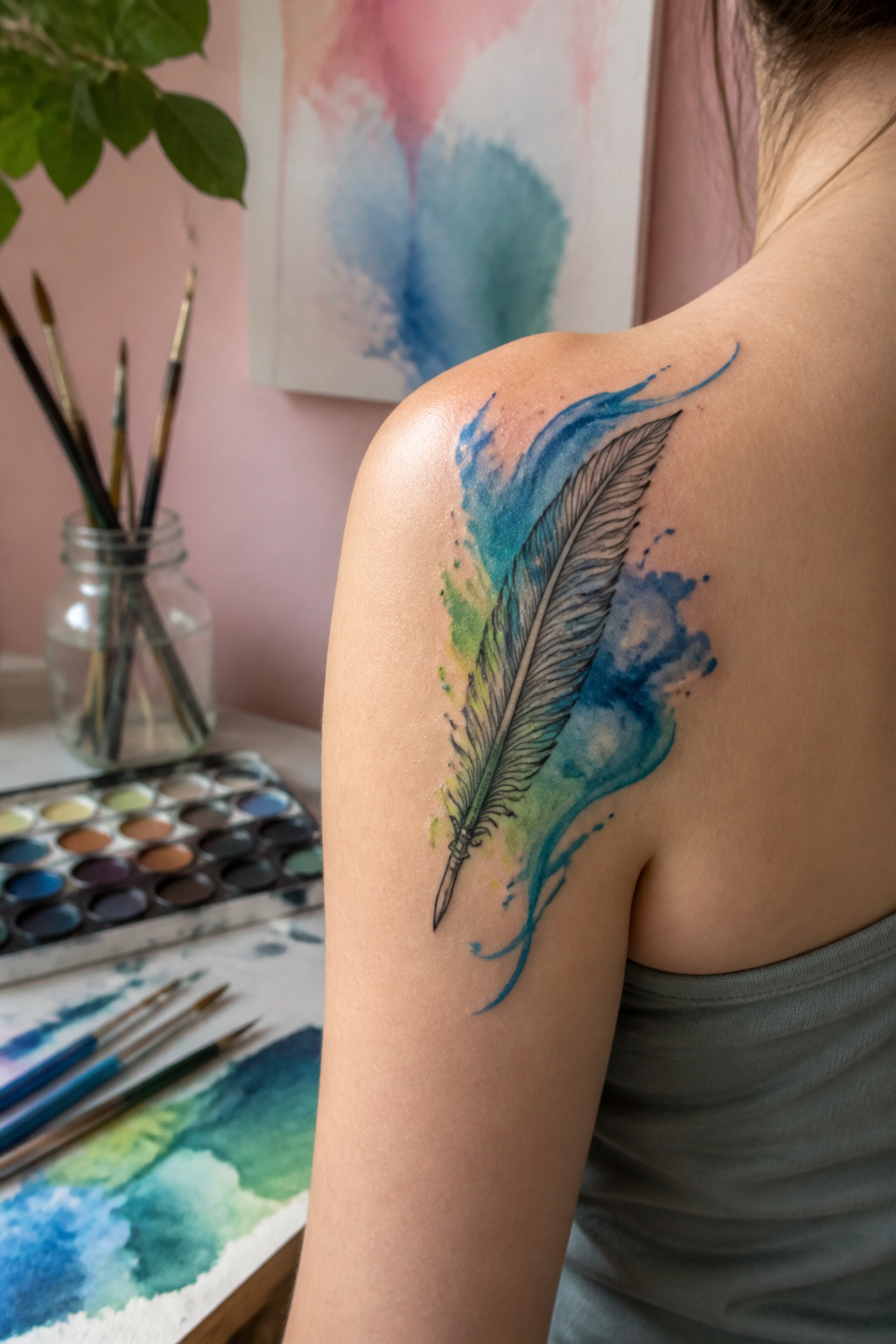
A watercolor quill tattoo lives in the tension between control and chaos. The quill itself keeps its precise shape, a sharp silhouette that reads instantly as the tool of writers and thinkers. Around it, color bleeds outward in soft washes and sudden splashes, the way pigment pools and feathers on wet paper.
That contrast is what makes the design work. The fluid lines and vivid hues create movement that a plain black quill cannot manage, and the emotion comes from those unpredictable edges where one color dissolves into another. Someone drawn to this style usually wants the symbolism of craft and creativity without the stiffness of traditional rendering.
The technique asks more of the artist than a standard color piece. Watercolor tattooing relies on diluting ink to specific consistencies and building transparent layers that still read as bright from a distance. Done well, the quill appears almost suspended in its own painted atmosphere. Done poorly, the washes muddy together and the whole thing ages into a blurry smear.
Placement matters for longevity. Areas that see constant sun or friction will fade those delicate gradients fastest. The upper arm, shoulder blade, or ribs give the design enough flat surface for the color to breathe while staying out of the worst wear zones.
8. Peacock Quill Tattoo
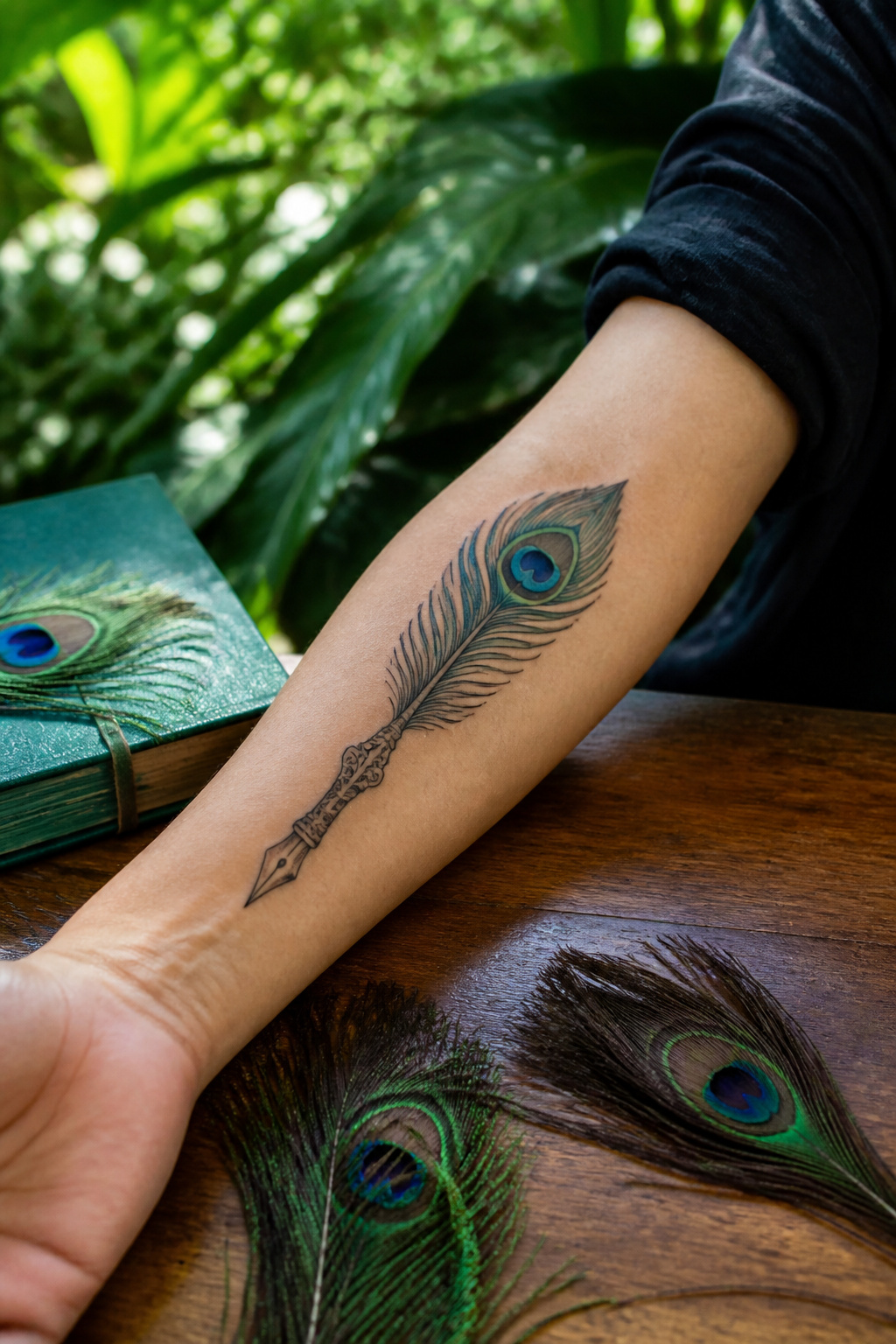
A peacock quill tattoo carries two symbol systems in one piece. The quill itself speaks to writing, literature, and the work of shaping ideas into words. Layer in the peacock feather with its unmistakable eye pattern, and the meaning shifts toward beauty, pride, and the courage to be seen. The cool-toned blues and greens typical of this design make the eye spots pop without reading as flashy.
What separates this from a standard feather quill is the merging of intellect with self-expression. Where a plain quill might suit someone who lives in notebooks and drafts, the peacock version fits the writer who also performs: the poet who reads aloud, the journalist on camera, the novelist whose book jacket carries their face. The peacock’s traditional association with vanity isn’t a flaw here; it is the point. The tattoo says that making beautiful things and standing beside them are not contradictions.
Color saturation matters more on this design than on most quill tattoos. The eye pattern depends on contrast to register from a distance, and muted ink tends to collapse the detail into a vague green smear. Go vibrant or go monochrome; the half-measure is where this one fails.
What Quill Tattoos Mean
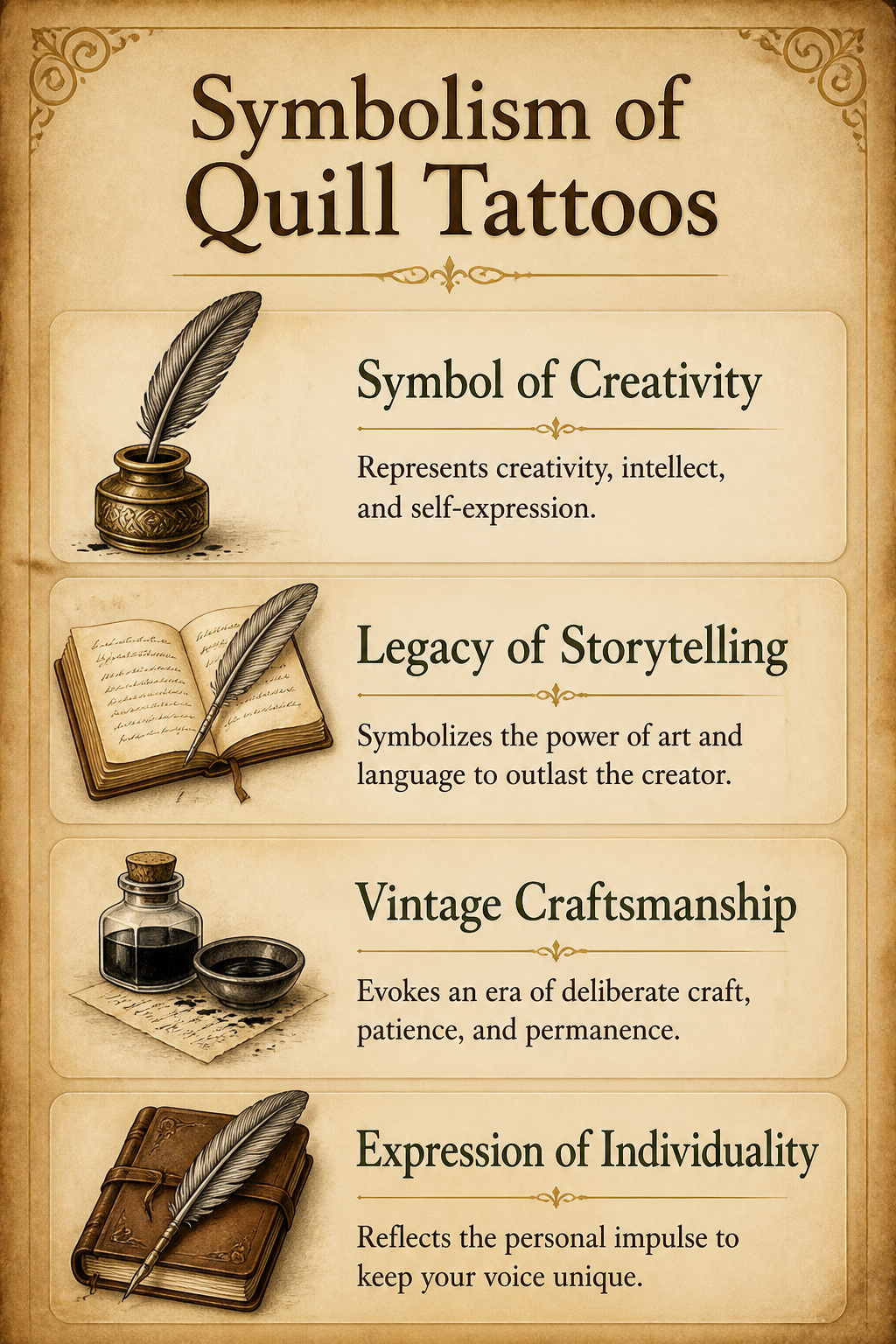
Quill tattoos carry a weight that feather tattoos alone do not. The distinction matters: a feather floats, but a quill writes. That anchored purpose gives the design its core symbolism of creativity, intellect, and self-expression, rooted in the instrument’s actual history of putting words to page.
The meaning deepens when you consider what those words do. A quill represents the power of art and language to outlast the hand that held it, the body that wore it. People drawn to this imagery tend to value storytelling as a form of legacy, the idea that something created today persists after the creator is gone.
Vintage appeal plays in too. The quill evokes an era of deliberate craft, of ink mixed by hand and sentences weighed before they were set down. For anyone who judges designs by what they communicate rather than how loudly they announce themselves, that association with patience and permanence tends to resonate.
Individuality surfaces just as strongly. Historical quills were personal tools, used to record singular thoughts rather than mass-produced messages. A tattoo of one signals that same impulse: the refusal to let your voice be interchangeable.
Where to Place a Quill Tattoo
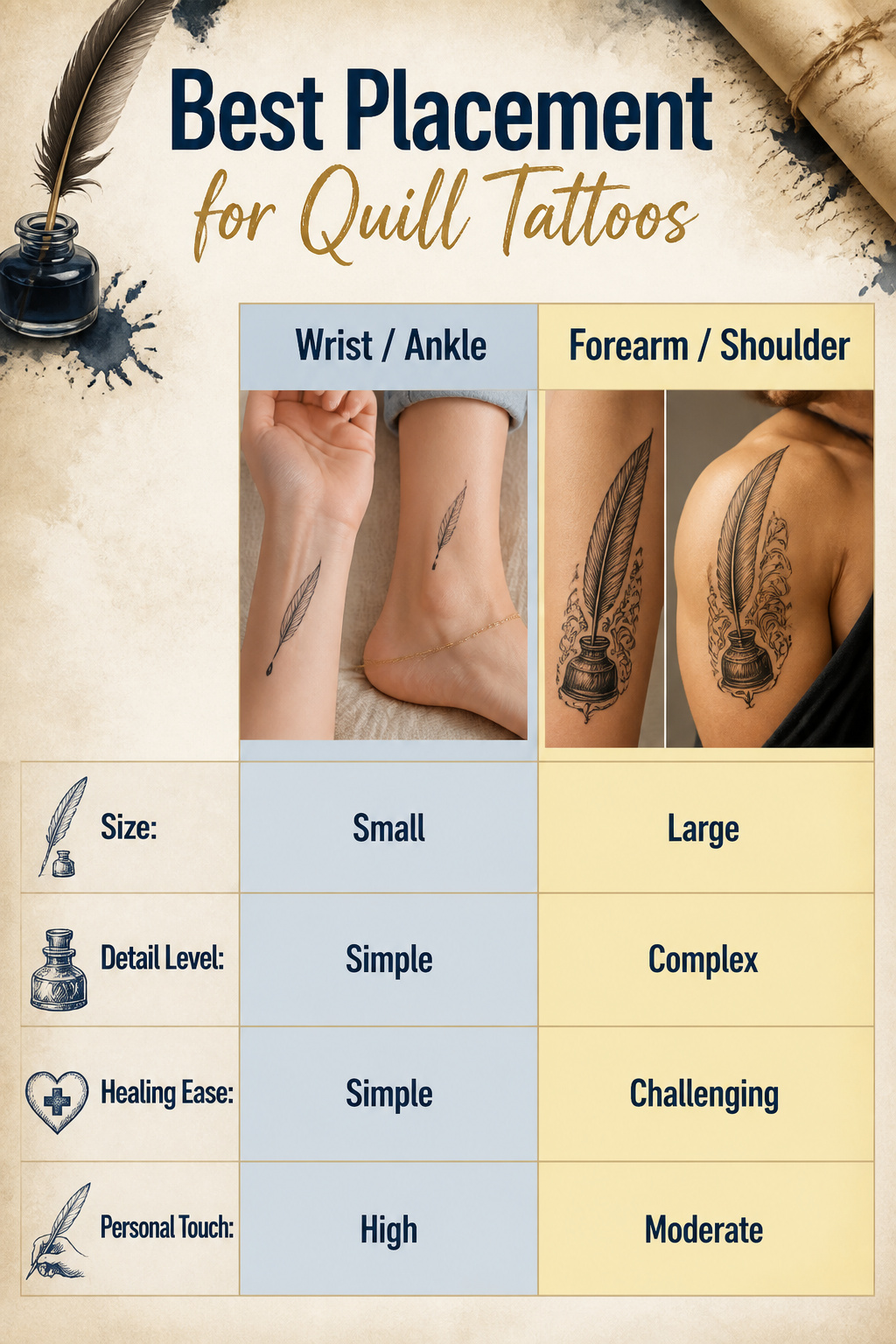
A quill’s long, narrow shape makes it almost anatomical: it wants to follow the lines your body already offers. Small, delicate designs settle naturally on the wrist or ankle, where a few inches of skin are enough to hold a slim feather with maybe a drop of ink. The bone sits close there, so the tattoo stays crisp and the healing stays simple.
Scale up the detail, add scrollwork or a full inkwell, and the forearm opens the whole canvas. The flat plane keeps line work readable, and sleeves or no sleeves, the piece earns its space. The shoulder carries the same logic for something ornate: the curve of muscle gives the quill a sense of movement, and the skin takes color with less blurring than spots that stretch more.
The ribcage is the outlier. The design can run large there, tracing the ribs like a page margin, but the pain runs real and the healing demands patience with every breath. Not every quill needs that commitment. Smaller pieces get lost on that much territory; this placement only pays off when the art was built for it from the first sketch.
Frequently Asked Questions
What are the best placements for quill tattoos?
Small, delicate quill tattoos work best on the wrist or ankle, where bone sits close to skin and keeps lines crisp. The forearm suits medium pieces with extra detail like scrollwork or an inkwell, since the flat plane keeps line work readable. Shoulder placement fits ornate designs because muscle curve gives the quill movement, and the skin holds color with less blurring. The ribcage can carry a large quill tracing the ribs like a page margin, but the pain and healing demands mean this placement only pays off for art built specifically for that space.