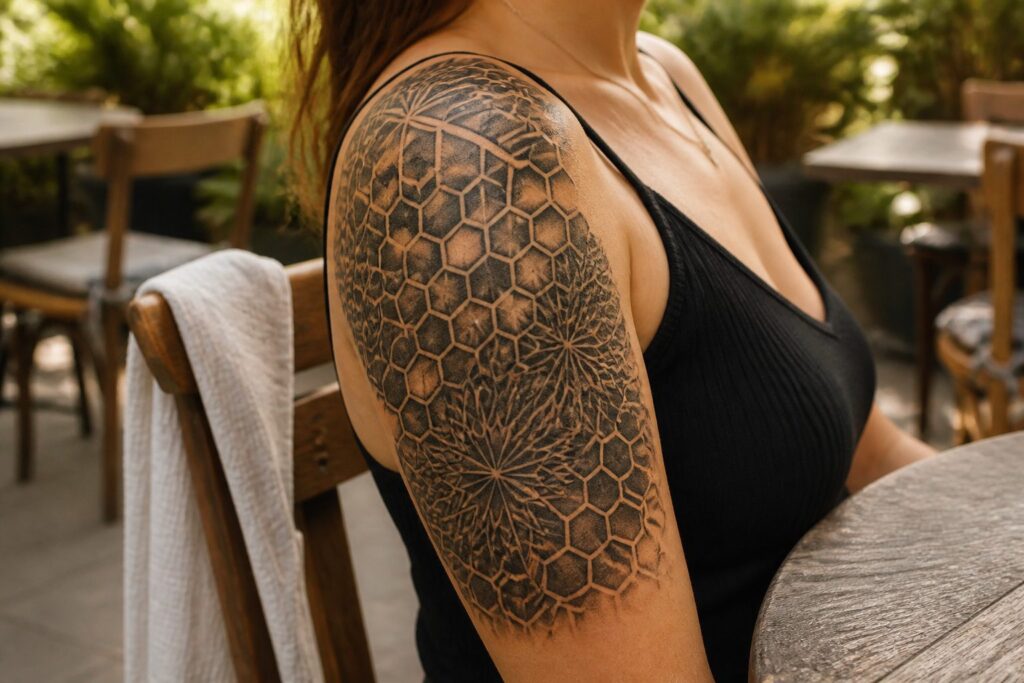
A shoulder tattoo cover up for women is the process of layering new ink over existing shoulder work so completely that the old design stops reading through.
Old pigment never truly leaves the skin; the new piece has to outsmart it with darker values, larger scale, and styles built for concealment rather than delicacy.
Geometric patterns work because crisp hexagons and interlocking triangles give the eye something deliberate to follow, turning faded lines underneath into mere texture beneath intentional structure.
Geometric Patterns
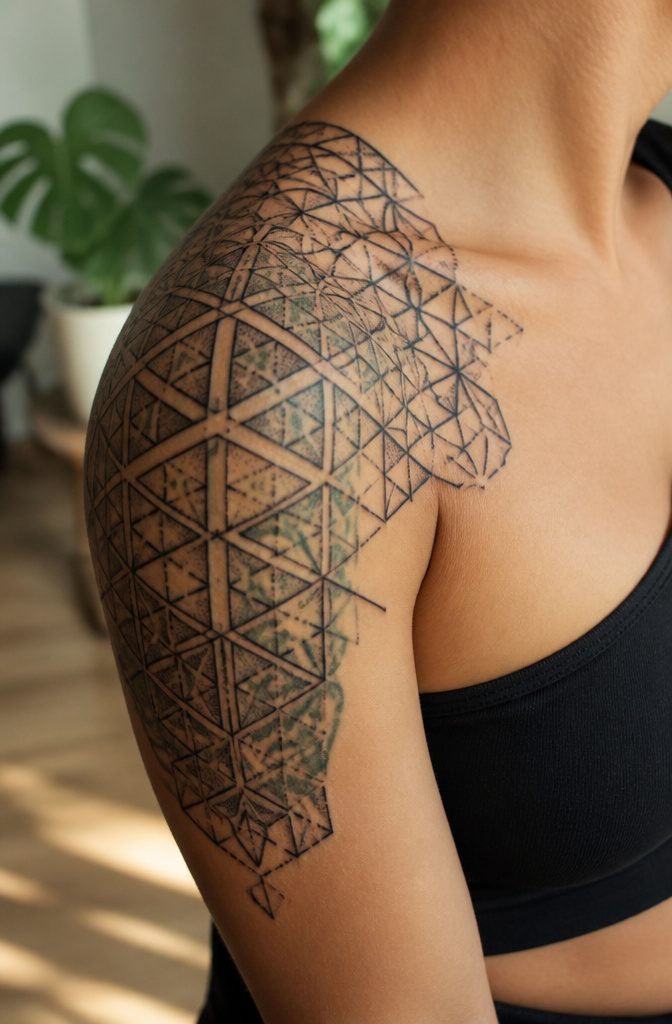
Crisp geometric shapes draw the eye so deliberately that old tattoo lines underneath simply stop reading as tattoo lines. The precision becomes the story, not what came before it.
On the shoulder especially, this works because the body’s natural contours give the pattern something to wrap around; a hexagon or a set of interlocking triangles can follow the curve of the deltoid in a way that looks intentional rather than apologetic.
The density matters as much as the line weight. A geometric cover-up needs enough pattern packed in to break up whatever sits beneath it, but the spacing can be adjusted so the overall piece still breathes.
A skilled artist maps this out before touching needle to skin, measuring how much ink the old piece threw and where the darkest zones need the tightest clustering of new lines.
The shoulder’s broad surface area lets the design expand past the original tattoo’s borders, which matters more than most people realize until they see a cover-up that stayed too small.
Geometric work can start at the cap of the shoulder and extend toward the collarbone or down the arm, turning a limited old piece into something that looks like it was always meant to be there.
Watercolor Tattoos
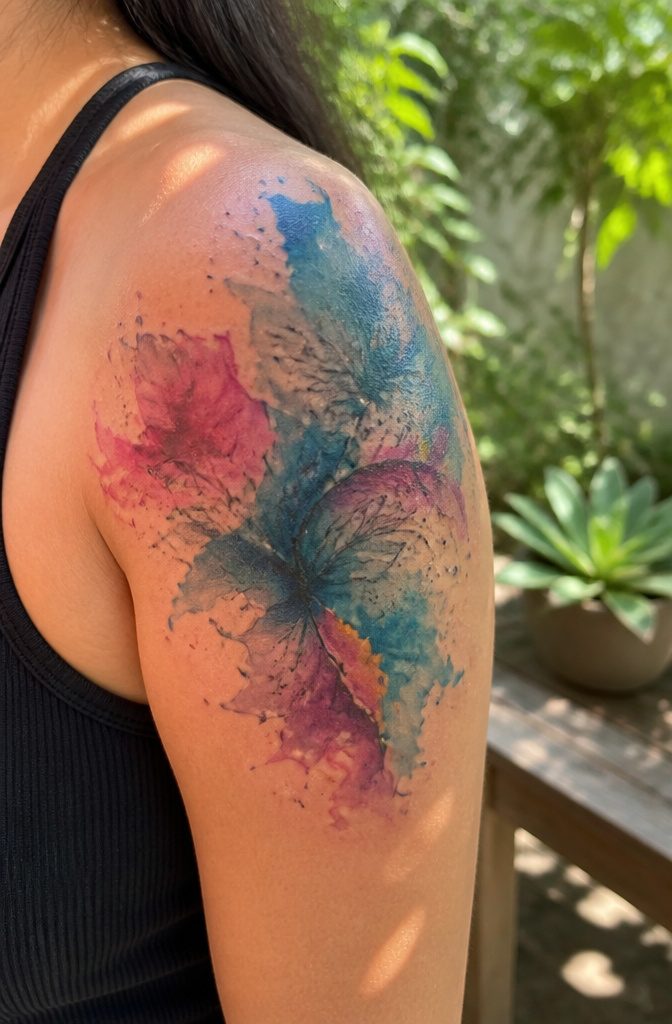
A faded shoulder tattoo, something small and ten years old, almost asks for watercolor. The technique works because the colors are allowed to bleed past the old lines instead of trying to ink over them precisely.
Blues and magentas, amber into rose, they pool and blend where the original pigment has already surrendered to time.
I have watched artists lay down a wash of pale yellow so thin the old tattoo shows through at first, then come back with a slightly darker coral at the edge, letting the two meet wet into wet.
The old black turns to shadow under the new layer. It reads as depth, not cover-up.
This needs the old piece to be small, the way a wine stain shrinks under running water. A dense tribal band or solid black lettering fights the watercolor too hard.
The ink has to breathe underneath. Where it has faded to soft blue-gray, the new colors lift off it like light on fog.
The result is not camouflage. It is replacement, something alive and moving where the old thing sat flat.
Traditional and Neo-Traditional Designs
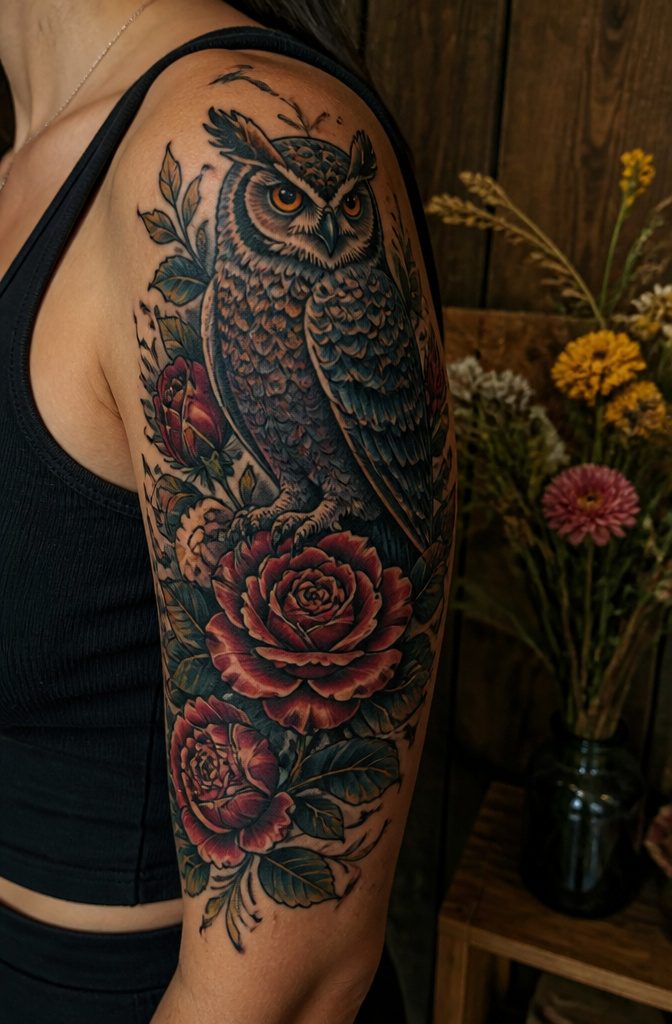
Bold black outlines and saturated color fills do the heavy lifting in traditional and neo-traditional cover-ups.
The style was built for this. Sailors needed old names and failed romances hidden quickly, so artists developed a visual language of roses, anchors, snakes, and predatory animals that reads clearly from across a room.
That same legibility now blocks out faded tribals and blown-out florals on shoulders.
Deep shading, not clever line work, is what actually buries the old ink. A neo-traditional piece might layer midnight blues and oxidized reds so densely that nothing from 2012 bleeds through.
The imagery scales well too. A single large owl or dagger-flower composition can swallow a half-sleeve mistake while keeping the shoulder’s natural movement in mind, something simpler styles often ignore.
Dotwork Patterns
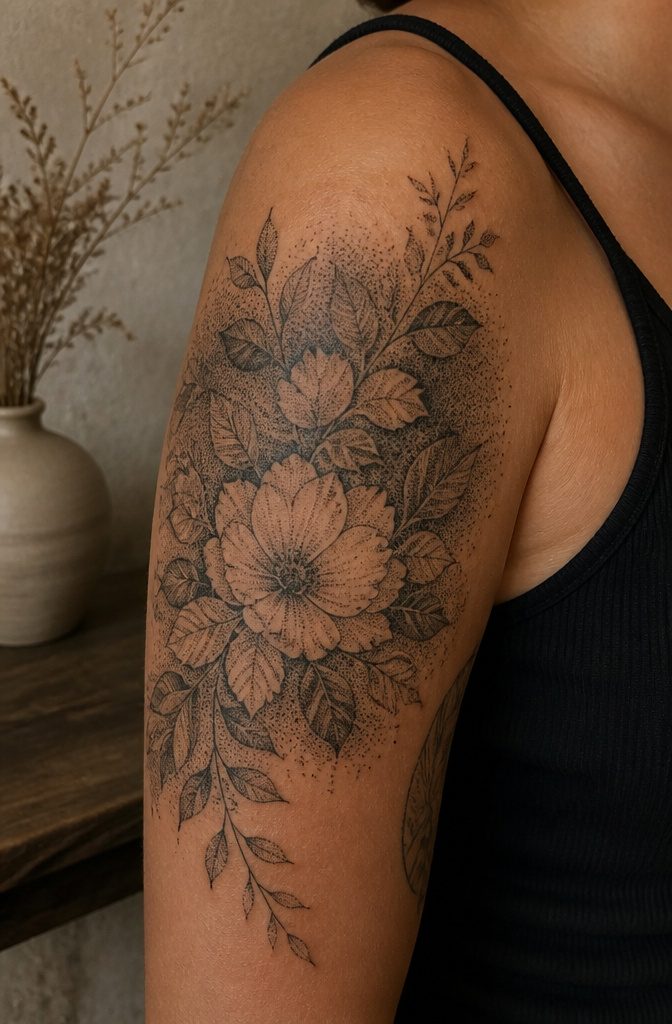
Dotwork builds coverage through thousands of stippled points, not solid ink. The technique lets an artist control density by clustering dots closer where the old tattoo needs hiding and spacing them apart where the skin should show through.
That gradient of density is what makes the style so effective for shoulder work, an area where bone and muscle already create natural shifts in how skin reads visually.
I have seen pieces where a dark, blocky old script fades into a spray of fine dots that resolves into a new floral outline.
The stippling performs the cover rather than declaring it. The old ink does not need total obliteration; it needs enough interference for the eye to stop registering it as the main event.
The style scales well.
A minimalist dotwork piece with generous skin breathing room can soften a small, light original tattoo. Dense, almost blackwork dot clusters, where individual points nearly merge, handle heavier legacy ink.
The shoulder’s curved surface does create some challenge, closer to the collarbone and deltoid edge, where the tattooer has to account for how dot size will stretch slightly as the arm moves.
Larger Designs
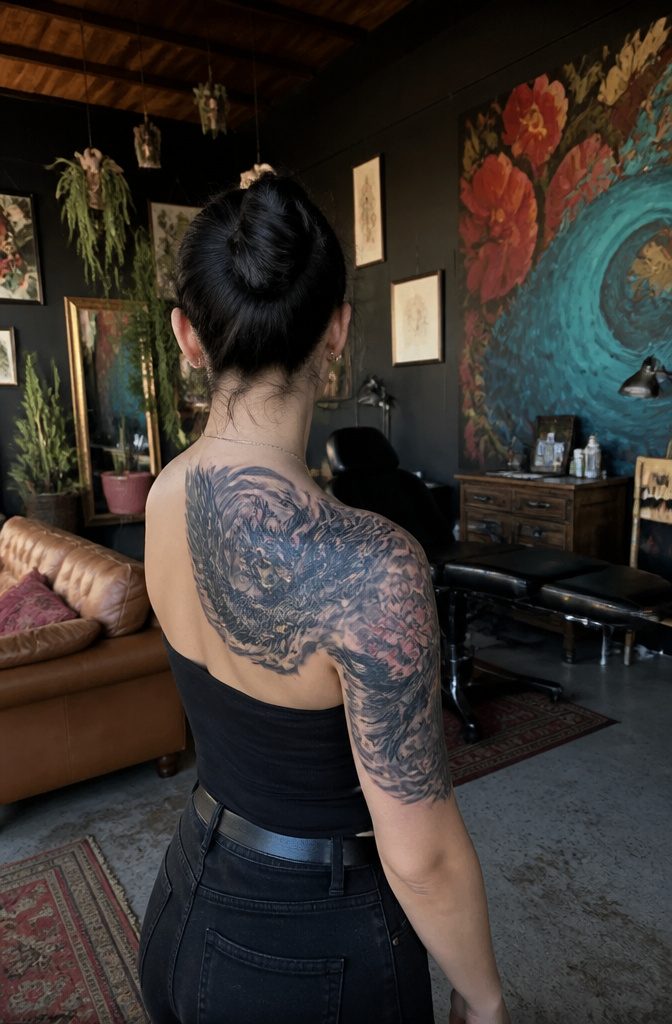
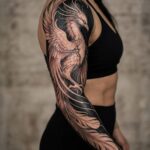
A shoulder tattoo cover up often demands more canvas than the original piece gave you, especially when the old ink sits dark and saturated in the skin.
Expanding the new design past those original edges does two things: it lets the artist fade old ink into background shading or new imagery, and it turns a cramped repair job into a composition that actually moves.
The shoulder connects too many useful places to stay small.
An artist can carry the new work onto the upper arm, let it dip toward the chest, or reach across the upper back. That spread creates the gradual transitions a cover up needs.
Dark old lines do not disappear under fresh pigment; they get woven into something larger, where a flower petal or a geometric cell can naturally ride over them without any single spot carrying the whole burden of concealment.
I have watched artists sketch this out in marker on skin, mapping how a mandible of an old tribal piece becomes negative space inside a raven’s wing, or how saturated black from a former band tattoo turns into storm clouds that keep traveling toward the collarbone.
You do commit to a bigger, more visible piece than you first imagined.
But on a shoulder, where the original tattoo already announced itself every tank top season, that larger footprint usually works better than a cramped design fighting its own borders.
Going bigger is not always optional. When the original saturation is heavy, the new pigment needs neighboring territory to breathe.
What Makes the Best Cover-Up
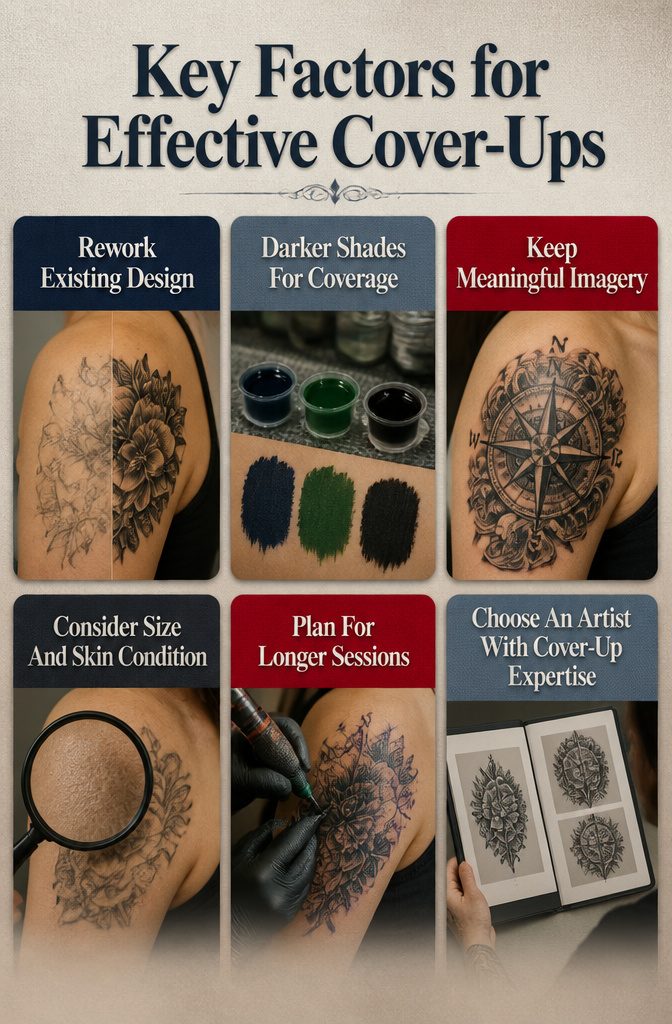
A shoulder cover-up succeeds when the new piece reworks rather than erases what came before. The original size, condition of the skin, and your tolerance for longer sessions will narrow the realistic options before ink ever touches skin.
Darker shades like deep navy, rich green, or classic black do the heavy lifting for concealment, though contrast and shading can pull brighter tones into the design without letting the old tattoo show through.
Keeping meaningful imagery from the first tattoo, even changed, preserves the story while giving the artist structural cover to build around.
Choosing the Right Artist
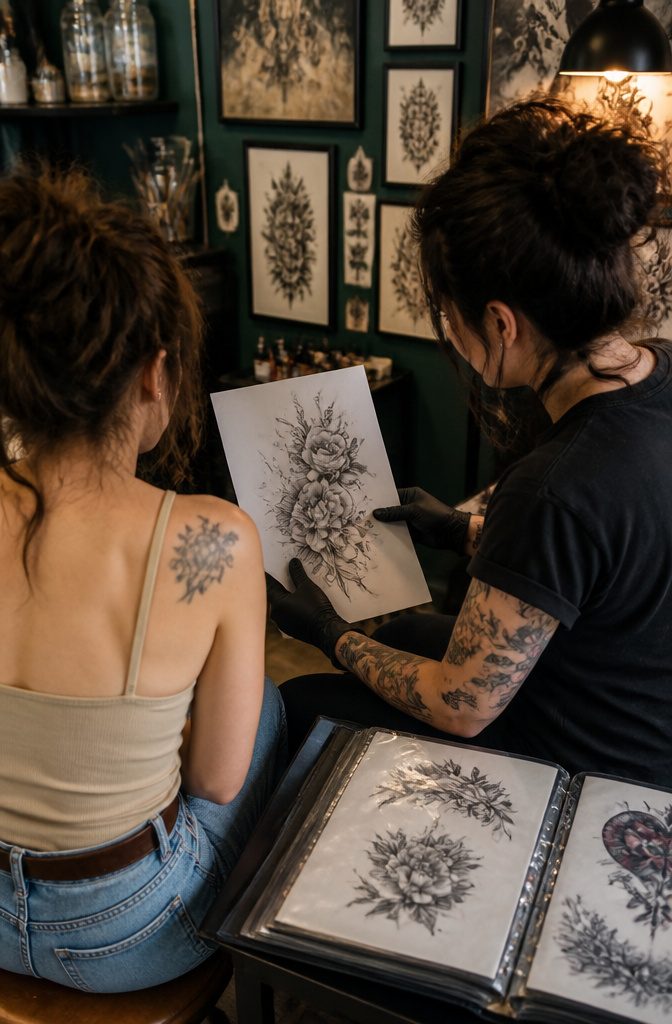
A shoulder cover-up is not the place to test a new artist. The portfolio is where the proof lives, not in promises.
I scroll through Instagram collections and shop binders looking for one specific thing: old ink that has been swallowed whole by a new design. Smooth color transitions tell me more than any bio.
A sleeve that started as a tribal band and ended as a Japanese garden means the artist understands how dark pigmentation layers over saturated old work, how a faded blue becomes the shadow beneath a lotus instead of a ghost beneath it.
The consultation is where artists prove they can think in three dimensions, not two.
A good one walks you through what your existing ink demands. They name the constraints outright: scar tissue that will reject new pigment, colors that refuse burial, the way your shoulder’s curve distorts geometry.
If they cannot tell you why your watercolor dream is a risky choice over old black lines, or why geometric patterns might serve you better, you have your answer.
Bolder, darker, and larger is the baseline rule for covering old work, but technique fills the gap between baseline and art.
The artist’s skill at masking old patterns with strategic pigment density, at letting your natural shoulder shape guide the new flow rather than fight it, determines whether someone looks twice from admiration or confusion.
Strategies That Actually Work
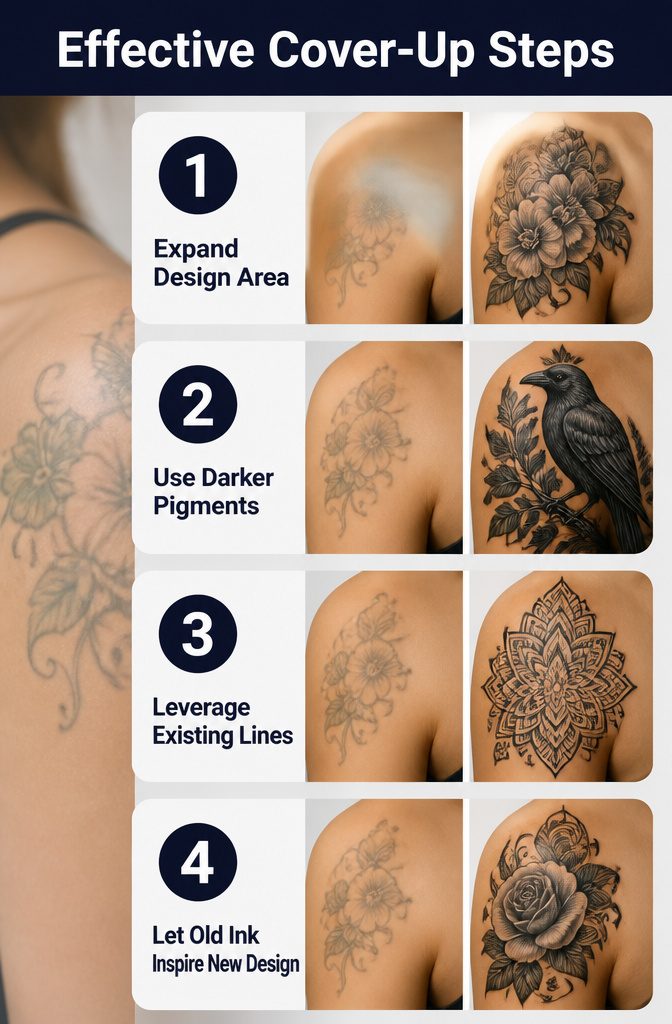
Going bigger with the design is the first move that actually works on a shoulder.
The original ink sits in skin that gets stretched and sun every day, so simply tracing over it leaves the old lines ghosting through within a year or two.
Expanding the new piece past those boundaries lets the artist layer detail where the old tattoo used to be and fresh composition where there was bare skin, which heals more evenly and reads as intentional rather than a patch job.
Darker pigments matter here for a reason beyond hiding old color.
Shoulder skin sees more UV than most spots, and even with religious sunscreen, black and deep saturation hold longer than the pastels or watercolor washes people often want for a "feminine" look.
I have watched a client go from a faded tropical bird to a dense raven piece, and the difference in how the old shapes stayed buried was obvious at the six-month mark.
The third strategy turns the existing tattoo into an asset, not an enemy. Old lines can become negative space in a new pattern, or a faded shape can anchor a larger ornamental frame.
Fighting the old work, trying to erase it completely without using its form, usually means more sessions and more trauma to skin that already holds pigment unevenly.
Letting the previous design suggest the new one, even dictate a border or a focal point, gives the cover up structure that a blank canvas would not provide.
Aftercare for the New Tattoo
The shoulder is constantly on the move, which can irritate healing skin and stress fresh ink before it sets.
I learned this the hard way after my second cover-up: the scabbing along my collarbone cracked where I had reached too high for a cabinet, and a small spot healed pale.
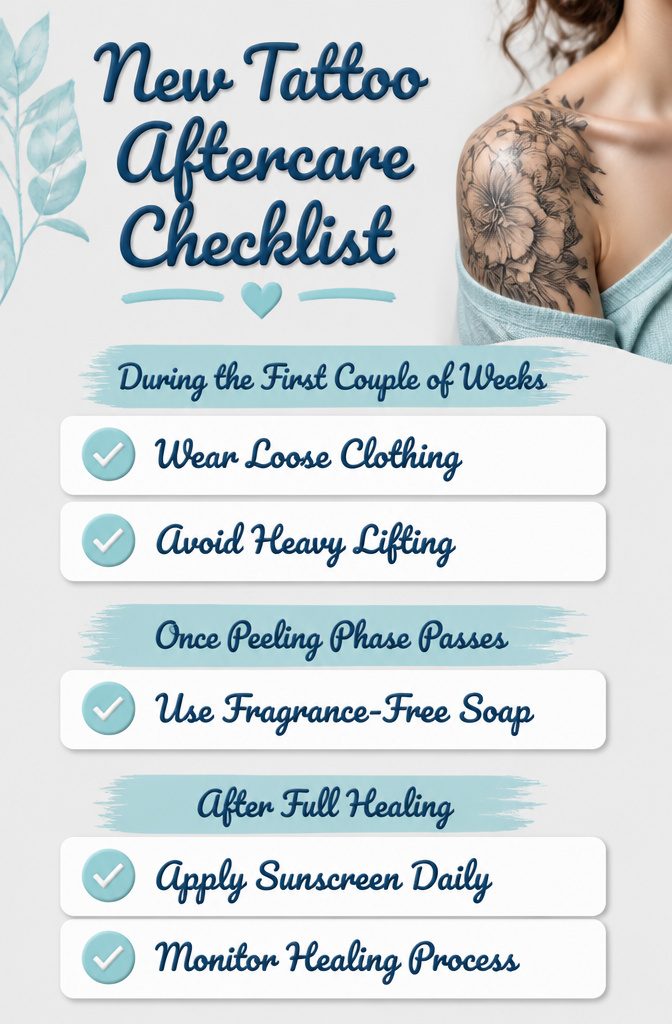
For the first couple of weeks, loose, breathable fabric beats anything fitted, and avoiding heavy lifting or exaggerated stretching gives the new work its best chance at holding solid color.
Once the peeling phase passes and the surface looks settled, fragrance-free soap stays the cleaner of choice; anything perfumed can pull moisture and trigger a reaction you will not want on a shoulder you just paid to redeem.
After full healing, SPF 30 or higher becomes daily equipment. UV exposure fades cover-up work faster since the ink runs deeper in some zones and thinner in others to blend the old piece away.
That uneven topography means sunscreen matters a lot if you want the new art readable for years.
The Emotional Side of Covering Up
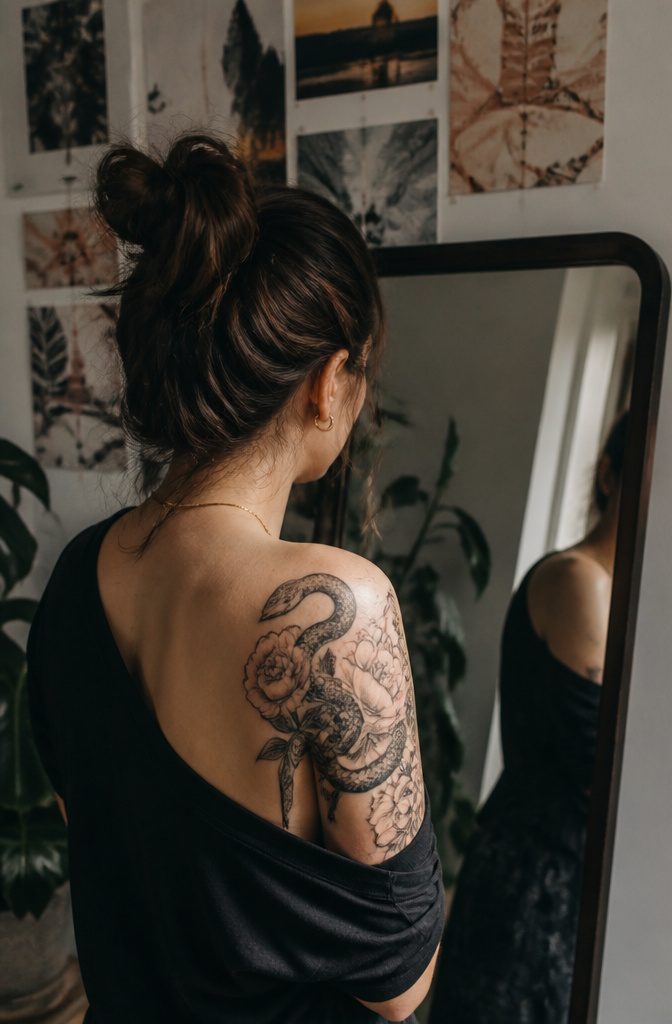
Most women who walk into a shop for a shoulder tattoo female cover do not say they are fixing a mistake. They say they are done being the person who got the first one.
The tattoo they want gone is usually tied to aifiable chapter: a marriage that ended, a faith they left, a grief they survived, or simply the years between 22 and 42.
The shoulder becomes a place where that old story sat visible every summer in tank tops and wedding-guest dresses.
Covering it is not about shame. It is about refusing to carry the introduction someone else wrote.
Choosing the new design takes longer than the session itself.
The women I have watched through this process spend weeks, sometimes months, deciding what belongs there now. One friend brought her artist three separate mood boards across two seasons before she settled on a snake winding through peonies.
She wanted something that could hold both the danger she had survived and the softness she was allowing back in. The planning became its own ritual: reclaiming not just the skin, but the right to narrate what it means.
The practical part matters too. A cover-up demands darker pigment and more coverage than a fresh piece, so the reinvention carries literal weight.
The new image wins by being bolder, not by apologizing for what came before. That matches what most women want from the process: not erasure, but a louder sentence on the same page.
Mistakes I Have Seen
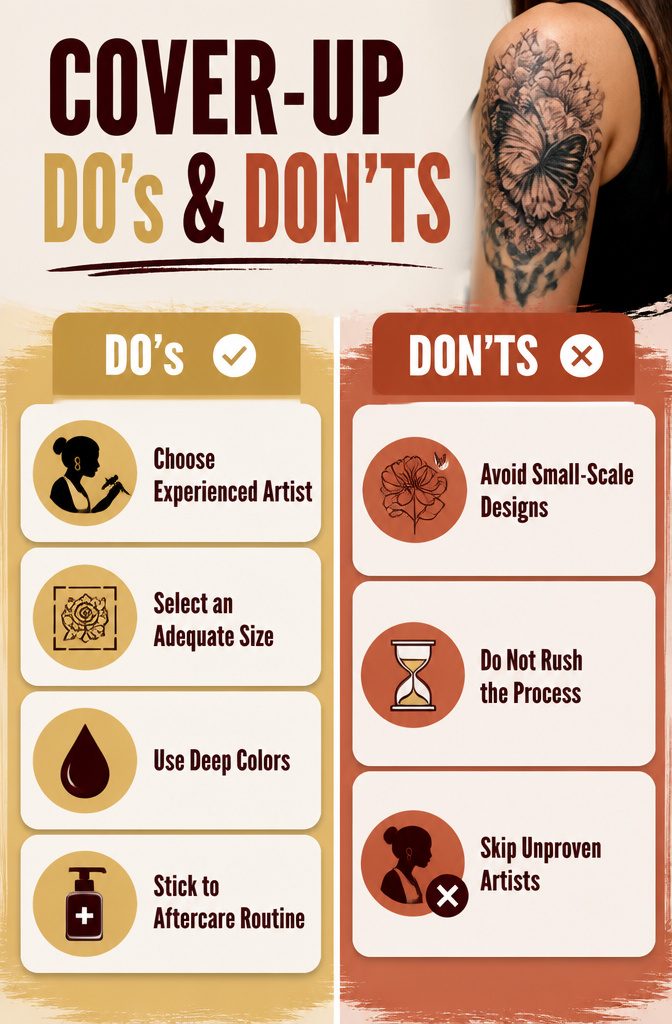
A friend of mine sat in a chair for six hours and walked out with a butterfly that still showed the old tribal underneath.
The artist had a gorgeous Instagram, full of fine-line florals and delicate script, but not one healed cover-up in the portfolio. She had trusted the aesthetic, not the evidence.
The size mistake cuts deeper than people expect. I’ve watched clients insist on a design only slightly larger than the original, convinced clever placement will do the job.
Old ink has edges you cannot negotiate with. The new piece needs enough surrounding real estate to build actual depth, to let darker values sink into shadow instead of sitting right on top where the eye catches the ridge.
Color refusal is the one that stings most to watch. Someone wants a bright, airy piece and cannot accept that certain pastels will never sit opaque over black that has spent ten years in skin.
The compromise they force, a medium tone pretending to be light, turns muddy in six months when the old work pushes back through.
The aftercare assumption floors me every time. A woman with three healed tattoos thinks she knows the drill, so she skips the thicker ointment, moves the arm too soon, lets the shower hit it directly.
Fresh work over dense old ink is a different wound. It needs more patience, not less, because the skin underneath has already been through something.
Frequently Asked Questions
What is the best cover-up tattoo for a shoulder?
The best shoulder cover-up reworks rather than erases what came before, using darker shades like deep navy, rich green, or classic black for concealment.
Geometric patterns, watercolor, traditional or neo-traditional designs, dotwork, and larger expanded pieces all work well depending on the old tattoo’s size, saturation, and condition.
A skilled artist will match the style to your specific ink rather than forcing a look that fights the existing pigment.
How to cover a shoulder tattoo?
Start by finding an experienced artist who specializes in cover-ups and can show you healed results in their portfolio.
In the consultation, they should evaluate your existing tattoo’s size, colors, and placement, then recommend going larger, bolder, and darker than the original.
The design needs to expand past the old edges so the artist can fade existing ink into background shading or new imagery rather than cramming concealment into the same footprint.
What tattoos are easiest to cover up?
Small, faded designs with lighter colors and minimal shading cover most easily because darker new ink masks them without fighting dense old pigment.
On the shoulder specifically, older pieces that have softened to blue-gray under years of sun and movement become shadow under watercolor, or get swallowed by geometric and dotwork patterns that use the faded lines as texture rather than obstacles to obliterate.
Is it more painful to get a cover-up tattoo?
The shoulder’s constant movement can also irritate healing skin and stress fresh ink before it sets, making aftercare stricter than for a first tattoo on untouched skin.
What is a cuff tattoo?
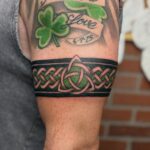
A cuff tattoo wraps around a limb like a bracelet, typically encircling the wrist or upper arm.
Can I wear a bra with a shoulder tattoo?
For the first couple of weeks after a shoulder cover-up, loose and breathable fabric beats anything fitted, which would include tight bra straps pressing on healing skin near the collarbone or deltoid.
Avoiding pressure, heavy lifting, and exaggerated stretching gives the new work its best chance at holding solid color through the scabbing phase.