Elemental tattoos range from small geometric triangles to full alchemical transmutation circles, with watercolor styles and nature landscapes in between, and the choice usually comes down to whether you want a readable symbol or a scene you can step into.
1. Alchemy & Elemental Transmutation Design
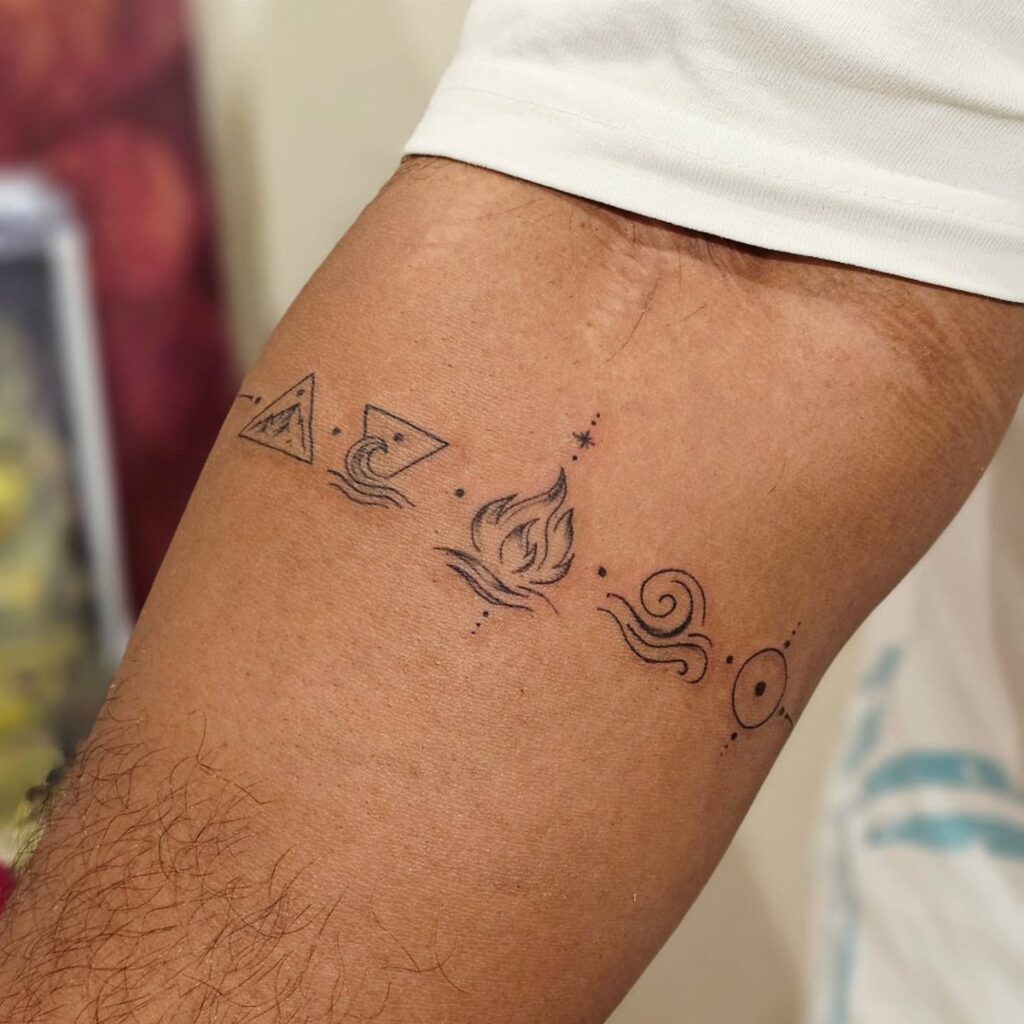
Alchemical elemental tattoos lean on triangle-based marks that still read cleanly after centuries of use. Each element has its own direction: fire rises, water falls, earth stays level, and air cuts across.
I have seen these built into full transmutation circles on upper backs and chests, where the geometry has room to breathe. Black and gray suits this style better than color; the linework carries the weight, not shading tricks.
Meaning carries this design; the look comes after. If intellect matters more than mood to you, this is the direction I would check first.
2. Nature-Based Elemental Landscape Tattoo
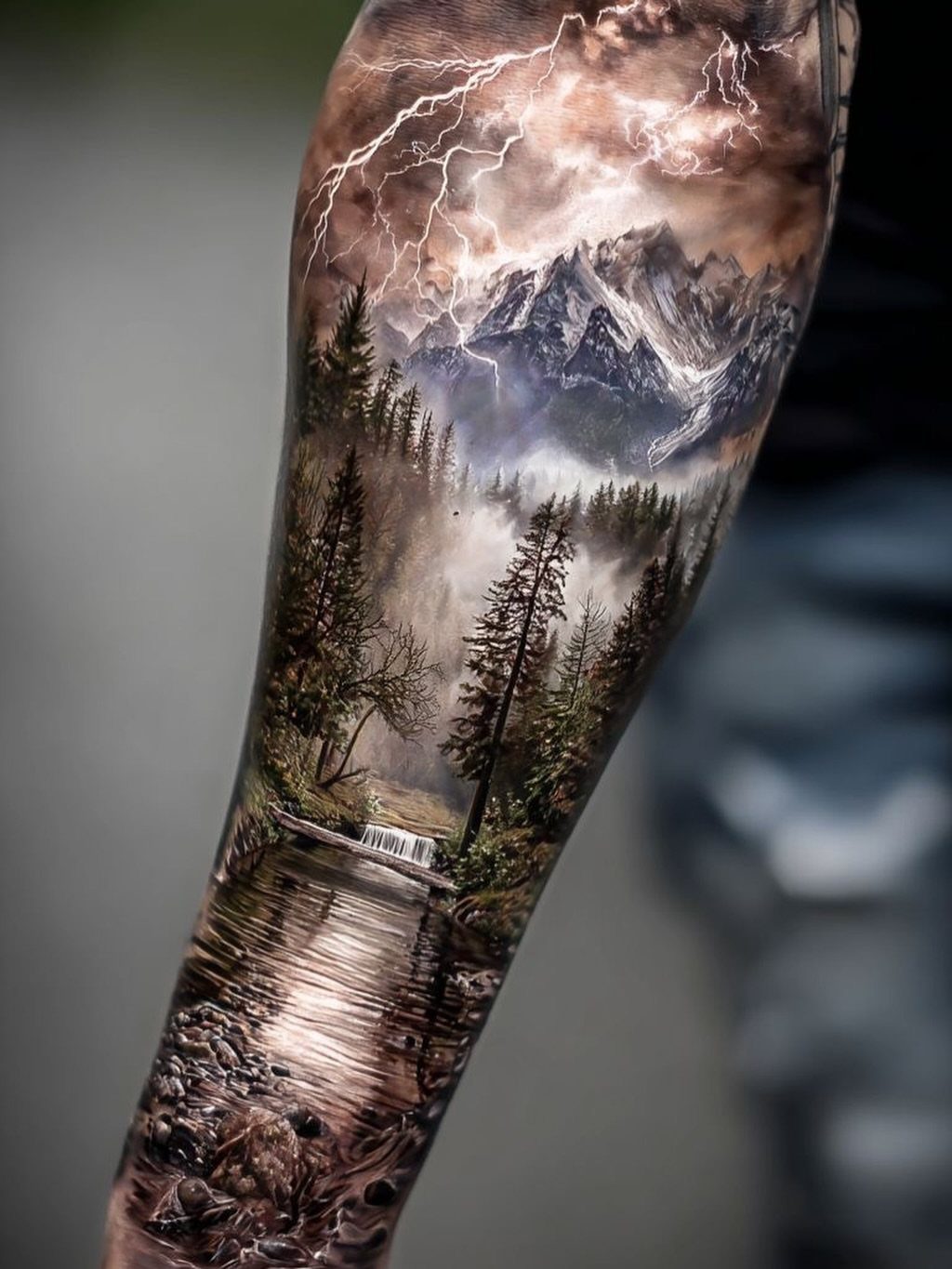
Some people need the elements to feel walked-through rather than diagrammed.
The image reaches the gut before the brain catches up. I would plan this for a placement with length; a small landscape loses the scale that makes it land.
3. Water Symbol Tattoo
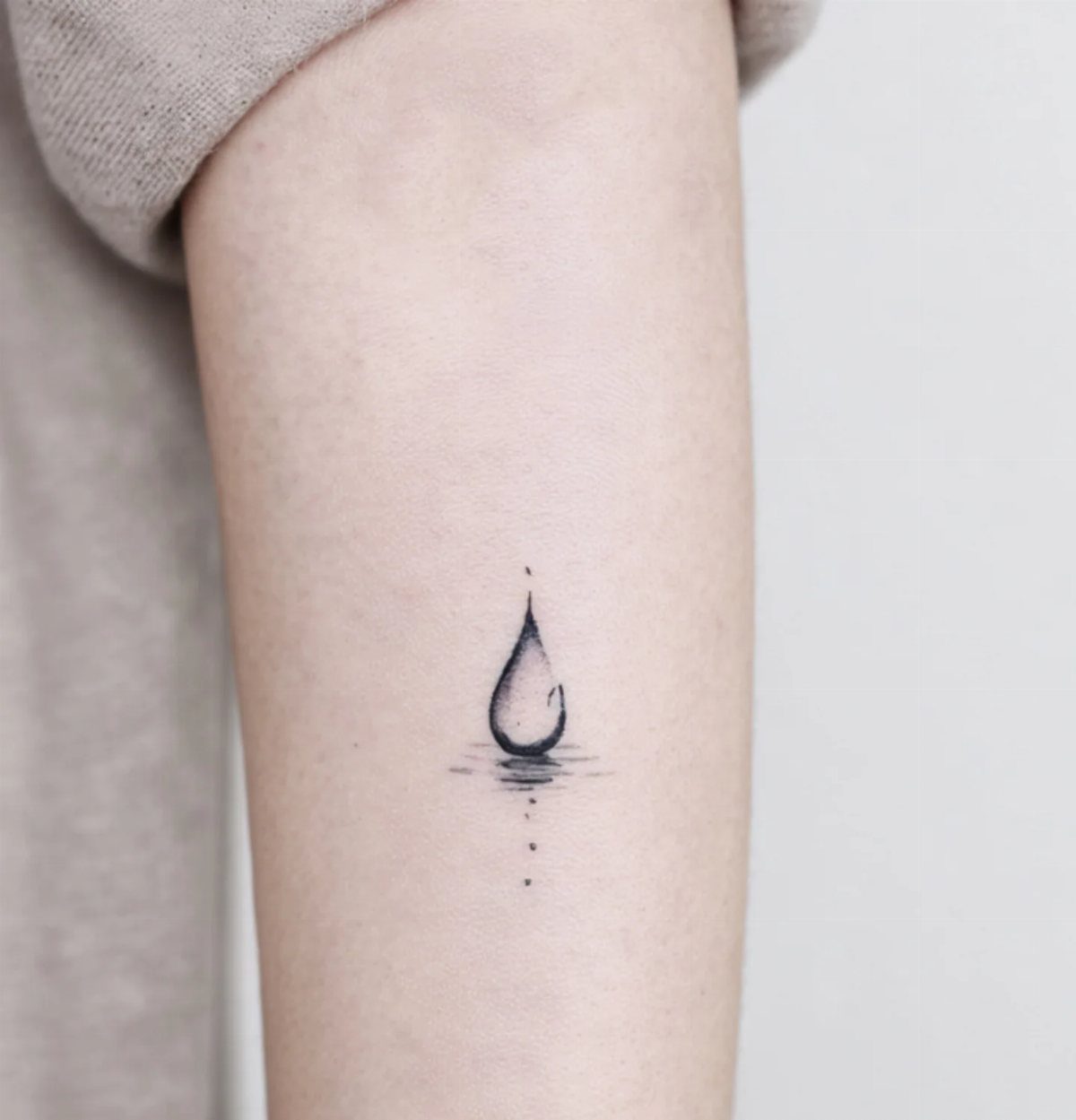
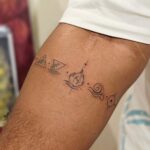
The alchemy symbol for water is a downward triangle, and for a small tattoo the ripple-droplet combination handles the same idea without the reference burden.
Behind the ear or wrist placement keeps it intimate; either spot suits something you want to check privately rather than explain. I would ask the artist to proof the line weight against how much that skin shifts daily.
The symbol is meant to mark intuition and emotion. If that pairing feels accurate to how you use water metaphors yourself, the specific image matters less than the placement holding up.
4. Earth Alchemy Tattoo
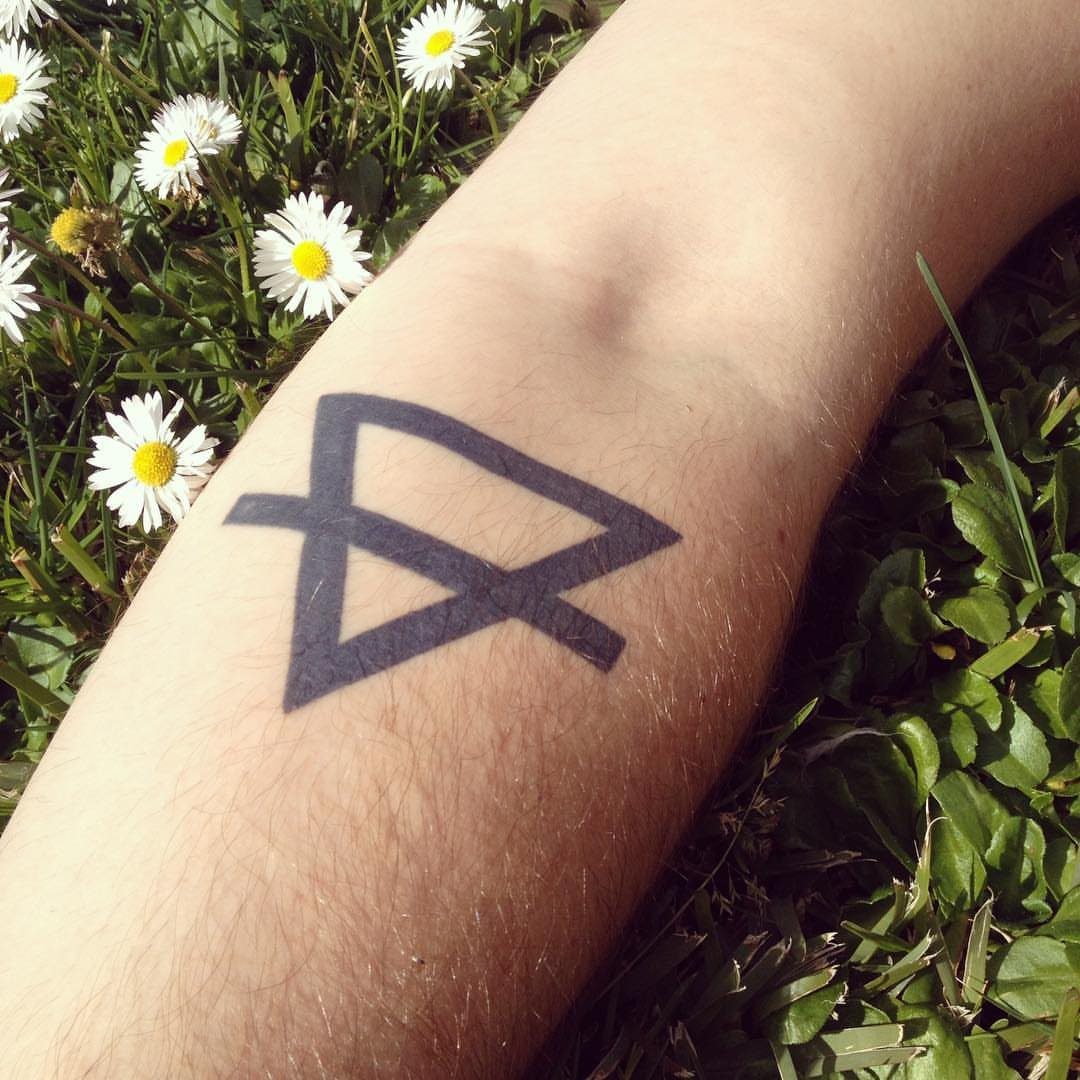
Some read it as a rooted tree, others as a mountain; either way the meaning holds steady. Ankles and feet make sense for this one, since ground symbolism sits lower on the body by instinct.
I would keep it that simple. If you want grounding without the narrative weight of a landscape, this is the compact version.
5. Fire Element Tattoo
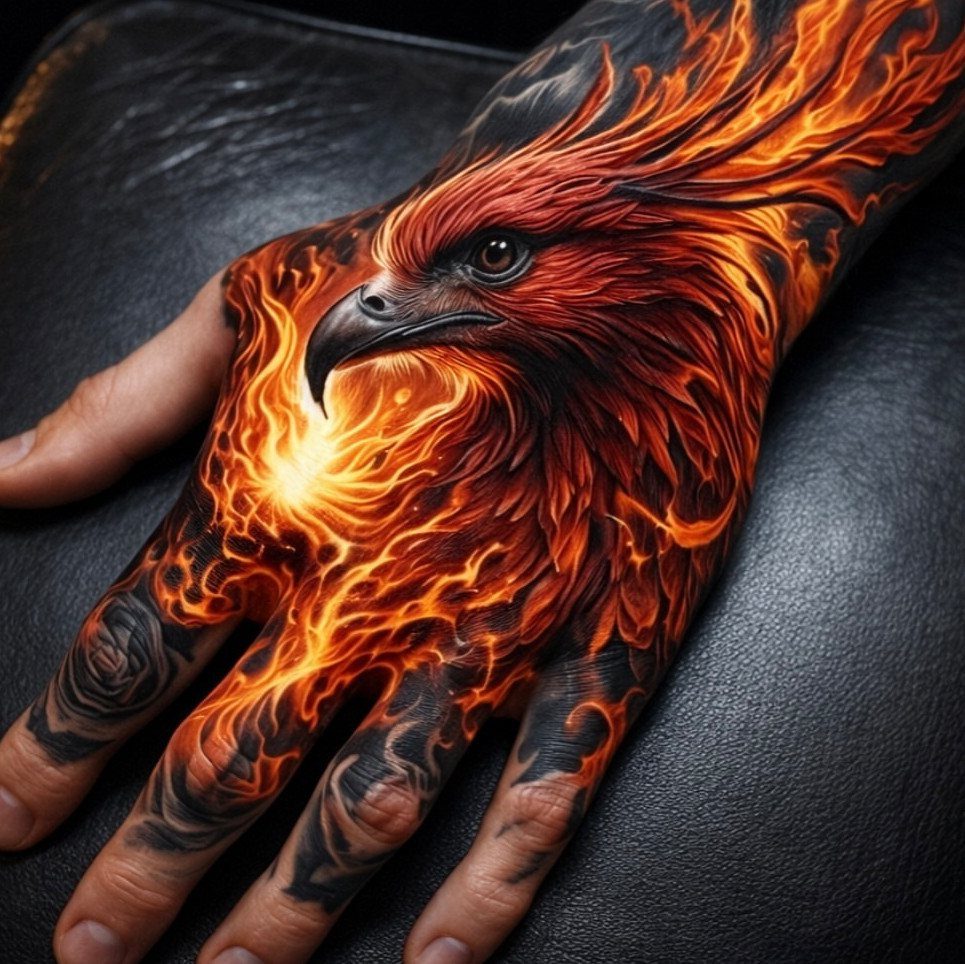
Fire moves upward, so its triangle points up. A phoenix built from flame, like the hand placement shows, takes that symbol and gives it literal form.
The solar plexus placement puts the element at your center, which matches how fire reads: creativity, transformation, the thing that consumes and remakes.
Hand tattoos hurt more and age faster; I would budget for touch-ups or consider the chest instead. If you need the element to look alive rather than symbolic, this is the path between diagram and scene.
6. Watercolor Element Triangles Tattoo
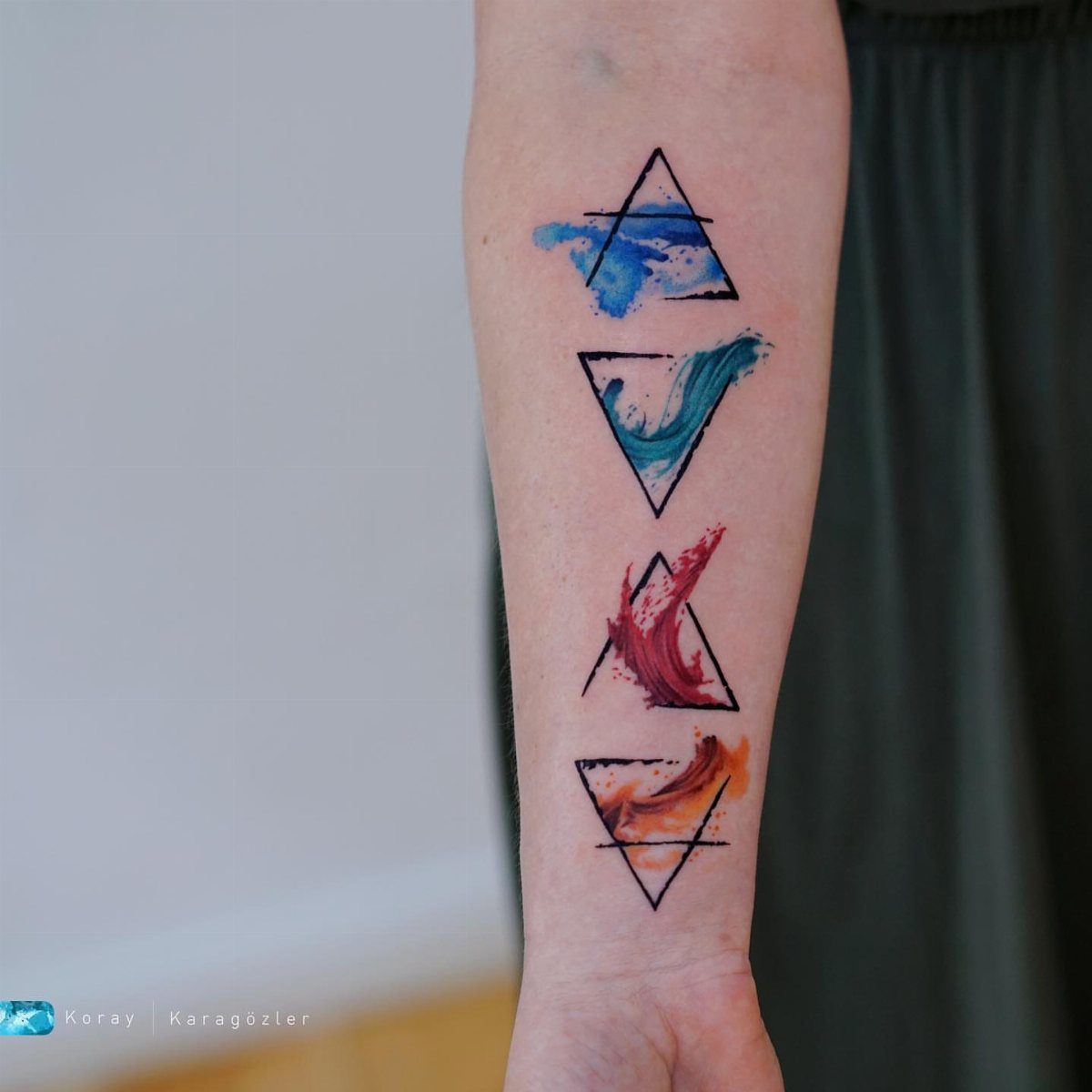
4 triangle outlines stacked vertically, each flooded with watercolor in its element’s color: blue or teal for water, red and orange for fire, air and earth in lighter tones.
The black ink gives structure; the wash inside gives mood. Watercolor in tattoos fades faster than solid fill, and the bleeding edge is the point, not a flaw.
I would ask to see healed photos from the artist before booking; fresh watercolor always looks bolder than settled. This style suits someone who wants all 4 elements but needs color to feel the meaning.
7. Circular Element Symbols Tattoo
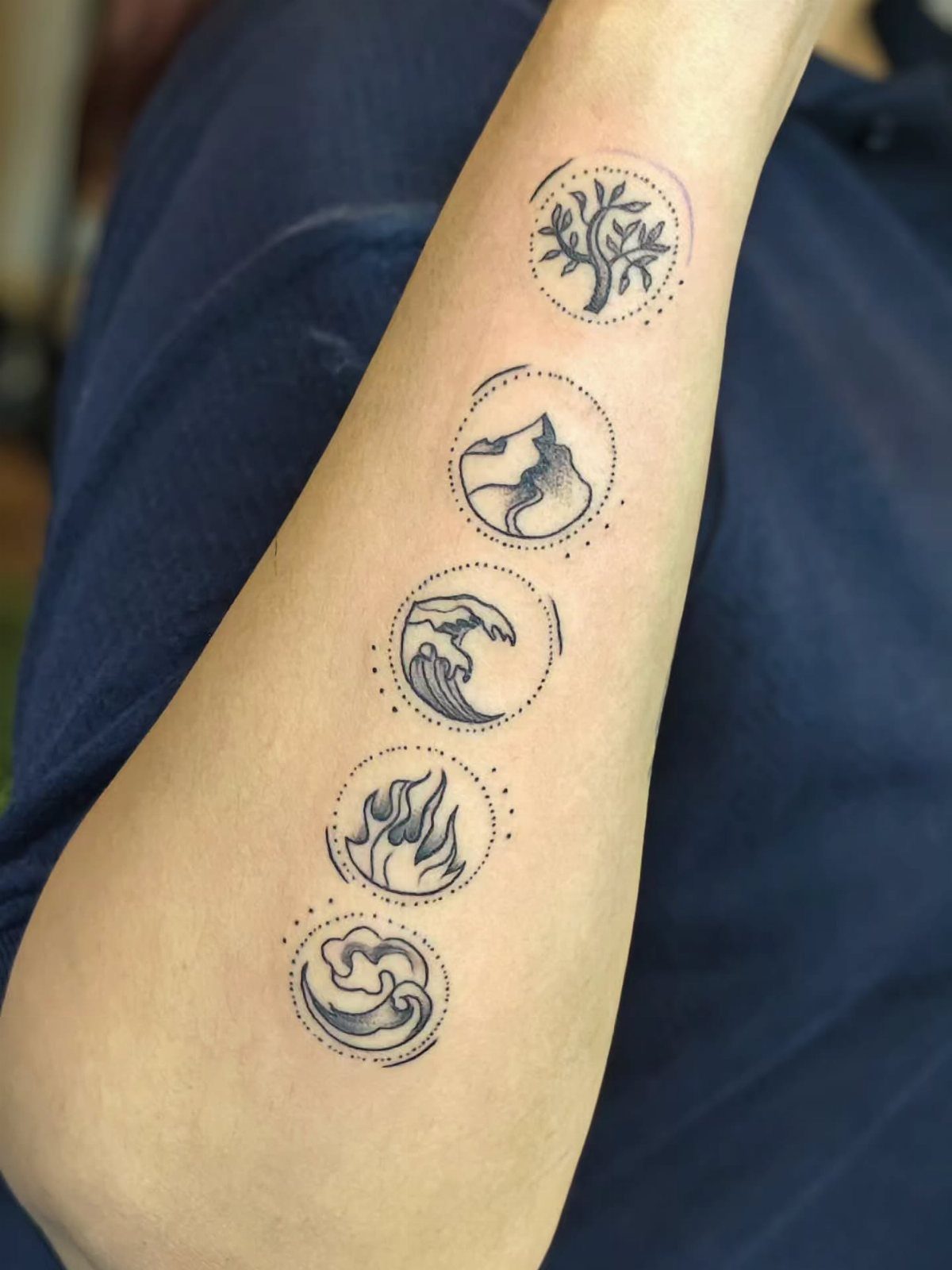
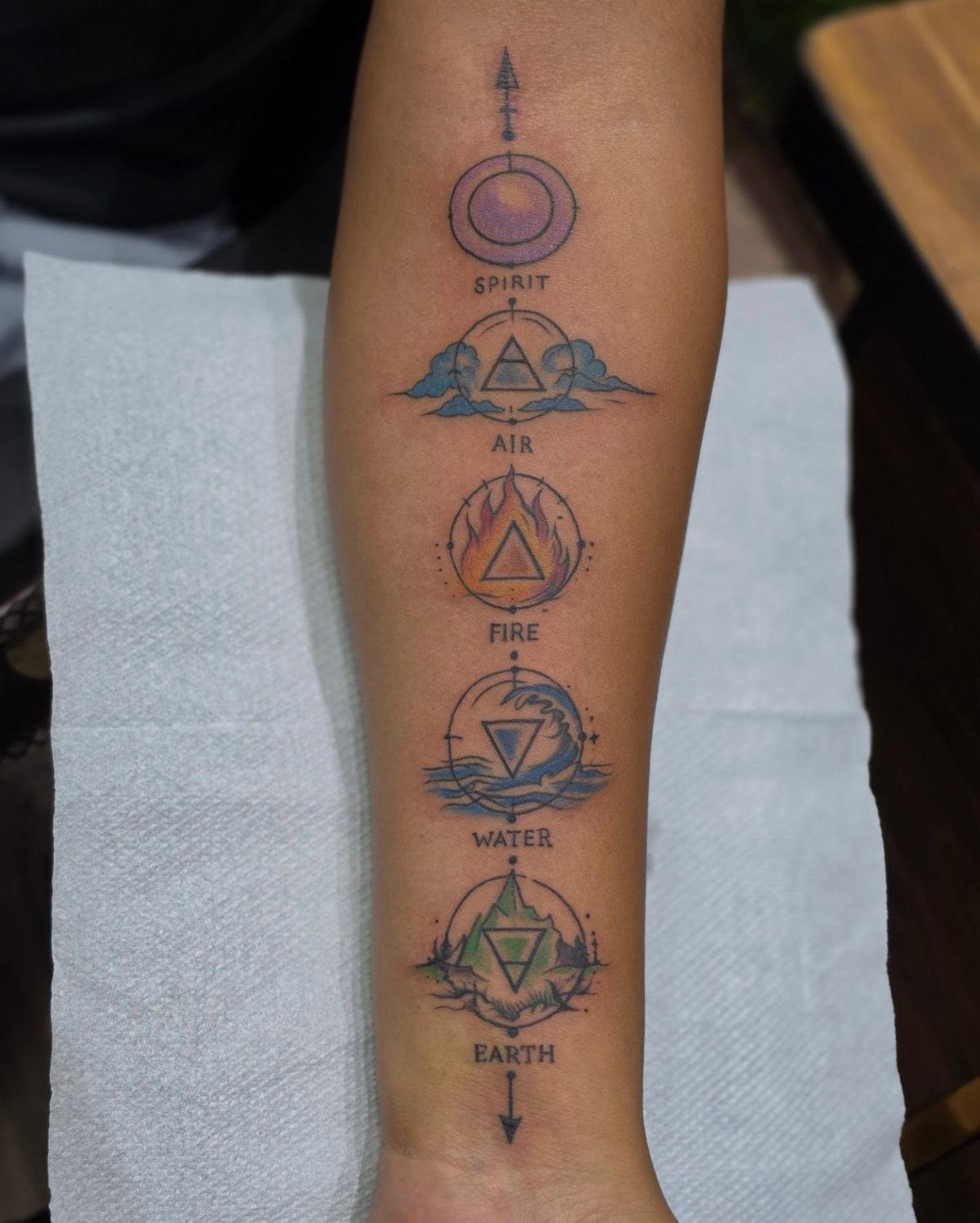
5 small circles running down the forearm gives each element its own frame without crowding.
The tree, mountain, wave, flame, and wind icons read fast because the circle holds them together; the eye has an edge to catch. Vertical alignment follows the arm’s line, which makes the placement feel natural rather than forced.
I would keep the circles uniform in size; variation breaks the rhythm that makes this read as a set. Black ink keeps it legible at the small scale these need to stay.
This suits someone who wants all the elements plus one extra, maybe spirit or void, but needs the collection to stay quiet.
8. Geometric Element Triangles Tattoo
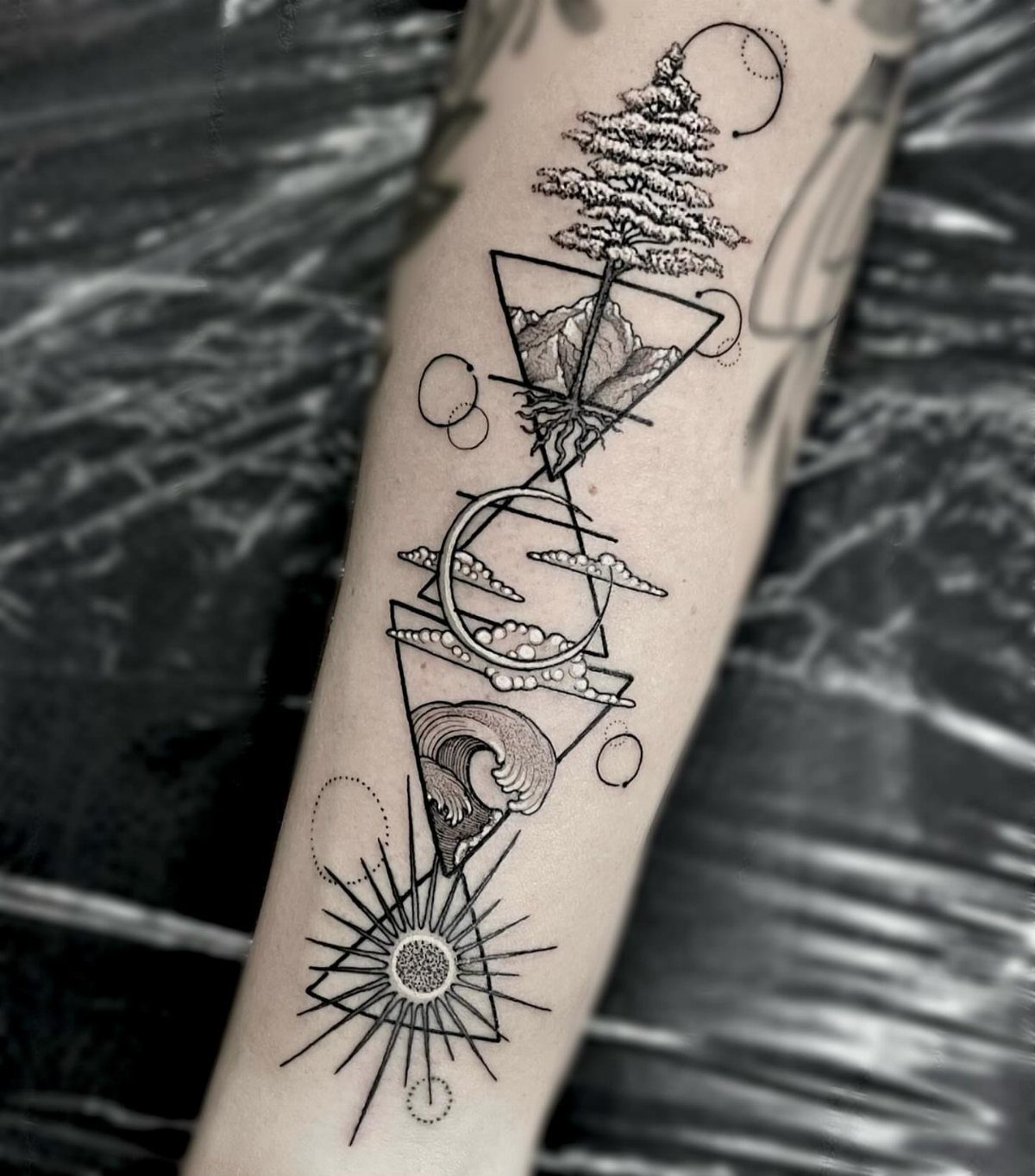
Stacked triangles with scenes inside split the difference between symbol and landscape.
The geometry gives structure; the pine, peaks, wave, and sun inside give the elements their natural faces. Connected edges turn separate triangles into one piece, which matters on a forearm where the eye travels.
An artist who builds geometric frames first and fills scenes after will get cleaner joins than one who sketches freehand.
I would check their portfolio for other geometric nature work. Not every linework specialist handles both halves of this style.
9. Watercolor Fire and Water Couple Tattoos
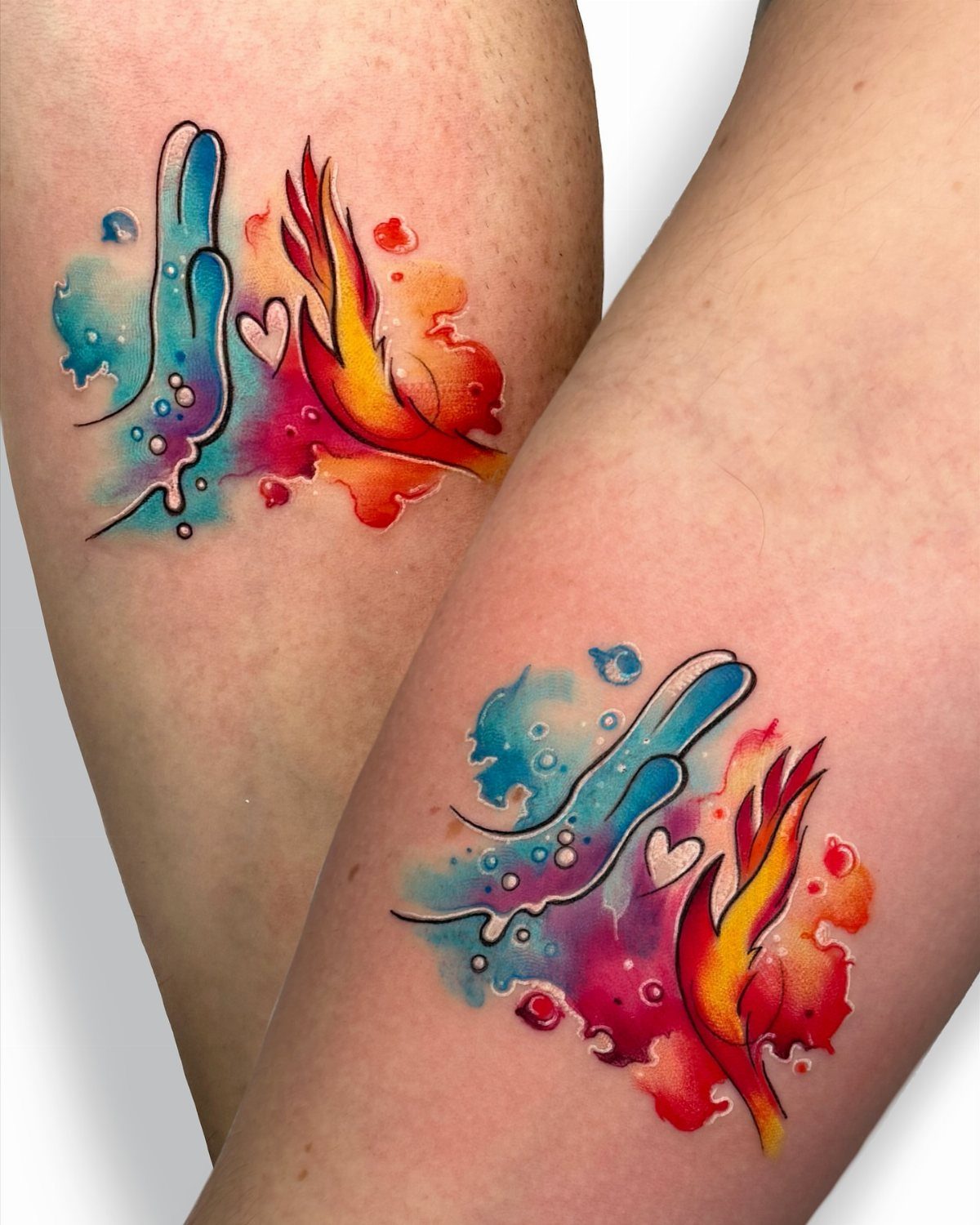
Matching watercolor designs for a pair trade longevity for immediacy. The blue and orange-red read as water and flame at a glance; the touch of heart between them marks the connection without needing text.
Watercolor pairs need two decisions in one visit.
I would book a single artist for both pieces, same day, same mix. Healing differs by person, so the colors will settle unevenly; that difference is part of the match, not a flaw to fix.
Book touch-ups early if you need them to stay even. These fade faster than solid fill, and matching pieces draw comparison.
10. Embracing Elemental Figures Tattoo
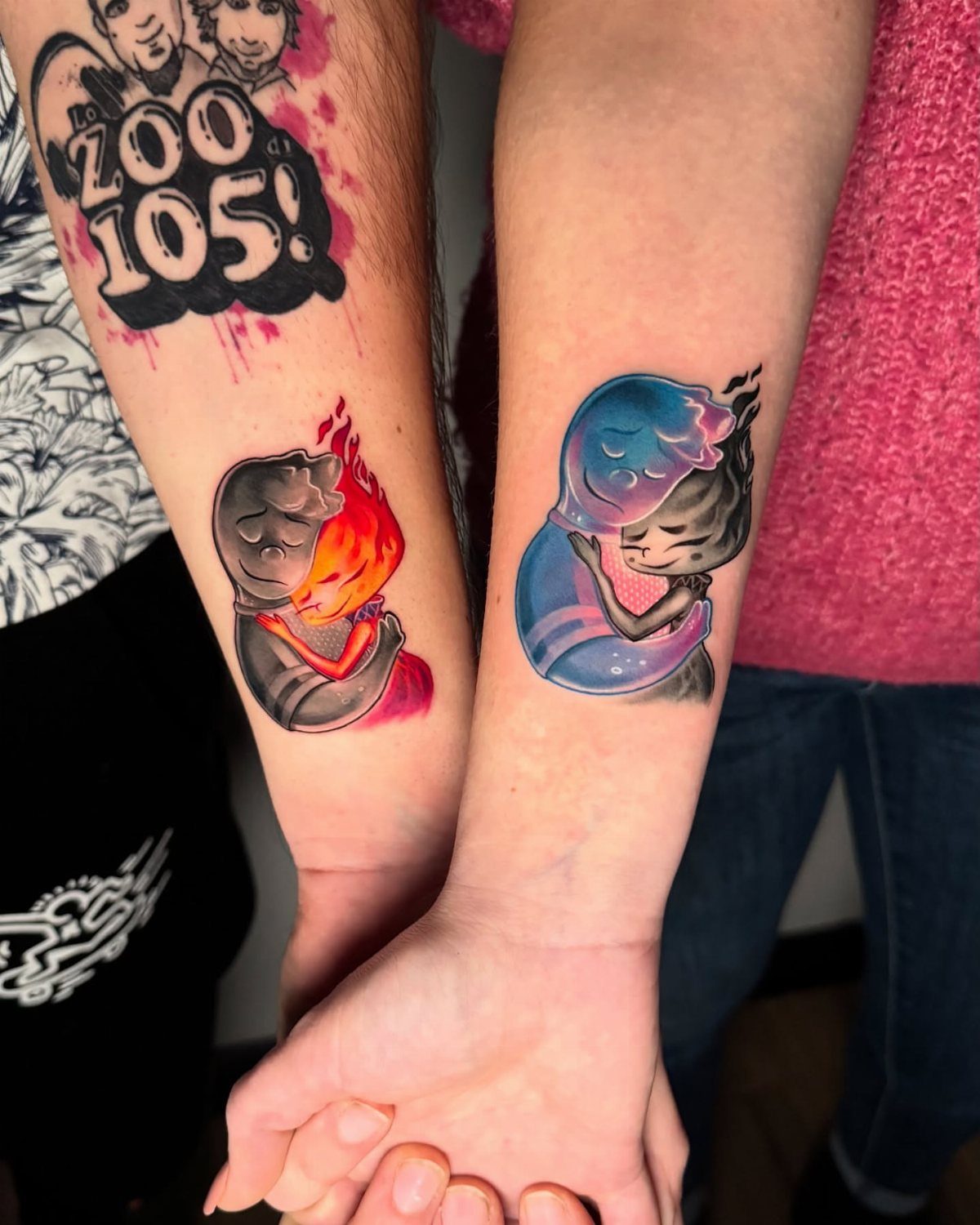
Figures built from flame and water, holding each other, turn the opposition into a single form.
On matching forearms the pair complete the image by standing together. The style is more character than symbol, less diagram than story.
The element-as-body approach needs an artist who handles stylized anatomy, not just fire or water effects alone.
I would ask to see their figure drawing first. The pose has to read from the shapes themselves; if the embrace looks accidental, the whole piece falls flat.
This works when the relationship is the subject and the elements are the language for it. If you want the elements first, the couple format may fight that priority.
11. Elemental Animated Character Tattoos
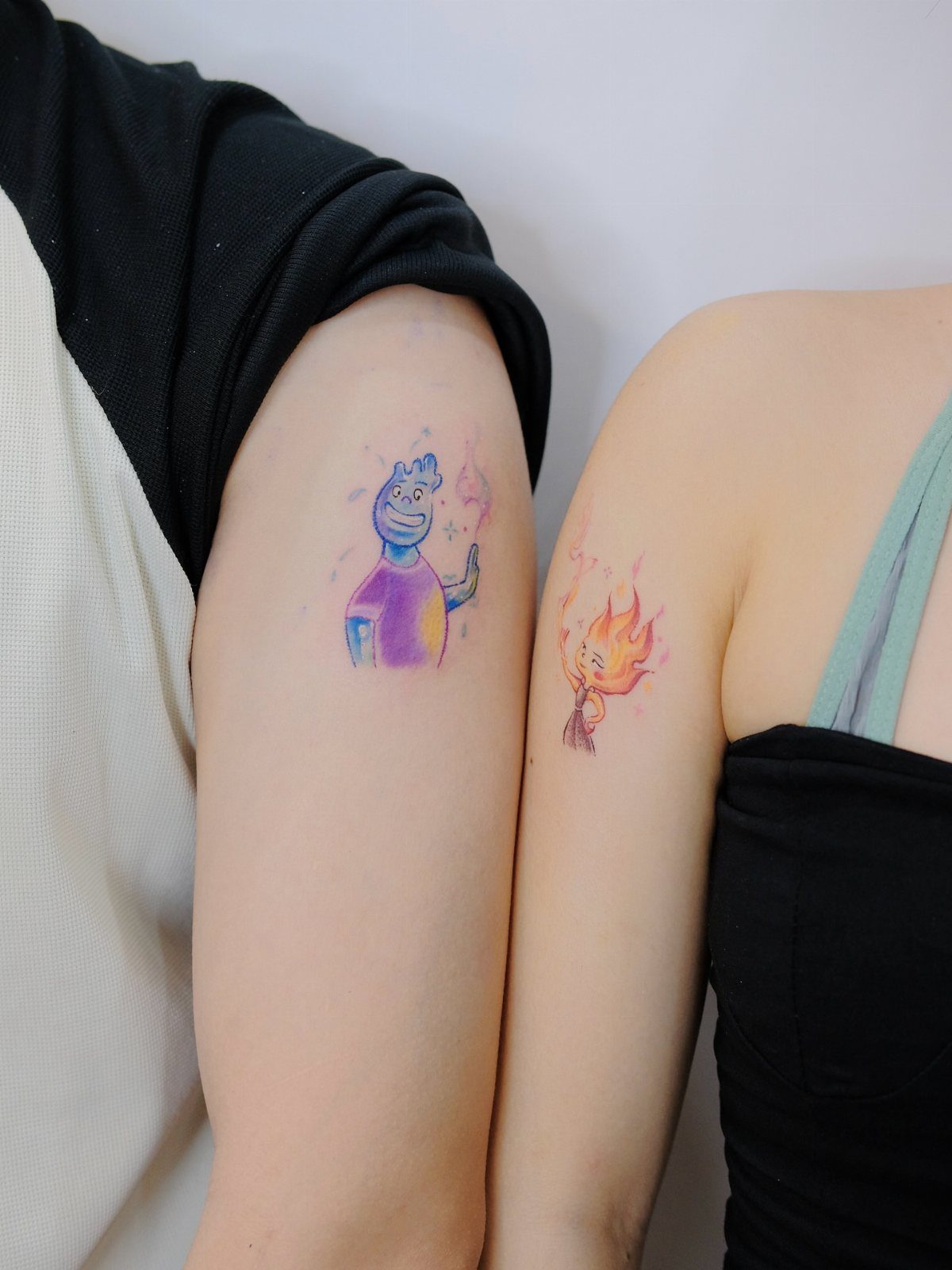
Small watercolor characters give the elements faces and posture.
The blue water figure and orange-pink fire figure sit at cartoon scale, which keeps them friendly rather than mythic. That tone is a choice; it will not deepen with age the way a more severe style might.
Placement on the arm lets you see your own element without a mirror.
I would consider whether you want the pair visible only together or each readable alone. 2 arms side by side is a composition that does not have to be your arrangement.
An artist who does animation or character work regularly will handle the proportions better than one crossing over from realism. The style lives in clean edges between color fields, not in shading volume.
Significance of Elements in Tattoos
The four-element model has held for more than 2,000 years, tracing back to Empedocles in Greek philosophy. A mark that stays readable for decades beats one that chases a style and collapses.
The first tattoos were simple marks carrying meaning, not decoration. Ötzi the Iceman, dead around 3300 BCE, had 61 tattoos in 19 groups; carbon ink on skin, preserved in ice.
His lines were plain stripes and crosses, which still say something about trusting the symbol over the ornament.
Each element carries its own weight: fire as transformation and regeneration, water as intuition and emotion, earth as grounding, air as intellect and movement.
Zodiac signs map to elements too, which gives some people a starting point that feels personal rather than chosen from a chart.
The meaning deepens when the element matches something you actually recognize in yourself, not something you wish were true.
Choosing an Elemental Tattoo Design
Start with which element you actually reach for in language, not which one looks best in a portfolio.
If your metaphors run to water, to being moved or to depth, that is your element regardless of birth sign. The zodiac connection is one route among several, not a requirement.
Scale and placement decide whether the design stays yours or turns generic. A personal pattern, a vertical stack, a woven single symbol: these choices separate a collection of icons from a composition that holds together.
Fine lines and micro symbols blur sooner than most clients are told, particularly where skin rubs or flexes constantly.
For a tattoo you can still read at 60, I ask the artist for breathing room between elements, dark against light, and lines with enough weight to survive a few rounds of fading.
Inner forearm, upper arm, outer calf, upper back: these spots keep detail longer than fingers, the hand edge, or anywhere the sun hits daily.
Risks of Getting a Tattoo
A tattoo is permanent, the process hurts, and good work costs.
These are not obstacles to rush past; they are reasons to slow down. Infection and dissatisfaction are real risks, and both trace back to the same choice: the artist you book with.
Reputation is not follower count. It is healed work you can see, a setup you can inspect, and a conversation where your questions get direct answers.
Fine-line and minimalist work ages faster than the average person expects. If you want a piece to stay readable for decades, plan for touch-ups or choose bolder line weight from the start.
The element you choose should outlast the phase you are in. Pick something tied to how you already speak about yourself, not how you hope to sound.
Frequently Asked Questions
What does a 4-element tattoo symbolize?
A four-element tattoo marks connection with nature and balance among earth, water, fire, and air. A circular arrangement keeps every symbol on equal footing, so the eye moves around rather than landing on one star of the show.
Some clients pick their element from their zodiac sign; that built-in link saves them from starting from scratch.
How do I choose an elemental tattoo design?
The element you name-drop in conversation, the one you already use to describe your own moods, is the one worth inking.
Scale and placement decide whether the design stays yours or turns generic; inner forearm, upper arm, outer calf, and upper back keep detail longer than fingers or anywhere the sun hits daily.