Celtic knots, Polynesian blocks, and geometric blackwork sit lower on the arm than most people picture, and each style carries a different price tag depending on how far it wraps.
Muscle curve on the upper arm gives bold patterns room to move, and a forearm band stays visible in short sleeves but squeezes detail tight; add color and daily SPF becomes part of the upkeep.
The red and purple barbed wire in the list below drops the old cover-up reference that black ink still carries, though any color that loud needs a look at your workplace policy first.
1. Celtic Armband Tattoos
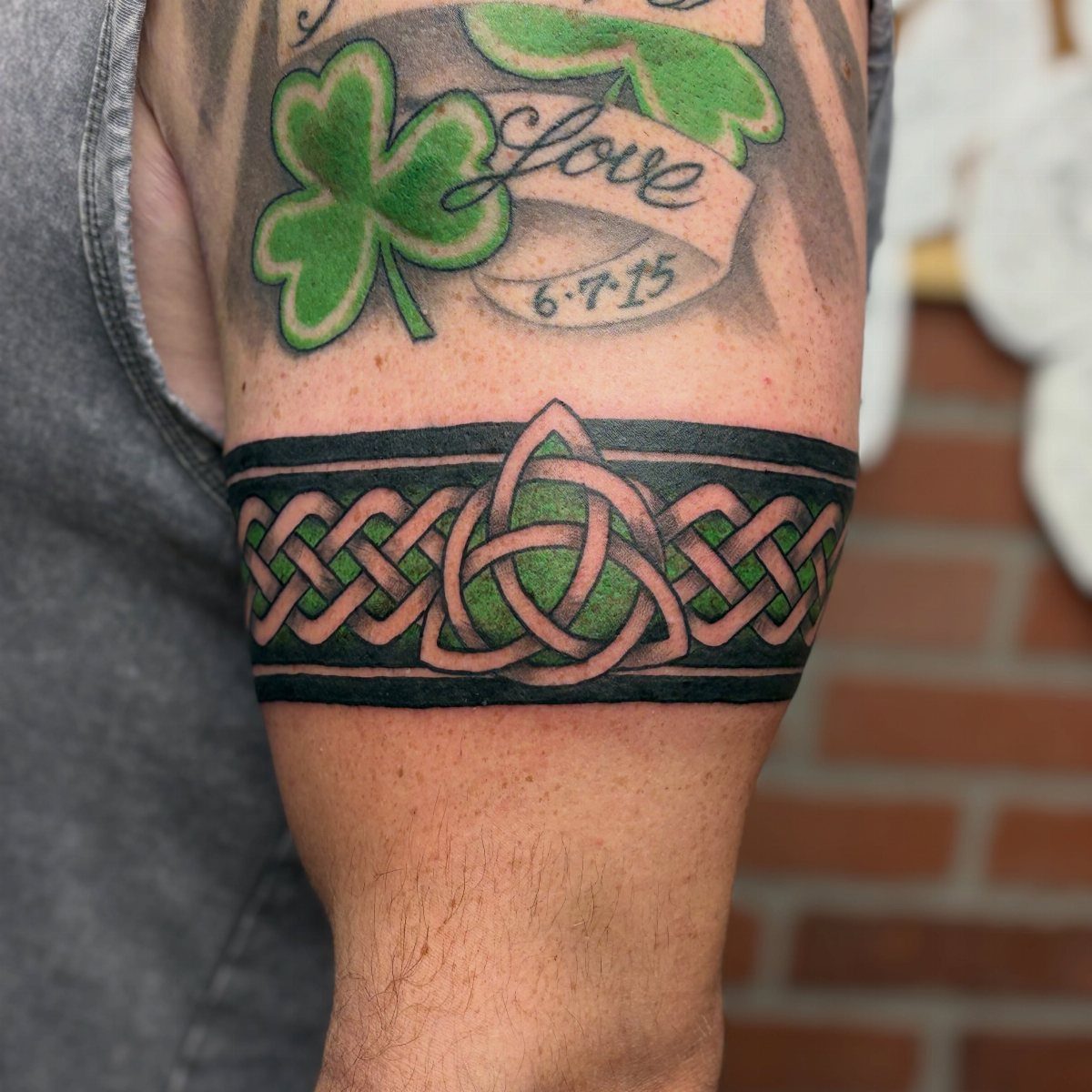
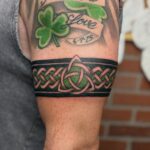
Green ink gives Celtic knotwork a living quality that black sometimes flattens into textbook illustration. The knotwork pattern runs continuous around the arm, and that unbroken line carries the meaning: no start, no finish.
Upper arm placement handles the curve of knotwork better than wrist or forearm, where the pattern compresses and details muddy.
Sizing matters more than most bands: too narrow and the interlace tangles into a stripe, too wide and the arm looks bracketed.
2. Floral Armband Tattoos
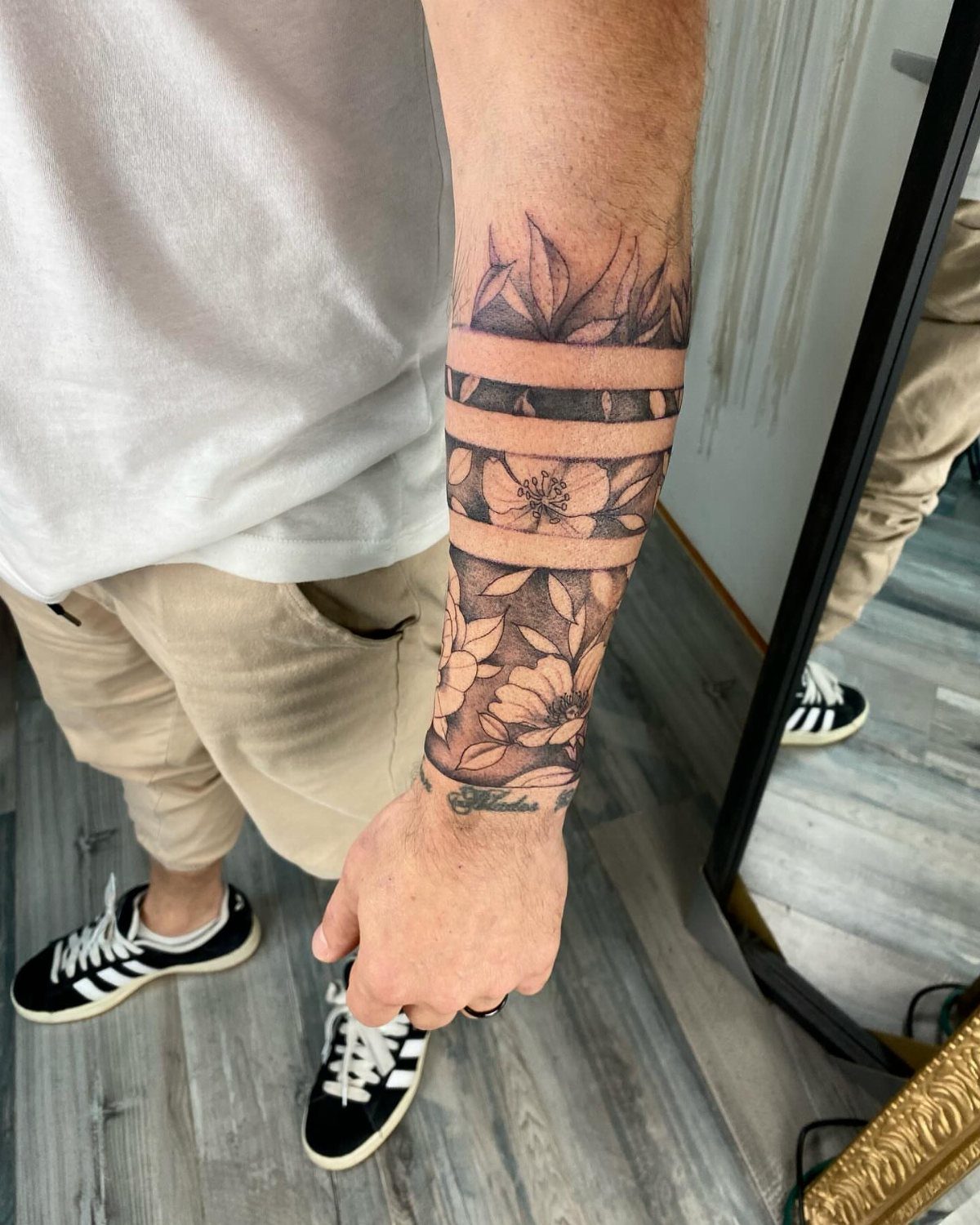
Flowers wrapped around a forearm read differently than a single bloom on a shoulder.
The negative space bands in this version keep it from reading as a garden gone wild; the dark leaves and stems hold shape, and the skin showing through acts as the frame.
Forearm placement means this stays visible through most daily movement, which suits the design fine but needs checking against workplace policy before committing.
Black and grey hold steady, though color holds up in floral work if you budget for touch-ups every few years where the outer arm sees sun.
3. Polynesian Armband Tattoos
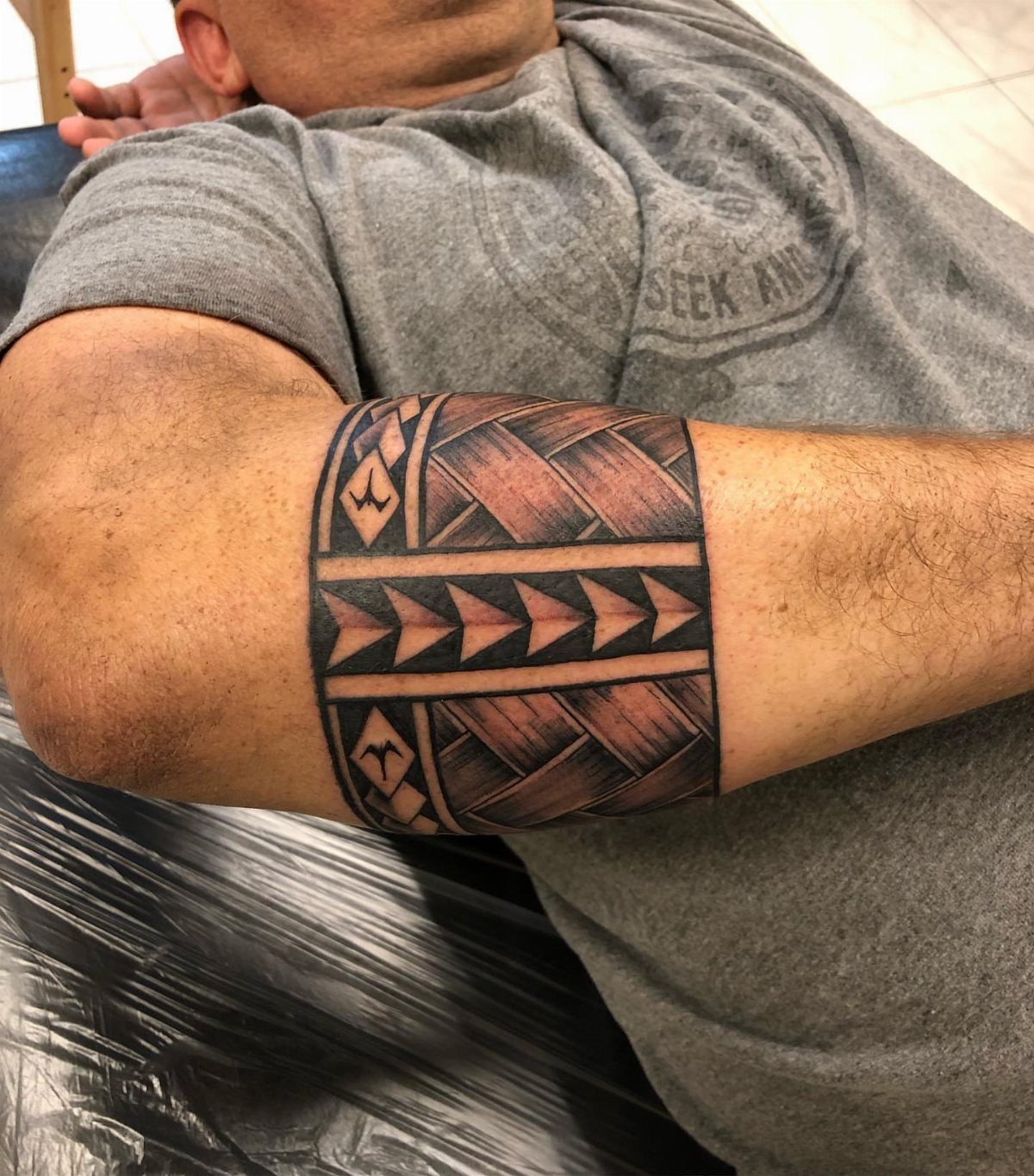
Polynesian armbands carry weight because the patterns were never decorative; they recorded status, lineage, protection. The reddish-brown in this band reads as wood or earth against the black, a choice that keeps it from the harsh contrast of straight blackwork.
Bold patterns need room. Upper arm placement lets the triangles and woven sections breathe; forearm bands of this density can compress and lose the spacing that makes the geometry legible.
The symbols themselves vary by island and family, so borrowing specific motifs without understanding carries risk most artists will flag.
4. Geometric Black Ink Armband Forearm Tattoos
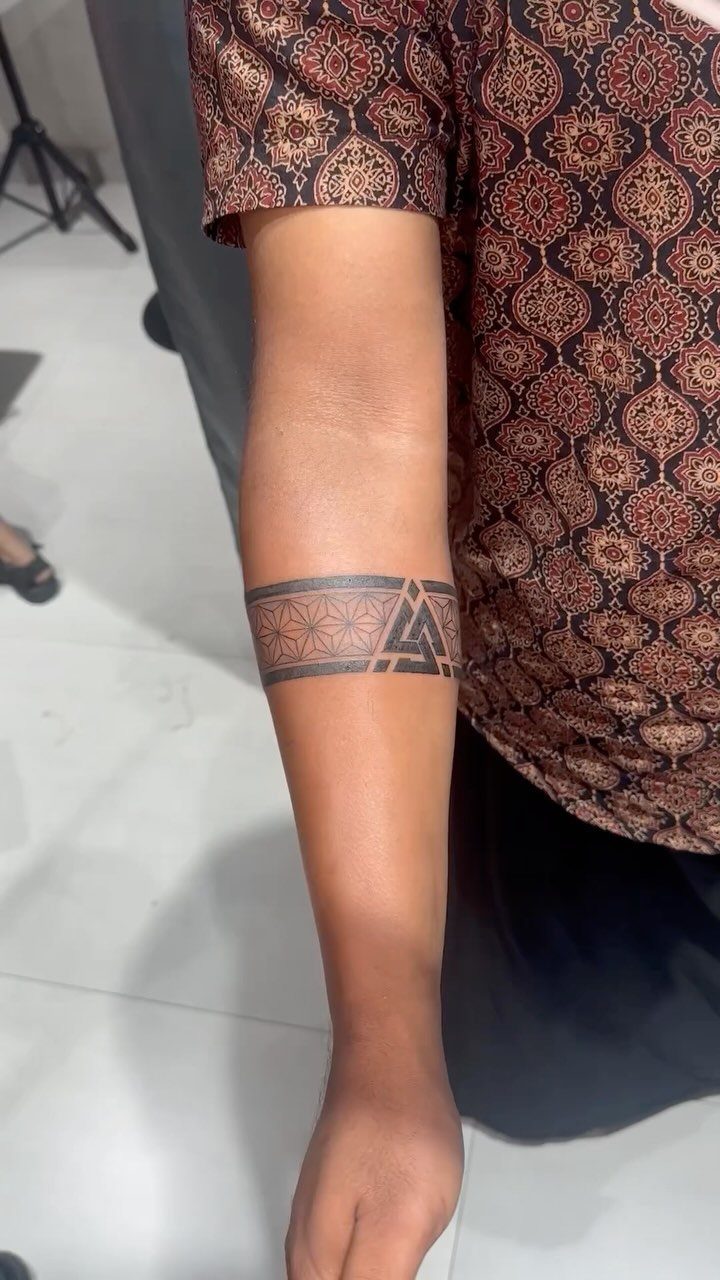
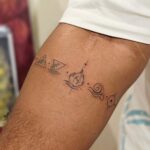
6 narrow bands of solid black, spaced evenly, pull off something ornate without ornament.
The central triangle breaks the repetition just enough to keep the eye moving. This is the geometric approach stripped to its frame: no fill, no shading, just line and interval.
Forearm placement sits below the elbow, visible in short sleeves but easy to cover.
The spacing between bands is the detail to get right; too tight and they merge as one thick bar, too loose and the rhythm breaks. Ask to see the spacing marked before the needle starts.
5. Colorful Landscape Armband Tattoos
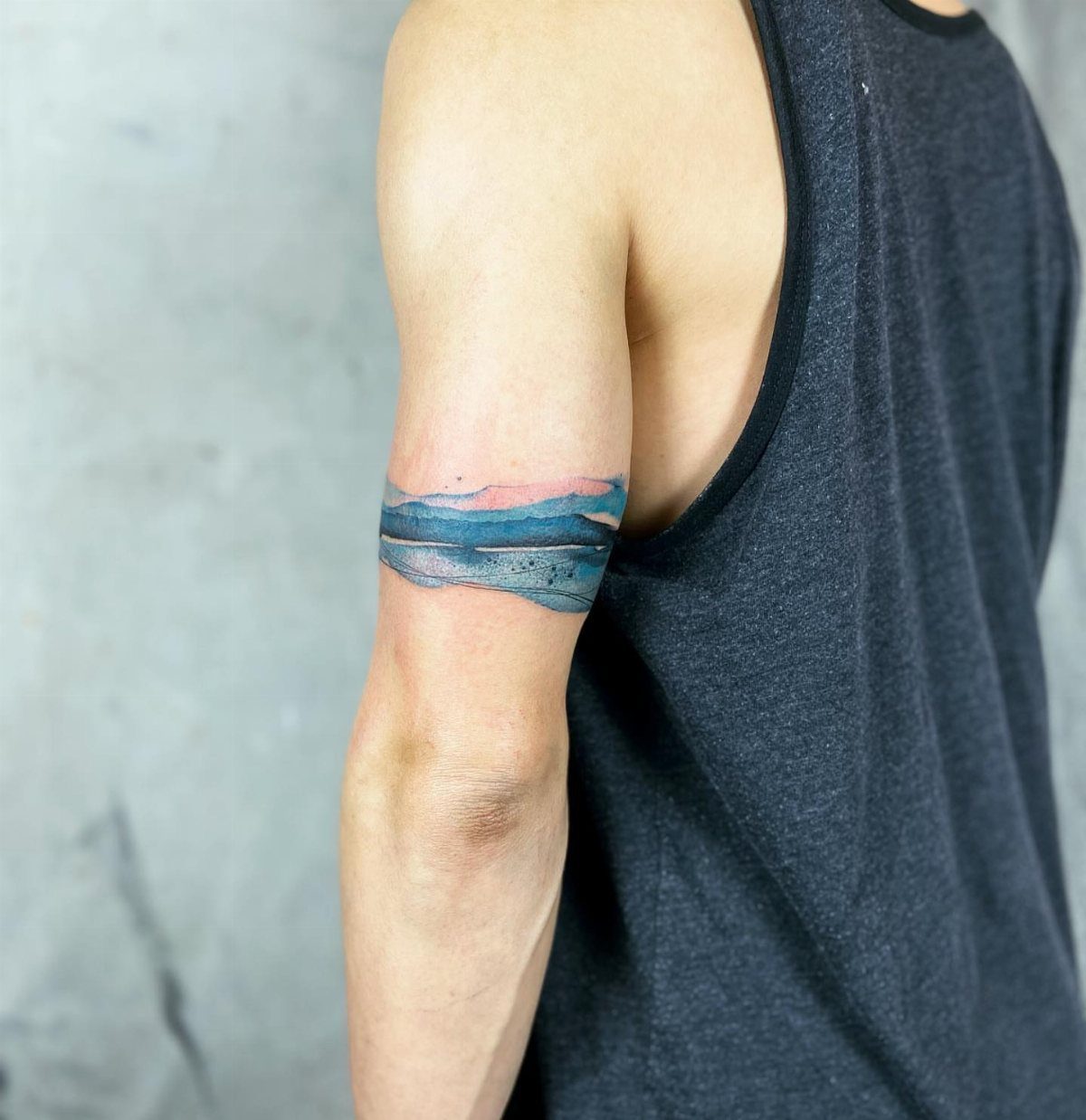
A landscape wrapped around an arm faces a problem no wall painting has: the scene bends, and the viewer moves.
This band solves it by leaning into the wrap; the pink sky at one angle becomes blue water from another, and neither view is wrong.
Upper arm placement gives the horizontal scene room to unroll.
The colors read dusk or dawn, that hour when land, water, and sky trade places and hues; tattooed color in this range fades faster than black, so sun protection on the outer arm is not optional if you want the pink to stay pink.
6. Colorful Barbed Wire Armband Tattoo
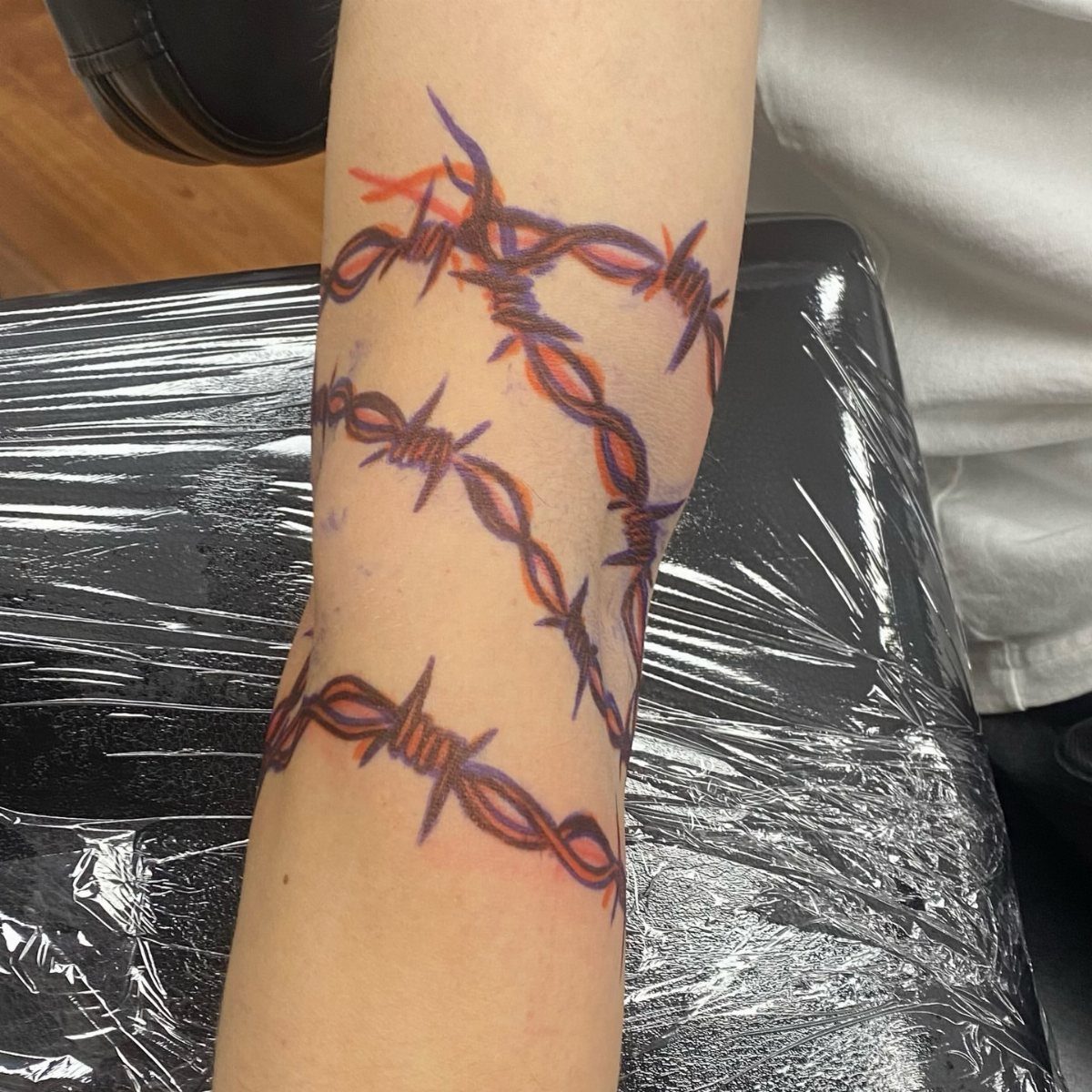
Barbed wire in red and purple is not trying to look like real barbed wire, and that honesty helps. The spiral wrapping the forearm keeps the thorn pattern in motion, more vine than fence.
Color here works as a signal: barbed wire in black can read as cover-up, the solid black band that masks older mistakes, and this version sidesteps that history by refusing the reference entirely.
Forearm placement puts the spiral where daily movement keeps it alive, though the color will need planning around how it ages; purple holds better than red in most skin, and the balance between them shifts over time.
7. Geometric Bull Head Armband
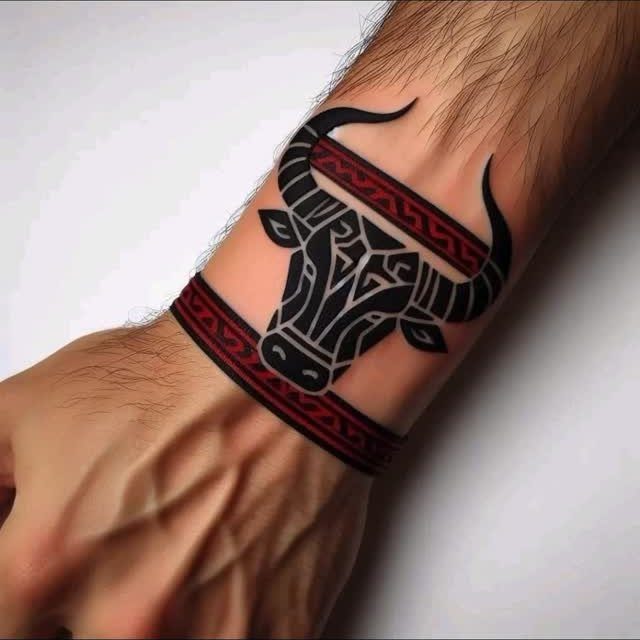
The bull head sits dead center in this band, built from triangles and facets that read more gem than animal unless you step back.
That distance is what makes it work: up close the geometry holds interest, from across a room the symbol reads clear.
Black carries the structure, red sits in select facets as an accent rather than a split tone.
The wrist and hand placement in this version keeps the bull facing outward where the flat plane does the design a favor; wrapping it higher to the forearm would distort the face around tendons that move all day.
This one trades the repetition of pure band patterns for a single loaded image. The trade is commitment: a bull carries fixed associations that floral knotwork or plain geometry avoids, so the symbol needs to land for you personally.
Check the artist’s sketch wrapped around a cylinder before skin, not flat on paper; the forearm curve changes proportions more than most expect, and a symmetrical face can skew when banded.
Tattoo Placement Advice
Bold bands sit best on the upper arm, where the muscle curve carries the pattern without squeezing it.
Wrist placement sits at the edge of what armband geometry allows, and most artists will warn you that detail shrinks fast below the forearm.
Visibility is the trade you make. Check your workplace policy before settling on placement; a band that sits below the elbow is harder to cover than most people guess until they try it.
The wrap itself matters too. Full circumference changes how a pattern reads from every angle, while a half-wrap frames the design against the inner arm but leaves a gap that some find unfinished.
Tattoo Meaning Insights
Strength and power sit at the core of most armband meaning, though the form that takes changes with the design.
Tribal and cultural bands carry the heavier load: Polynesian patterns recorded status and lineage, Celtic knotwork loops the unbroken line of eternity.
Wearing them without that connection turns the tattoo toward decoration, which is a valid choice but a different one.
Dates, names, or short phrases banded around the arm turn the form into a private record, visible to others but readable only to the wearer.
The commitment is literal: the ring shape closes on itself, no start or finish, which reads as promise or trap depending on what the band encircles.
Purely ornamental bands lean on line and shape rather than borrowed cultural weight, a choice some wearers make when they want the look without a message they did not earn.
The meaning there is preference, taste, the fact of having chosen this line and not another. That lightness is its own statement.
Tattoo Cost Information
Small armband work starts around $150 for minimal line work with a single outlining needle.
Intricate designs, dot work, or bio-mechanical themes push toward $1,000 or above. Hourly rates run $150–$200 on average, with highly skilled artists commanding up to $500 and apprentices or less experienced hands at $75.
Band height, full versus half wrap, pattern detail, and shading all move the final number. Simple bands stay at the lower end; full tribal or detailed wraparounds need a custom quote.
The 15% tip is standard, though 20% is the better mark for quality work. Confirm pricing before the needle starts, not after the stencil is on.
Sun protection is part of the long-term cost. Color in the pink-to-red range fades fastest where the outer arm sees daily UV, so budget for touch-up work every few years if your design leans that direction.
Frequently Asked Questions
What does an arm band tattoo mean for guys?
Strength sits at the core of most armband meaning for men, with the circular shape reading as infinity or an unending cycle.
Tribal bands earned their weight through rites and rank passed down generations; ornamental ones earn it through the eye alone, no story required.
A band circling the bicep reads one way, the wrist another, and borrowing a pattern from a culture you do not belong to shifts the tattoo from claim to aesthetic, which is fine as long as you know the difference.
What does an armband tattoo symbolize?
Polynesian work tracked who a man was and who his people were; Celtic knots keep turning back into themselves with no break in the thread.
The ring shape itself does the work, endless and closed, which can feel like devotion or like something you cannot step out of.
Ornamental bands ask nothing of history; they ask whether you like this line, this spacing, this particular blue against your skin.
What are some cool armband tattoos for men?
Celtic knotwork in green ink carries living color black sometimes flattens, floral bands use negative space to keep from reading as garden gone wild, and Polynesian geometry needs upper arm room to let the triangles breathe.
Landscape bands turn the arm’s curve into a horizon line, so sunset pink on the inner arm flips to lake blue on the outer as you turn.
Six narrow black bands with a central triangle pull off ornate without ornament, the geometric approach stripped to line and interval.