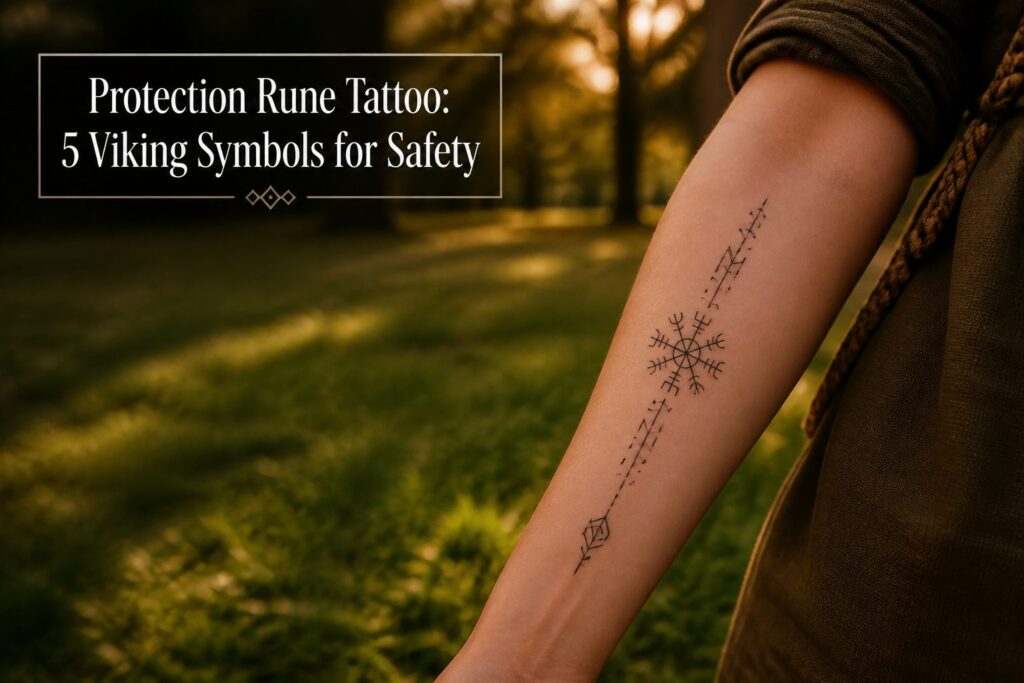
A protection rune tattoo is a permanent symbol from the Elder Futhark meant to shield or steady the person wearing it, but the same rune can invite harm if reversed or placed on a limb that flips it during ordinary movement.
Wunjo, the joy rune, becomes sorrow when inverted, which means arms and legs are the wrong canvas entirely.
The rune that feels right on Sunday can read like a forgotten sticker by Wednesday, and the only way to know is to draw it yourself and live with the sketch through showers and sleep before the needle touches skin.
Algiz
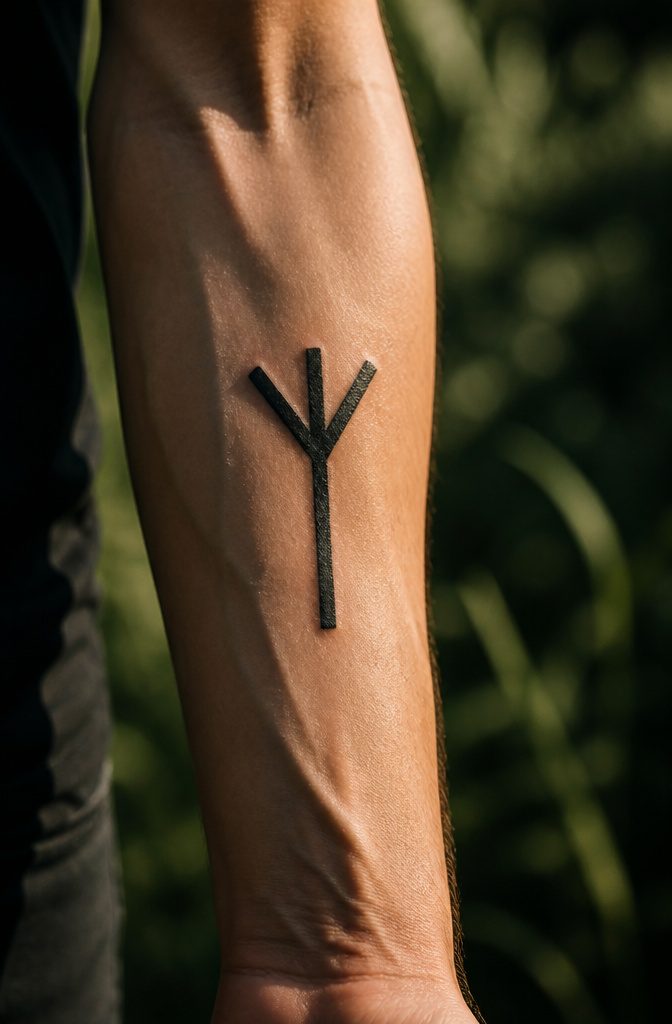
The Algiz rune turns up first in almost every search for protection ink, and for solid reason. Its shape, an upright staff with a single branch reaching upward or a hand splayed in warning, reads immediately as a shield.
That visual alone makes it a natural choice for a protection rune tattoo you can recognize across a room.
Most bindrunes built for safety build from Algiz as their anchor, and the three strongest guides on rune tattooing all single it out as the rune to start with when defense is the intent.
The branch-upward form carried specific weight in Old Norse thought: it’s the horns of the elk, the branches of the world-tree raised in warding, the hand held up to halt what should not pass.
That layered meaning lets the symbol do more work than a generic shield ever could.
For placement, Algiz works vertically by nature, so the forearm, spine, or side of the ribcage keeps its line intact without forcing the design.
I have seen it paired with a rotated second Algiz to make an hourglass bindrune, but a single clean figure needs no accompaniment.
Thurisaz
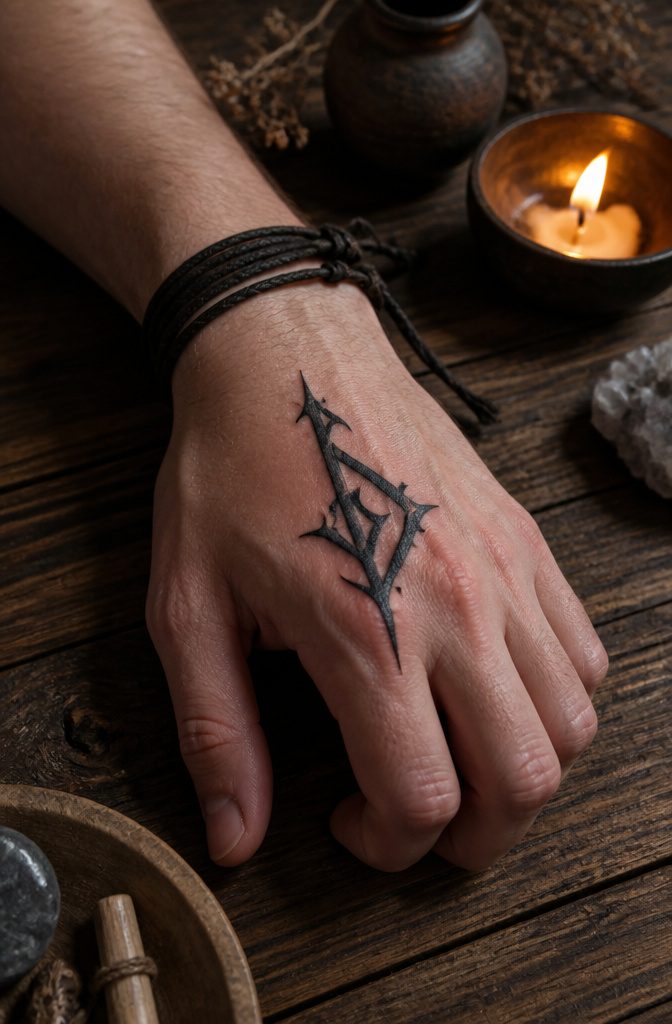
Thurisaz in a protection rune tattoo is a sharp double-edged tool. The rune carries the force of a thorn and the weight of a giant’s hammer, a pairing that makes the symbol inherently destructive.
Wearing it alone on skin invites trouble rather than repelling it. A talisman worn during a specific struggle is one thing; a permanent mark is another, because the energy it draws does not switch off when the moment passes.
The rune finds its place only when combined with intention into a bindrune. There, Thurisaz converts its raw force into active protection, the kind that strikes outward rather than passively shields.
The combination matters more than the symbol itself. Two approaches to this rune are worth weighing: leave it out entirely for a gentler ward, or bind it with steadying runes if you need that offensive edge.
Most who search for a protection rune tattoo will want the latter built carefully, not the former standing alone.
Eihwaz
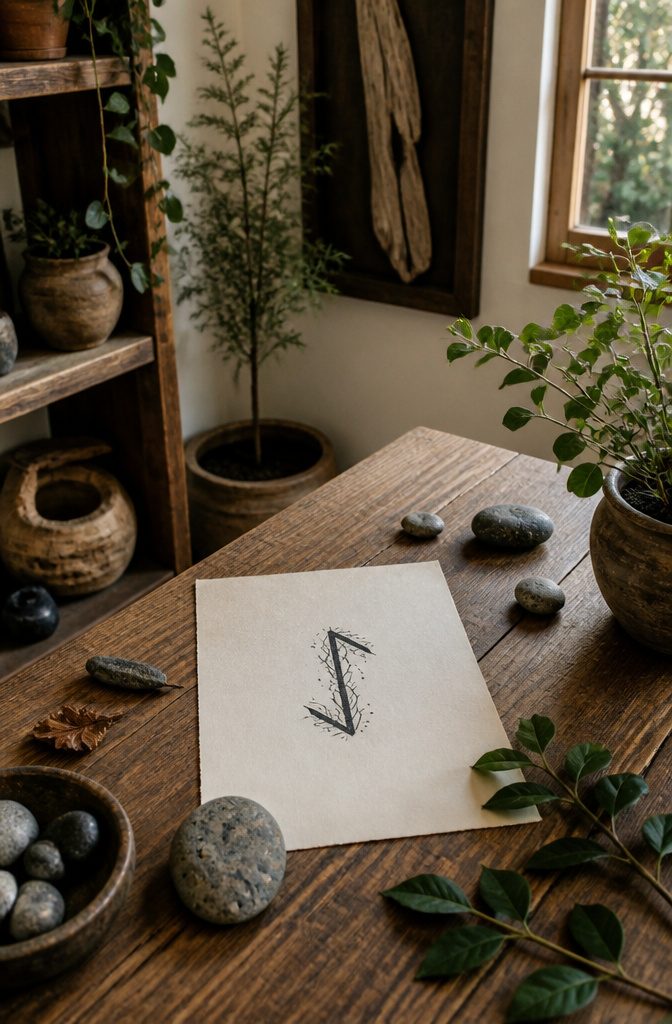
The yew tree lives for thousands of years, and Eihwaz draws its protective power from exactly that kind of endurance.
Most protection runes in the Viking tradition promise to block or deflect harm. Eihwaz works differently: it is the rune of surviving long enough that the threat simply passes.
I first encountered this distinction while comparing rune meanings for a friend’s sleeve design.
Algiz and Thurisaz appear repeatedly in protection-focused tattoo references. Eihwaz barely registers in those same collections, which makes it either overlooked or quietly selective, depending on how you read the absence.
The yew’s wood was prized for bow-making because it bends without breaking. Applied to skin, that symbolism suits someone who has already withstood difficulty and wants the mark to acknowledge what held, not what guarded.
The shape itself looks like a straight staff with a small fork, simple enough to scale large or keep minimal behind an ear or along a finger.
For a protection rune tattoo, Eihwaz asks something of the wearer. Its protection is not immediate or obvious.
It offers the long view, the outlasting. That narrows its audience to people drawn to resilience as a virtue in itself, not as a means to an end.
Gebo
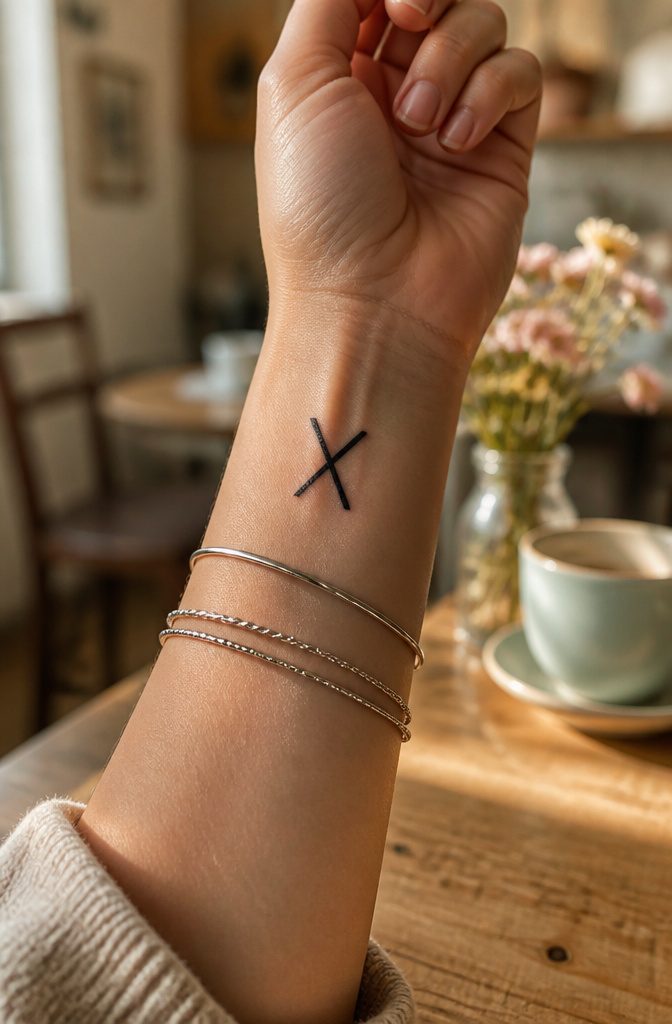
Gebo looks the same whether you flip it upside down or leave it upright, which makes it the safest rune to carry on skin when you want meaning without risk.
I came across this shape during a phase of weighing every option for reversibility, and the symmetry settled it fast: you cannot accidentally activate some shadow version by inking it backward.
The meaning steers clear of warriors and shields entirely. Gebo is about balance between giver and receiver, the kind of mutual exchange that builds steadiness inside rather than chasing off external danger.
That reads differently at forty than at twenty, and it ages without embarrassment; a tattoo about reciprocity does not pretend you are still the person who needed constant guarding.
Confidence arrives differently with this one.
Where Thurisaz might feel like armor you buckle on, Gebo behaves more like proof you already trust your own weight in a negotiation. The form stays stable, the social reading stays generous, and the ink earns its keep without drama.
Wunjo
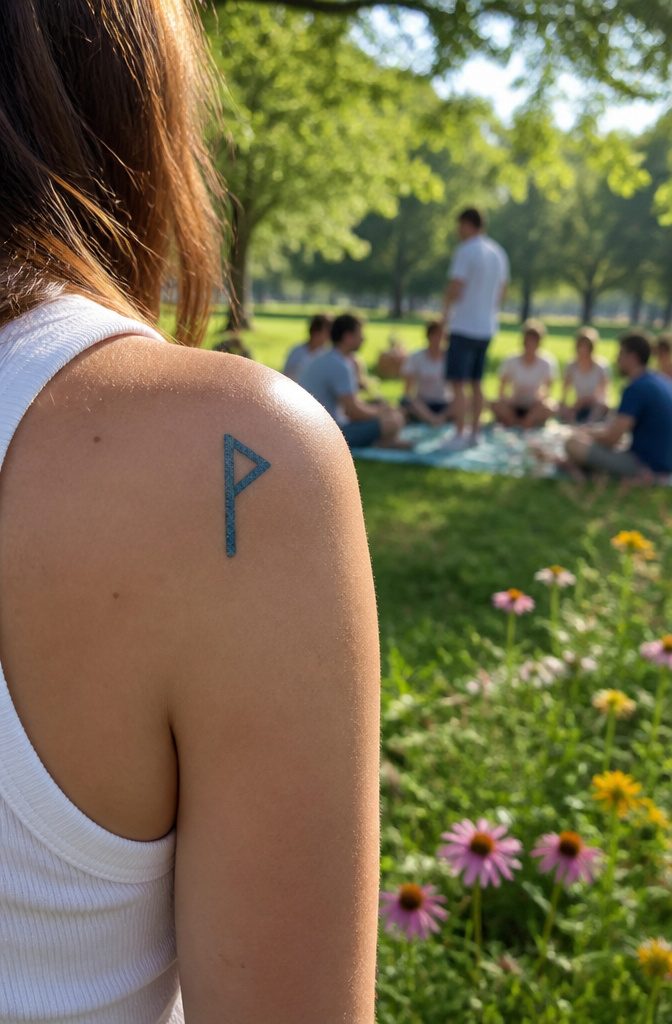
Wunjo carries one of the brightest meanings in the elder futhark, the rune of joy, fellowship, and the simple pleasure of being among your own people.
Its shape opens upward like arms raised in celebration, and that upright posture matters more for this symbol than for any other protection rune on the list.
A reversed Wunjo takes on a dark mirror of itself, sorrow and isolation where celebration stood. Arms and legs swing, rotate, and spend as much time upside-down as right-side-up during ordinary movement.
Chest, back, and neck stay comparatively fixed. The placement warning exists for this rune alone among the five, and that singularity should shape how you think about any rune tattoo.
The body is not a flat page.
A symbol on a shoulder blade rides differently from one on a wrist that flips twelve times an hour. Ask yourself what orientation your chosen rune will hold when you are walking, lifting groceries, or reaching across a table.
Wunjo forces the question because the stakes are visible. The other runes deserve the same scrutiny, even without an explicit reversal warning.
Bindrunes
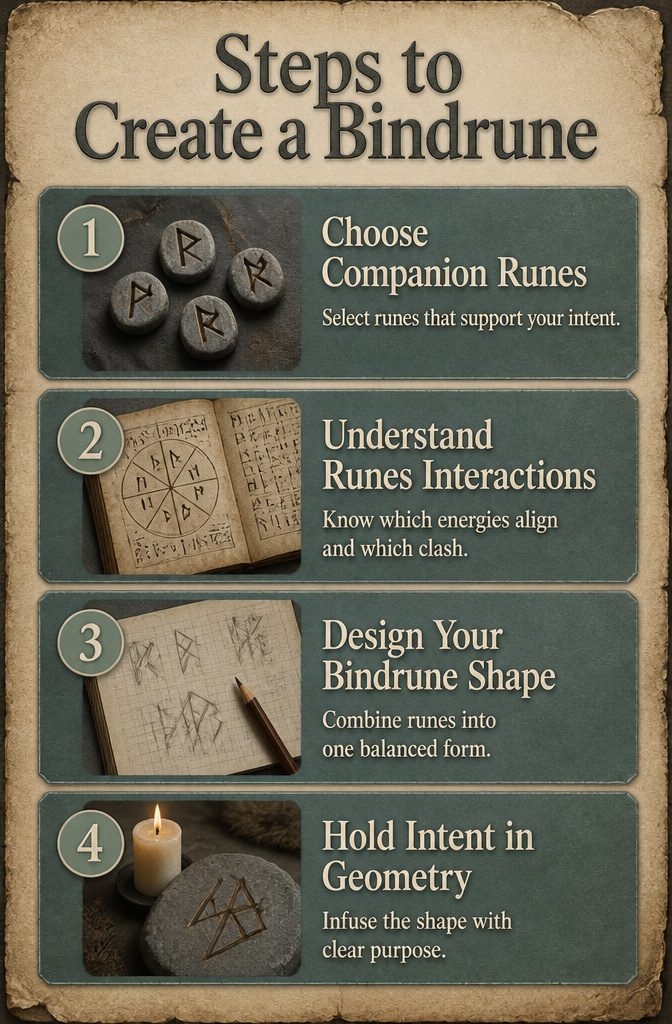
A bindrune layers protection by asking several runes to share one shape, not by picking the single strongest symbol and hoping it covers every threat. The result is riskier than it looks, and one common choice proves why.
Thurisaz on its own carries destructive force.
Wearing it permanently is understood to attract problems rather than deflect them, which makes it a poor fit for a standalone tattoo. In combination, though, it shifts to active protection.
The thorn quality that destabilizes when isolated becomes a barrier when anchored by companion runes. That is the bindrune gamble: context turns a hazard into a shield.
No historical source documents a specific protective bindrune design you can copy onto stencil paper.
The gap matters. Building one requires knowledge of how runes interact, which energies amplify and which clash, and how the geometry of the bind itself channels intent.
Without that background, the tattoo risks carrying a symbol that means less than nothing, or something the wearer did not intend.
Research Before You Ink
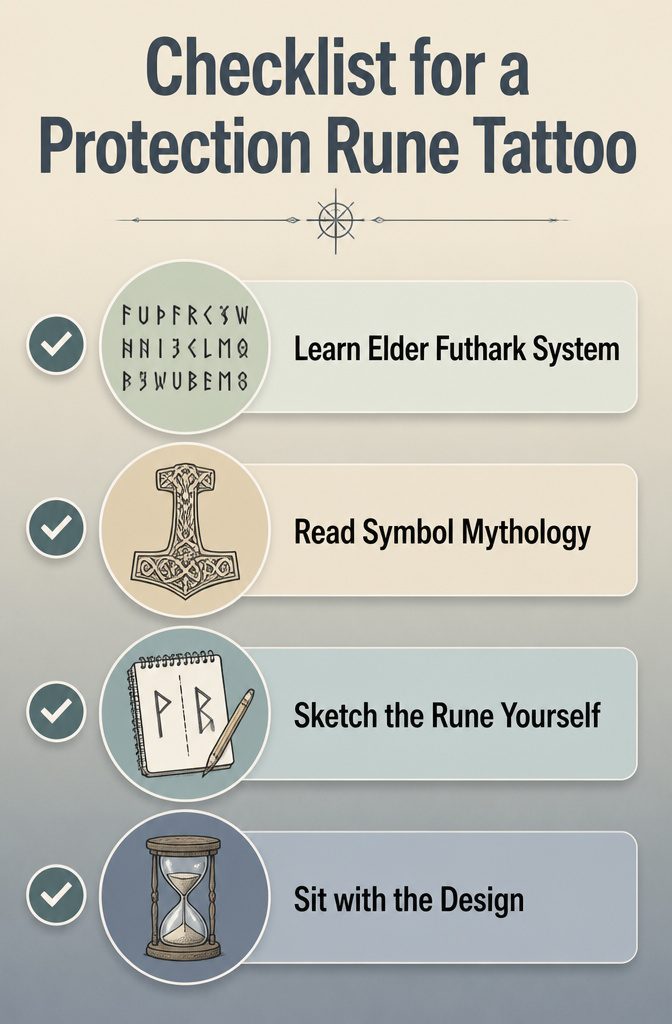
Getting a protection rune tattoo right means doing the homework first, because Elder Futhark symbols carry layers most flash sheets skip.
- Learn the full Elder Futhark system, not just the upright meanings. Each rune flips to a reversed reading, and the reversed forms are generally not recommended for ink unless you already work with them and understand what you are inviting. Study both orientations before you decide; what reads as shielding right-side up can shift to blockage or reversed energy when inverted.
- Read the mythology behind the symbol, not just the one-word summary. A rune tied to Thor’s hammer carries different weight than one rooted in Tyr’s sacrifice, and that story becomes part of what sits on your skin.
- Sketch the rune yourself, upright and reversed, until the orientation is automatic. A protection rune tattoo only protects if it faces the direction you intended; a flip during the stencil transfer turns the meaning.
- Sit with the design for several weeks before booking. The rune that felt urgent on Sunday can read differently once the initial pull fades, and tattoo removal runs colder than waiting.
Finding a Rune-Knowing Artist
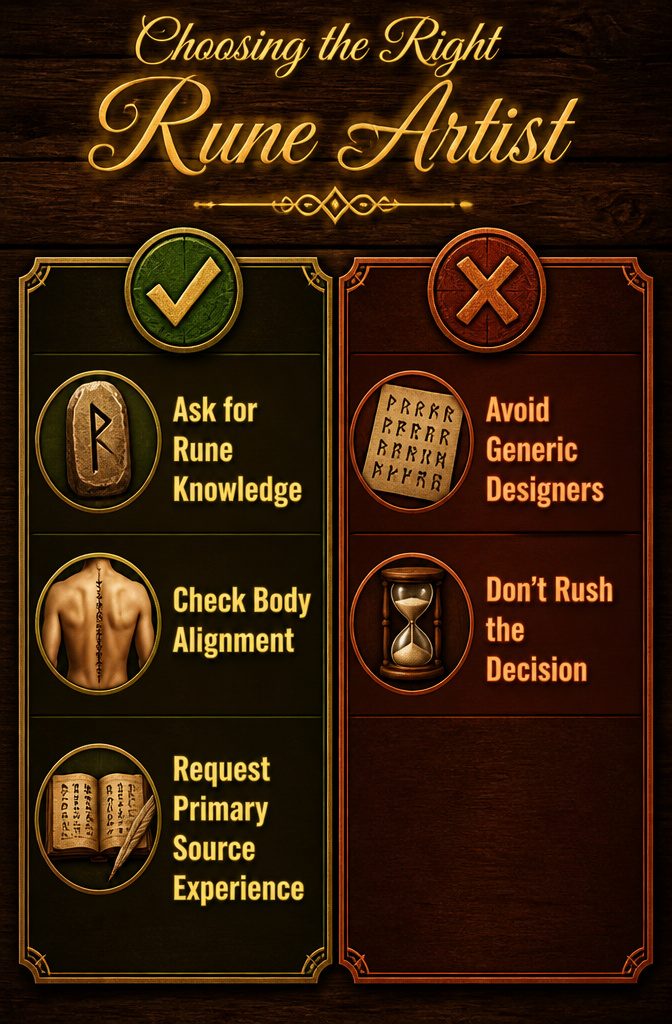
A protection rune tattoo is only as accurate as the hand holding the needle.
Runes are not generic line art: each has a specific stroke order and directional orientation that changes its meaning, and an artist who treats them as decorative Nordic flourishes can flip, mirror, or combine them in ways that say something unintended.
Ask three things before booking. First, whether they can name the rune you want and describe its traditional form, not just show you a Pinterest board of "Viking tattoos."
Second, whether they adjust rune spacing and alignment for the curve of the body, since runes carved on skin behave differently than runes carved on flat wood or stone.
Third, whether they have worked from primary sources like the Rune Poems or the Elder Futhark itself, or only from tattoo flash that may already contain errors.
Mistakes happen more often than people admit. An artist copying a popular bindrune design may accidentally duplicate a reversed symbol that weakens or contradicts the intended meaning, turning a ward into nonsense or worse.
Proximity and price should not decide this choice; the right artist costs what they cost because they understand the material. competence with a machine does not guarantee competence with an alphabet.
Try It Temporary First
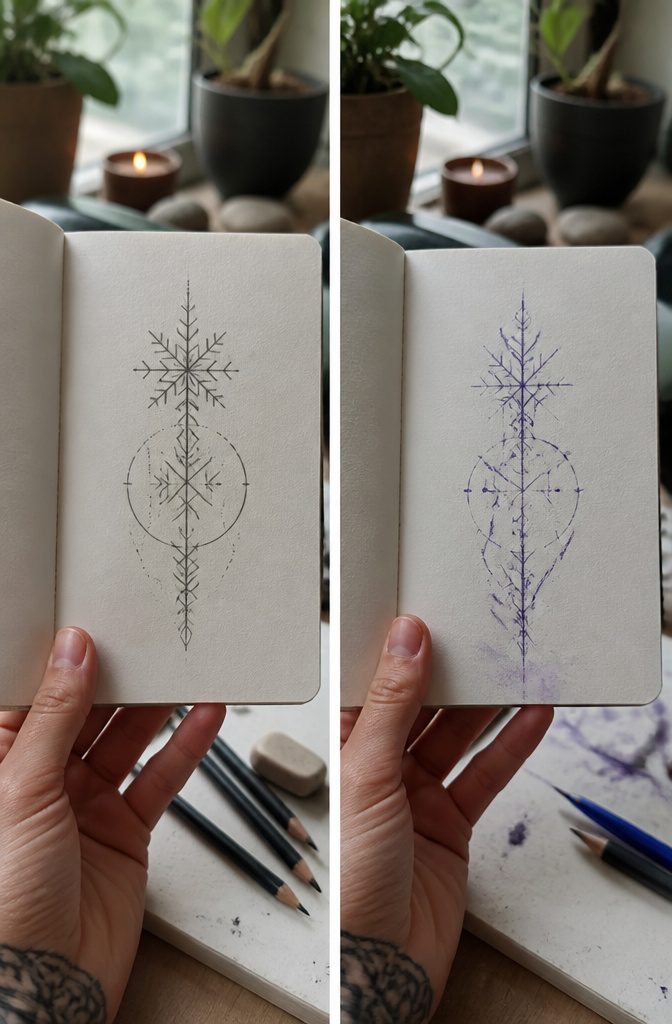
A rune on your skin only works if you still want it there after week three.
Before committing to needles and ink, draw the symbol yourself with a pen or try a henna version and treat it like a real tattoo.
Sleep with it, shower with it, catch your own reflection and see if the meaning still lands or if it starts to feel like a sticker you forgot to peel off.
Placement matters more than most sources admit. Wunjo is a case worth remembering: the rune stays upright only on the chest, back, or neck, since arms and legs flip it into its reversed, negative form.
Temporary testing would have saved anyone who inked it on a forearm and ended up carrying the wrong meaning.
A few days with a pen sketch on your inner arm shows exactly how the symbol shifts when you move, and whether that movement changes what it says to you.
Comfort with visibility is the other thing a temporary trial reveals. A protection rune tattoo on your neck is public in ways a collarbone placement is not.
A henna version lets you notice when you start hiding it under scarves or stop seeing it entirely. If either happens, the placement is wrong even if the rune itself is right.
Galdrastafir and Beyond Runes
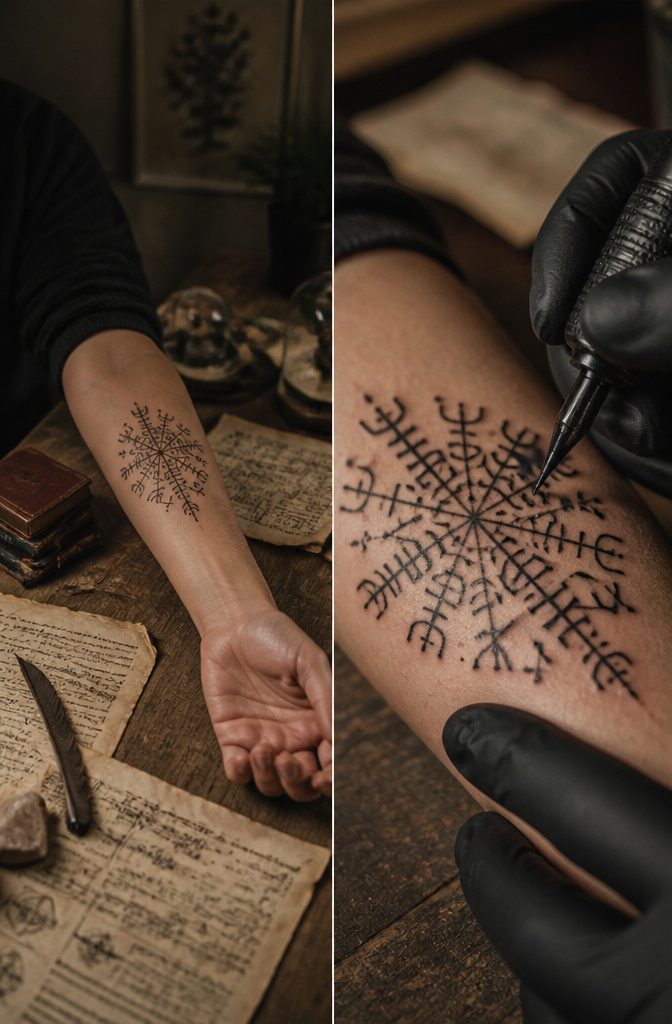
Galdrastafir sit outside the Elder Futhark system entirely. These Icelandic magical staves, drawn in manuscripts centuries after the Viking Age proper, carry different rules of construction and meaning than the runic alphabet most people request in shops.
I spent weeks confusing the two when I first started researching, assuming Ægishjálmur or Vegvísir were simply "rune variants" rather than separate magical symbols with their own textual histories.
The gap matters for a tattoo. A stave like Ægishjálmur appears in post-medieval grimoires with specific ritual instructions, not carved on Migration Period artifacts.
Treating it as interchangeable with Algiz or Thurisaz flattens that history into decoration. I nearly booked an appointment with a stave I’d misidentified as a "protection rune" before catching the date mismatch in the museum catalog I was browsing.
If you’re drawn to these symbols, the research path forks deeper.
Icelandic sources are sparser, translation work is ongoing, and academic folklore studies often disagree on which staves belong to which century. The visual appeal is immediate; the ground beneath it is softer.
Frequently Asked Questions
What is the meaning of the Algiz rune?
Algiz is a protection rune shaped like an upright staff with a single branch reaching upward, reading as a shield across a room.
Its symbolism layers the horns of the elk, branches of the world-tree raised in warding, and a hand held up to halt what should not pass. Most bindrunes built for safety use Algiz as their anchor.
Can I combine runes in a tattoo?
Yes, combining runes into a bindrune layers protection by asking several symbols to share one shape.
Thurisaz converts from destructive force into active protection when anchored by companion runes. No historical source documents a specific protective bindrune design to copy, so building one requires knowledge of how runes interact and which energies amplify or clash.
Should I hire an expert for my rune tattoo?
Yes, because runes have specific stroke order and directional orientation that changes meaning, and an artist treating them as decorative Nordic flourishes can flip or mirror them into something unintended.
Ask whether they can name your rune and describe its traditional form, whether they adjust spacing for body curves, and whether they have worked from primary sources like the Rune Poems.
What is the rune symbol for protection?
Algiz is the rune most singled out for protection, though Eihwaz offers a different kind of safety through endurance and outlasting threats rather than blocking them.
Thurisaz provides active protection only when bound with other runes, not standing alone. The best symbol depends on whether you want immediate shielding, long-term resilience, or an offensive barrier.
Is it okay to get runes tattooed?
It is okay if you do the homework first: learn the full Elder Futhark system including reversed meanings, read the mythology behind your symbol, sketch the rune yourself until orientation is automatic, and sit with the design for several weeks before booking.
Try it temporary first with pen or henna to test how placement and visibility feel during ordinary movement.
What runes to avoid tattooing?
Avoid Thurisaz alone on skin, since its destructive force does not switch off after the moment passes and invites trouble rather than repelling it.
Avoid reversed Wunjo on arms or legs, since movement flips it into its negative form of sorrow and isolation.
Any rune inked backward risks activating a shadow version unless you already work with reversed forms and understand what you are inviting.