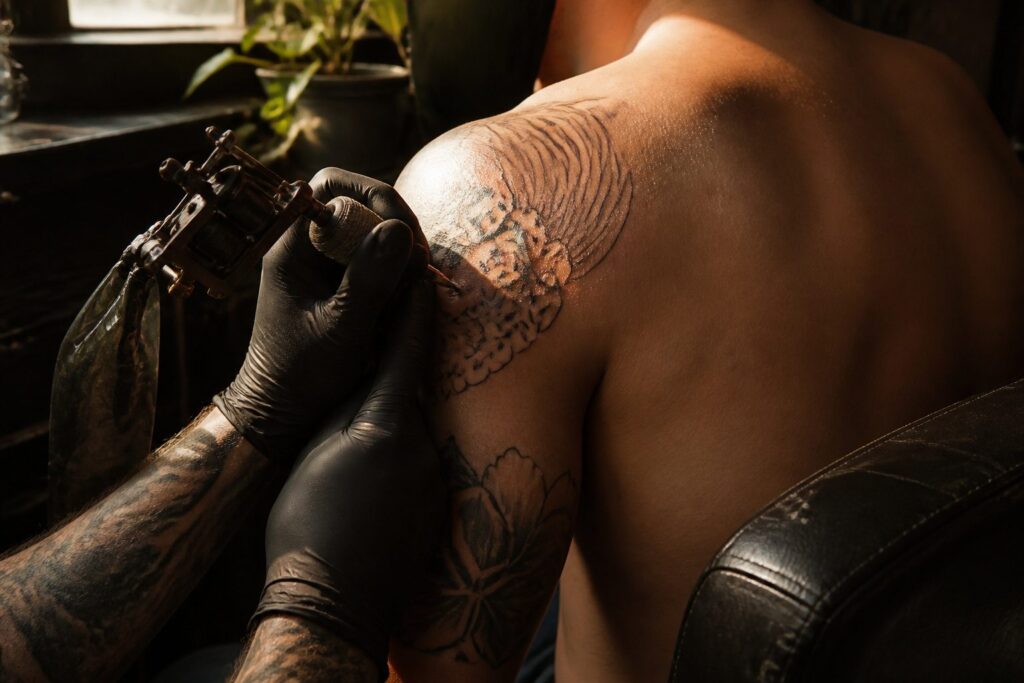
A tattoo size chart maps dimensions to what skin can actually hold.
The same 3-inch design that stays crisp on a flat forearm will blur within years on ribs that stretch with every breath, because placement changes the rules the measurement alone does not show.
Most shops switch to hourly or day-rate pricing once a piece crosses 10 inches, where a full sleeve can swallow 20 to 40 hours across months of healing breaks.
Small Tattoos
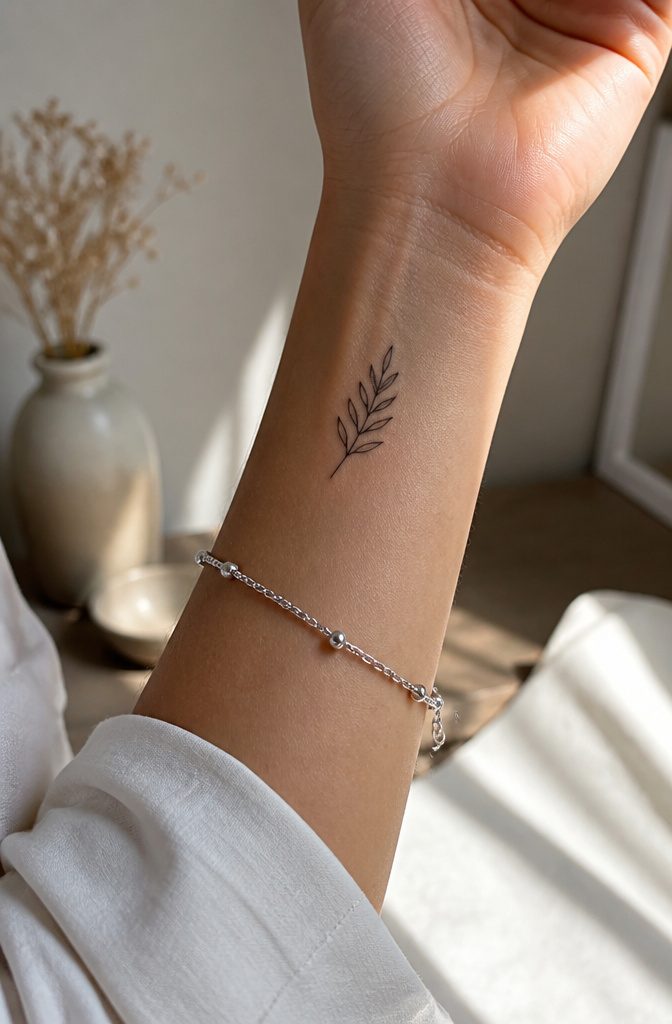
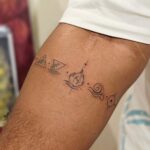
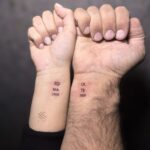
Small tattoos sit in the 1–3 inch range, a size that covers quickly and heals fast on most people.
The inner wrist, ankle, and collarbone turn up again and again for first-timers because shirts, socks, or a necklace line hide them without effort.
Fine line work dominates here; a simple leaf, a word, or a tiny symbol holds its weight when the details stay minimal.
Go too dense with shading and the design will blur inside two years as skin shifts and ink spreads.
Pain tends to be sharpest where bone sits close to surface, so the collarbone and ankle outrank the outer arm or thigh for sting, though none of these spots run long enough to matter much at this scale.
A small piece also lets you test how your skin takes ink and how your artist handles your requests before committing to larger work.
Ask what your design will cost at two inches versus three; the studio can usually adjust size or placement to hit a budget without stripping the idea down to nothing.
Most artists treat these as single-session bookings, which keeps the time commitment low for anyone still building pain tolerance or calendar space.
Medium Tattoos
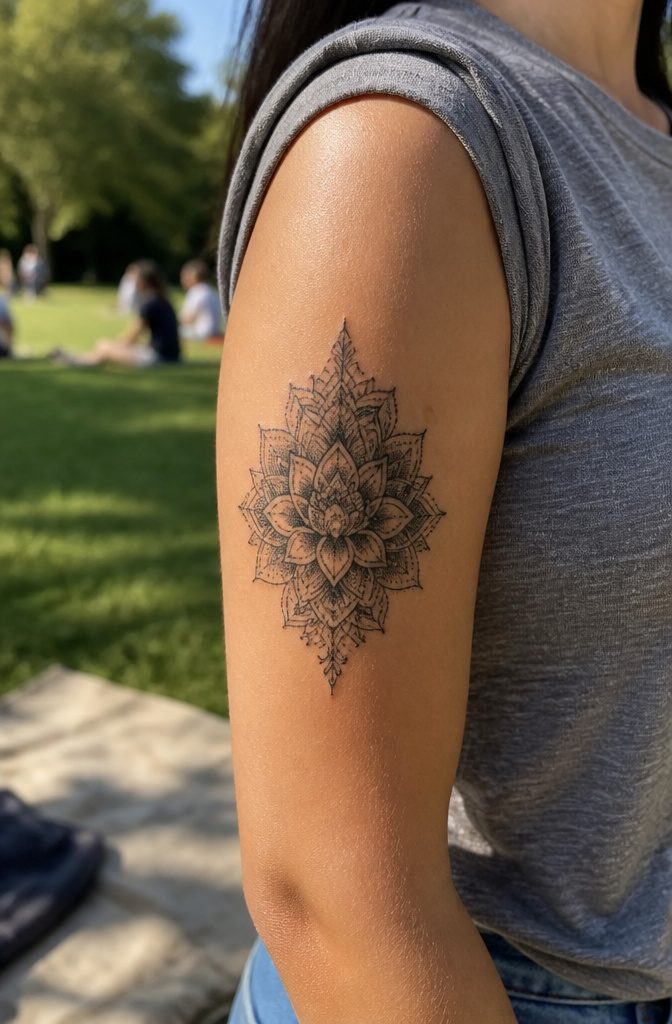
A 4–6 inch tattoo sits in the practical middle ground most people end up choosing, even when they walked in thinking smaller or bigger.
At this size, a line can curve with real intention, a flower petal can carry its own shadow, and script stays legible without dominating a forearm or calf.
The detail becomes possible without the commitment of a torso panel or a sleeve.
Placement matters here more than at smaller scales because the skin you choose might want a neighbor later.
The outer upper arm, the side of the thigh, the flat plane of the shoulder blade: these all hold a medium piece comfortably and still leave surrounding territory open.
A 5-inch mandala on the inner bicep can become the anchor of a half-sleeve in five years, or stay exactly what it was.
The upper back, below the neck and above the bra line, works the same way for women layering work around an existing design.
I have watched friends book medium-sized pieces as a compromise and end up preferring them to the tiny tattoos they outgrew or the large ones they stalled on finishing.
The cost and the chair time land where the psychology does: serious enough to mean something, contained enough to live with tomorrow.
Large Tattoos
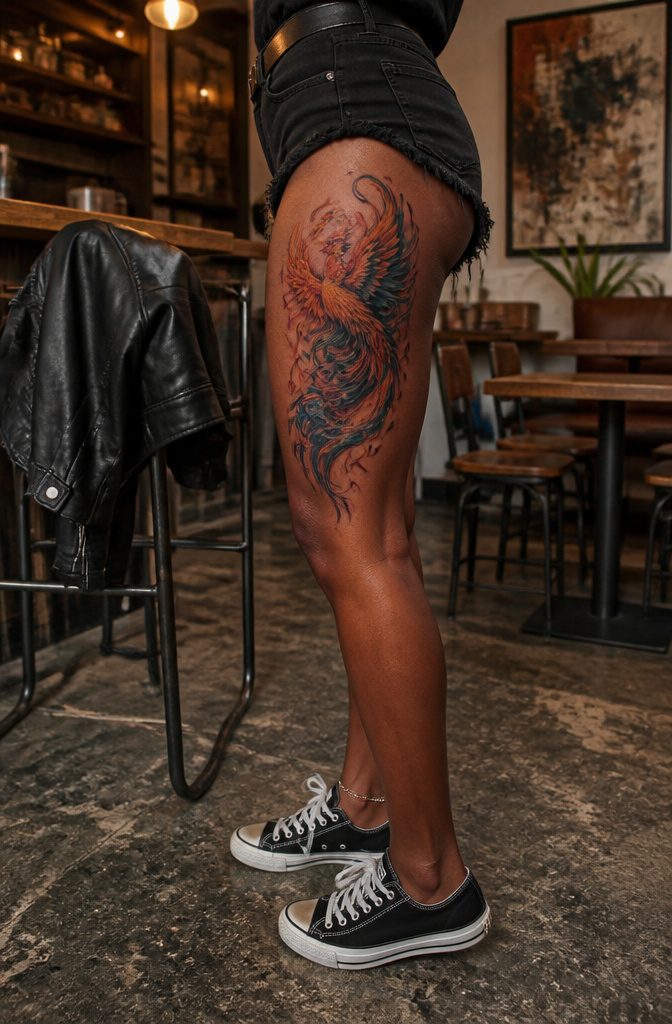
A 7–10 inch tattoo crosses into territory where placement stops being casual and starts being strategic.
The upper back, outer thigh, and center of the chest become the usual choices at this scale, not because smaller areas are impossible, but because a design needs room to breathe so details do not collapse into each other.
Session planning changes entirely here. What sits in a single afternoon now demands multiple appointments, sometimes spread across weeks for healing between passes.
Skin that looked good after one sitting can blow out or heal patchy if you push too far in one go, and the artist’s hand gets less precise as hours add up.
I have seen friends schedule a Saturday marathon only to tap out at hour four and need three more visits anyway, paying more in the long run than if they had planned for two from the start.
The thigh carries less pain drama than ribs or spine, which matters when visit counts climb, though loose skin can shift the stencil if you sit wrong.
Chest placement sits differently on women, and a reputable artist will map the design with your bra line in mind so the visual weight holds when you are clothed.
Extra-Large Tattoos
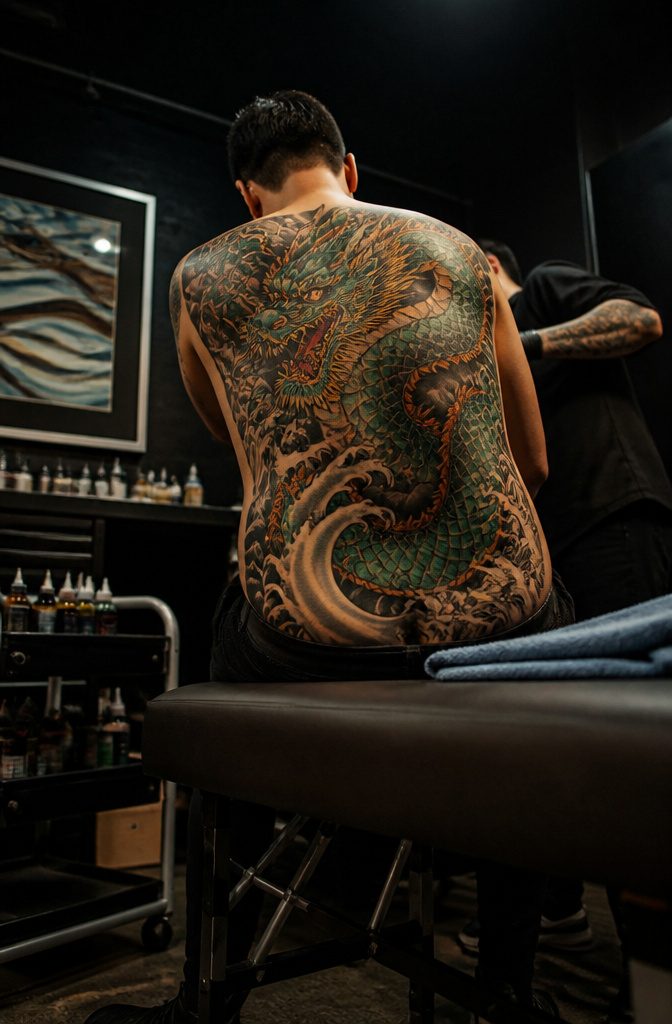
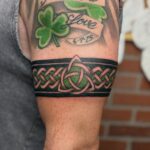
Anything over 10 inches sits in a different category of commitment. Full sleeves, back pieces, and leg panels demand months or years of scheduled sessions, not a single afternoon in the chair.
Artists quote this work differently than smaller tattoos.
The price depends on more than the raw dimensions. Two tattoos that cover the same number of inches can cost very differently based on detail, color saturation, and how the body area moves and stretches.
Most shops switch to flat day rates or hourly blocks for extra-large work rather than the per-piece pricing used on smaller designs.
The real cost is time. A full sleeve often runs 20 to 40 hours.
A back piece can stretch across two years of appointments. Skin needs healing between sessions, and life gets in the way.
Before booking, ask how the artist structures long-term projects. Some require deposits that lock in recurring slots; others treat each session as its own booking and risk calendar gaps that stretch the timeline further.
Placement matters at this scale in ways that smaller tattoos do not. A sleeve moves with the shoulder and elbow.
A back piece compresses when you sit. The design must be planned around how the body shifts, or the image distorts in daily use.
Measuring With a Ruler
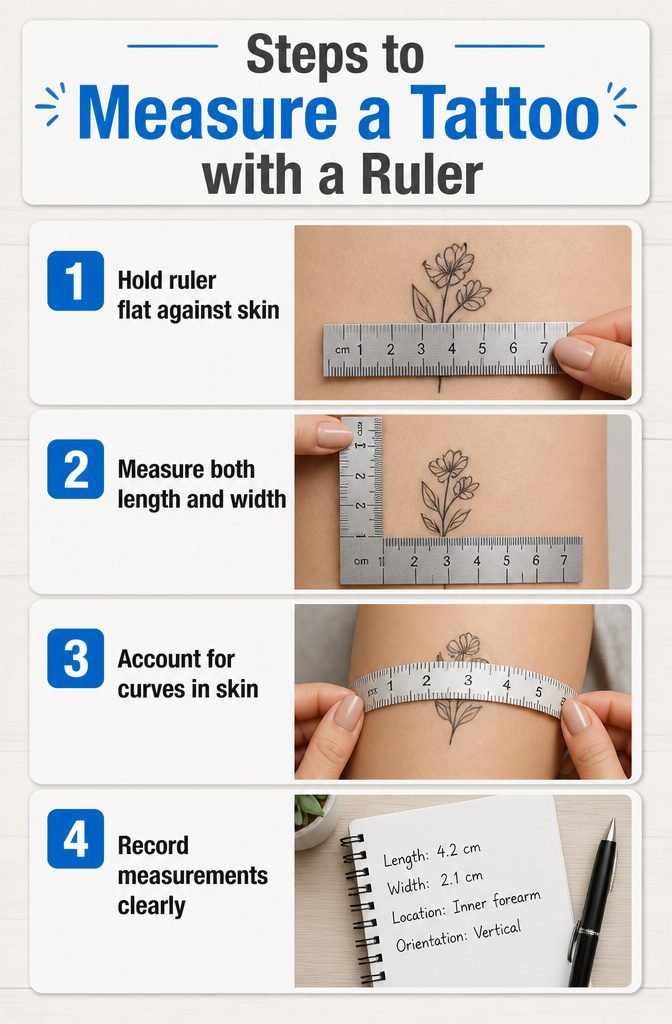
- A ruler measures tattoos the same way it measures anything else: length by width, recorded in inches or centimeters. The artist needs both numbers, not just one. A 2-inch tattoo rotated 90 degrees is still a 2-inch tattoo, but placement changes whether your body has room for the orientation you want.
- Flat measurements break down on curved spots like ribs, shoulders, or calves. Skin wraps, so a 3-inch straight line across a bicep sits differently than the same 3 inches following the curve of an ankle. What reads as generous flat space can feel cramped once the stencil bends.
- If you measure at home, write down the numbers but tell your artist where and how you held the tape. They will likely re-measure anyway, and the second reading usually corrects the first.
Placement and Pain
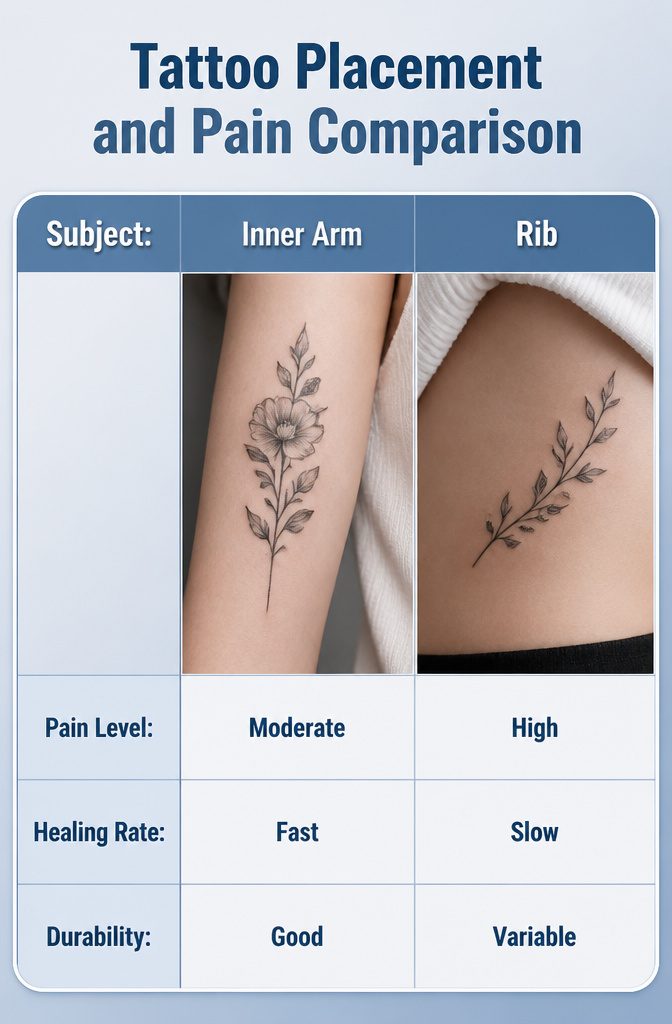
A rib piece that looked perfect at two inches had bled into a soft gray smear within three years.
The skin there stretches and shifts with every breath, so fine lines pull apart and close together until the ink migrates. That taught me pain is only half the placement story.
The flat planes of the outer arm or calf carry detail well and generally heal as drawn. By contrast, the closer bone sits to surface, the more the needle reverberates, and the more the skin struggles to hold saturation.
Some spots that photograph beautifully on day one distort fast. The inner bicep softens with age and sun.
Fingers and palms shed pigment almost predictably. Ribs, feet, and anywhere the skin flexes constantly demand simpler shapes with breathing room built in.
Size limits follow the same logic. A palm can manage a bold quarter-inch mark.
A full back can swallow a scene measured in feet. The same design at the wrong scale on the wrong canvas either blurs or looks stranded.
Design Complexity at Each Size
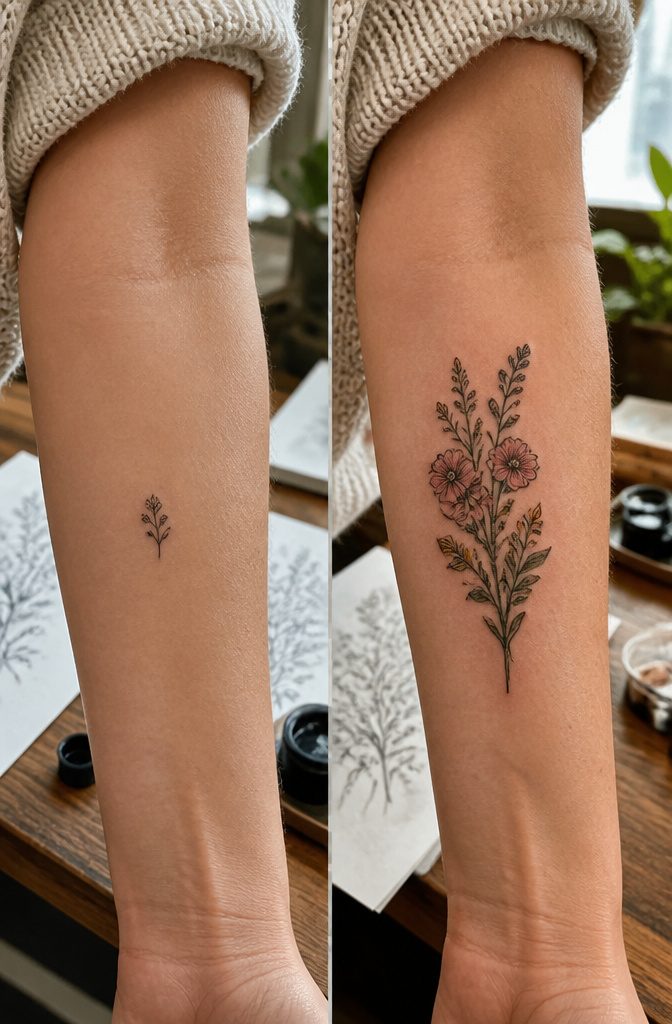
Dense shading and fine linework demand different amounts of real estate on skin.
A single-needle floral piece packed into two inches will blur inside five years as the ink migrates between layers. The lines soften, the petals merge, and the detail you paid for becomes a smudge.
Line weight is the first variable that scales badly.
Hair-thin strokes look crisp on paper at any size because paper does not shift. Skin lives: it stretches, scars, and suns.
A 0.3 mm line drawn at under 2 inches wide stands a fair chance of disappearing into texture, while the same weight at 4 inches survives the decades because there is enough pigment density to weather the spread.
Color packing follows the same math.
Saturated fields need overlap to read as solid. Shrink the design and the artist must reduce the number of passes or crowd them too tight, which heals patchy either way.
Black and grey work is more forgiving; the eye reads a half-tone dot at smaller sizes than it reads a hard edge of crimson or cobalt.
Two tattoos of identical dimensions can carry wildly different session lengths and prices for exactly this reason. A clean outline of a crescent moon at 3 inches is one sitting.
A photorealistic moth at the same span might need three. The size chart gets you in the door, but the complexity inside that square inch is what drives the clock and the cost.
Frequently Asked Questions
What are the different sizes of tattoos?
Small tattoos cover 1–3 inches, medium runs 4–6 inches, large spans 7–10 inches, and extra-large is anything over 10 inches.
How does tattoo placement affect size?
Placement changes whether a design fits, holds detail, or distorts over time.
Flat planes like the outer arm carry fine lines well, while ribs, fingers, and skin that flexes constantly need simpler shapes with breathing room built in. Bone-close spots also amplify pain without adding any visual benefit.
What is the best way to measure a tattoo size?
A ruler gives the length and width in inches or centimeters, and you need both numbers, not just one.
Flat measurements get tricky on curved spots like calves or ribs, so tell your artist exactly where and how you held the tape; they will likely re-measure anyway.
Can you provide a chart of tattoo sizes and prices?
Small pieces are usually priced per piece, while extra-large work shifts to flat day rates or hourly blocks. A photorealistic 3-inch moth can cost triple a simple crescent moon at the same size.