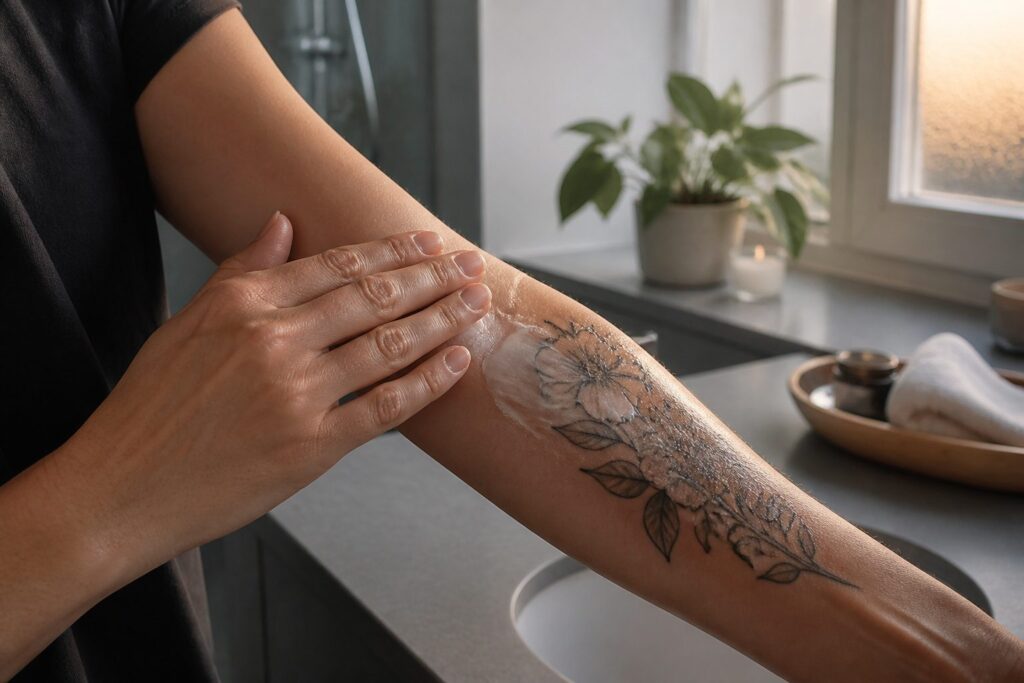
Tattoo aftercare is the cleaning, moisturizing, and protection routine that keeps a fresh tattoo from scarring, fading, or getting infected.
What complicates things is that the timeline splits immediately based on what your artist wrapped you in: plastic wrap comes off in 2 to 4 hours, while second skin stays on for several days.
Ask before you leave the shop whether they plan to replace the film once, because that single detail changes everything that follows.
Initial Covering
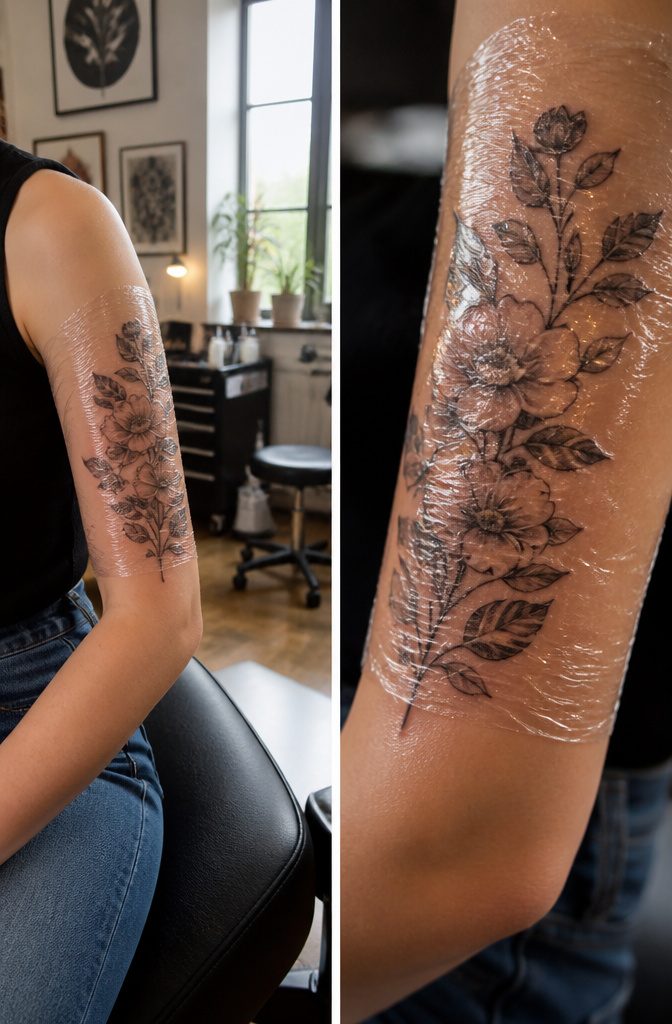
The covering on your fresh tattoo starts working the moment you stand up from the chair.
Plastic wrap comes off after 2 to 4 hours. Second skin stays on longer, typically 3 to 5 days, though some artists direct 2 to 4 days for the first application.
Either way, the point is the same: airborne bacteria and the friction of your clothes against an open wound are the enemy right now.
Plasma, extra ink, and a little blood will pool underneath.
That fluid looks alarming, but it is normal. What the wrap does is keep that environment controlled so the skin surface does not crust too early.
Your artist should tell you which timeline applies to what they used. Wash your hands with antibacterial soap before you touch anything, whether you are removing basic wrap at home that evening or peeling back adhesive film days later.
Warm water and fragrance-free soap come next, but that belongs to the wash step, not this one.
One thing I have noticed in comparing advice: the range for second skin swings wider than plastic wrap, and some artists reapply a second round while others do not.
The question to ask before you leave the shop is not just how long to keep it on, but whether they plan to replace it once.
First Wash
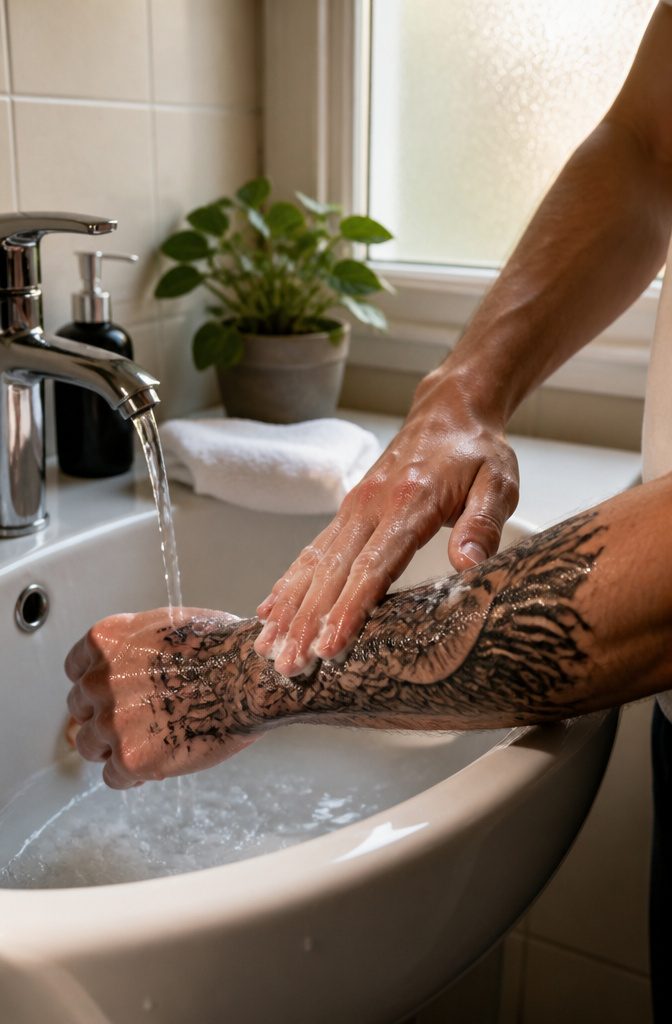
The bandage that comes off after a few hours (or a few days, if your artist used a second-skin film like Saniderm) leaves behind dried plasma, excess ink, and sometimes a little blood.
Wash your hands first, every time, before you touch anything near the tattoo itself.
Lukewarm water is the temperature that matters here. Too hot opens the pores and pushes out more plasma; too cold tightens the skin and stings.
A mild, fragrance-free liquid antibacterial soap lathered in clean fingertips, nothing abrasive, works the film off without scrubbing. Rinse until the skin feels clean, not slippery.
Pat dry with a clean paper towel. A bath towel from the rack holds bacteria you do not want near an open wound, and rubbing traps fibers in the fresh ink.
The timeline splits.
A standard plastic wrap comes off in a few hours, and that first wash happens the same day. A second-skin film stays on for up to a few days, so the first wash waits accordingly.
Either way, what you want is identical: remove the debris before it hardens into thick scabs that pull ink out with them when they eventually fall.
Let the skin air-dry for 15–20 minutes before any moisturizer touches it. Wet skin under ointment breeds the wrong kind of moisture, and the first 48 hours are about giving the tattoo a clean, calm environment to start healing in.
Moisturizing
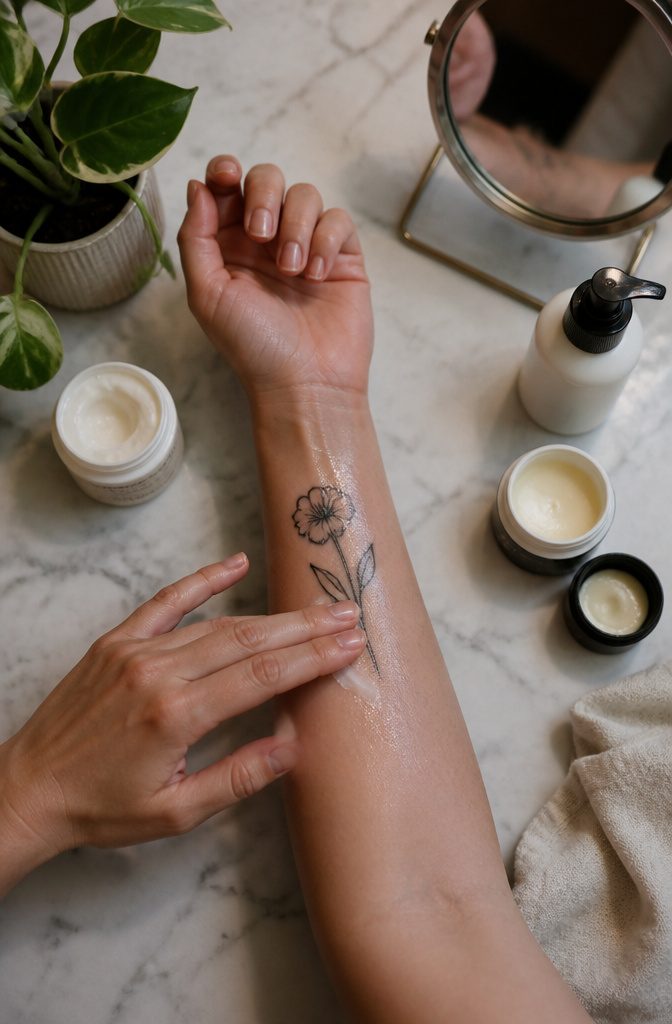
Moisturized skin heals a tattoo without the cracking that pulls ink out with it. What works is giving it just enough to do that job.
A thin layer means thin, not a glazed doughnut sheen. Two to three times a day is the usual rhythm: morning, midday, and before bed for the first stretch.
If the skin looks wet or feels tacky an hour later, you are laying it on too heavy and suffocating the work underneath. That trapped moisture can bubble the surface or clog pores into little whiteheads around the lines.
Aquaphor works for the initial days because it spreads without forming a pure petroleum barrier; air still moves through it.
Once the surface settles, I switch to Lubriderm, something fragrance-free and light enough that it vanishes into the skin rather than sitting on top.
Tattoo-specific balms with shea butter or jojoba oil are also in rotation now, though I treat them as alternatives rather than upgrades. The ingredient list matters more than the marketing: no fragrance, no alcohol, nothing that stings.
The real test is absorption. The lotion should be gone within a few minutes, leaving the area feeling like normal skin that happens to have a fresh tattoo on it.
Ongoing Care
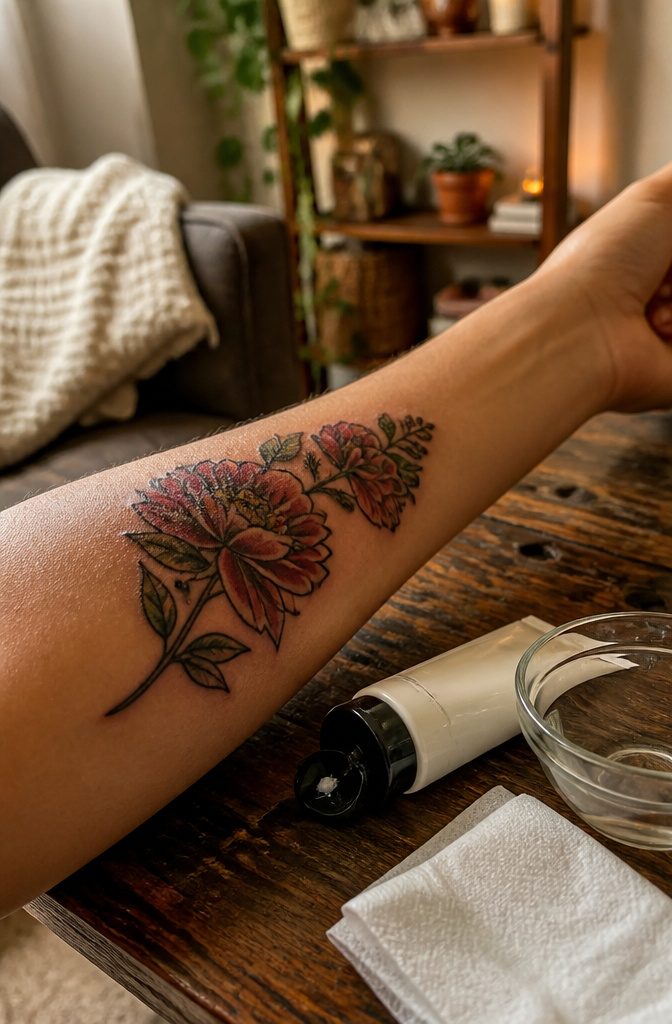
By day four, the oozing has usually slowed and the surface starts to tighten.
This is when scabbing begins, and with it comes the real test of patience. The skin itches like a healing cut, sometimes intensely enough to wake you up at night.
Gently patting the area helps more than you’d expect. A cold compress with a thin cloth barrier between it and the tattoo can take the edge off without soaking the skin.
Washing and moisturizing stay on the same twice-daily schedule through about week two, though some artists drop to once daily after the first week.
The moisturizer should stay light; heavy layers trap moisture and soften scabs that need to dry and lift on their own. Picking or scratching pulls ink out with the scab, leaving pale spots that need touch-ups later.
The "milky" look arrives around weeks three and four.
The tattoo appears dull under a thin veil of dead skin, which is normal but disquieting if you haven’t seen it before. That cloudiness clears as the deeper layers finish rebuilding.
Water stays restricted the full two weeks at minimum, some artists say three or four.
Showers are fine, but baths, pools, hot tubs, oceans, and lakes are off limits until the surface has fully closed. Sun exposure carries the same restriction, and sunscreen waits until healing is complete.
The gym, with its shared equipment and heavy sweat, is a bacterial risk on skin that is still technically an open wound. Tight clothing that rubs and traps moisture against the area is worth skipping too.
Active care runs two to four weeks for most people, though deeper layers keep settling for months. The shift to long-term care is simple: once the surface is intact, UV protection becomes the daily habit that preserves the color.
Long-term Protection
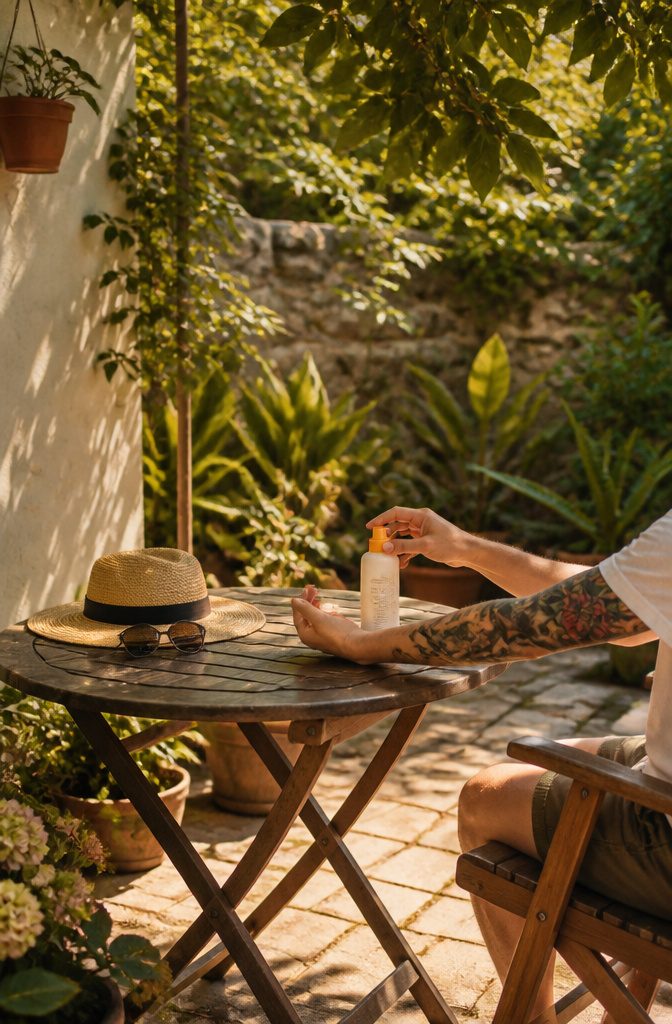
The surface of your tattoo may look settled after two to three weeks, but deeper layers of skin keep regenerating for up to six months.
That longer timeline matters more than most people realize. During those months, the ink is still anchoring itself, and the choices you make show up in how the tattoo looks five years out.
Regular moisturizing remains worth the habit even after the peeling stops.
Dry skin catches light differently and makes lines look chalky. A thin layer of whatever lotion you already use on your body is enough; what counts is consistency, not a special product.
SPF 30 or higher sunscreen is the part nobody wants to hear but everyone ends up grateful for. UV exposure breaks pigment down directly, and a faded tattoo rarely fades evenly.
The blacks go gray first, then the colors wash out in patches. A daily application on exposed work takes ten seconds and costs less than any touch-up.
The "milky" or matte look some tattoos develop during weeks three and four is normal.
It clears as the deeper skin finishes its cycle, not because you did something wrong. Keeping the area out of direct sun and lightly moisturized gets you through that phase without the temptation to overwork it.
Healing Timeline
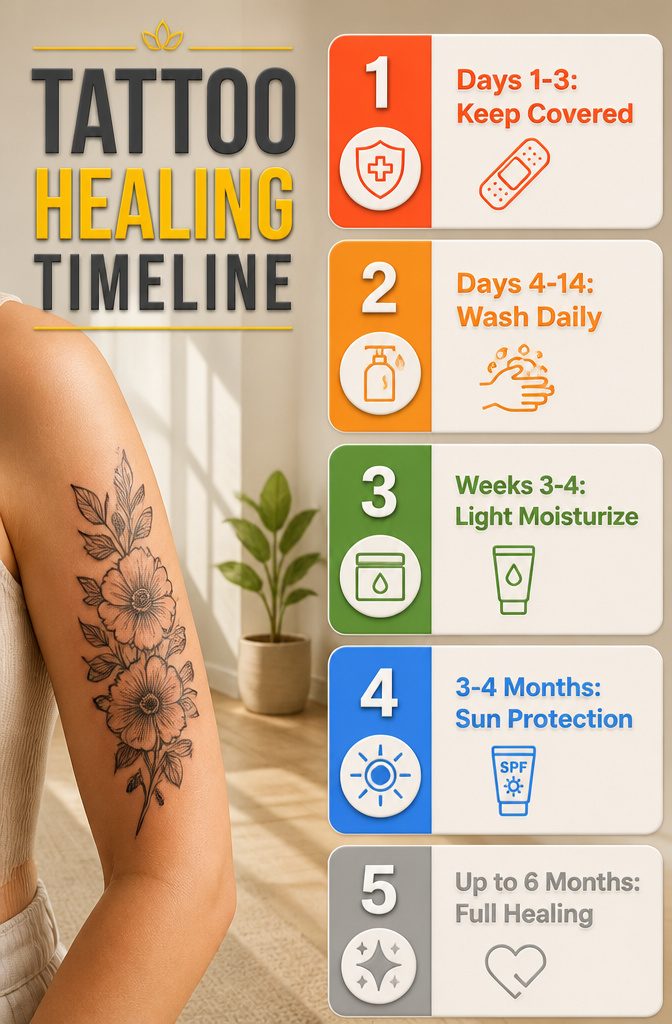
The first three days are the messiest.
Plasma and ink seep through the bandage, and the skin around the new work stays red and tender. This is the inflammatory phase, and what you want is simple: keep bacteria out and let the wound settle.
Most artists send clients home with a covering to leave on for a few hours, then replace or switch to breathable protection that still blocks germs.
Days 4 through 14 bring the shedding phase.
Light scabs form, the area starts to itch, and washing becomes part of the daily routine. The surface heals in 2–4 weeks, but that is only the outer layer coming together.
Beneath it, deeper tissue is still rebuilding. By week 3 or 4 the tattoo often looks dull or cloudy, which is normal; the regenerating phase just needs patience and continued light moisturizing.
Full healing of the lower layers takes longer than the surface suggests. Some sources say 3–4 months; others describe a maturing window that runs up to 6 months.
The tattoo brightens again once that deeper work finishes. Until then, sun protection matters even after the scabs are gone.
UV exposure during these later weeks can fade ink that has not fully settled, so the care routine should stay in place through the full window, not stop when the skin looks fine.
Aftercare Products Compared
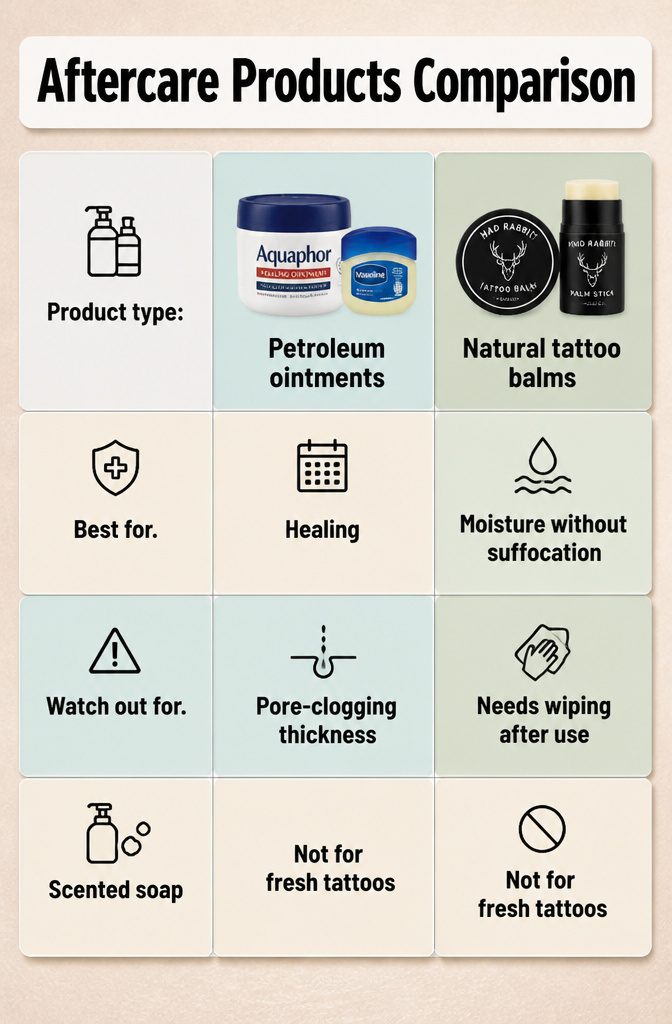
Petroleum-based ointments like Aquaphor and Vaseline trap bacteria and block pores, which slows healing and raises infection risk.
Fragrance-free soaps do the actual cleaning work instead. Dr. Bronner’s Unscented cleans without the irritation that scented alternatives add back in, and Vanicream or Lubriderm’s fragrance-free lotions hydrate without the dyes and perfumes that inflame fresh ink.
Dedicated tattoo balms such as Mad Rabbit skip petroleum entirely, building around shea butter, jojoba oil, or aloe vera.
Their balm stick also avoids cross-contamination. Daily lotions marked as tattoo-specific, like Mad Rabbit’s Daily Tattoo Lotion, belong only after healing finishes; regular white lotions handle the job fine during the active phase.
| Product type | Best for… | Watch out for… |
|---|---|---|
| Petroleum ointments (Aquaphor) | First 3-4 days under traditional bandage only | Pore-clogging thickness; switch to lotion quickly |
| Natural tattoo balms (Mad Rabbit) | Moisture without suffocation | Stick format needs wiping after each use |
| Fragrance-free soap (Dr. Bronner’s Unscented) | Cleaning without irritation | Not a moisturizer on its own |
| Scented soap or lotion | n/a | Fragrance and alcohol irritate fresh tattoos |
| Daily tattoo lotion (Mad Rabbit Daily Tattoo Lotion) | Healed ink maintenance | Do not apply to unhealed skin |
| Standard fragrance-free lotion (Lubriderm, CeraVe, Vanicream) | Main moisturizing phase | Verify "fragrance-free," not just "unscented" |
My own tendency is toward simpler: a plain white lotion in the first week, then nothing tattoo-specific at all.
The dedicated balms earn their place if you’re prone to dryness or replacing a compromised barrier, but most healing needs basic care done carefully rather than specialized products done twice.
Signs of Trouble
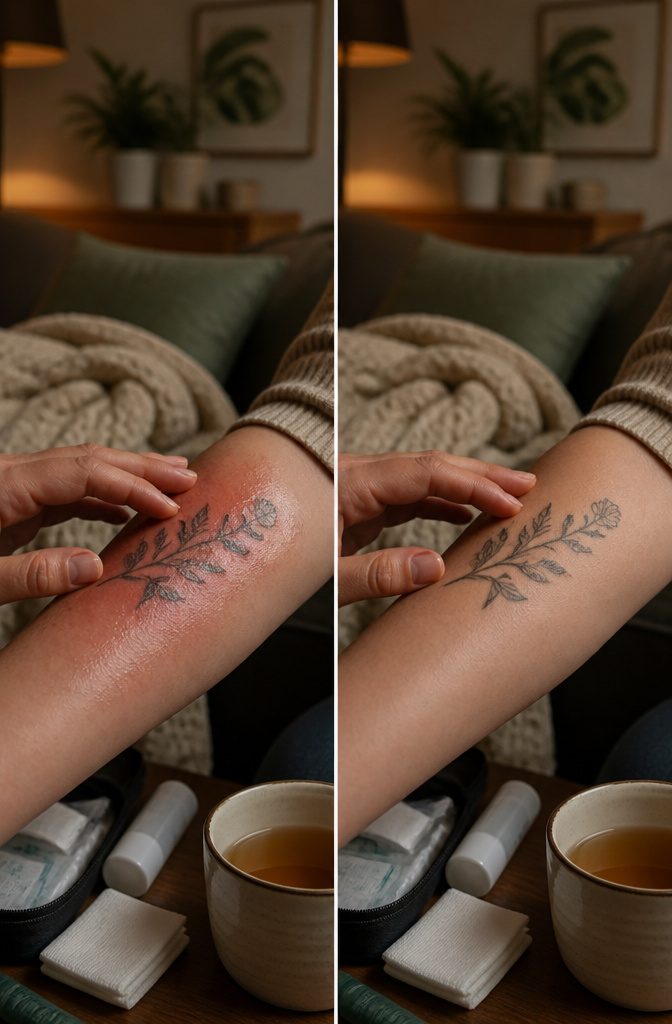
Slight redness and a little swelling around fresh ink are normal; so is the cloudy film that settles over the tattoo for a day or two and the light flaking that follows.
The skin is doing what it does after any wound, and the improvement should be steady.
When the redness spreads rather than retreats, the skin feels hot, or you notice a greenish-yellow discharge, that is infection, not healing.
Pain that intensifies after the first couple of days, red streaks moving away from the tattoo, or a fever are signs to contact a doctor, not just your artist.
Your artist wants to see the work if something looks off, but fever and spreading redness need a clinic, not a studio opinion.
Keeping the area clean from the start is the prevention. Wash your hands first, then use lukewarm water and a mild, fragrance-free antibacterial soap.
Pat dry with a clean paper towel. Clean skin is what keeps bacteria out of the open wound a tattoo creates, and that matters more than any ointment you apply after.
What to Avoid
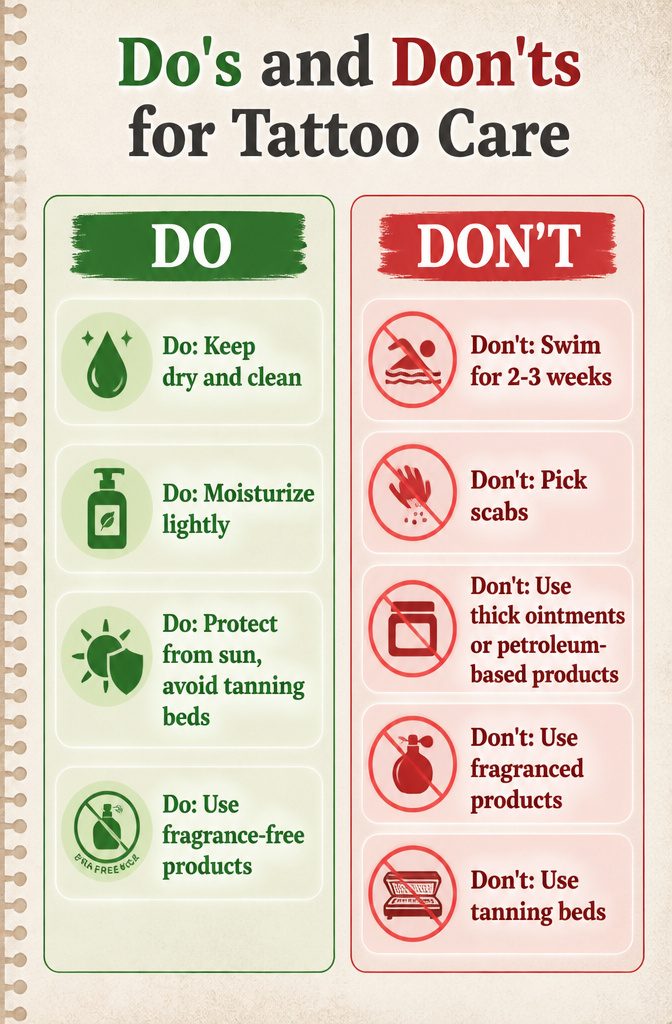
A few habits turn a two-week heal into a six-month cover-up job. These are the ones I watch for.
- Hold off on swimming for two to three weeks. Pools, hot tubs, lakes, and oceans all expose fresh ink to bacteria and chemicals that can lead to infection. Showering is fine; soaking is not. The scabs need to fully settle before you submerge them.
- Keep new tattoos out of direct sun and skip tanning beds for the first few weeks. UV is the fastest way to kill fresh color, and the damage sits in the skin before you see it. Sunscreen becomes a lifelong habit once the heal is done, but early exposure is asking for a faded patch.
- Do not pick scabs or scratch. It is the quickest route to wrecking a heal, and the scar that forms pulls ink out with it. Let the skin flake on its own schedule.
- Avoid thick layers of ointment or petroleum-based products like Vaseline. They clog pores and suffocate the tattoo, which slows healing rather than helping it. A thin layer of fragrance-free, alcohol-free lotion or a tattoo-specific aftercare product is the right move, applied just enough to keep the surface supple.
- Fragranced products belong nowhere near fresh ink. Fragrance is a top irritant on open skin, and the reaction can mimic an infection or create one. "Fragrance-free" is the label to look for, which is different from "unscented."
Frequently Asked Questions
How long should I keep my tattoo covered?
Plastic wrap comes off after 2 to 4 hours, while second skin stays on for 3 to 5 days, though some artists direct 2 to 4 days for the first application.
Ask your artist before leaving the shop not just how long to keep it on, but whether they plan to replace it once. Your artist’s specific instructions for the bandage they used should override any general timeline.
What should I use to clean my new tattoo?
Wash with lukewarm water and a mild, fragrance-free liquid antibacterial soap lathered in clean fingertips.
Avoid anything abrasive, rinse until the skin feels clean rather than slippery, and pat dry with a clean paper towel. Bath towels hold bacteria and rubbing traps fibers in the fresh ink, so skip them entirely.
Can I swim with a new tattoo?
Stay out of pools, lakes, oceans, and hot tubs until the surface has fully closed, which means two weeks at minimum and some artists say three or four.
Showering is fine, but soaking introduces bacteria and chemicals that can lead to infection. The restriction on water applies until scabs have fully settled and the surface has sealed.
How do I know if my tattoo is healing properly?
Normal healing includes slight redness, mild swelling, light flaking, and a cloudy or dull appearance around weeks three and four that clears as deeper layers finish rebuilding.
Improvement should be steady, not worsening. If redness spreads, the skin feels hot, or you notice greenish-yellow discharge, that signals infection rather than healing.
What should you not do after a tattoo?
Do not swim for two to three weeks, pick or scratch scabs, expose the area to direct sun or tanning beds, apply thick layers of petroleum-based products, or use fragranced soaps or lotions anywhere near the fresh ink.
Tight clothing that rubs and traps moisture, plus gym sessions with shared equipment and heavy sweat, are also worth skipping while the skin remains an open wound.
Do tattoos heal better dry or moist?
Moist, but barely. A thin layer of moisturizer two to three times daily keeps the skin supple without cracking, yet too much traps moisture and suffocates the tattoo underneath.
The surface should feel like normal skin within minutes of application, not tacky or wet. Wet skin under ointment breeds the wrong kind of moisture, so let the area air-dry for 15–20 minutes before any product touches it.