A full arm piece can sit anywhere from dark geometric linework to the full color saturation of the cosmic sleeve, and the session count does not move in your favor once you start building up that much density.
The deciding factor is whether you need the design to stay legible through decades of aging or whether you plan to refresh it.
The phoenix, floral, and angel sleeves all stay in black and grey, which I see done mostly for how the larger pigment particles hold their place over decades; the cosmic sacred geometry sleeve breaks that rule, and its upkeep is where you notice the difference.
1. Geometric Patterns with Triangles and Waves
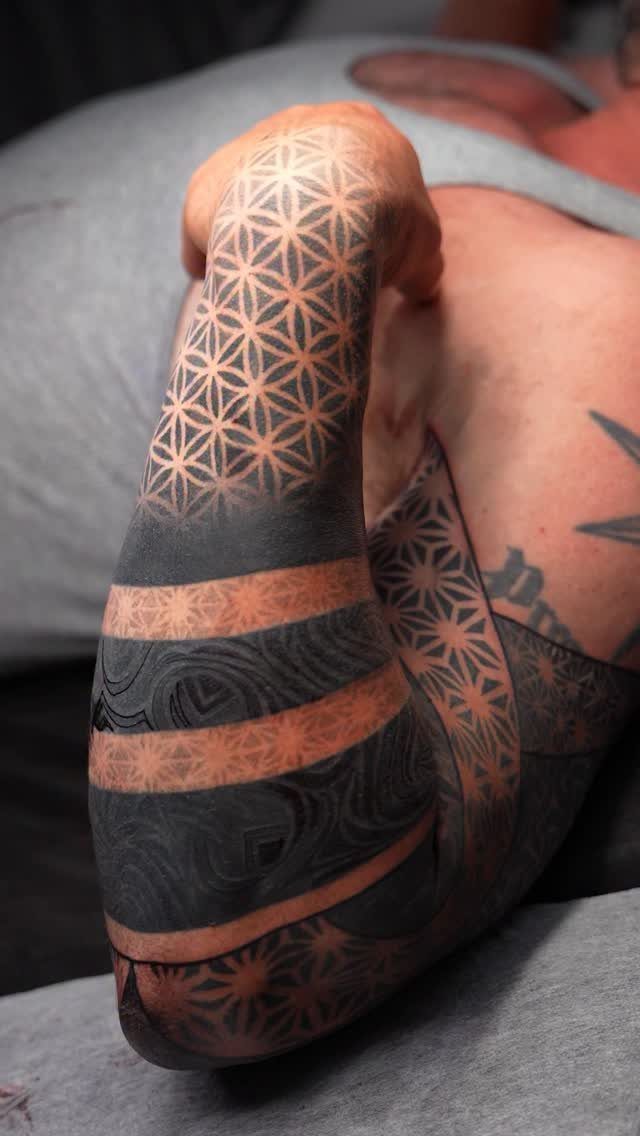
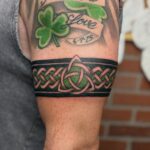
Geometric sleeves built from triangles, waves, and thick banding read as armor more than ornament.
The structure matters: bands lock the design to the arm’s shape so nothing floats untethered across moving skin. Blackout sections give the eye somewhere to rest, which keeps intricate linework from turning into noise at a distance.
A good artist maps this in stages, working from shoulder down so each band meets the one below it clean.
The wavy texture in the linework comes from varying needle groupings, not from drawing wavy lines; ask specifically for that texture if you want it.
This style ages well because the shapes are large and the black is saturated, though touch-ups on texture zones run more than solid fill.
2. Phoenix Tattoo
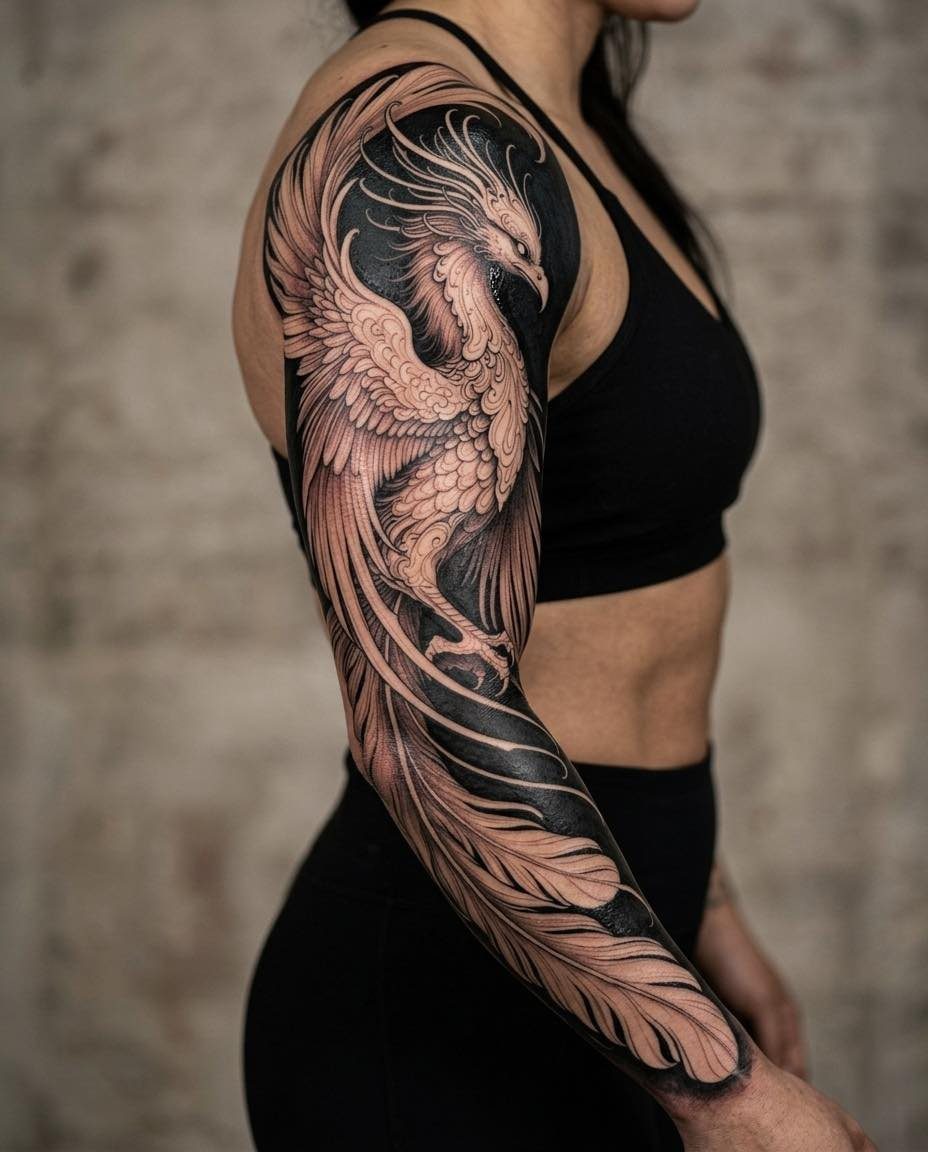
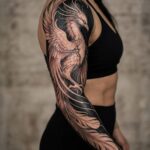
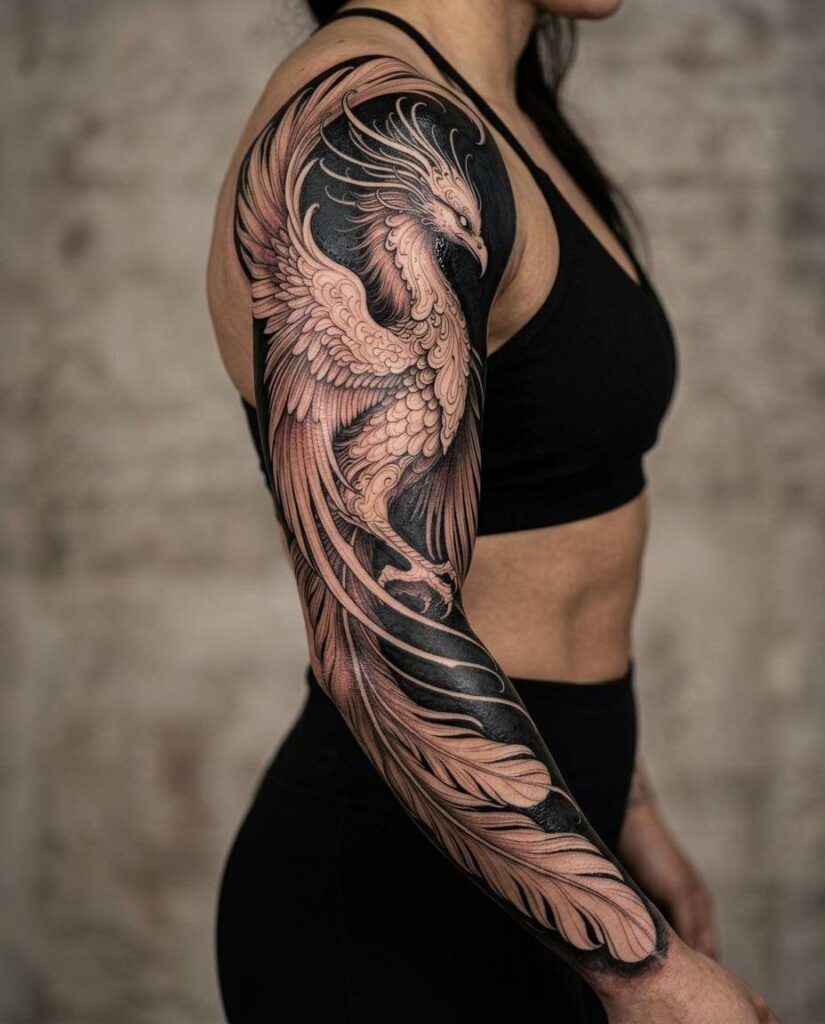
The phoenix sleeve works best when the bird’s tail feathers are given room to flow, which means letting the design break across the inner arm rather than keeping the drama on the outer face.
Black and grey ink keeps the focus on form; color would fight the smoke patterns that fill the background and give the feathers their sense of lift.
The phoenix itself carries enough movement that the design does not need extra elements; the feather density and tail sweep create impact on their own.
The upper arm placement is standard for first sleeves: enough flat canvas for detail, easy to cover for work.
Smoke reads as flat grey if the artist doesn’t build it in layers; ask to see healed smoke in their portfolio, not fresh.
3. Floral Arm Sleeve
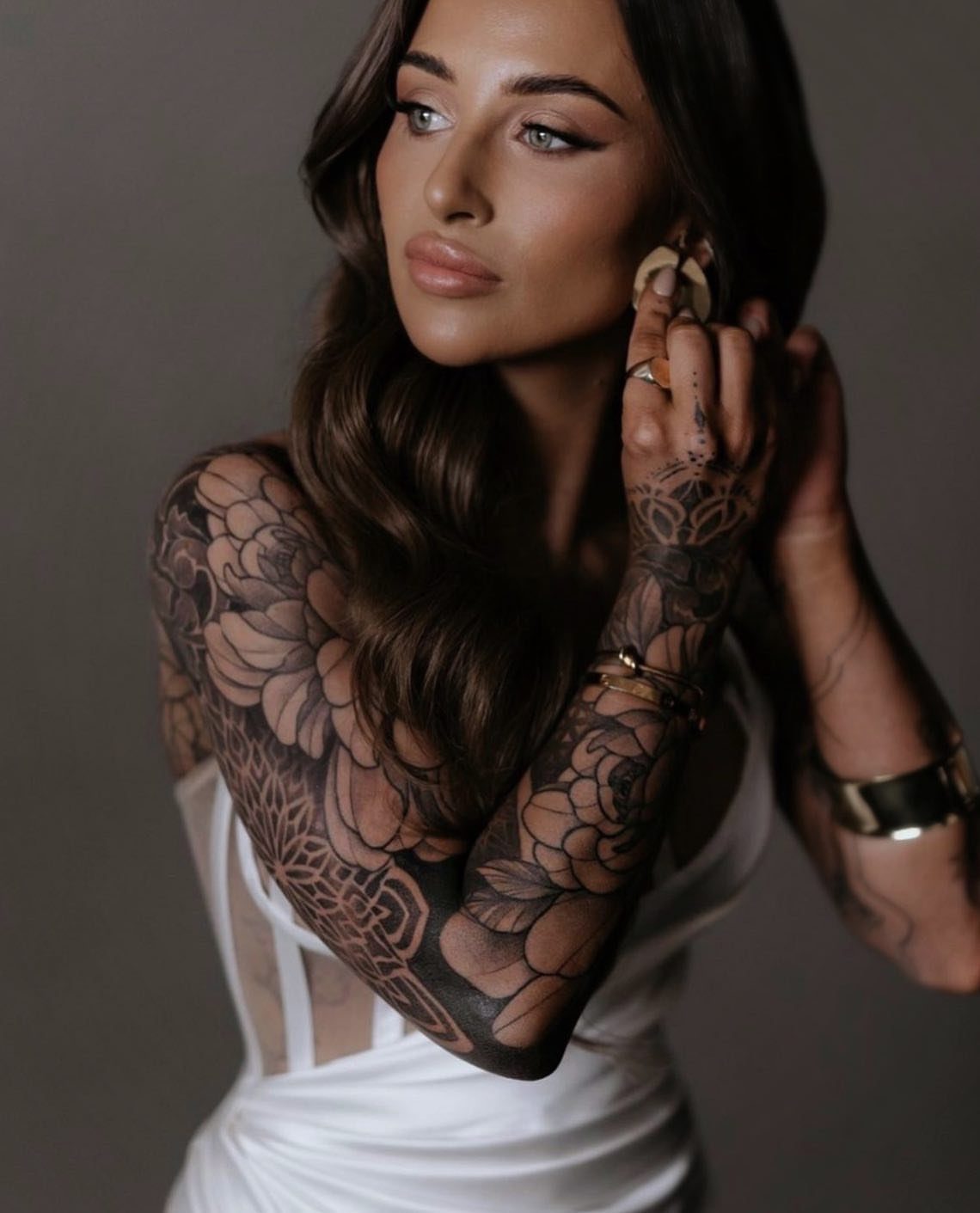
A floral sleeve lives or dies on whether the flowers own the arm or look like stickers applied after the fact.
Continuous flow means every bloom connects to a stem that connects to a leaf that wraps the limb; gaps kill the effect.
Peonies work for this because their layered petals give the artist shading practice that shows, and their roundness counters the arm’s long axis.
Black ink only suits fair skin and stays legible as it ages. The vertical composition keeps the eye moving, which matters on a narrow canvas.
Both arms matching doubles the commitment and the cost; I would start one arm and live with it a year. White dress is the test: if you cannot picture it against your palest clothing, the design needs toning down.
4. Skulls and Reaper
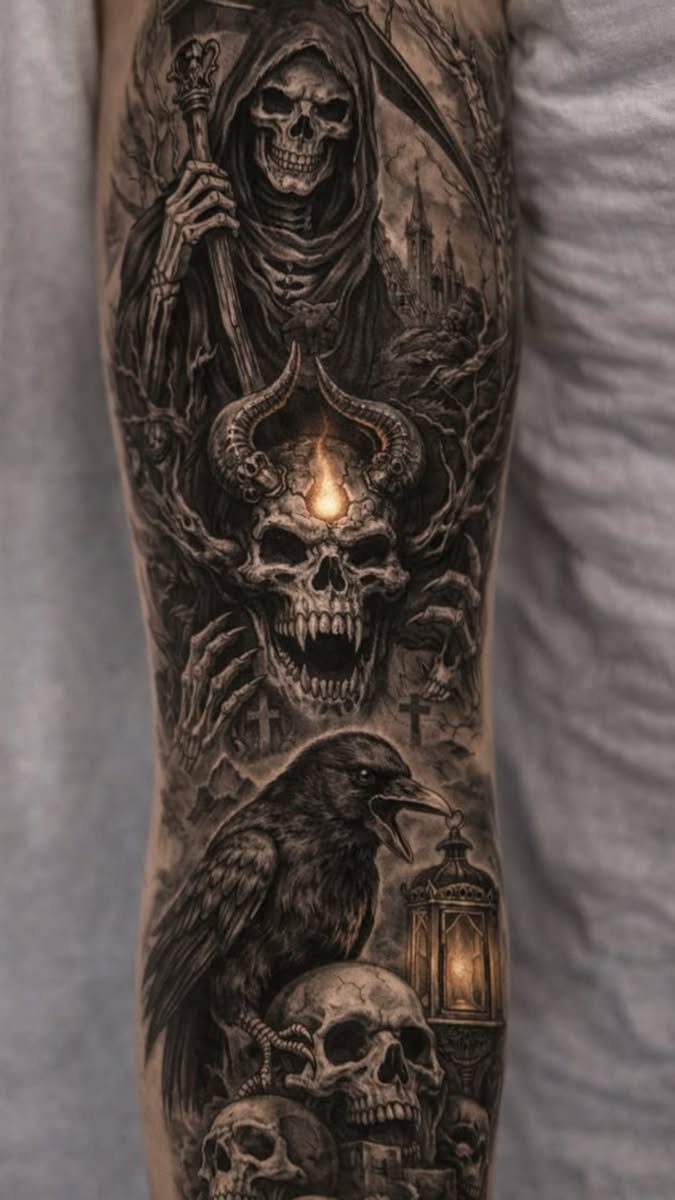
This is the sleeve for someone who wants the arm to tell a story that starts at the shoulder and ends at the wrist with a mood that does not lighten.
The reaper, skulls, raven, and moon give Gothic imagery without requiring a single narrative; they share a register, which is enough. A single lantern is the small touch that makes it work, a warm element in cold imagery.
Dark cloud backgrounds demand heavy black saturation that takes multiple passes; budget more sessions than a simpler design.
The glowing moon effect comes from leaving skin tone for highlight against surrounding fill, not from white ink, which yellows. Hooded figures age better than faces because the lack of features means no features to blur.
5. Tiger Face Tattoo
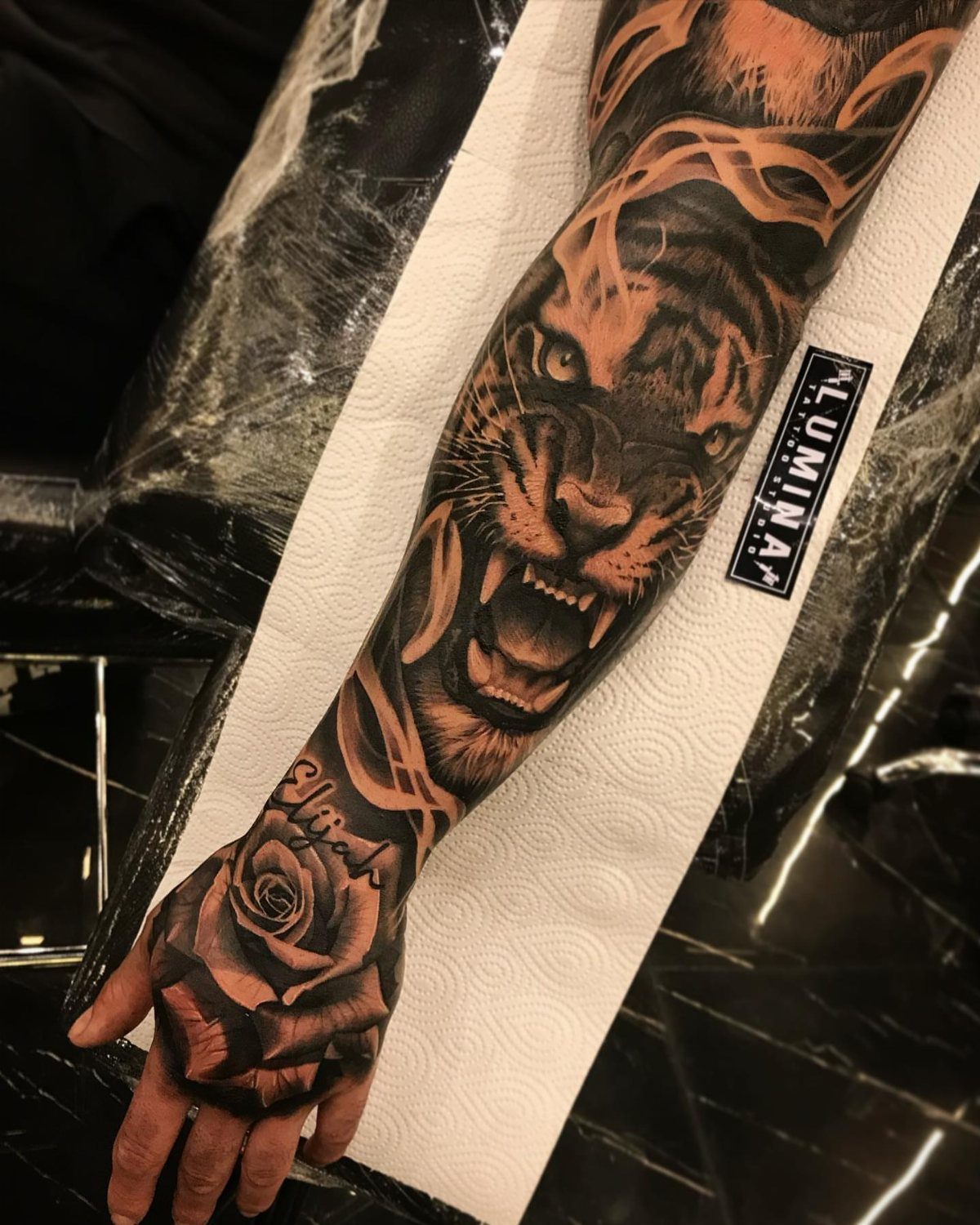
Tiger faces need the muzzle short enough to fit a forearm without stretching, which means the artist scales the head up and the body out of frame.
Flames around the face solve the problem of what sits below the jaw; without them, you get floating head or cramped shoulder. The rose anchors the composition to the hand, giving the eye a stopping point.
The rose in the foreground, the flames behind it, and the fur texture give the artist 3 different surfaces to work against, which is why this combination shows up so often.
Black and grey realism on this scale needs a specialist, not a generalist; the stripes alone require whip shading that takes years to control. Plan on multiple sessions, with the hand session last and most painful.
6. Angel Sleeve Tattoo
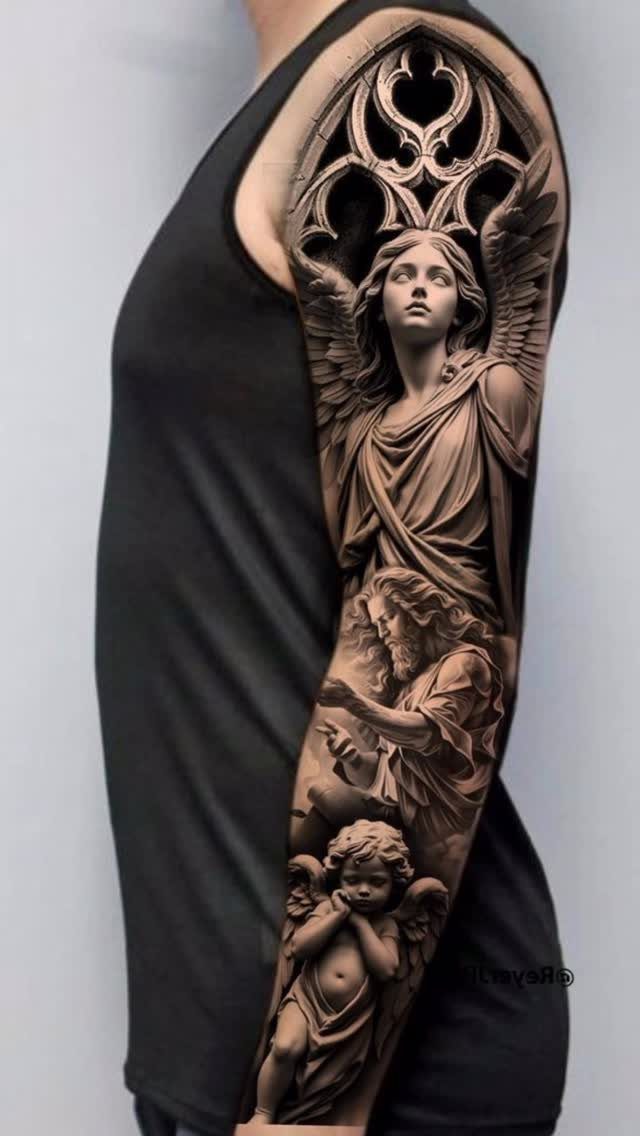
Religious imagery on this scale walks a line between devotion and decoration that the wearer has to own completely.
Gothic arches frame the figures like church windows, which keeps the composition architectural rather than scattered. Cherubs add sentiment; the bearded figure adds gravity; the angels carrying both registers is the design’s real achievement.
Black and grey ink is the right call here because color would turn angels into illustration, and the skin tone is doing the work of flesh already.
Classical architecture with pointed arches and column details draws from European sources; if your lineage or faith pulls from elsewhere, the architecture should follow.
This sleeve type draws conversation, mostly from strangers; consider whether you want to explain it twice a week for decades.
7. Lion Realism Sleeve
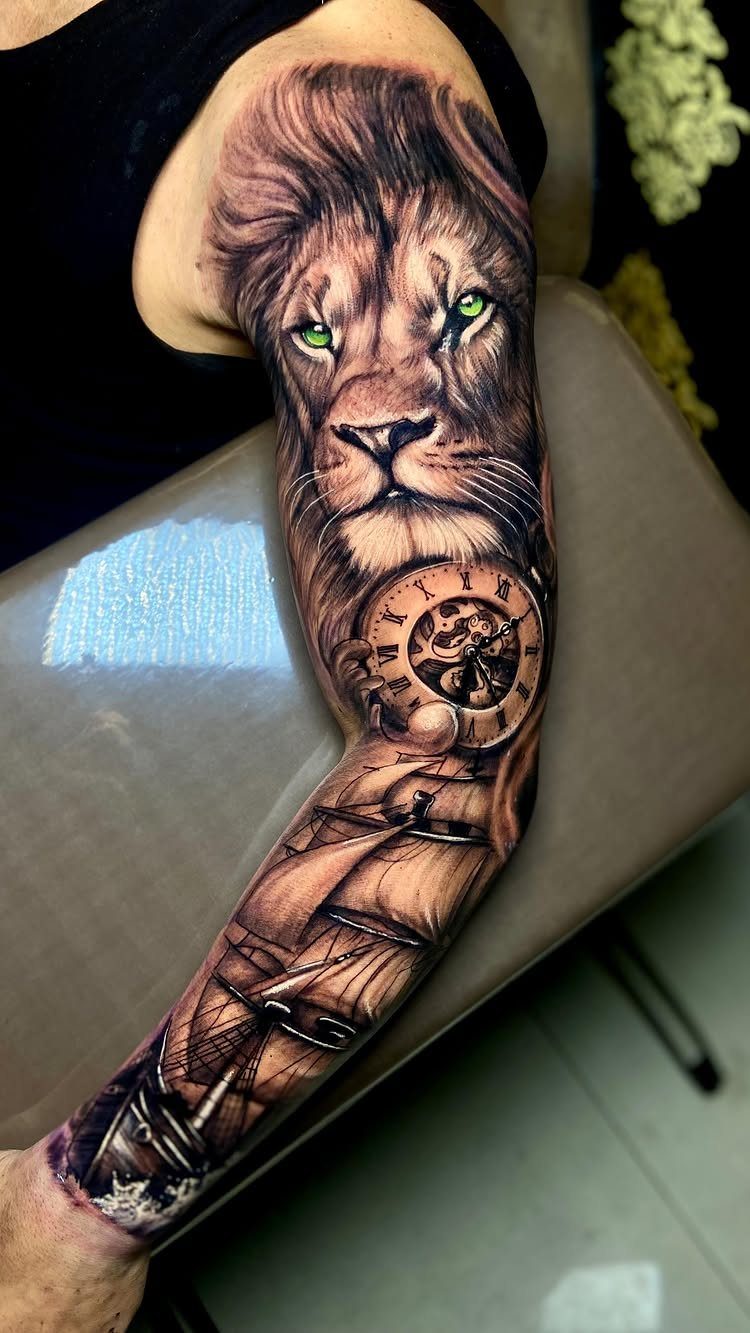
A lion realism sleeve reads as family history or personal mythology depending on what sits beside the face. The pocket watch and ship in the visible version turn the animal into a story about time and distance, not just strength.
A Colosseum or Spartan helmet trades the nautical for classical legacy; either works if the architecture matches your lineage rather than defaulting to Roman.
Greek key banding at wrist or shoulder locks the composition to the arm’s shape, the same structural move the geometric entry uses.
The watch face needs diameter enough to read; too small and it blurs to an oval.
Fur texture demands stippling near the muzzle where the hair is shortest, longer whip strokes on the mane. A specialist in animal realism is not optional on this scale; the eye alone has multiple planes that flatten in untrained hands.
Plan the secondary elements after the lion is placed; the face is the anchor and everything else adjusts to its gaze direction.
8. Cosmic Sacred Geometry Sleeve
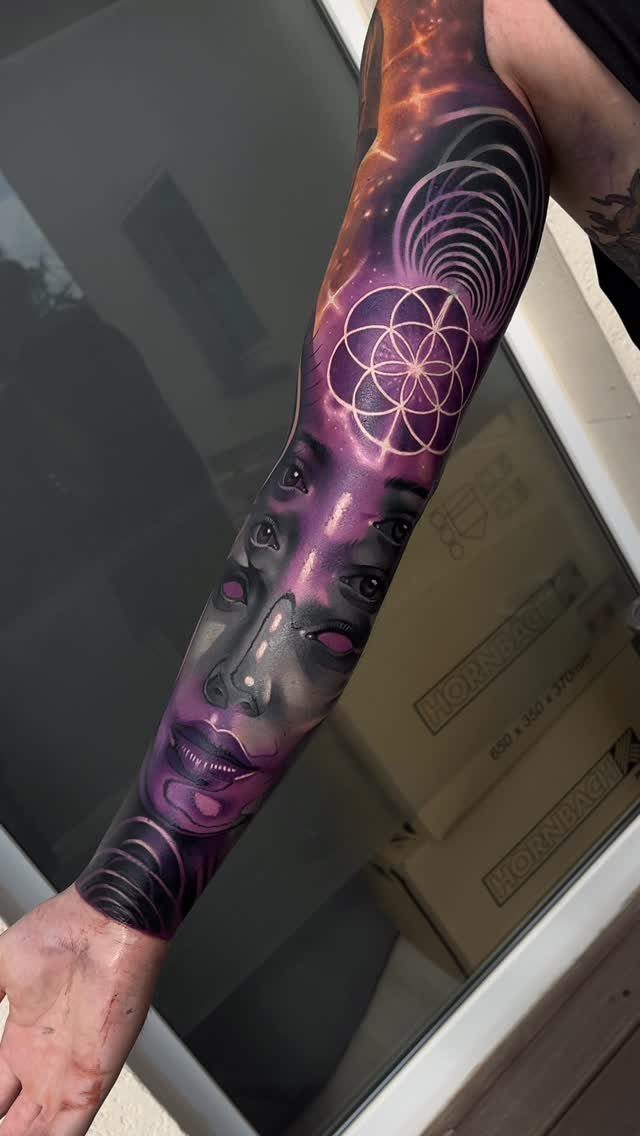
Cosmic sacred geometry splits the arm into zones: the upper arm holds dense star fields and nebula color, the forearm drops to linework mandalas where the skin is thinner and color bleeds more.
The flower of life pattern visible here needs spacing generous enough that each circle keeps its shape as the arm flexes; compressed, it reads as noise.
Purple dominates the visible version, with the multi-eyed face near the elbow acting as a transition between color field and pattern.
A cosmic sacred geometry sleeve looks like studio work, not street flash, and the artist’s geometric precision matters more than their flash book.
Linework this fine takes steady hands and a single session mindset; stop halfway and the needle angle shift shows.
White highlight over healed purple gains luminosity; done fresh, it sinks and vanishes. Budget for a color specialist who shows healed photos once the skin has settled; nebula color shifts unpredictably as it heals.
Tattoo Placement Advice
A sleeve that flows with the arm’s natural lines starts at the shoulder with elements that follow the deltoid curve rather than crossing it at odds.
The outer arm is what most people see; the inner arm is where a design can surprise, but ink there shifts more with movement and weight change, so intricate detail faces more distortion over time.
From the front, a full arm piece reads as one composition. From the side, the forearm and upper arm separate visually, which means the design needs a bridge at the elbow or a deliberate break that works both ways.
Most artists plan for the arm hanging straight and the arm bent; if it holds up at both, it holds up in motion.
The wrist bone and the inner elbow crease are natural stopping points that collectors often use to phase a sleeve.
Starting at the shoulder and working down lets you live with each stage, but it also means the overall flow gets locked in piece by piece; a full design mapped at once ages more cohesively.
Tattoo Color Choices
Black and grey ink stays legible longer because black pigment particles are larger and settle more stably in the skin.
Color, especially red and yellow, breaks down faster and needs more frequent refresh. The floral and phoenix entries both note this explicitly: black and grey is the default choice for longevity.
Where color does appear in sleeves, the cosmic sacred geometry entry shows the practical problem.
Choosing full arm tattoo colors demands planning from shoulder to wrist, because this is not an artistic choice alone; it is a response to how the body takes pigment differently by zone.
White ink deserves its own caution. The skull and cosmic entries both mention it, and both note the same risk: white over unhealed color sinks and vanishes, and white on its own yellows to cream or disappears entirely.
When an artist shows white highlight in a fresh photo, ask for the healed version before you book.
Tattoo Pain Levels
Pain on a full arm sleeve is not evenly distributed, and the difference between zones can change whether you finish in the planned sessions or split the project across years.
The elbow ditch, where skin is thinnest and closest to bone, is the most commonly cited problem spot; most artists schedule shorter sessions when working there.
The wrist and hand, noted in the tiger entry as last and most painful, combine thin skin with dense nerve endings and the complication that swelling affects function.
The hand session being last is partly practical: if you stop early, the visible arm is already complete.
The outer upper arm, by contrast, has more muscle and fat padding; collectors often use first sessions there to learn their own pain response before committing to the inner arm or joint areas.
Forearm front versus back also differs, with the inner surface more sensitive than the outer.
No numbing cream eliminates sensation entirely, and most artists prefer working on unnumbed skin because blood flow and skin texture change with topical anesthetics.
The real preparation is session length: plan a working maximum for painful zones, and do not let ambition override what your body tells you.
Frequently Asked Questions
How big is a $500 tattoo?
A medium session covers a limited area, not a full sleeve. Blackout sections and intricate linework in geometric sleeves require multiple sessions, and dark cloud backgrounds for skull and reaper designs demand heavy saturation that takes extra passes.
How painful is a full arm tattoo?
Pain varies sharply by zone on a full arm piece. The outer upper arm has more muscle and fat padding, which is why collectors often start there to learn their own pain response before moving to more sensitive areas.
What are some cool arm tattoos?
Geometric patterns with triangles and waves read as armor, phoenix designs with flowing tail feathers work well in black and grey, and floral sleeves with continuous stem-to-leaf flow suit fair skin.
Lion realism sleeves with pocket watches or ships tell a story about time and distance.