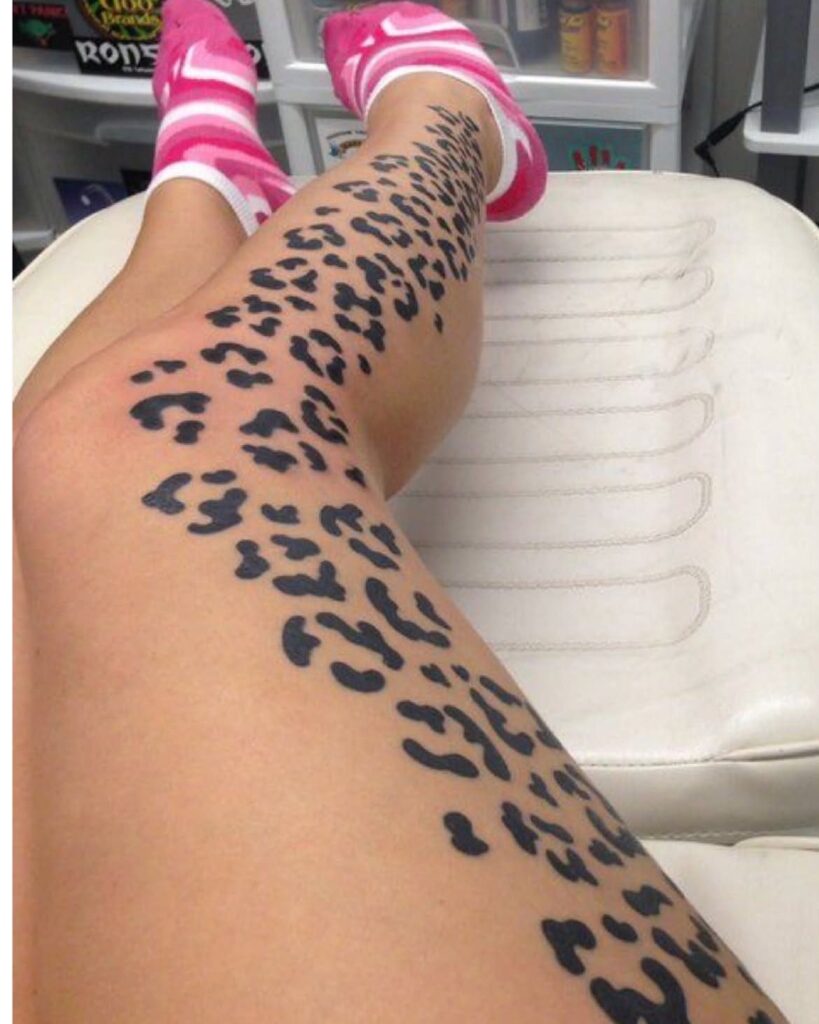
Cheetah thigh tattoos on this list run from monochrome dot patterns to three-color script wraps, and the right one depends on whether you want the animal as a figure or just its print as texture.
1. Cheetah Print Tattoo
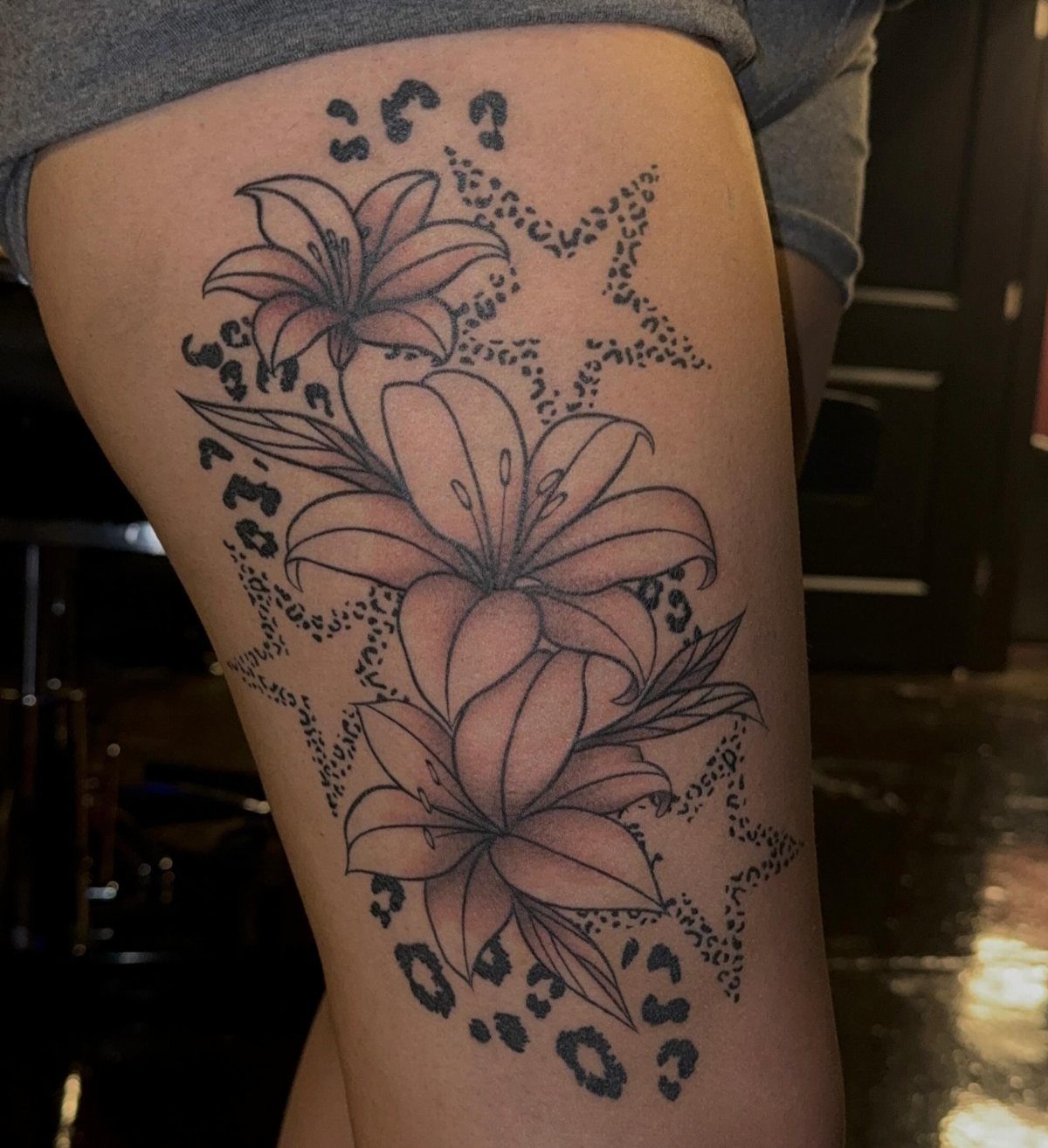
Cheetah print works as a full thigh wrap without needing an animal outline at all. Lilies and star shapes rising out of spotted patterning solve the usual problem of print tattoos looking like random blobs after a few years.
Black ink keeps the price down and the healing simple, though the knee crossing will need touch-ups since that skin moves constantly.
I would ask the artist to draw the flow on me standing up; sitting stretches the thigh differently and the spots can end up oval.
No figures needed, just a stencil session where you walk around the shop before anything permanent goes on.
2. Cheetah Walking Tattoo
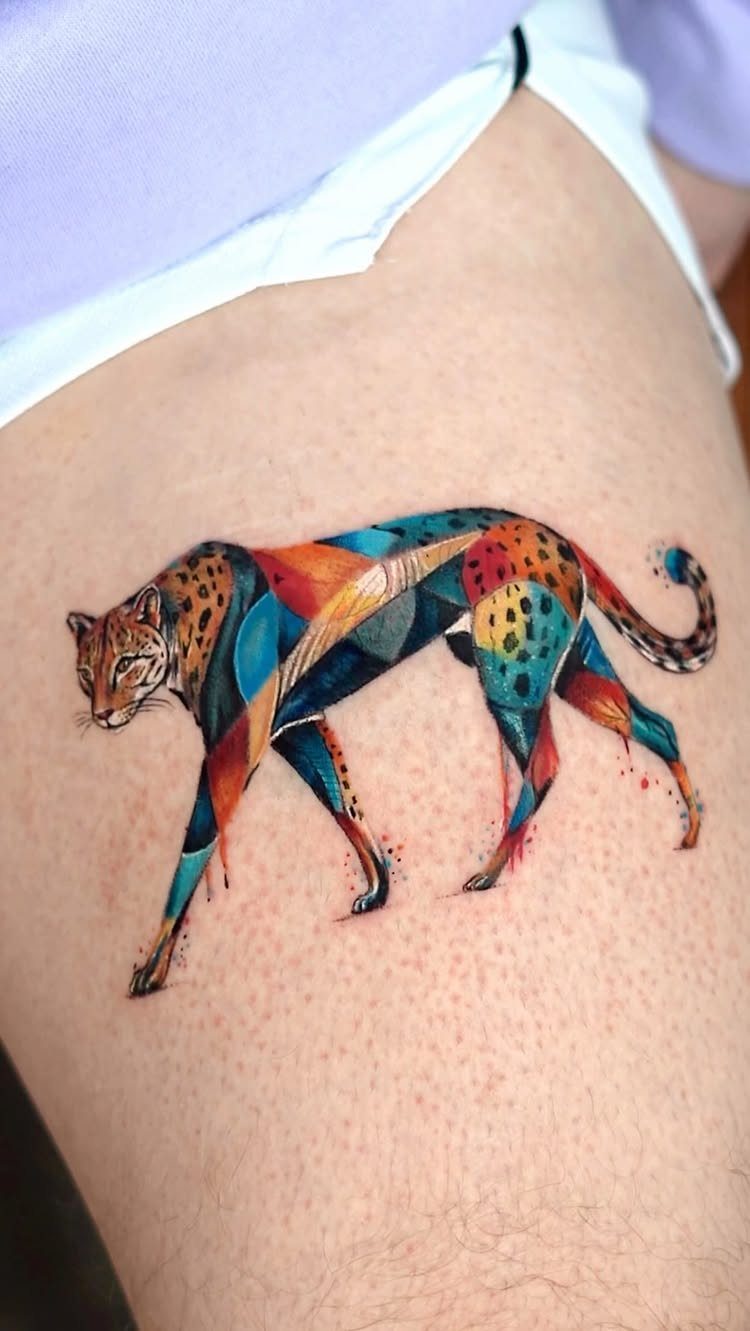
A walking cheetah carries forward momentum that flatters the thigh’s length. Geometric color blocking works, but black and grey with red florals is easier to live with long-term; red holds okay on thighs but fades faster than black.
The geometric shapes framing the cheetah keep the piece reading as one continuous design rather than a floating figure.
Ask about the belly placement. A cheetah walking left will seem to enter or exit depending on which leg gets it, and that changes the feel completely.
3. Cheetah Thigh Tattoo with Hibiscus Flowers
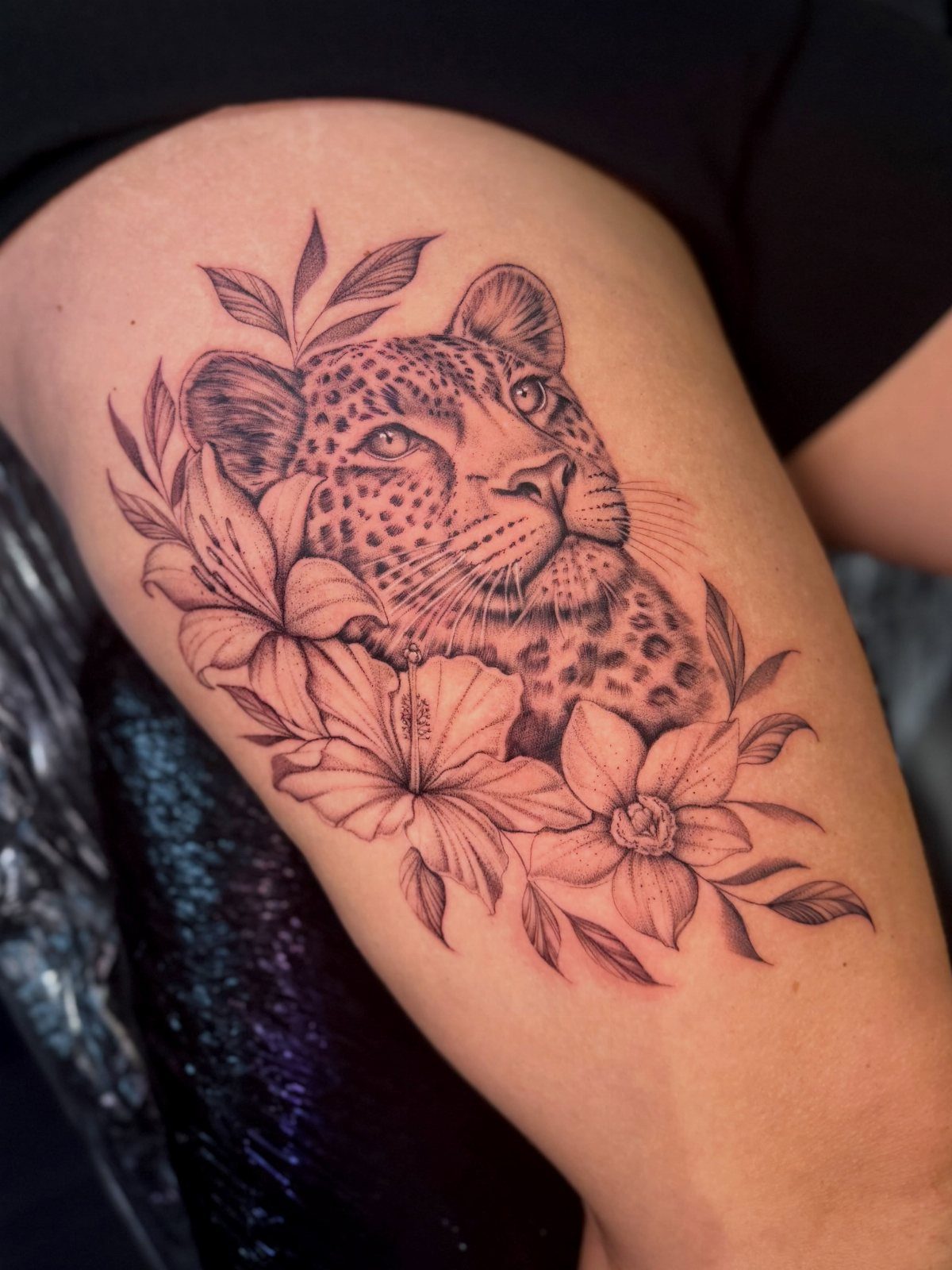
Hibiscus blooms around a big cat head give tropical weight without going full jungle scene.
Black and grey is the safer start, though red and dark shading is an option if you have budget for more sessions; the flowers pop against spots either way.
Lily shapes sometimes sneak into this mix, which works fine since both flowers have open faces that frame a cat profile without crowding.
Thigh placement lets the hibiscus scale large enough to keep their detail, about palm-sized minimum per bloom. I would keep the cat facing outward, toward hip or knee, so the portrait reads when someone sees it straight on.
4. Cheetah Thigh Tattoo with Butterflies
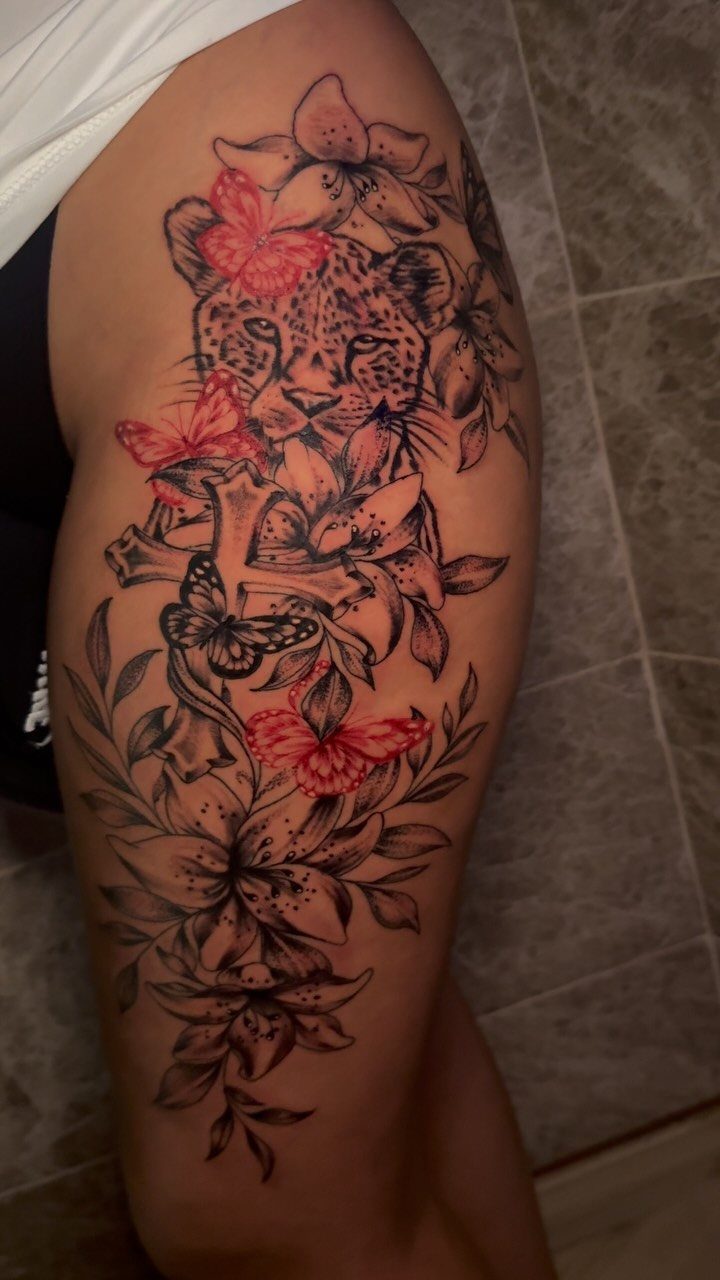
Butterflies give a cheetah tattoo movement that a static portrait lacks.
Red and black butterflies around lilies and a cross is one route, though dropping the cross for a resting cheetah among lilies with fine line work keeps the focus on the animal.
Red butterflies on black ink make sense as color accents without running the whole budget up; one bright spot near the cat’s nose, like the described version, draws the eye to the face first.
Resting posture suits a seated canvas better than running; thighs compress when you sit and a stretched sprinting cheetah can look stubby in jeans.
Check the butterfly scale against the cat head. Too small and they read as random insects, too large and they compete.
5. Cheetah Thigh Tattoo with Cursive Script
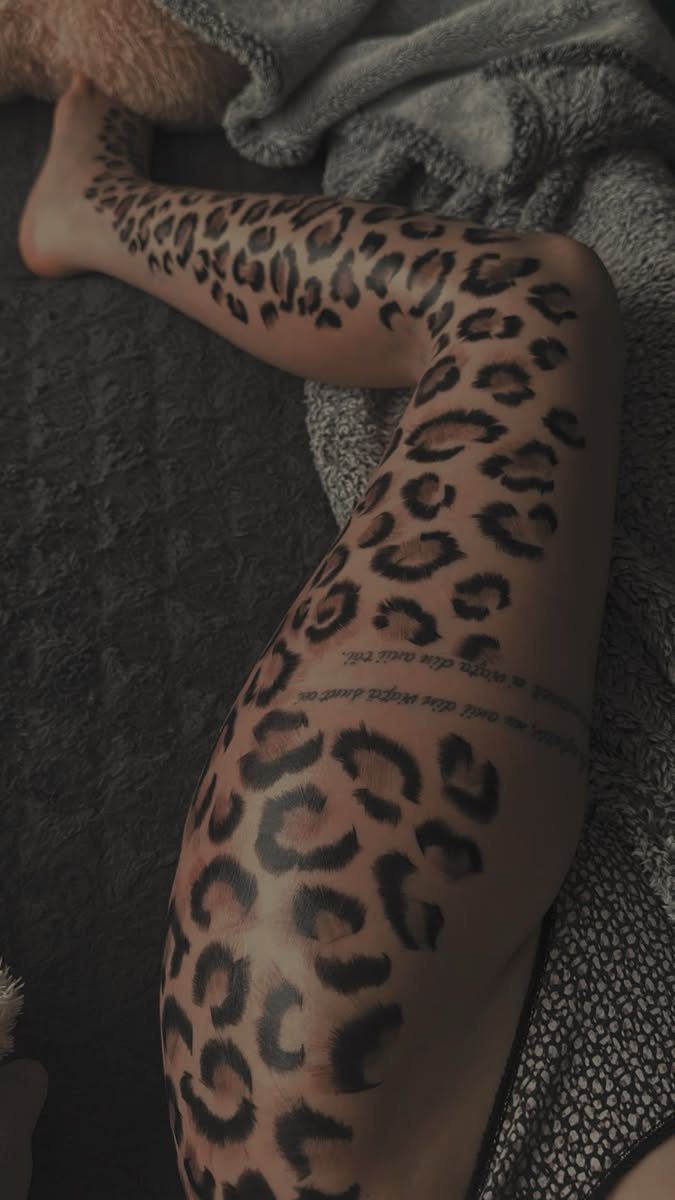
Script threading through animal print turns the thigh into a sleeve-style wrap. Brown and tan spots with a band of text is one approach, though a sharper combo runs black leopard head, white line lilies, and red cursive together instead.
That three-color plan needs a confident artist since white ink fades to yellow on some skin and red script bleeds if the lining is rushed.
Text content matters more here than with most tattoos; a phrase that felt deep at 22 can cramp badly by 35.
Short words, clean font, wrap placement where the thigh is fullest so the lettering doesn’t distort on the curve nearer the hip or knee.
6. Line Art Cheetah Thigh Tattoo with Flowers
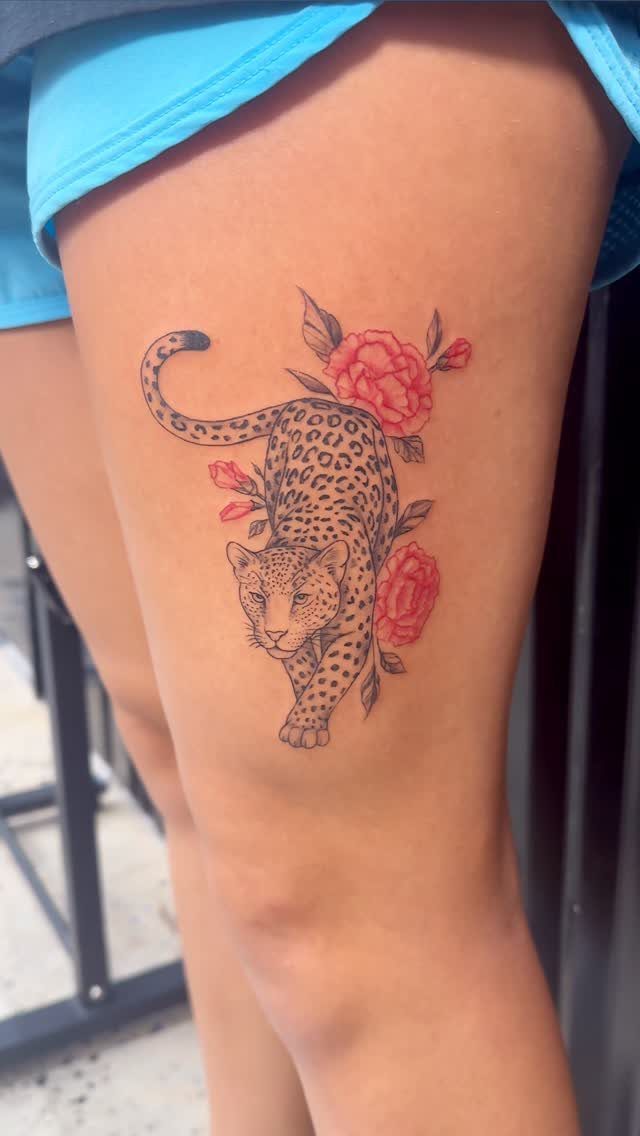
Line art keeps a cheetah thigh tattoo light enough that adding flowers does not overcrowd.
The spotted pattern becomes the shading, so the artist builds tone through dot density rather than grey wash; this reads cleaner from a distance but needs steady handwork up close.
Hibiscus and lily shapes both appear in the references, interchangeable depending on petal preference, though I would check whether the artist draws petals with single lines or doubled edges.
Doubling thickens over time. Pink or red accents on the flowers, subtle or brighter, stay optional; pure black line survives decades with less drama.
Tattoo Placement Considerations
The thigh carries weight and movement differently than flat surfaces like the back or chest.
Skin there stretches across the quadriceps and compresses when you sit, which means a design drawn on a flat table can distort once it is on your body.
Standing during the stencil phase matters more here than on most placements.
The artist sees how the pattern falls across the muscle and where the natural folds sit. Spots or lines that look evenly spaced on paper can bunch toward the inner thigh or pull thin across the front.
The upper outer thigh sees less friction from clothing and walking, so detail there holds longer. Inner thigh work fades faster from rubbing and moisture.
Pain Levels for Thigh Tattoos
The thigh sits high on the list of tolerable spots. Muscle and fat layer thickly over the bone there, which dulls the needle sensation compared to ribs, ankles, or collarbones.
Inner thigh skin runs thinner and more sensitive than the outer surface.
Nerves cluster closer to the surface there, so the same needle depth reads sharper. The back of the thigh, near the crease, follows the same pattern.
Most people describe outer thigh work as a deep scratch or hot rubber band snap.
Inner thigh can spike to a sharper, more insistent burn. Neither matches the intensity of bone-adjacent placements, but the difference between inner and outer thigh is worth planning around if you are sensitive or scheduling a long session.
Post-tattoo Care
A thigh tattoo faces friction from walking, clothing, and sitting that a back or arm piece avoids. Loose shorts or breathable fabrics reduce irritation where denim or leggings would rub, at least until the surface layer closes.
Moisturizing keeps the scabbing minimal, but over-greasing softens the skin and can pull ink out.
A thin layer twice daily, after gentle washing with unscented soap, is the usual balance. The knee area needs extra patience: bending and straightening cracks forming scabs if the skin dries too rigid.
Soaking stays off the table until the surface layer closes, which takes longer than most people guess. Showers are fine; baths, pools, and hot tubs hold bacteria and soften the healing skin past what is useful.
Sun exposure on a fresh thigh tattoo happens more easily than you expect, since shorts and skirts expose the area without thought. SPF or fabric cover once the skin seals, sooner if the artist advises it.
Frequently Asked Questions
What does a cheetah tattoo symbolize?
Cheetah tattoos carry the animal’s reputation for speed, agility, and grace. On the thigh specifically, the placement adds a sense of forward momentum, especially in walking poses that follow the leg’s natural line.
The big cat’s spotted pattern also works as decorative body framing, which tattooists like Iolanda Leali treat as a dialogue with the body’s own shape and movement.
Is the thigh a bad spot for a tattoo?
The thigh ranks among the better placements. The thigh carries more padding than the ribs or ankles, so the needle hits with less bite.
The outer thigh stays mostly clear of fabric rub, which keeps fine lines intact longer; the inner thigh takes more wear from skin-on-skin contact and sweat.
Skin across the quadriceps stretches when you stand and compresses when you sit, so a stencil drawn flat may warp once it moves with the muscle underneath.
What not to do after a thigh tattoo?
Soaking has to wait until the top layer seals, and that seal forms slower than most clients guess.
Running water in a shower is fine, but still water in baths or pools breeds bacteria and over-softens healing skin. Skip tight denim or leggings in favor of loose shorts or breathable fabrics while the surface layer closes.
After washing with unscented soap, a thin layer of moisturizer twice daily is enough; too much grease keeps the skin overly soft and can draw ink out.
Once healed, the thigh needs SPF attention too, since shorts and skirts leave it exposed without a second thought.