A running wolf tattoo can sit anywhere from the ankle to the thigh, and the size you pick shapes everything else: a small piece needs clean lines that read fast, while a larger one gives the artist room for motion and detail.
Tribal reads as pattern first, neo-traditional as animal first, and that difference in how the eye picks up the figure is the first choice.
The red sun behind the wolf is the only design here that brings a warm color into play, so if you are drawn to that one, ask your artist how the pigment settles on your particular skin tone before the needle starts.
1. Tribal Running Wolf Tattoo
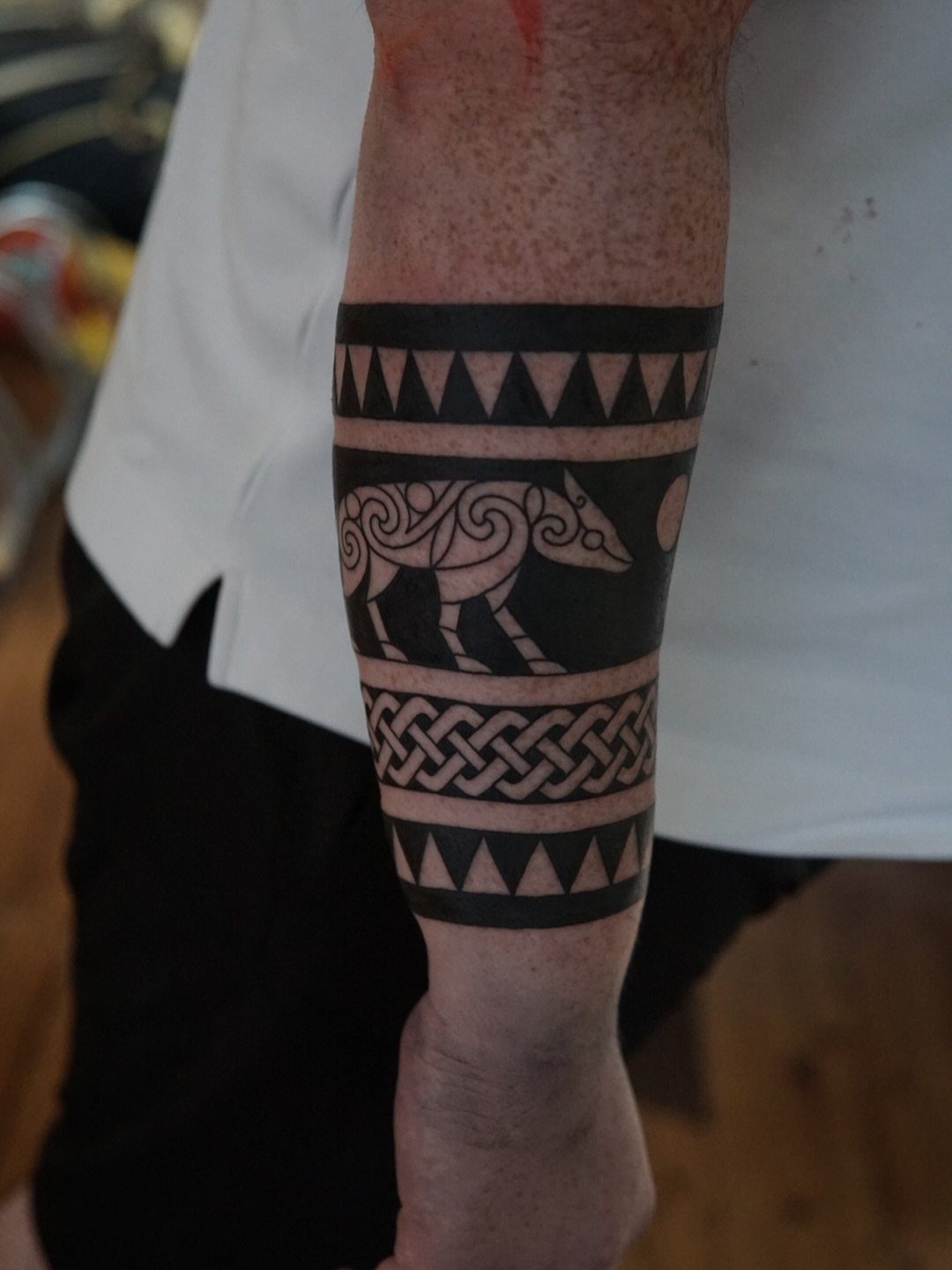
Tribal knotwork turns a running wolf into something that reads like armor on the forearm.
The thick black lines and star accents sit well on bone, which matters because this style needs a flat surface to keep its geometry clean; the wrist or upper arm works better than a spot that curves too much.
I would ask the artist to keep negative space between the patterns open rather than packed tight. Too much fill and the wolf stops reading as motion and starts reading as a solid band.
2. Running Wolf with Arrows
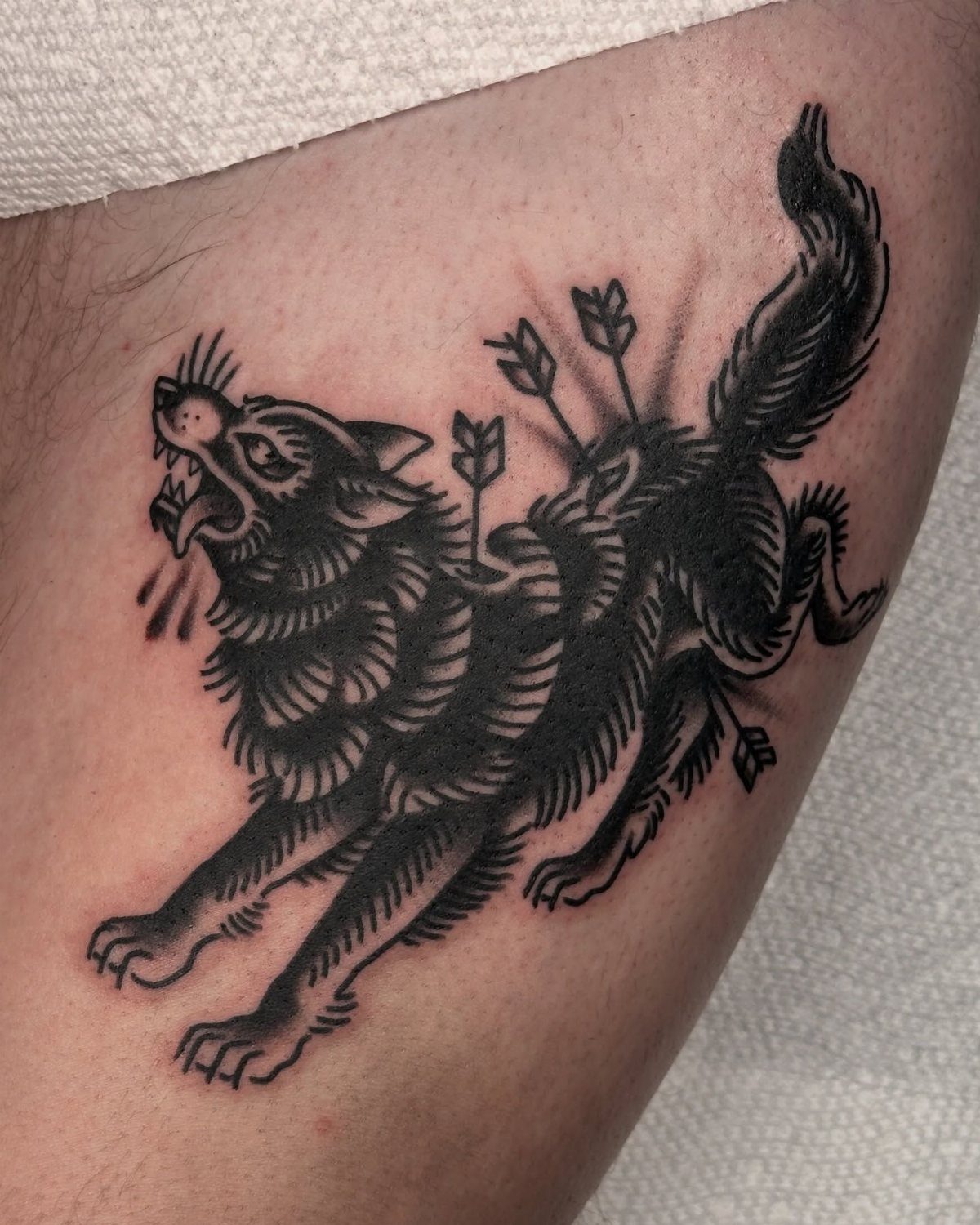
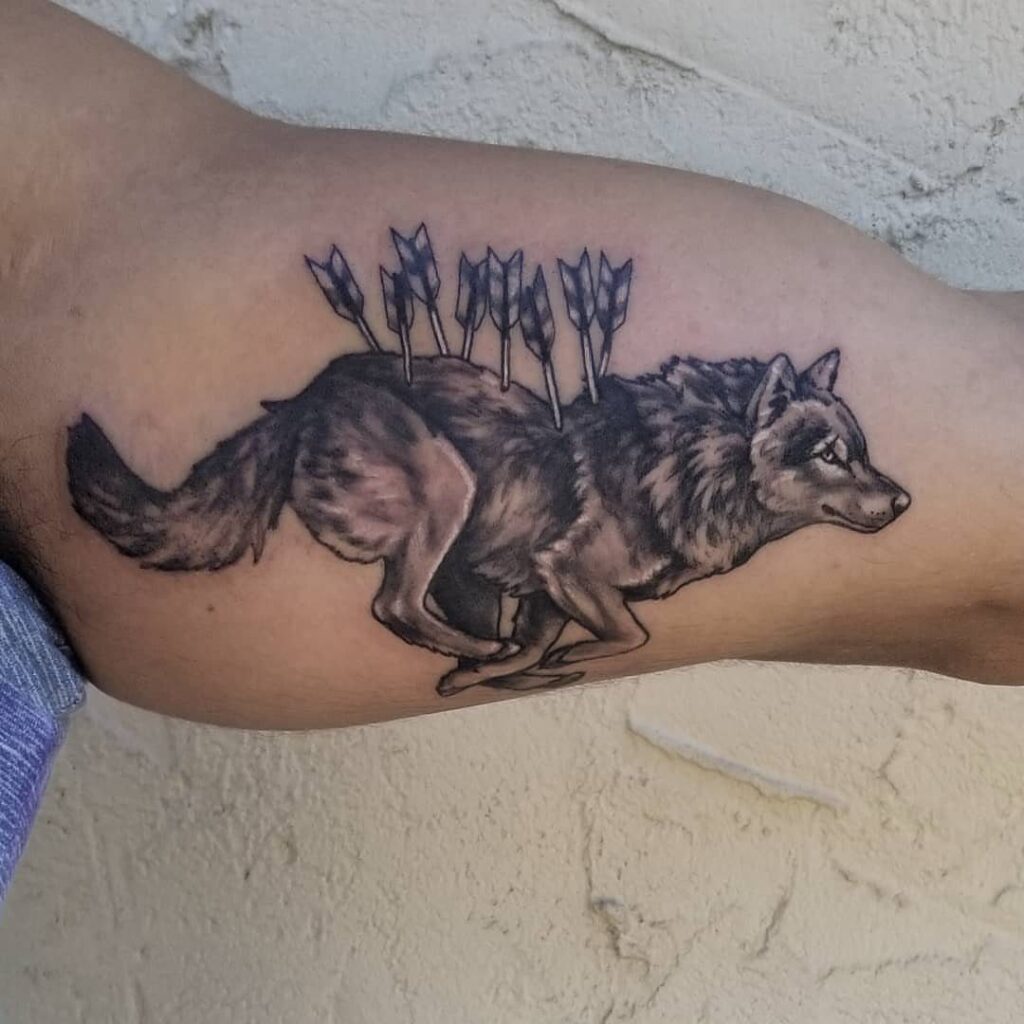
Arrows through the back make this one a story of still moving. Three shafts, sometimes four, stay in black-ink traditional line work so the wolf itself carries the detail and the arrows read as interruption.
This suits someone who has already thought about what the resilience actually means to them; the imagery is blunt enough to feel borrowed if the meaning is not there.
The hind-leg placement in some versions changes the gait, so check the silhouette before the session begins.
3. Wolf with Geometric Patterns
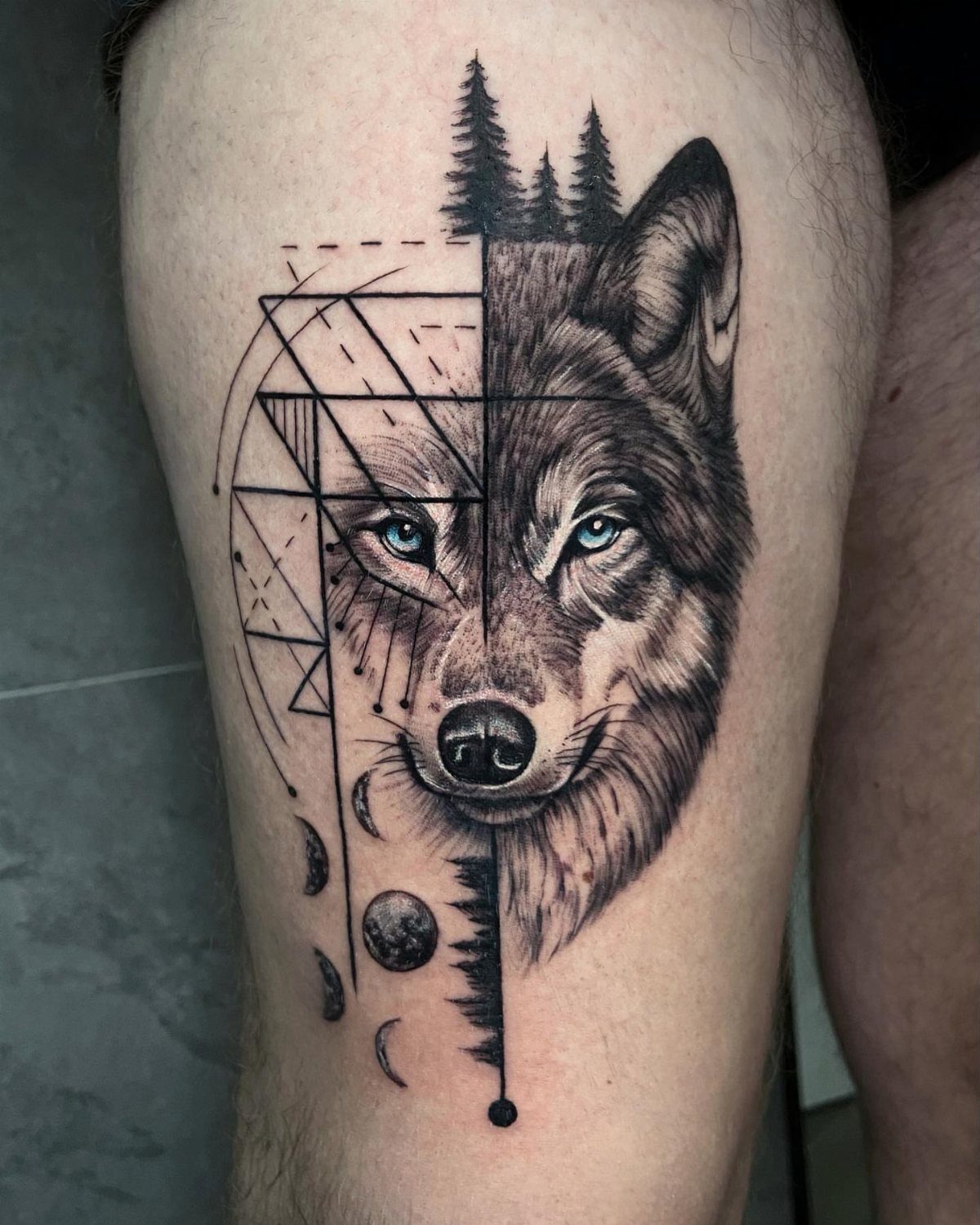
Half real fur and half hard lines: the split makes the wolf feel like it is emerging from or dissolving into structure.
The moon phases I have seen in leg placements pull it toward a personal symbolism that the geometry itself does not enforce.
Trees behind the face need enough space to read; this is not a small-piece design.
Ask how the artist handles the transition line between organic and geometric, because a hard stop looks like 2 tattoos colliding, and a gradual fade takes planning.
4. Minimalist Running Wolf Line Art
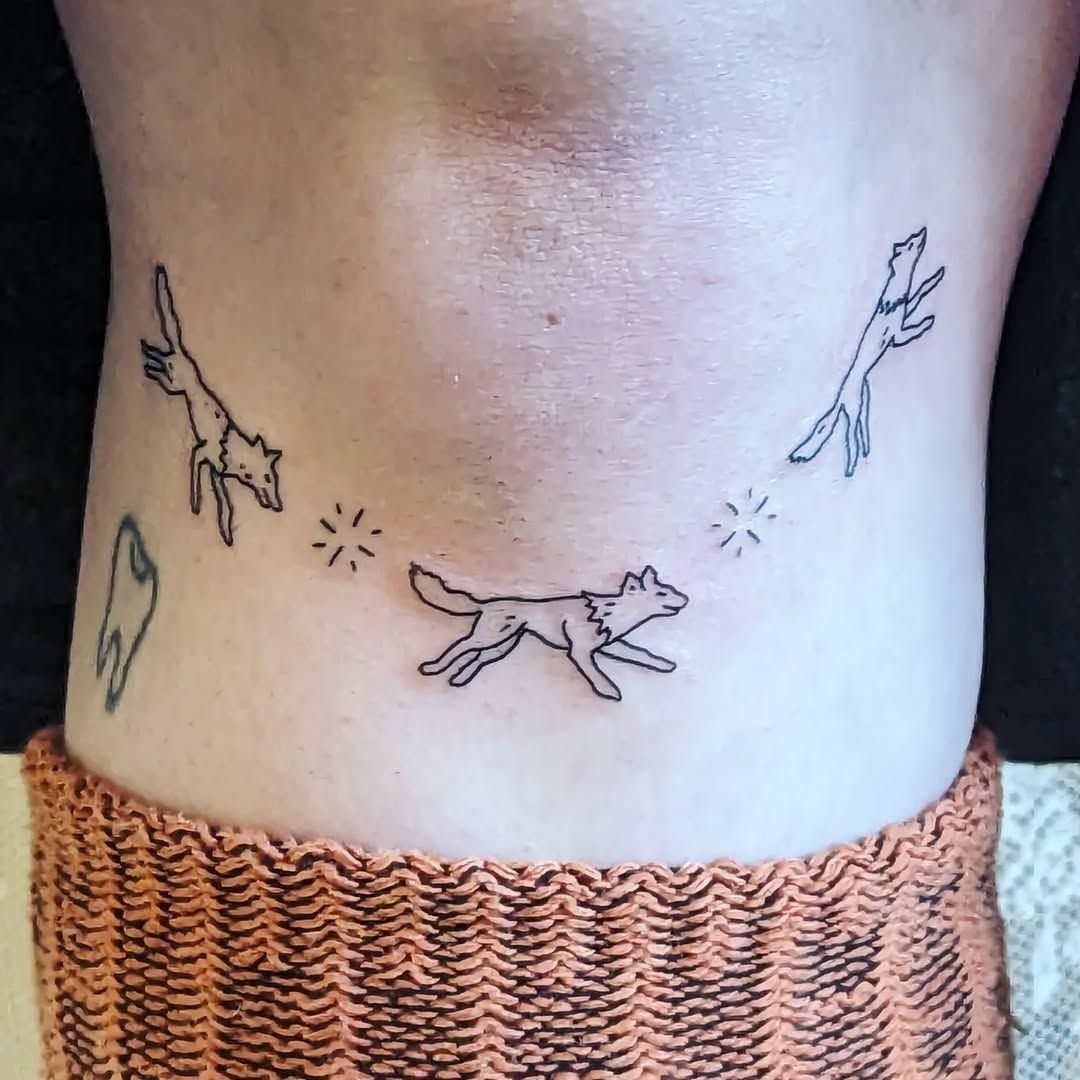
Three wolves in an arc, tiny burst stars between them: this is the one for someone who wants the idea without the weight.
An ankle placement above the sock line shows when you want it seen and hides when you pull the sock up.
Fine line work this small ages faster than bold tribal, so budget for a touch-up sooner than you would with heavier ink.
The running pose reads even at size because the legs stretch; a standing wolf this small would blur into a smudge.
5. Dynamic Shaded Running Wolf
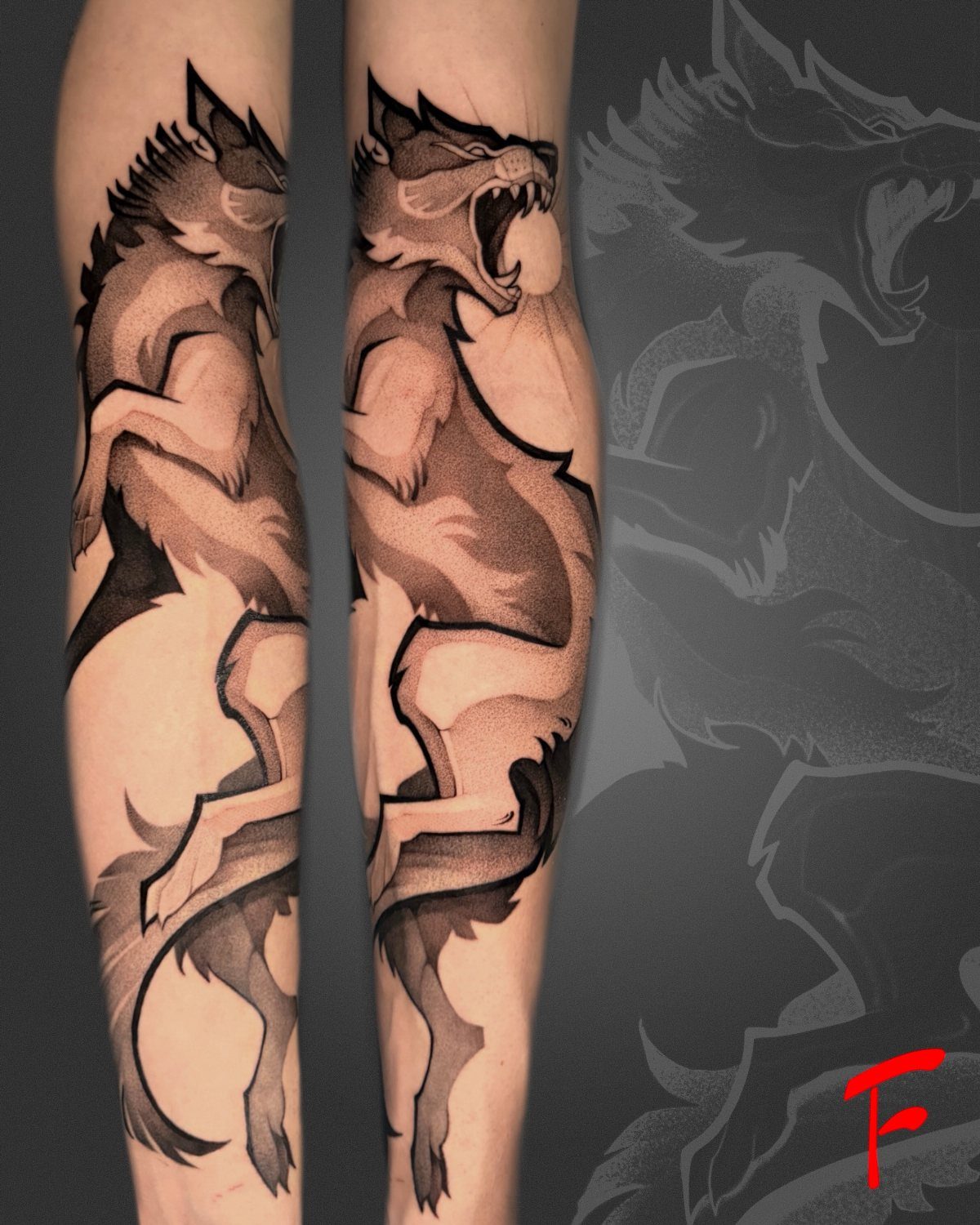
Heavy black and grey shading gives the wolf mass and motion both. The snarl and the leap need room to build tone, so this scales up or it loses the muscle definition that makes the dynamic pose work.
Lower leg bone is a common placement, though the curve there changes how the shading sits; a flat reference photo and the round surface read differently.
Ask to see healed photos of similar shading from that artist, not just fresh ink.
6. Wolf with Red Celestial Sun
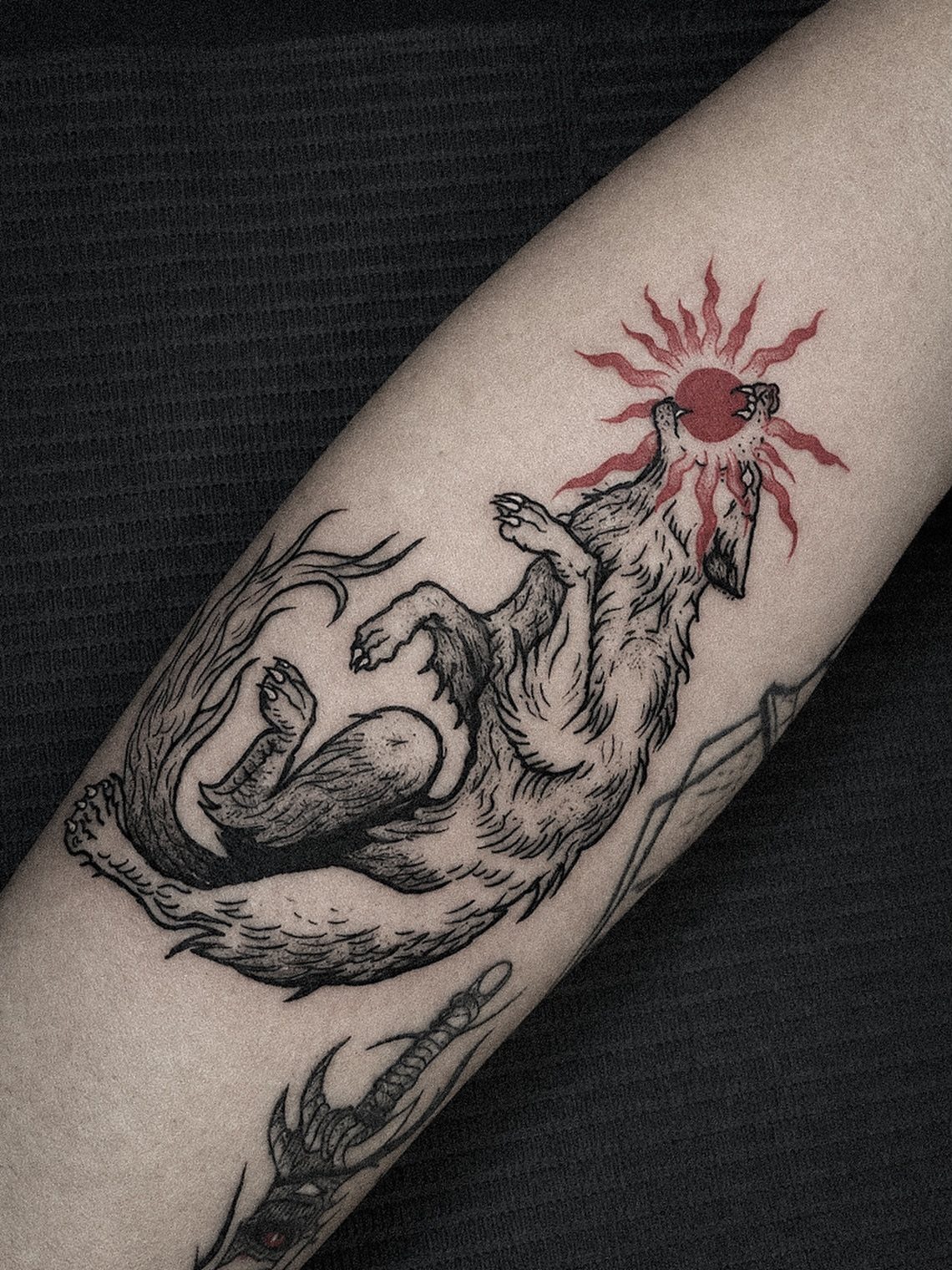
A red sun changes the whole palette from something safe to something that asks for care.
Red pigment fades faster than black and can blotch if the saturation is too heavy; wavy rays give the artist room to thin the fill toward the edges.
This is the entry where skin tone matters most. The red reads as intended on lighter skin, and on darker skin the same hue shifts toward orange or brown; talk through the pigment mix beforehand rather than hoping.
The wolf’s direction, upward and biting, is motion with intent, not just running for running’s sake.
7. Running Wolf Dissolving Into Birds
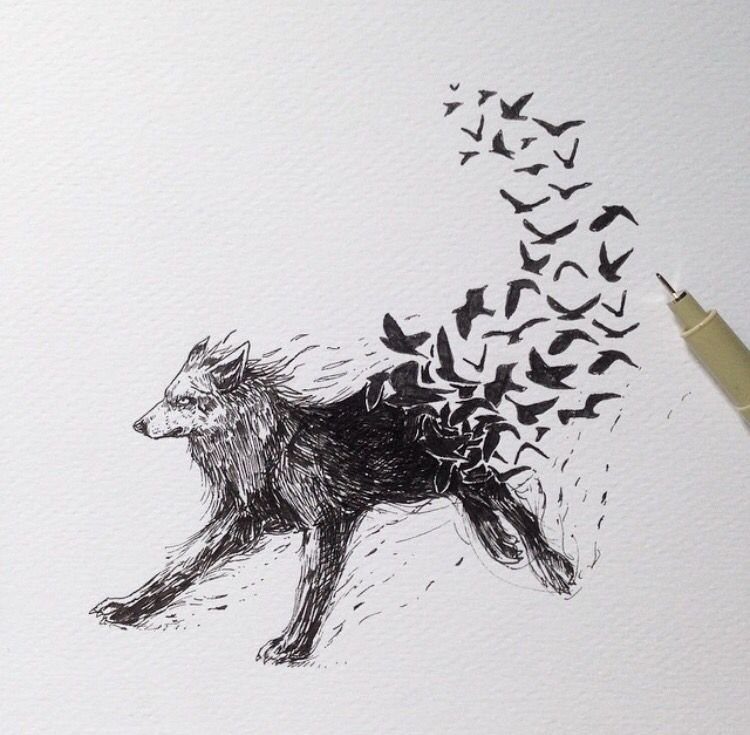
A running wolf that turns to birds is motion layered on motion: the pack animal becomes the flock mid-stride.
Fine line work holds the detail of individual feathers without the weight of solid black fill, though that same delicacy means edges soften faster than bolder styles.
The transition point, where fur becomes wing, is where the piece lives or dies.
Ask the artist how they handle the dissolve; a hard cutoff looks like 2 separate tattoos, and too gradual a fade turns the wolf into a smear before enough birds read clearly.
Placement on a flatter surface, forearm or thigh, keeps the dispersal readable from one angle rather than wrapping and breaking.
Wolf Tattoo Symbolism
Wolf tattoos draw on 2 competing instincts that most people recognize in themselves: the pack loyalty and the lone runner.
The running pose leans harder into the second reading, motion over stillness, which is why it attracts people who identify with endurance rather than guardianship.
The red tongue and eyes in neo-traditional work add aggression that the silhouette alone does not carry. That choice shifts the meaning from perseverance to hunt, and it is worth knowing which one you want before color goes in.
The arrows come in orange and gold with red accents, and which way you read them changes the whole story: either the wolf is the one being hunted, or it’s doing the hunting.
Tribal patterns and star trails borrow from specific cultural lineages.
The Clã Pakkija piece uses flowing black lines that read as movement without needing a background scene. If the symbolism matters to you, ask the artist about the origin of the knotwork they are adapting.
Placement Suggestions
A horizontal line of running wolves needs length more than height.
The forearm gives that, and the bone sits flat enough for stippled texture to read clearly. 4 silhouettes in a row would compress badly on a curved surface like the calf.
The thigh handles a pack scene better than the back does, unless you want the composition vertical.
A back piece invites a moon or landscape behind the wolves, which changes the subject from the animals alone to the whole scene. That is a different tattoo, not just a larger one.
Wolf silhouettes in various poses need space between them or they merge at a glance.
On the forearm, the natural width limits how many figures read as separate; three works, four is tight. Budget for the artist to step back and check the spacing before the outline sets.
Tattoo Styles
Neo-traditional builds dimension with limited color: the black and red wolf on the leg uses orange and gold arrows as framing devices, not as fill.
That restraint keeps the wolf central. The red tongue and eyes carry the accent weight; more color would scatter the focus.
Fine line and geometric work need different technical checks. A leaping wolf drawn with simple geometric accents needs the line weight to stay consistent; one waver and the whole piece collapses.
Tribal and neo-traditional both use heavy black, but tribal reads as pattern first and animal second, while neo-traditional reads as animal first.
The choice depends on whether you want the wolf recognized from across a room, or the overall shape to carry the arm from closer up.