These 7 ideas run from a lion stamped on a shield to a full-color Saltire fur pattern, some in black and grey, some in the red and gold of old heraldry.
A crowned version draws Stuart monarchy inquiries; a plain rampant lion does not. The Saltire’s blue stripes demand dense pigment packing because blues fade fastest to grey-green, a detail every source on these designs repeats and none dispute.
1. Lion Rampant on Shield
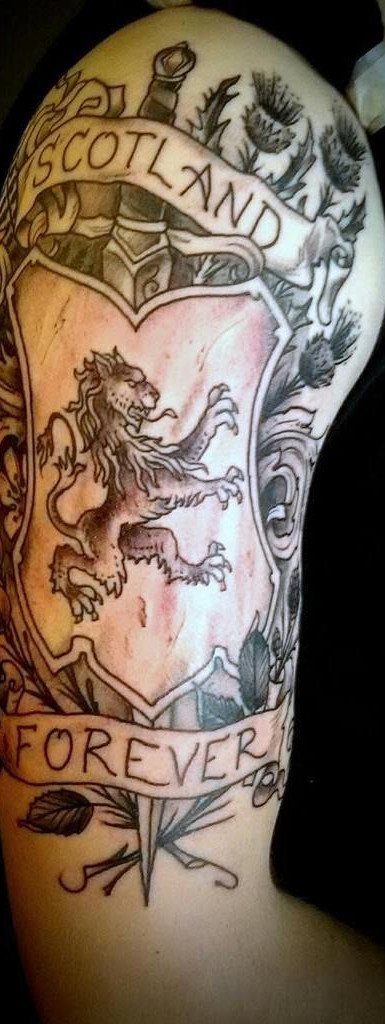
A shield gives the lion somewhere to stand, and the thistles and banners fill the space without crowding it. This layout works well on an upper arm or thigh where the curve matches the shield’s shape.
I would ask the artist to keep the shield surface light, almost skin-tone, so the black lion and lettering read clearly from a distance.
The dagger on one side and thistles on the other need balance, not symmetry: a slight tilt to the banner text keeps it from looking stamped on.
The "FOREVER" wording is your place to personalize.
Family names, clan mottos, or dates fit the same ribbon format. Plan for a long sitting to get through this much black fill and fine line work.
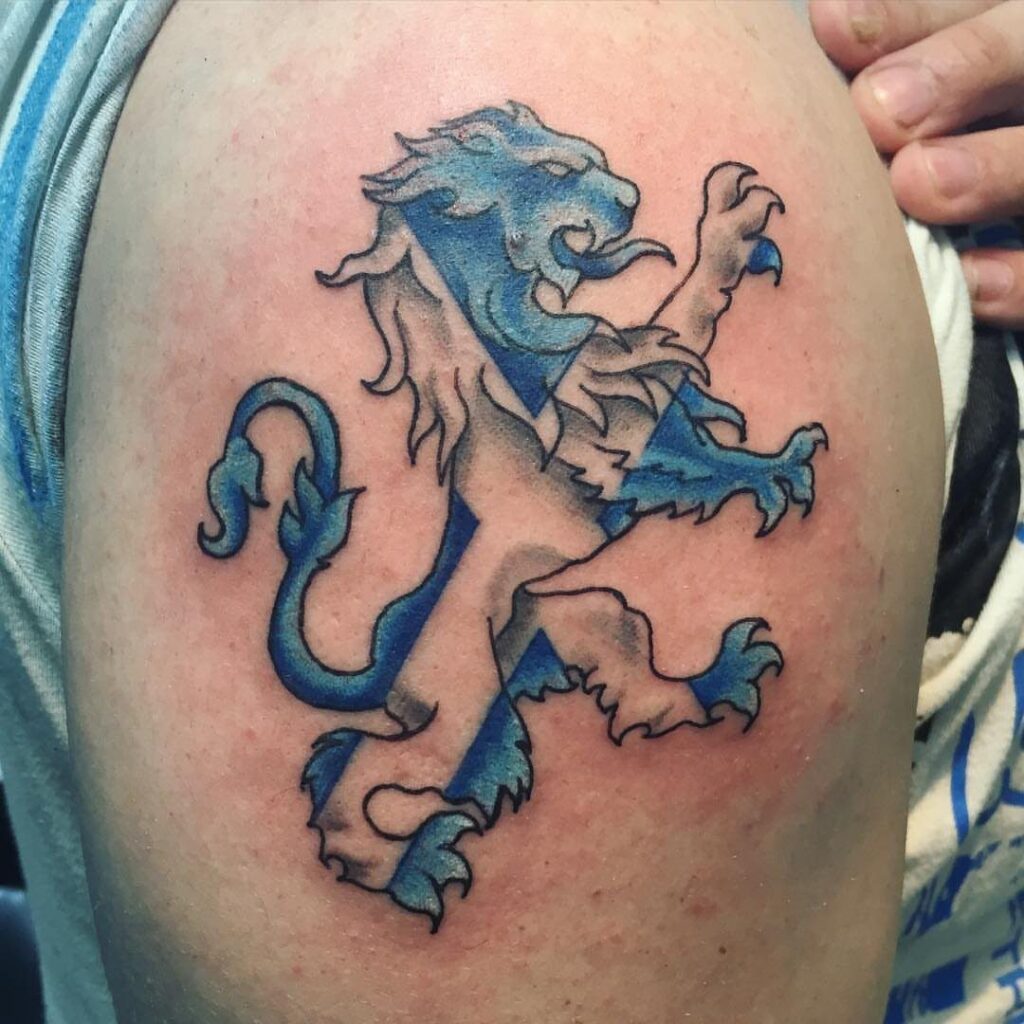
2. Saltire Patterned Lion Rampant
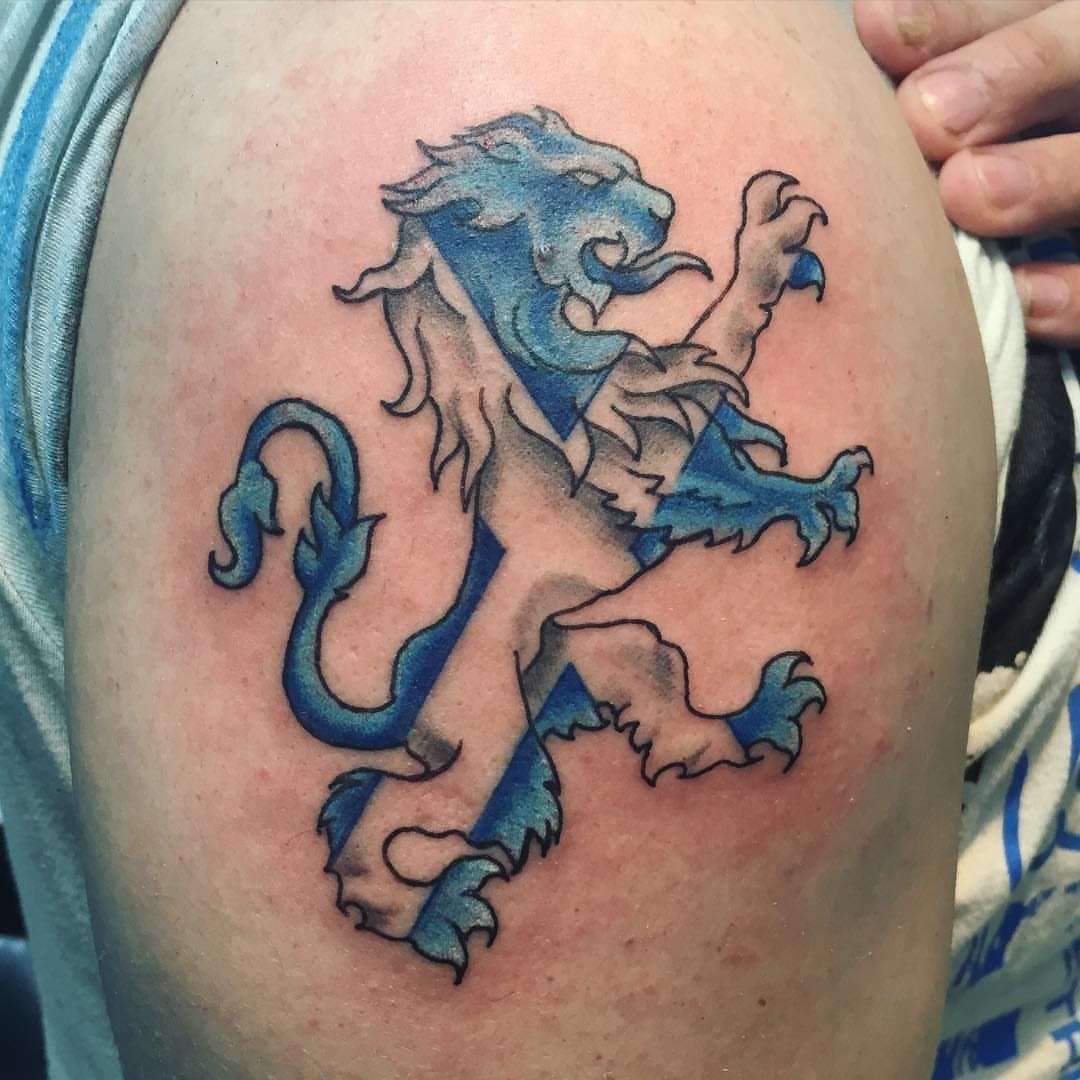
Striping the lion’s body with the Saltire’s blue and white turns the flag into fur texture. The effect works because the diagonal cross follows the muscle flow of a rampant pose; flat horizontal stripes would fight the shape.
Color saturation matters more here than in most tattoos. Blues fade fastest to grey-green, so the artist needs to pack the pigment dense in the first pass.
White sections read as negative space on light skin, or require bright white ink on darker tones. Ask to see healed photos of their color work, not just fresh ones.
This version reads as Scottish first, lion second. That suits someone who wants the flag reference immediate and unmistakable.
3. Celtic Knotwork Lion Head
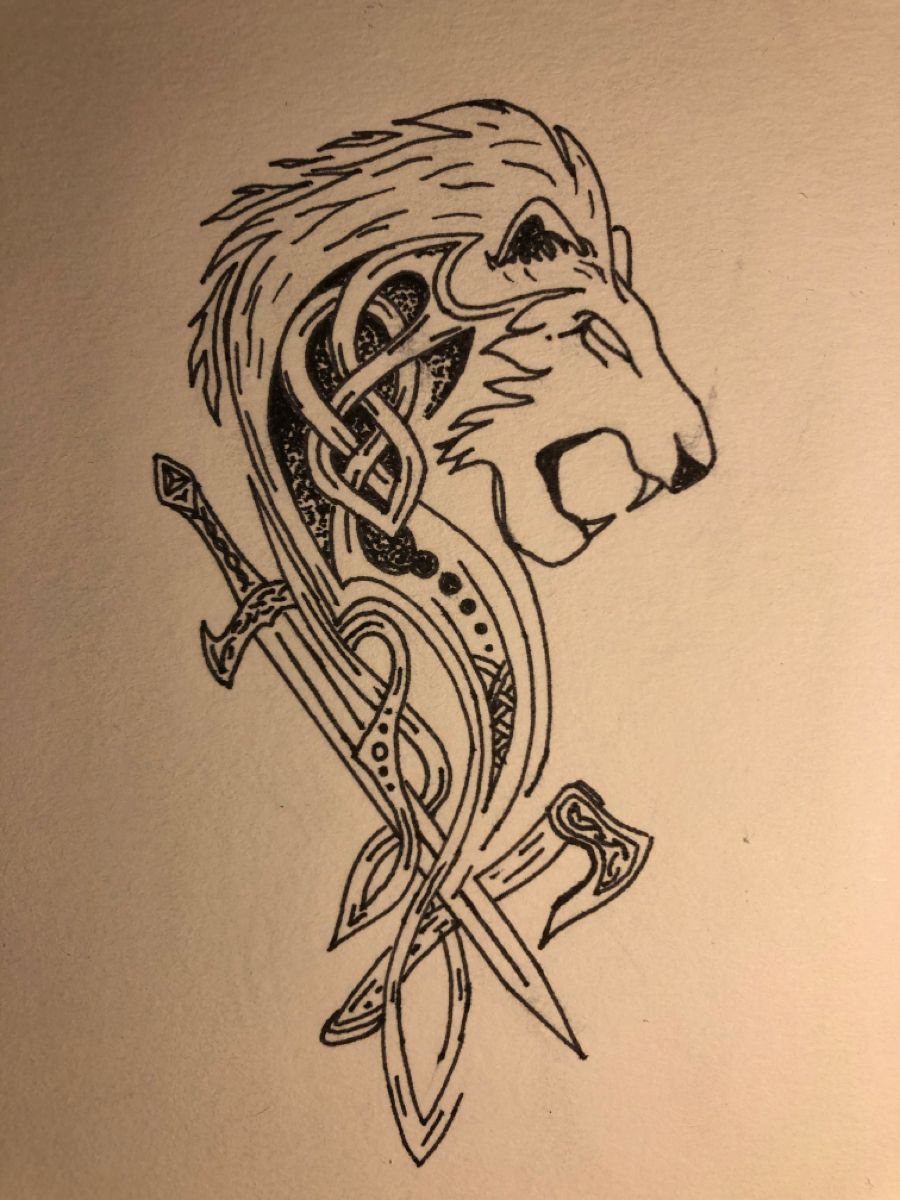
Knotwork demands an artist who tattoos it regularly, not one who learned Celtic patterns last month. The lines must stay consistent width through tight turns, or the whole piece blurs together in a year.
Placing this on a forearm or calf lets the band shape wrap naturally. The lion faces outward in the visible design, which means choosing whether the roar points toward or away from your body center.
I would angle the accompanying sword and axe to frame rather than compete, keeping them smaller scale or more open in their knotting.
No color shifts as it settles.
4. Black and Grey Lion Rampant
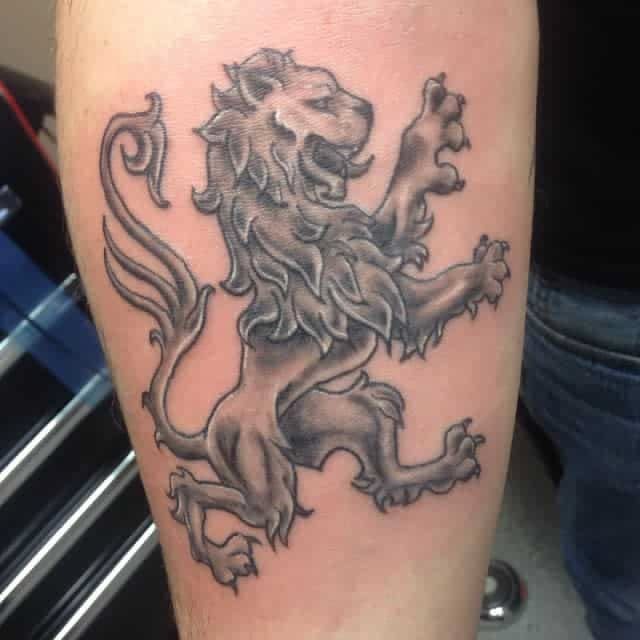
Black and grey relies on contrast range to sell the heraldic pose. Without red or gold to carry meaning, the lion’s claws, mane and tail tuft need extra ink weight to register as a symbol rather than a generic cat.
Skin on the leg holds ink differently than the upper body, often healing slightly lighter.
An experienced artist adjusts for this by deepening the darkest passes and keeping mid-tones cleaner than they would on a back or chest piece. The pose still reads clearly at smaller sizes, where a color version would lose its impact.
Healed grey sometimes cools toward blue. Ask your artist about their black mix and how it ages.
5. Tribal Style Lion Rampant
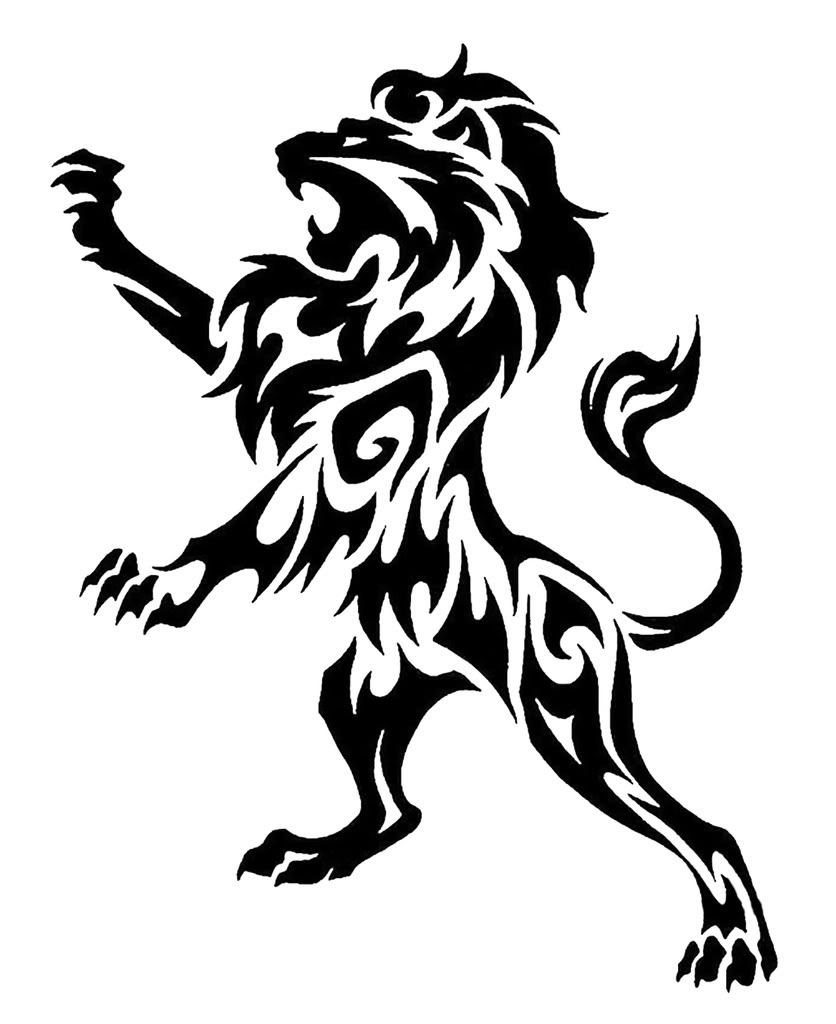
Bold, sweeping tribal lines suit the lion’s stance because the stance itself is already exaggerated.
Each curve of mane and tail can extend into a flame-like point or roll back into the body mass. The negative space between pattern and outline does as much work as the ink.
This style forgives placement on curved surfaces; shoulder caps and outer thighs both handle the silhouette cleanly.
The tribal density can adjust to your pain tolerance and session length. A full fill takes longer, but open sections with skin showing through heal faster and let you add color later if you change your mind.
I would bring reference from Polynesian or Maori traditions only if the artist works in that specific lineage. Generic tribal too often means pattern without weight distribution.
6. Red Heraldic Lion Rampant
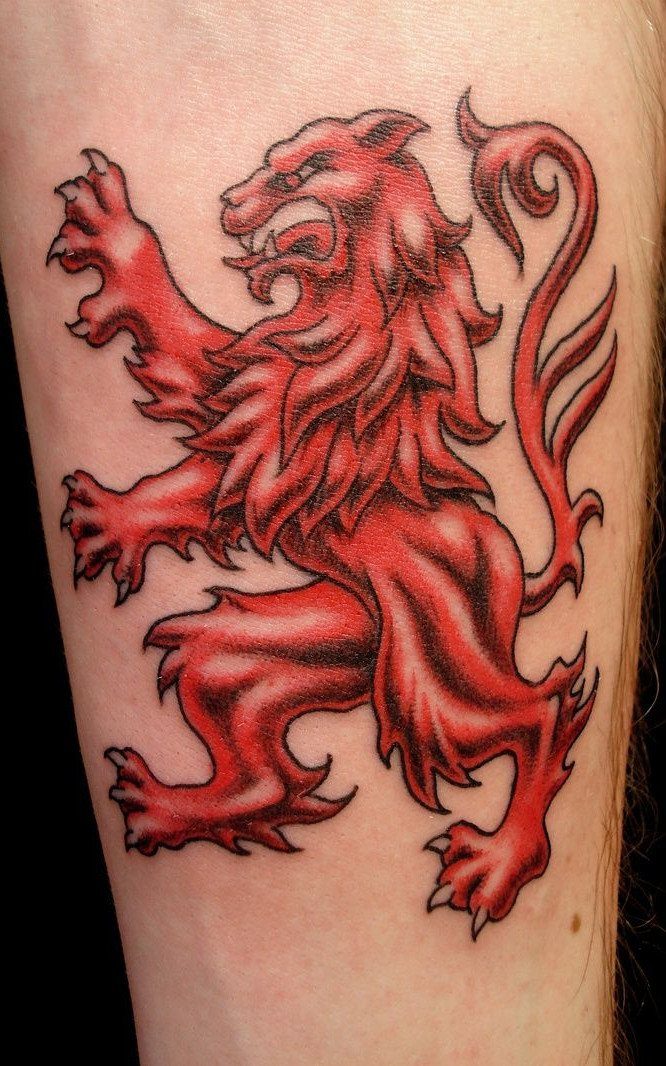
Red ink carries risks worth naming upfront. Some reds contain mercury-based pigments that react in sunlight; newer organic options fade to orange or pink faster than you might expect.
Ask specifically about the brand and compound, and plan for a touch-up schedule if you want the tone to stay true.
The black outline in the visible version does double duty.
It defines the heraldic form as the red shifts, and it lets the artist correct color bleed during application. Without that outline, red lion tattoos often lose their paw and mane edges sooner than black ink would.
This is the most immediate, shout-from-across-the-room option in the list. It suits someone who wants the symbol recognized before the style.
7. Crowned Heraldic Lion Rampant
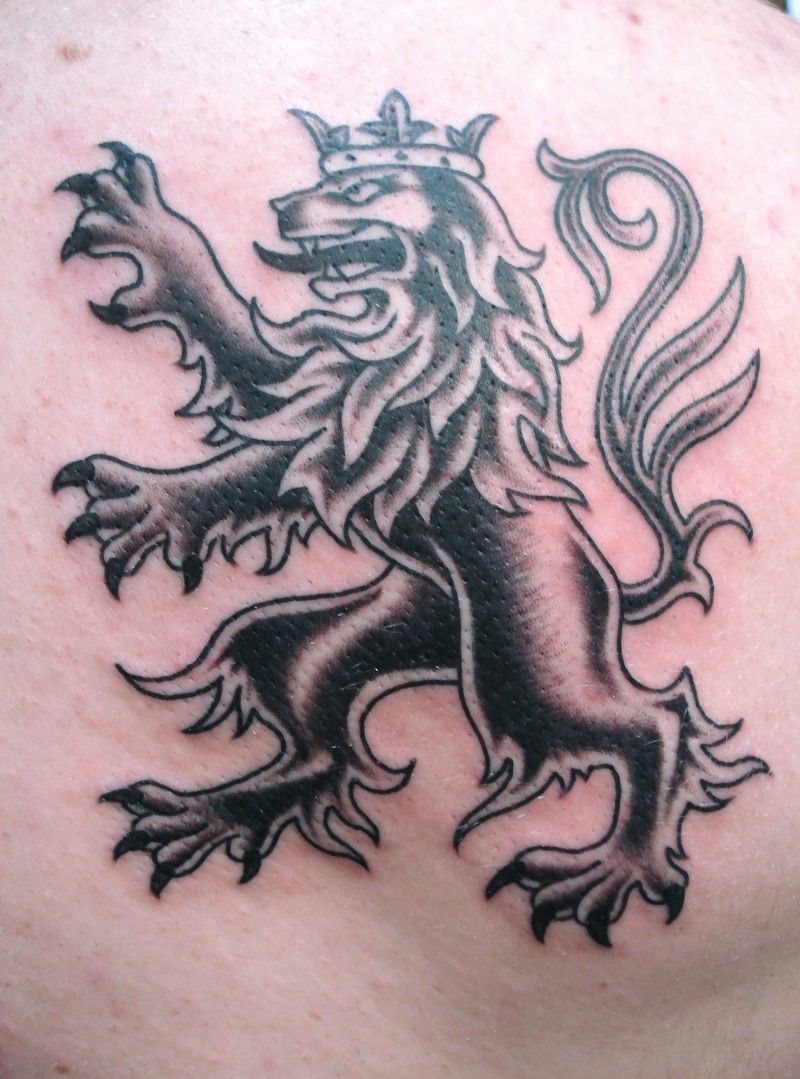
The crown changes the lion from clan symbol to royal claim, which shifts who asks about it. I would expect questions about the Stuart line or Scottish monarchy, not just heritage in general.
Black and grey ink keeps the crown’s details readable at small sizes where gold would muddy. The points and arches need single-needle work to stay sharp, so budget for an artist comfortable with miniaturized heraldry.
The visible version wears the crown simply, no jewels or crosses shown. You could add gemstones in color as birthstones or clan associations, but that turns a bold silhouette into something busier.
I would place this high enough on the arm or leg that the crown sits on a flat surface, not wrapping over a curve where the circle distorts. Shoulder or outer thigh works; the knee or elbow does not.
This suits someone whose Scottish connection runs through documented lineage rather than general pride. The crown makes a specific statement that plain rampant lions avoid.
Frequently Asked Questions
What is the Scottish lion emblem called?
The figure is called a lion rampant, a heraldic pose where the lion stands upright on its hind legs with forepaws raised.
Scottish royalty and clans have used it for centuries. In tattoos it usually appears on a shield or saltire background, with or without a crown, thistles, or motto banners.
What does a lion symbolize in a tattoo?
Broadly, lions signal strength and courage across cultures.
In a Scottish context the meaning tightens to heritage pride, clan loyalty, or royal lineage when a crown is added. The rampant pose specifically carries heraldic weight, so the tattoo reads as symbolic rather than purely decorative.