The nine skeleton hand tattoos here run from a single fine-line gesture piece to full hand and forearm coverage built across multiple sessions.
What decides which one fits is how much skin the reader is ready to commit: forearm only, or the visible surface of the hand itself.
1. Realistic Anatomical Hand Bones Tattoo
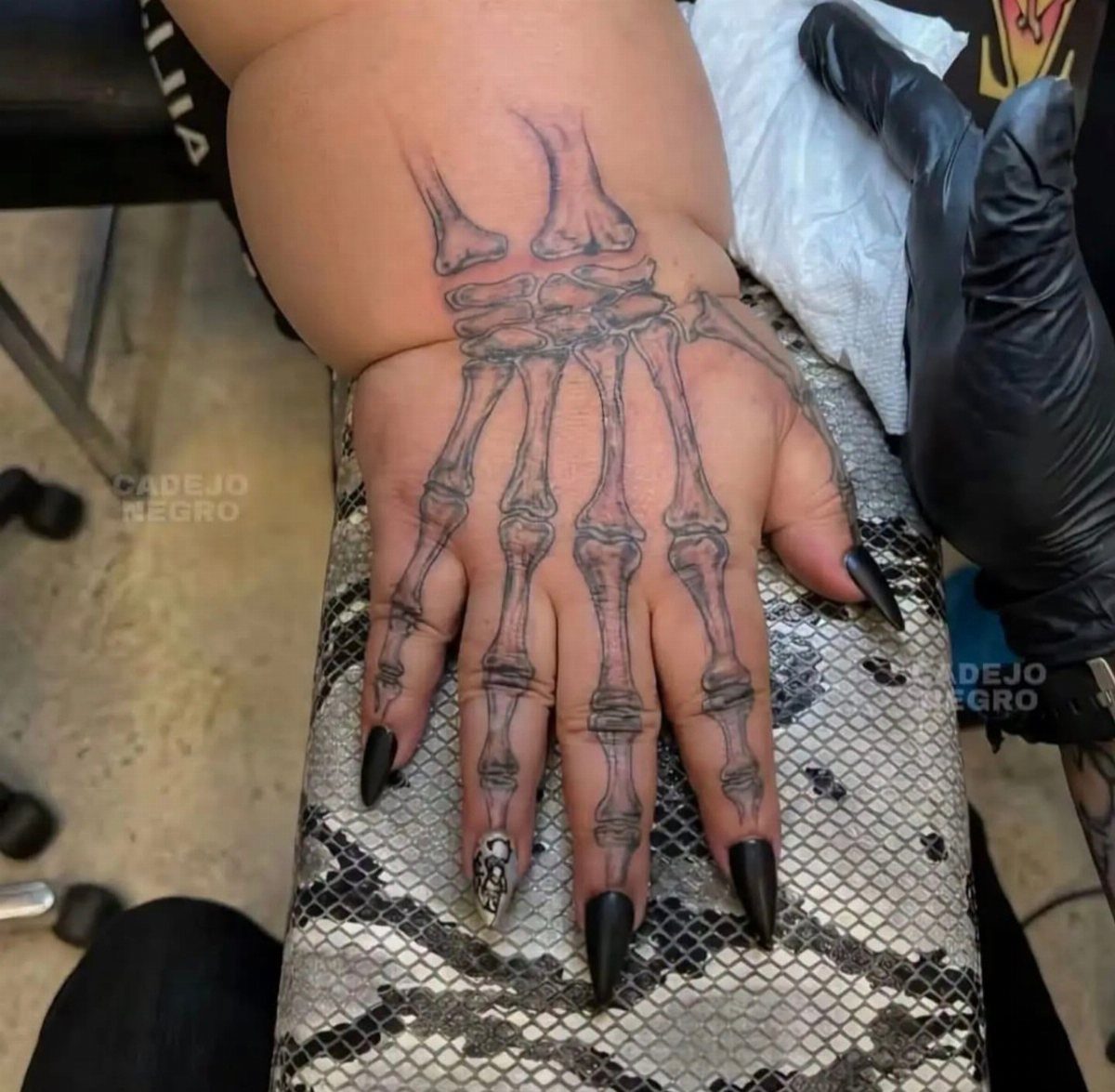
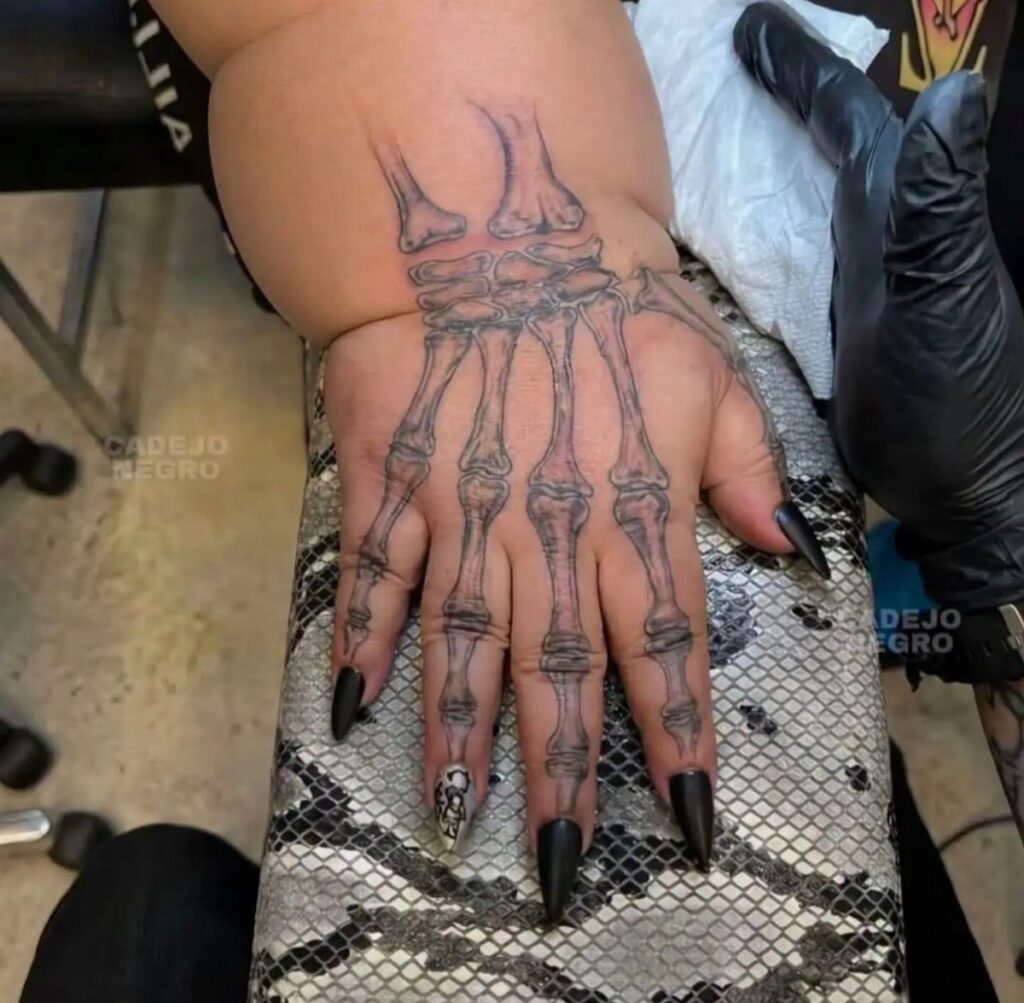
A realistic anatomical hand tattoo makes the bones look like they sit just under the skin, not printed on top of it.
The artist builds depth in layers: gray wash for soft tissue shadows, black for the hollows between carpal bones, white highlights where the bone would catch light. The result reads as structure rather than decoration.
This suits someone who wants the image to feel like an x-ray they carry permanently.
A full hand and wrist piece usually needs multiple sessions, partly so the swelling has time to settle before the artist goes back in. I would ask to see healed photos from the artist before booking.
Black and gray ages cleaner here than color, and the fine lines between metacarpals blur fastest. Sunscreen once it is fully healed keeps the contrast.
2. Skeleton Hand Making Horns Gesture
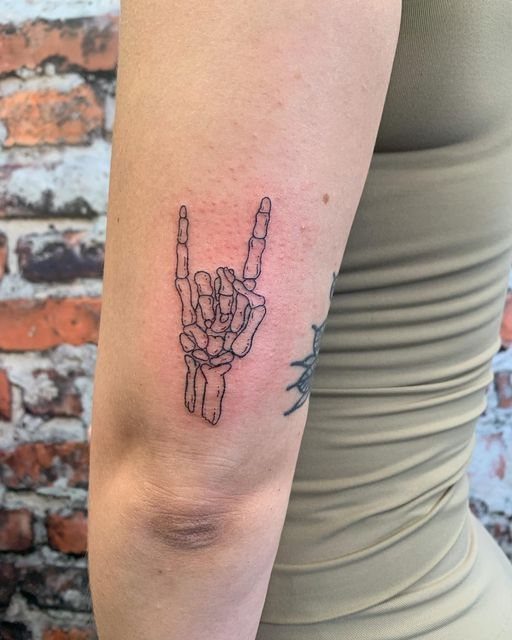
The horns gesture skeleton tattoo turns a familiar rock-and-roll sign into something more unsettling. Fine lines keep it light enough for an upper arm or forearm, where the bone fingers read as playful from a distance and stranger up close.
I like this version for someone who wants the motif without the full hand commitment. The gesture does the work of meaning; no extra symbols needed.
Placement matters more than size. A curved surface like the outer bicep lets the finger bones follow the muscle, so the hand looks like it is actually making the sign, not flattened.
Ask the artist to sketch it on in marker first and move your arm through its range. A pose that looks right straight ahead can distort when the elbow bends.
3. Skeleton Hand with Flowers
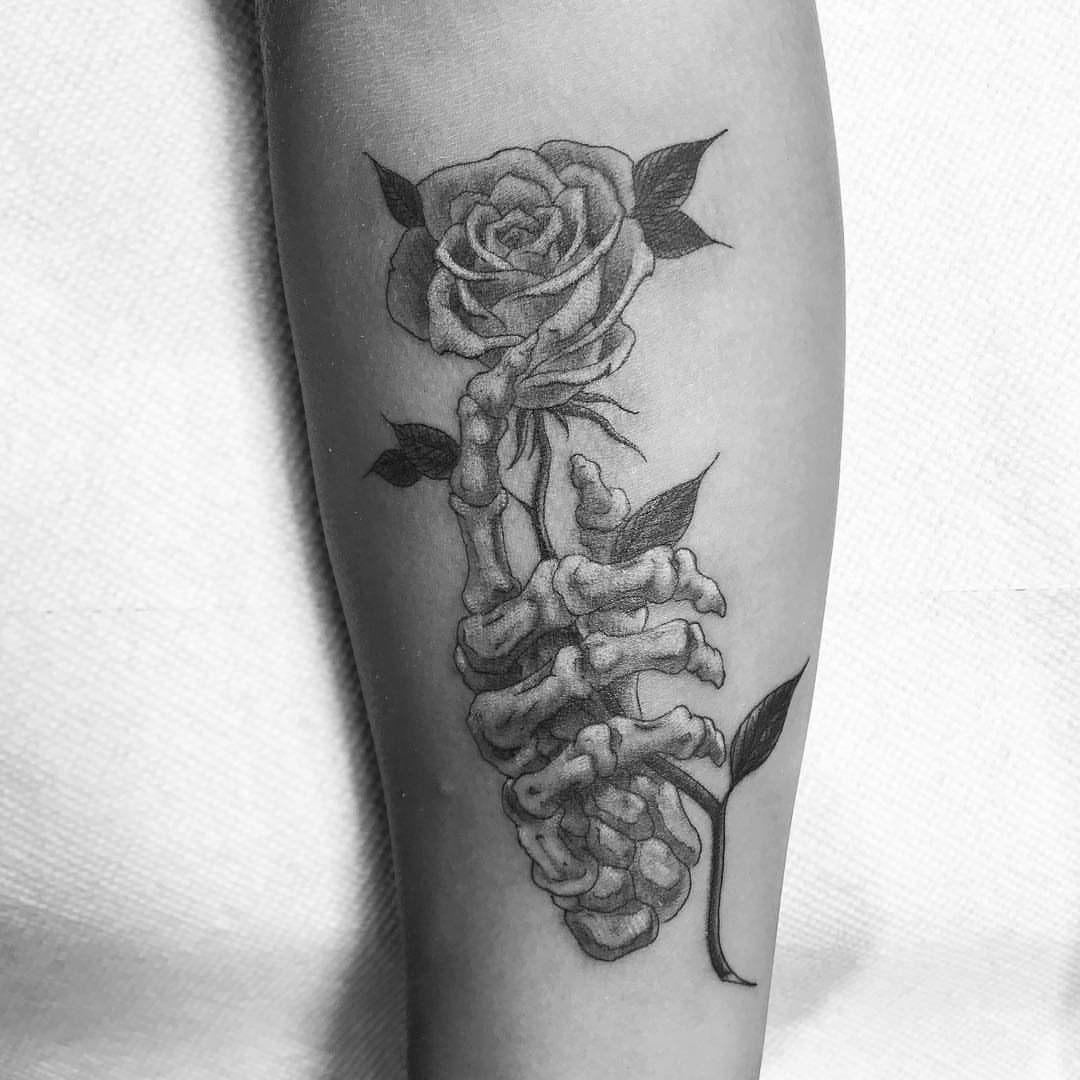
A skeleton hand holding a rose sets death against something growing. The weight of the bones and the softness of petals need equal attention or the image tips into clip art.
The version I would aim for keeps the bones anatomically correct and the flower large enough to show individual petal edges.
Black and gray ink lets the contrast do the work; color on the rose risks looking like a sticker laid over bone.
Placement on the forearm gives the stem room to extend, and the hand position should look like it is actually grasping, not just near.
This heals better on skin that does not crease sharply at the wrist, so the bones stay continuous.
4. Dotwork Skeleton Hand
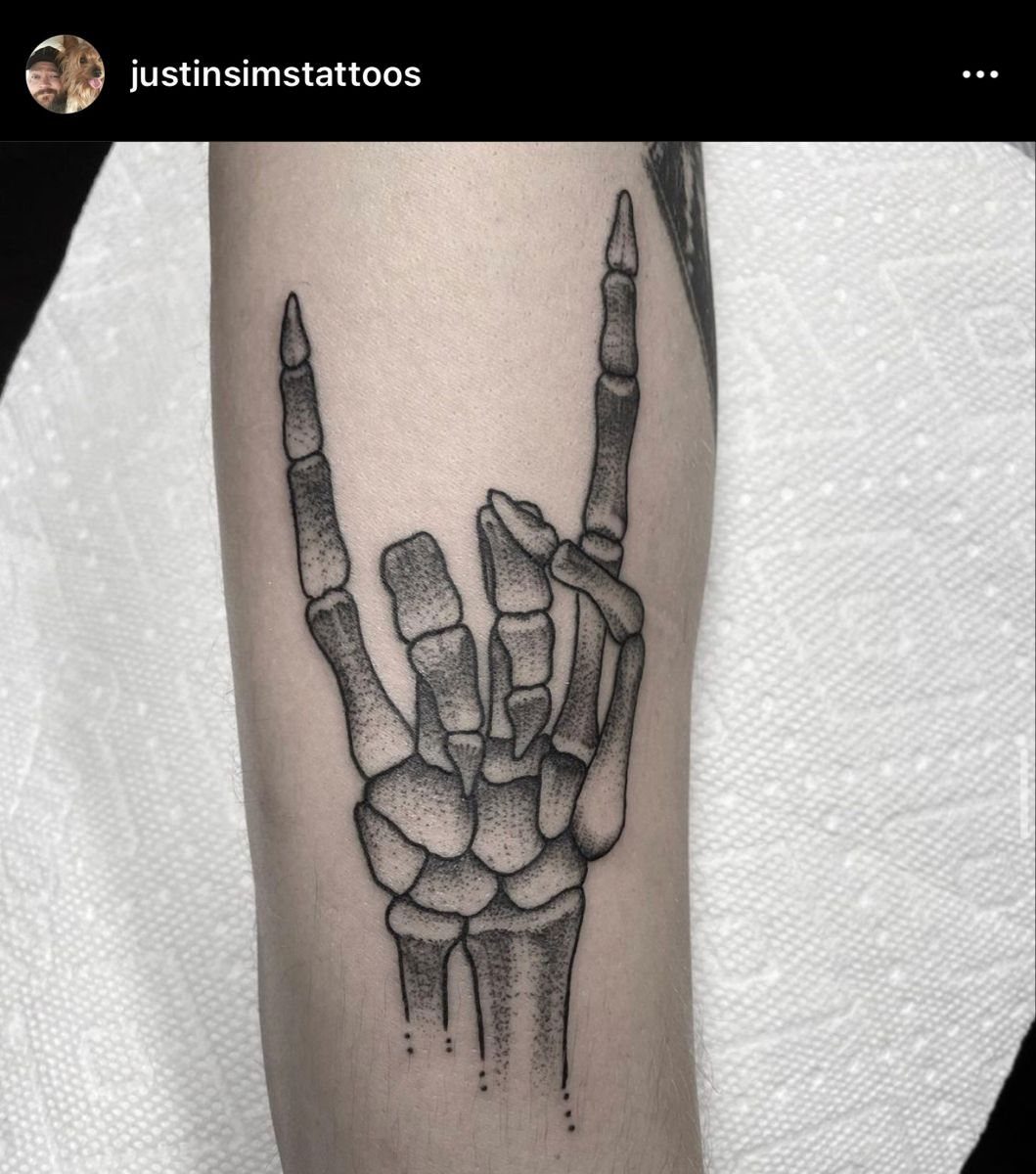
Dotwork builds tone from thousands of individual punctures, no solid fill, no smooth gradients. A skeleton hand in this style looks like it is emerging from dust or static, which feels right for the subject.
The stippled shading suits a horns gesture or a closed fist more than an open hand with spread fingers; too much blank skin between dots and the bone structure gets lost.
Healing takes longer than linework, and the dots can settle unevenly where the hand creases.
I would plan touch-ups into the cost from the start. A background of crosses or a moon, kept in the same stipple density, ties the image together without adding color.
5. Skeleton Hand with Butterflies
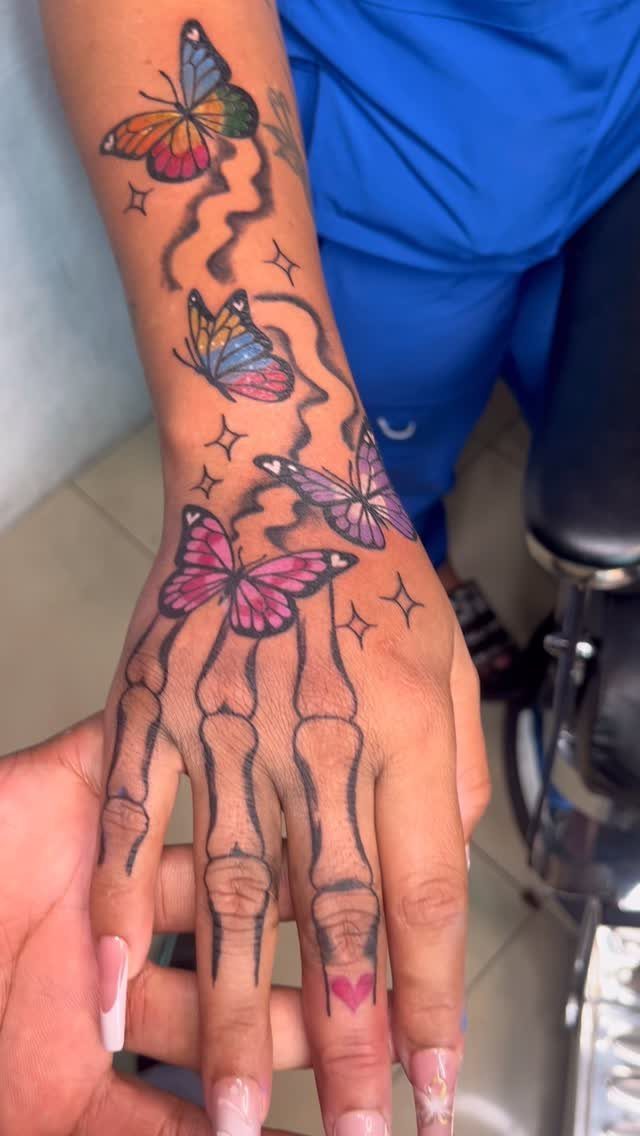
Butterflies on a skeleton hand tattoo let color enter where the bones stay black line. The insects read as life, transition, the temporary against the permanent.
The version I keep returning to keeps the butterflies few and large, not scattered small ones that read as decoration.
A single pink and black morpho-scale butterfly overlapping the knuckles, with smaller ones at the wrist, gives the eye places to rest. Color saturation matters more than variety.
Two or three hues, punched in solid, hold up better than a rainbow that muddies in a few years. This design asks for an artist who works both clean linework and smooth color fill.
6. Skeleton Hand with a Clock
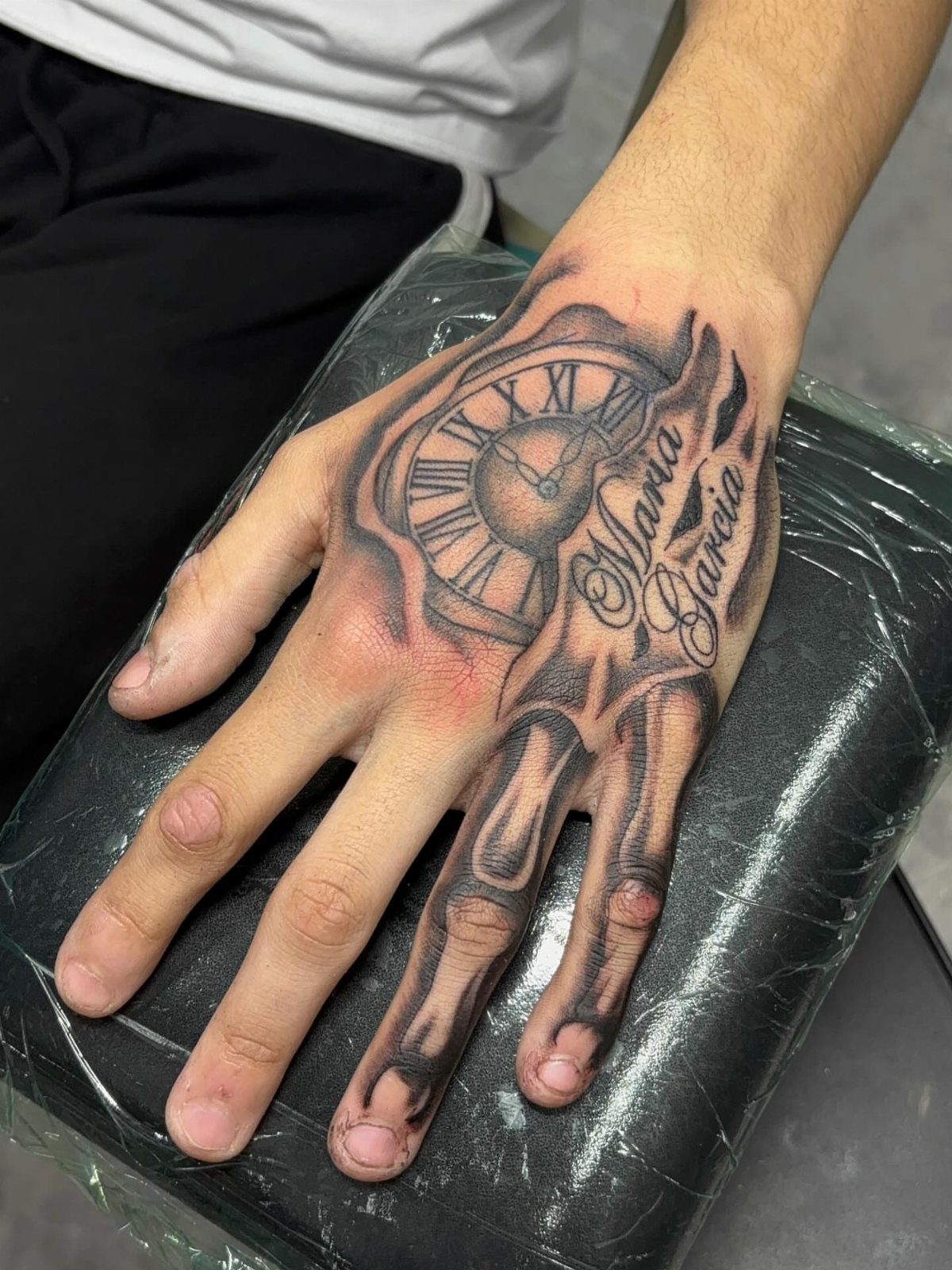
A clock and skeleton hand tattoo makes time and mortality explicit. The Roman numerals give it a classical weight, and the script name below roots the abstraction in someone specific.
The clock face works best large enough for the numerals to stay legible as they age. Go too small and the fine lines and shading collapse into gray blobs; detail needs room to breathe.
The bones should interact with the clock, not just sit beside it; fingers emerging from behind the face, or the hand seeming to hold it, keeps the two elements one image.
I would avoid adding too many extra symbols. The clock and the name carry enough meaning; more turns busy.
7. Skeleton Hand Tattoo with Skulls
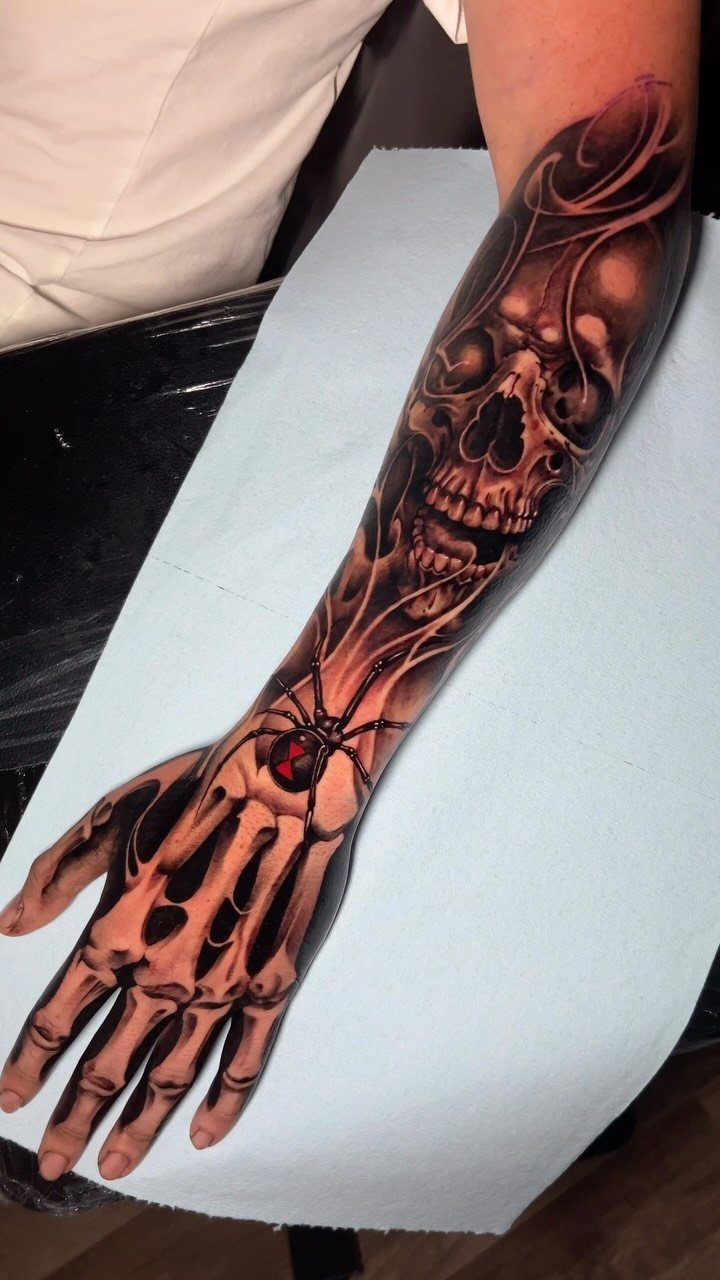
Skulls on a skeleton hand tattoo doubles the bone motif without turning redundant.
The visible piece keeps the skull on the forearm separate from the hand bones, which lets each area read clearly at a distance and rewards closer inspection where they connect.
Black and gray realism suits this best. The two skulls need different treatments to avoid repetition: one weathered and cracked, the other smoother, perhaps with a spider or web to break up the tonal range.
A red hourglass, used sparingly, becomes a focal point without drifting into color-script territory.
Full hand and forearm coverage commits the skin permanently; I would start with the forearm skull and extend later.
Finger bones blur faster than flat areas, so the boldest detail belongs above the wrist. Ask your artist about hitting the webbing between thumb and index last; it swells most and can push ink out unevenly.
Design Styles
Realistic skeleton hand work relies on gray wash to fake depth under skin.
Fine line takes the opposite path: one pass, no fill, letting the contour speak. It suits smaller placements where gray wash would turn muddy.
Dotwork sits between them.
Sugar skull styling borrows from Día de los Muertos decoration: floral patterns, hearts, and decorative swirls added to the bone structure.
The balance matters; too much filigree and the hand reads as costume. Black ink keeps it from tipping into color that will blur at finger scale.
Meaning of Skeleton Hand Tattoos
Skeleton hand tattoos carry 2 threads of meaning that do not mix cleanly.
One is personal tribute: the bones stand for someone lost, the permanence of memory against the permanence of death. The other is broader meditation on mortality itself, the clock and bone together making time visible.
Butterflies shift the reading toward transition.
The insect’s short life span against bone that does not decay sets temporary against permanent, and the color enters where the skeleton stays black line. A single large morpho-scale butterfly overlapping bone reads as transformation rather than decoration.
Flowers do similar work.
The rock gesture versions, horns raised, play this lighter. Death becomes playful from a distance, stranger up close, and the meaning stays in the viewer’s interpretation rather than the wearer’s intent.
Placement Ideas
The back of the hand offers the largest flat plane and the most natural place for a full anatomical piece.
The forearm gives room for combination pieces: skull above, hand below, with connecting bone or web.
I would avoid starting with full hand and wrist coverage. Starting on the forearm lets you test how the motif wears before committing skin the world sees constantly.
Finger placements demand extra planning. Sunscreen once the skin is fully healed is not optional if the contrast is to hold.
Frequently Asked Questions
What does the skeleton hand tattoo mean?
The meaning splits 2 ways.
Bones can mark someone gone, keeping their memory fixed to skin while time takes everything else. Without that personal story, the image still works as plain memento mori; add a pocket watch or a broken clock and the point sharpens.
A butterfly landing on bone turns the meaning toward change and the briefness of life against what stays behind. The rock-horns gesture plays lighter, letting the viewer read death as playful or unsettling depending on distance.
What tattoos should I avoid getting?
Full hand and wrist coverage as a first tattoo commits skin the world sees constantly before you know how the motif wears on your body.
Designs with too many extra symbols also clutter the image; a clock and name carry enough meaning without adding skulls, webs, and filigree that compete for attention.