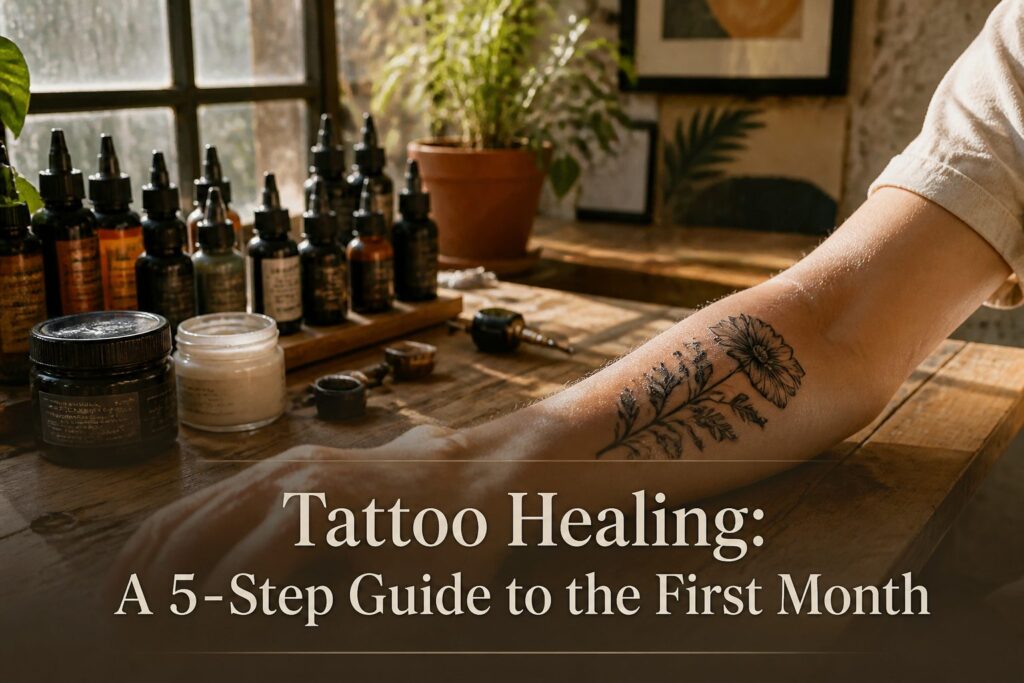
Tattoo healing is the month-long process of skin repair after a needle deposits ink into the dermis.
The catch: the outer layer closes in two to four weeks, but deeper layers keep settling for up to six months, and sun exposure or skipped moisturizer during that gap determines whether the color stays even.
Most people slack off around day 18, when the surface looks normal; that is exactly when the long work of pigment settling runs underneath, still vulnerable to UV and dryness.
The first 72 hours demand bandaged protection and twice-daily washing, but the real test is the discipline that follows.
The First 72 Hours
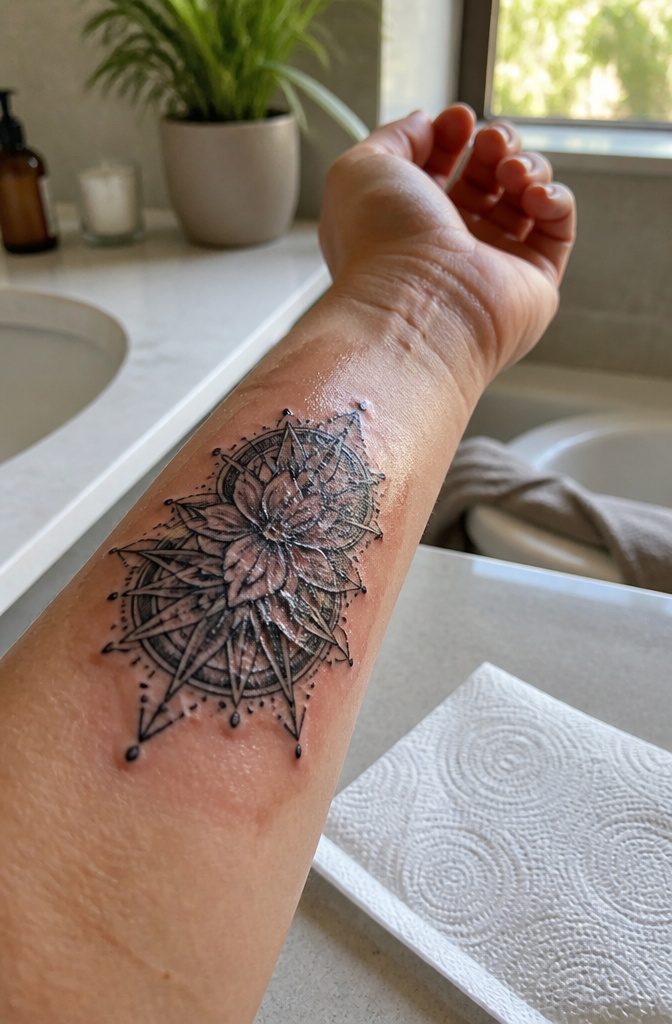
Fresh ink is basically an open wound, and the first three days make that impossible to ignore.
Plasma, extra ink, and a little blood will ooze through; the skin turns red, swells slightly, and often feels warm to the touch. That warmth is your white blood cells doing their job against the foreign pigment.
Your artist will send you home under wrap, either traditional bandaging or a medical-grade adhesive called second skin.
Keep that covering in place for two to six hours if it’s standard gauze or plastic; the adhesive film can stay on for a full 24 to 48 hours.
When it’s time to remove it, wash your hands first. Lukewarm water softens a stuck bandage so it peels away without tearing anything underneath.
Clean the tattoo two to three times daily using just your fingertips, fragrance-free antibacterial soap, and water that is warm but not hot.
Pat dry with a clean paper towel, never rub, then wait a few minutes before applying a thin layer of whatever ointment or simple moisturizer your artist recommended.
The thin layer matters; too much traps moisture and bacteria right where neither belongs.
When Plasma and Redness Peak
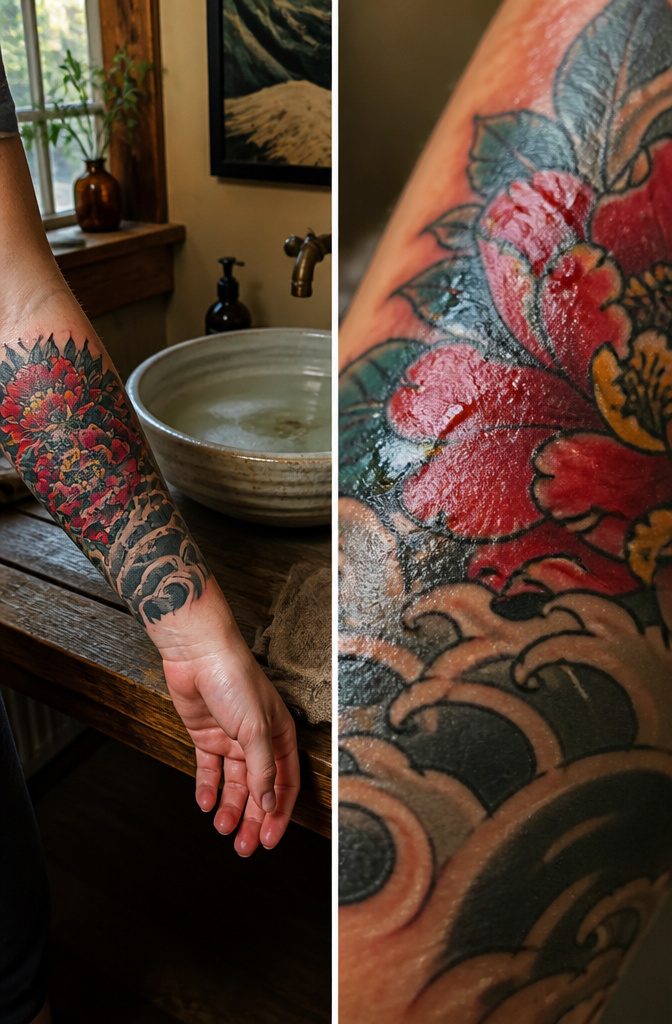
Plasma and ink can pool on the surface of a fresh tattoo for the first 3 days, and the surrounding skin stays flushed and warm.
That response is normal: your body treats the tattooed area as an open wound while the inflammatory cascade begins. The plasma clears on its own if you keep it clean.
Washing twice or three times daily with lukewarm water and a mild, non-abrasive cleanser removes the weeping before it can dry into thick scabs. Pat dry with a clean paper towel; rubbing drags at the skin.
A thin layer of moisturizer keeps the surface supple, but heavy application is where people usually go wrong. Too much product suffocates the skin and traps bacteria against the wound.
You will see some ink mixed into the plasma and wonder if the color is leaving the skin.
It is not. The pigment sits deeper than what washes away, and the weeping is part of how the healing cascade works.
What matters during these days is restraint: clean it, dry it, and resist the urge to coat it like a cracked lip. The weeping should slow toward the end of the first week.
Tightness and Early Scabs
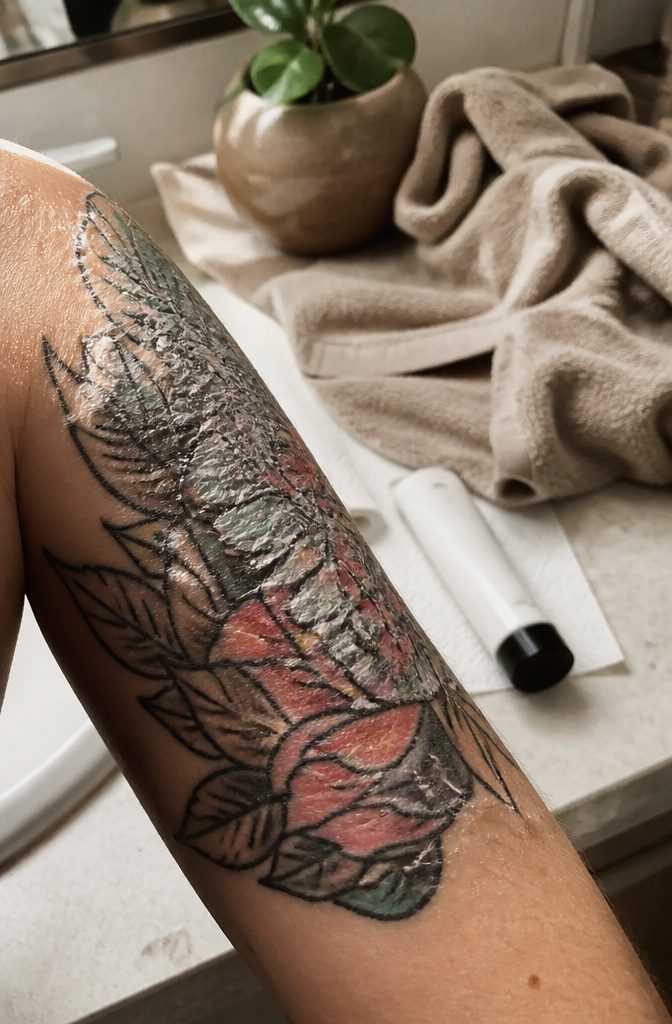
By day three, the plasma has stopped oozing and the skin pulls itself shut.
The fresh ink suddenly feels like dried leather or a sunburn that never got a chance to cool. That tightness is normal, but it is the gateway to the real mistakes.
This is when light scabbing starts, especially over spots where the artist packed in heavy ink. The scabs are not wounds; they are a protective barrier your body builds to shield the open skin underneath.
Picking at them, or peeling the flaky skin that comes with them, pulls ink straight out and leaves patchy color that no touch-up will fully fix.
Do not pick, scratch, or peel — let the scabs fall off on their own when you wash or apply lotion.
The itch during these days can be brutal. Moisturizer is the calmer here, not a heavy salve but a thin layer of unscented water-based lotion.
More than four applications a day is overkill; you want the skin supple, not wet, because too much moisture weakens the scab and causes patchy fallout. If the itch gets under your control, slap the area instead of scratching.
The tattoo may look dull or blurry beneath the flakes, which is normal. The vibrancy returns once the dead skin clears.
Keep the tattoo out of pools, baths, and direct sun.
The routine is clean, lightly moisturized, and hands-off. That discipline now decides whether the color stays even or costs you a return trip to the chair.
Flaking and the Itch
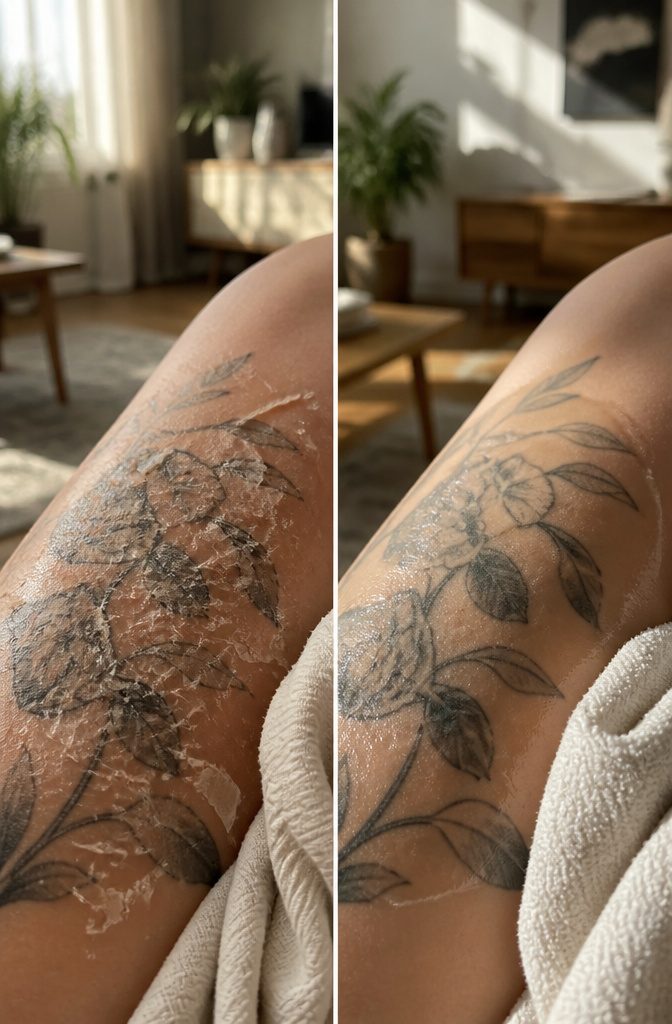
Peeling starts around day seven, and the skin comes off in flakes the size of oat bran, some of them carrying color.
The tattoo underneath looks faded, patchy, almost like a photocopy left in the sun. That visual hit is the hardest part of this stage: watching ink you chose and sat for seem to vanish into dry skin.
The itch that arrives with it can feel almost electrical.
Do not scratch. Scratching pulls ink out of healing tissue, risks scarring, and opens the door to infection.
A light slap through clean fabric works, or a pat with the flat of your hand. Moisturizer helps more: a thin layer, applied with clean hands, eases the tightness and reduces the urge.
The tattoo may look milky or dull through day 10, even 14.
That haze is normal. The color returns as the outer layer regenerates, though the waiting tests your patience more than the first week of plasma and bandages did.
Keep washing once daily if residue has stopped, moisturize two or three times, and let the flakes fall without picking. Tight clothing, heavy sweating, and steam still stay off the schedule.
The Month It Looks Healed

The surface of my last tattoo looked almost back to normal around day 18, which felt like permission to slack off on moisturizer. That was the mistake.
The outer layer heals in about two to four weeks, but the deeper layers keep settling for up to six months, and the way you treat the skin in that gap decides how the color settles long-term.
That slightly cloudy or matte look during weeks 3–4 is normal, not a sign of damage. Sources describe it as a "milky" phase while the top layer of skin finishes becoming transparent again.
The tattoo may seem dull before the brightness returns. What it needs through this is continued light moisturizing, not the heavy layer from week one, but something to keep the skin supple while the lower layers regenerate.
Sun exposure is where most people lose the work they have done.
The regenerating skin stays more sensitive than surrounding areas, and UV radiation fades pigment faster than almost anything else in daily life. I keep my newer pieces under clothing or SPF 50 when they show.
After the first month, the main job shifts to protection, not repair. The scabbing and itching are memories by then, but the long work of settling is still running underneath.
Second Skin Versus Traditional Wrapping
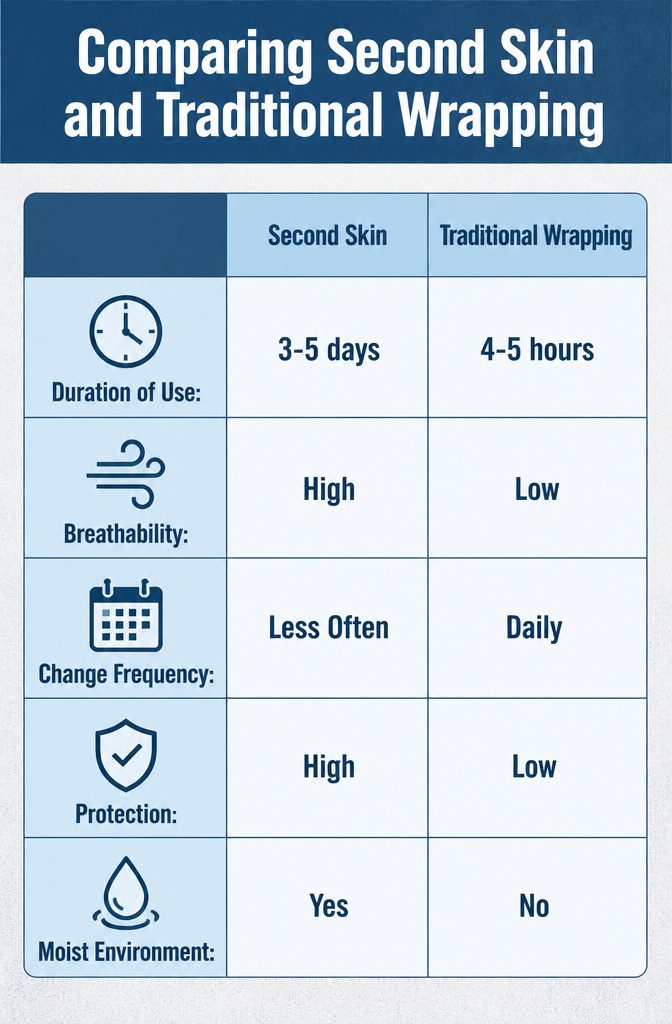
The first time an artist wrapped my new piece in cling wrap, I took it off at three hours exactly and thought I’d dodged some bullet the internet warned me about.
That wrap’s real job is narrower than it looks: keep road dust and subway pole off an open wound for the ride home, then come off within four to five hours before it turns into a bacterial greenhouse.
I slept with fresh cling wrap that night after washing, and ink still seeped through to the sheets.
Second skin bandages stay on three to five days, and that difference is the whole conversation.
The adhesive film breathes, lets plasma and extra ink pool underneath in a moist environment that actually protects the wound, and you walk around without the daily cycle of wash, dry, rewrap.
Plasma buildup under the film alarms everyone the first time; it’s normal, and it’s doing the work.
My adhesive sensitivity made the choice for me that first go.
Now I ask the artist before the needle hits which wrap they keep stocked. Some shops default to second skin for anything under a palm size where the film lays flat.
Larger or more mobile placements can lift at the edges, and a lifted second skin traps nothing, protects nothing. For those, I’ll take the old-school wrap and the four-hour countdown.
Soap and Moisturizer I Actually Use
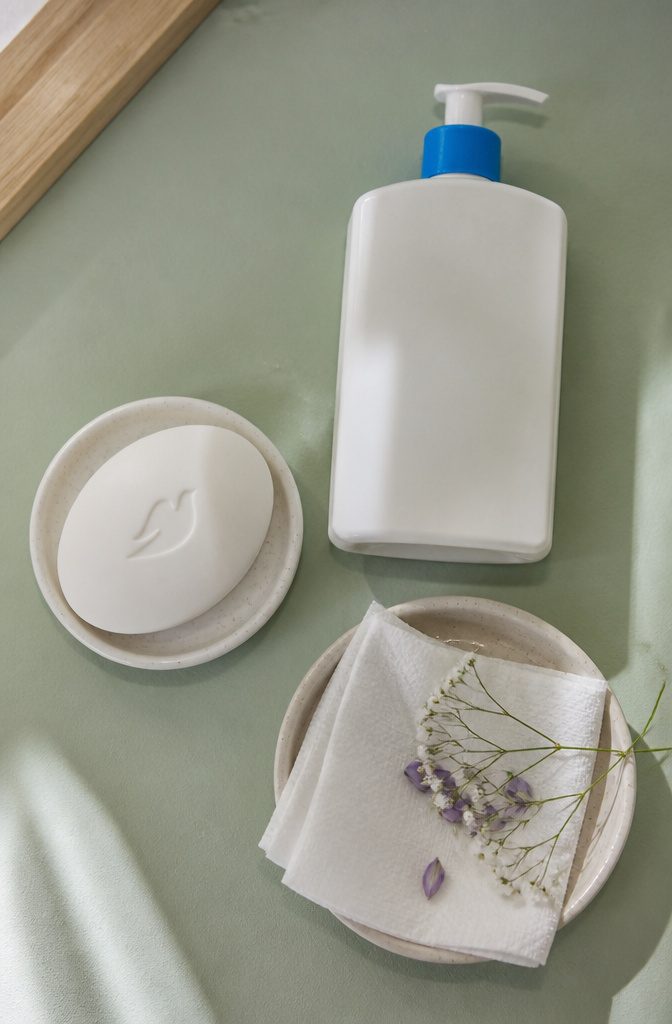
Most shops send you home with a slip that mentions fragrance-free soap and unscented moisturizer, then leaves the actual bottle to your imagination. That gap annoyed me every time.
After my second tattoo, I switched to Dove Sensitive Skin Beauty Bar for washing, the same bar Healthline notes, and spent the first three months guessing at moisturizers before landing on something that did not sting.
The routine that finally worked: wash morning and night with the Dove, pat dry with a clean paper towel, then apply lotion thin enough to absorb in a minute.
Two to three times daily in week one, stepping down to twice daily once flaking starts. For those first five to seven days, Aquaphor did the heavy lifting, though I kept it light because the petroleum base can clog pores.
When peeling began, I switched to Lubriderm Daily Moisture, the fragrance-free version, and ran that for another two weeks.
Some artists push Dial Gold for its antibacterial bite, but the fragrance kept me away; my skin runs reactive, and unscented products are the one place I do not gamble.
What Stays Away from Fresh Ink
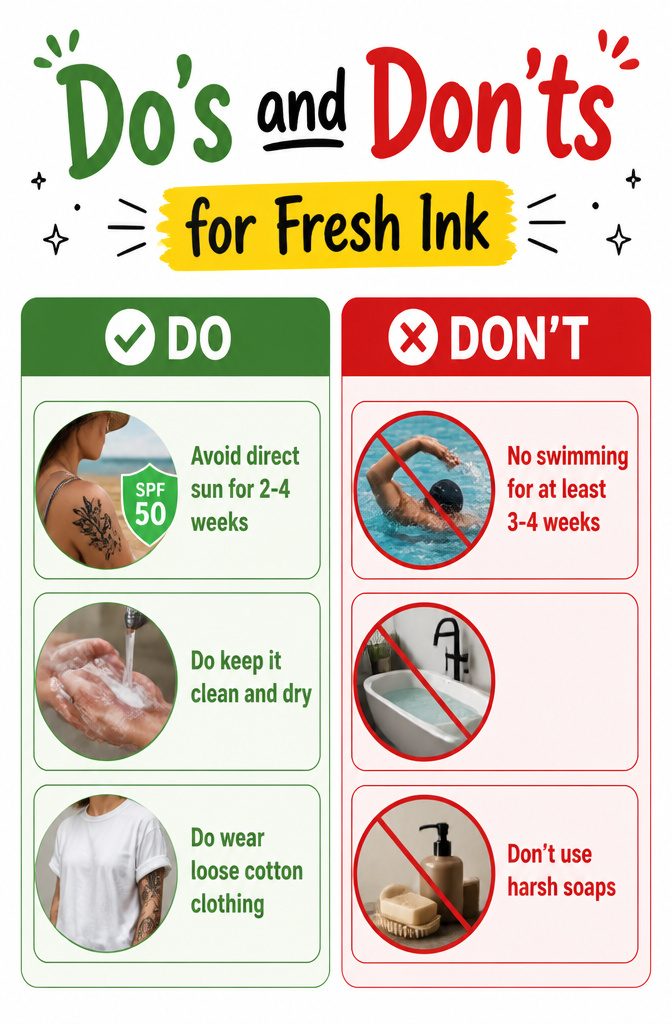
Fresh ink forces a few honest changes to the routine.
Sunlight is the first thing to go. The UV that fades a living room rug in five years will damage a tattoo’s color before it ever fully sets.
No direct sun for the first two to four weeks, and then minimum SPF 50 for life after that, not just the first summer.
Water works the same way. Showers stay fine, but submersion is off the table for at least two weeks.
Pools, baths, hot tubs, ocean, lake, whatever your usual weekend looks like: three to four weeks before swimming. The two-week mark lets the surface close; the extra buffer lets the deeper skin settle.
Loose clothing matters more than most people expect. Bra straps, tight waistbands, anything that rubs or traps sweat against the wound, will slow healing.
Cotton wins here, and the same goes for bedding. Clean sheets and clean clothes reduce bacterial exposure without requiring any new product.
These are temporary adjustments, not forever sacrifices.
The sun returns, the swimming returns, the fitted shirts return. The ink stays longer if you give it those first weeks of distance.
Reading Your Tattoo for Trouble
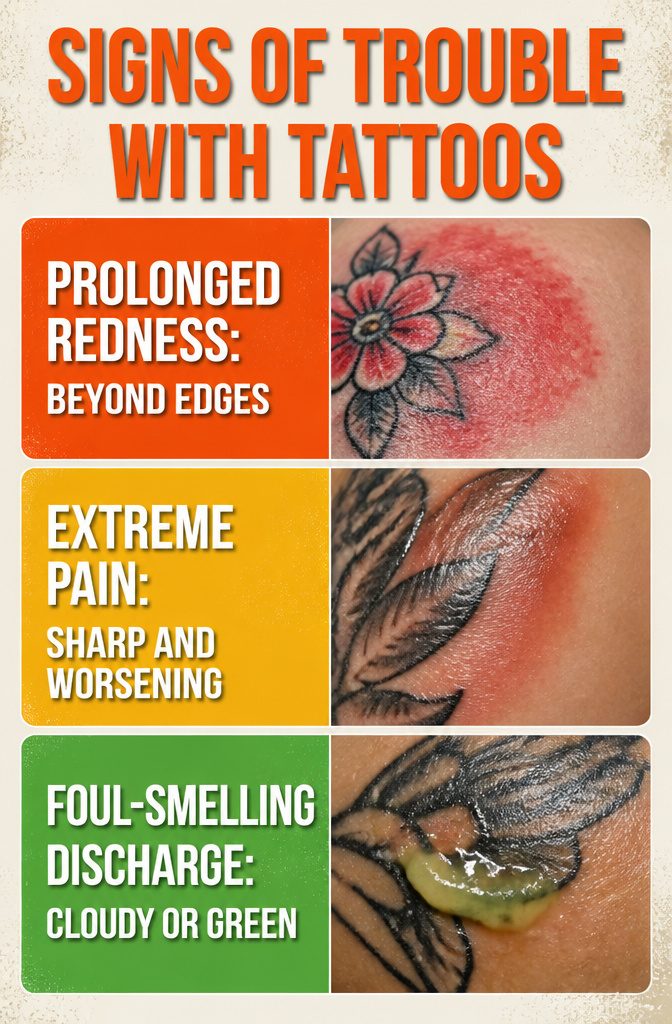
A fresh tattoo will feel warm for the first few days, almost like mild sunburn, and some clear plasma or colored ink may weep out in the first 24–48 hours.
That is your body doing its job. The trouble starts when the redness spreads well past the tattoo’s edges, the swelling becomes extreme and painful, or the area turns intensely hot compared to the skin around it.
Thick, cloudy, yellow or green discharge, especially anything foul-smelling, is the line where you stop watching and start calling.
Your artist knows their own work and can spot whether the ink is settling normally or rejecting, but fever or chills mean the infection has moved beyond skin level.
Call the artist first for localized issues; head straight to a doctor for systemic symptoms. Trust the difference between healing discomfort that peaks and fades, and warning signs that worsen with time.
The first improves. The second demands action.
Frequently Asked Questions
How long does it take for a tattoo to heal?
The outer layer heals in about two to four weeks, but the deeper layers keep settling for up to six months.
The surface may look normal by day 18, which tricks people into stopping care too early. Keep moisturizing lightly and protecting from sun through the full window even when the tattoo looks healed.
What should I avoid after getting a new tattoo?
Avoid scratching or picking at the tattoo, swimming or submerging it in water for three to four weeks, direct sun for two to four weeks, and tight clothing that rubs or traps sweat.
Also skip baths, pools, hot tubs, and heavy sweating until the surface has closed.
Can I swim with a new tattoo?
Wait at least three to four weeks before swimming, including pools, baths, hot tubs, ocean, and lakes.
The two-week mark lets the surface close, but the extra buffer allows deeper skin layers to settle. Submersion too early risks infection and color loss.
How do I clean my new tattoo?
Wash two to three times daily with lukewarm water, fragrance-free antibacterial soap, and just your fingertips.
Pat dry with a clean paper towel, never rub, then wait a few minutes before applying a thin layer of recommended ointment or moisturizer. Hot water irritates; harsh soaps or scrubbing damage healing skin.
Is it normal for my tattoo to look faded while healing?
Yes. Peeling skin around day seven carries color with it, and the tattoo underneath looks patchy or milky through day 10 to 14.
That haze is normal dead skin, not lost pigment. The brightness returns as the outer layer regenerates, though the waiting tests patience.
What are the stages of tattoo healing?
The stages run: plasma and redness peaking in the first 72 hours; tightness and light scabbing by day three; flaking and intense itch around day seven; and the milky, almost-healed look from weeks three to four.
Each stage demands slightly different care, but the throughline is clean, lightly moisturized, hands-off skin.
What are the worst days of tattoo healing?
Days three through seven hit hardest for different reasons. Day three brings brutal tightness and the start of scabbing, with itch that makes picking tempting.
Around day seven, flaking and electrical itch peak while the tattoo looks faded and patchy. Both windows reward restraint; scratching or peeling now destroys color permanently.
What should you not do after a tattoo?
Do not pick, scratch, or peel scabs and flakes.
Do not apply heavy layers of ointment, which traps bacteria. Do not soak the tattoo, expose it to sun, or wear tight, rubbing clothing.
Do not skip handwashing before touching the area. Each of these mistakes risks infection, scarring, or patchy color.
What helps tattoos heal faster?
Nothing speeds the biology, but disciplined care prevents setbacks that slow it. Clean gently twice daily, moisturize thinly, keep hands off, and protect from sun and water.
Slapping instead of scratching handles itch without pulling ink. Second skin bandages, where appropriate, reduce daily wash cycles and let plasma do protective work underneath.