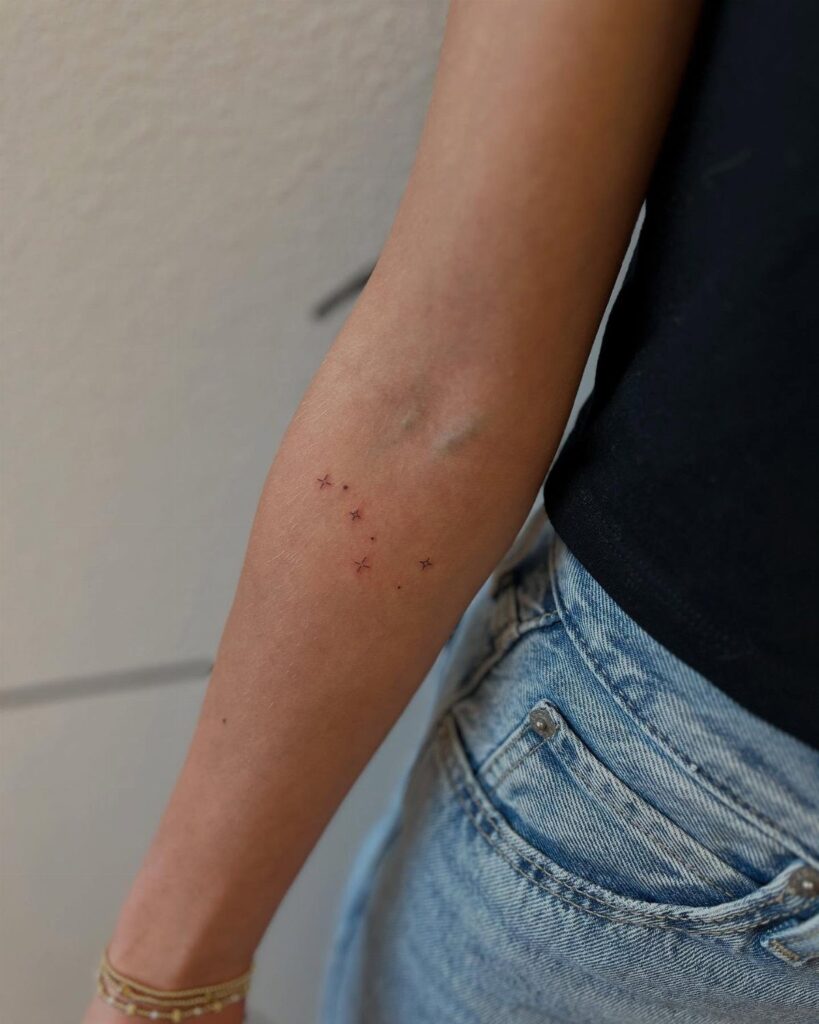
A twinkle star tattoo can sit almost anywhere: a cluster of fine-line stars hides under a watch band, a starburst cluster tucks behind the ear, and a flowing trail of stars and dots needs the long flat canvas of an arm or thigh.
What settles the choice is the meaning you want, the real estate on your body, and how much session time you are ready to commit.
1. Small Fine-line Stars
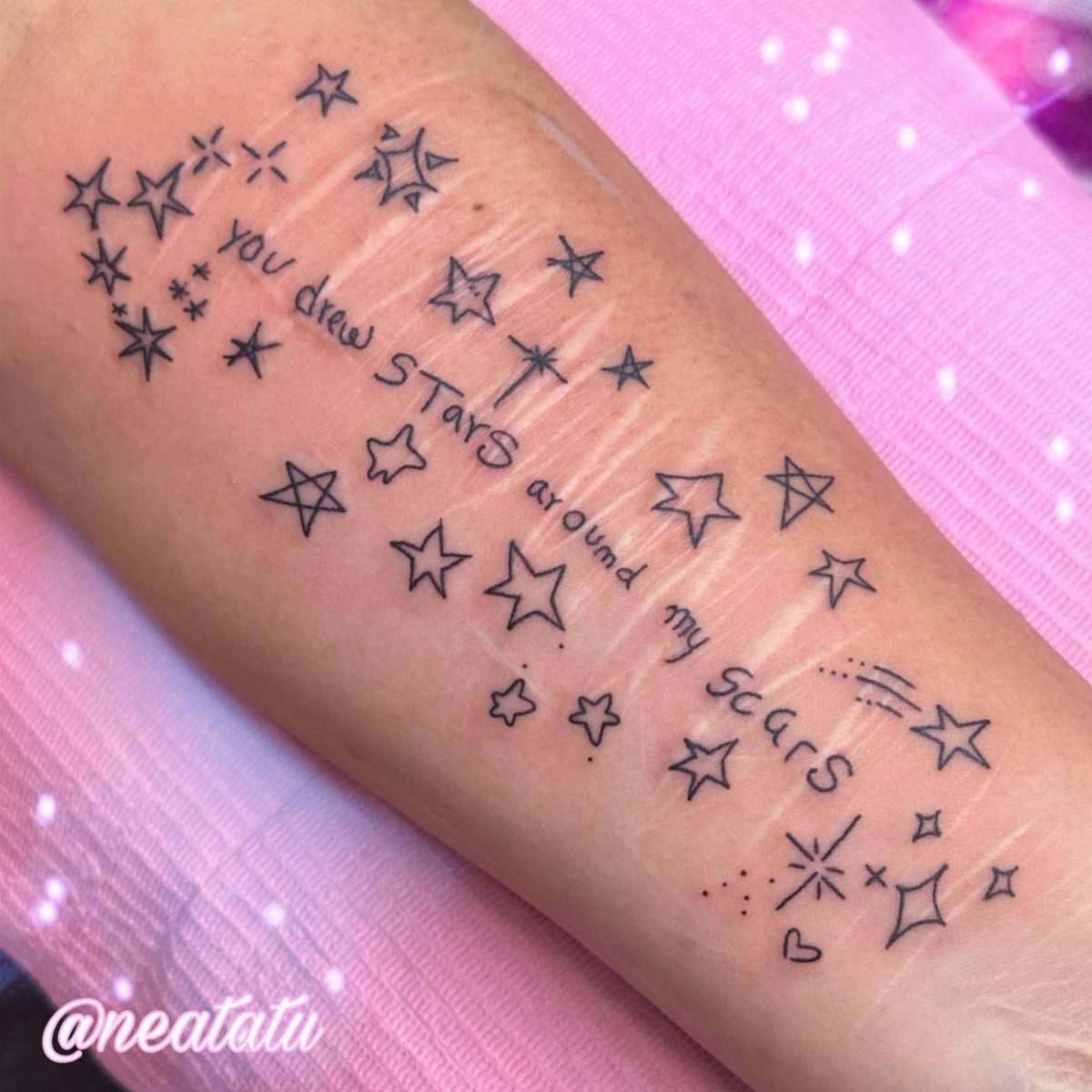
Fine-line stars keep the ink light enough that you can add more later without crowding the skin.
Varying the size matters more than adding color.
A single needle line weight keeps everything readable at a glance even as the pattern grows. For wrists or hands, where the skin turns over faster, this minimal approach also means less ink to fade unevenly.
Ask your artist to plot the spacing before any lines go in. Too tight and the stars blur together; too loose and the trail falls apart.
2. Cluster of Stars
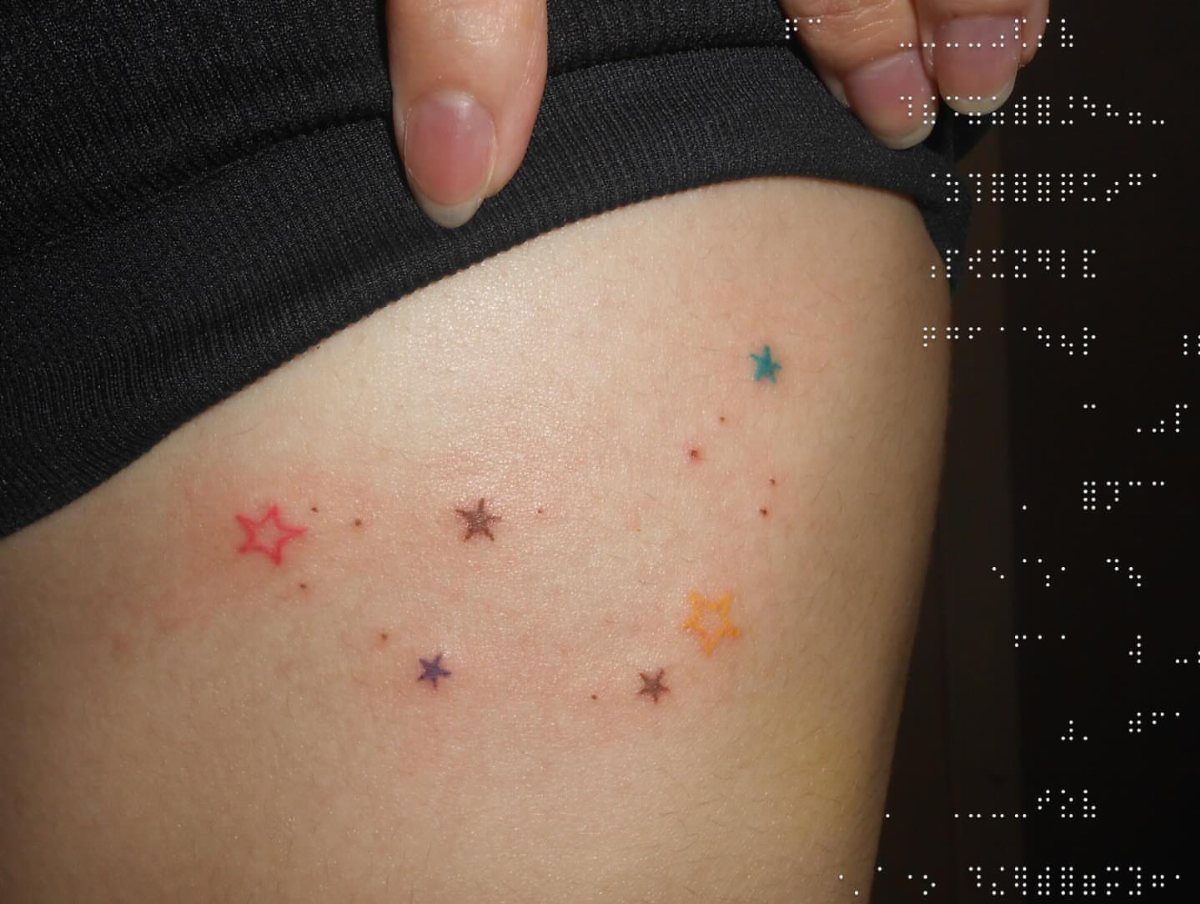
A cluster this small works for a first tattoo.
The placement lets you watch how your skin holds ink before committing to larger work, and the dots surrounding the stars can be added or left out at the last minute depending on how the outline sits.
Manhattan artist @indira_txttoo posted a version that keeps the cluster tight enough to cover with a watch band if you need to.
3. Star with Dots
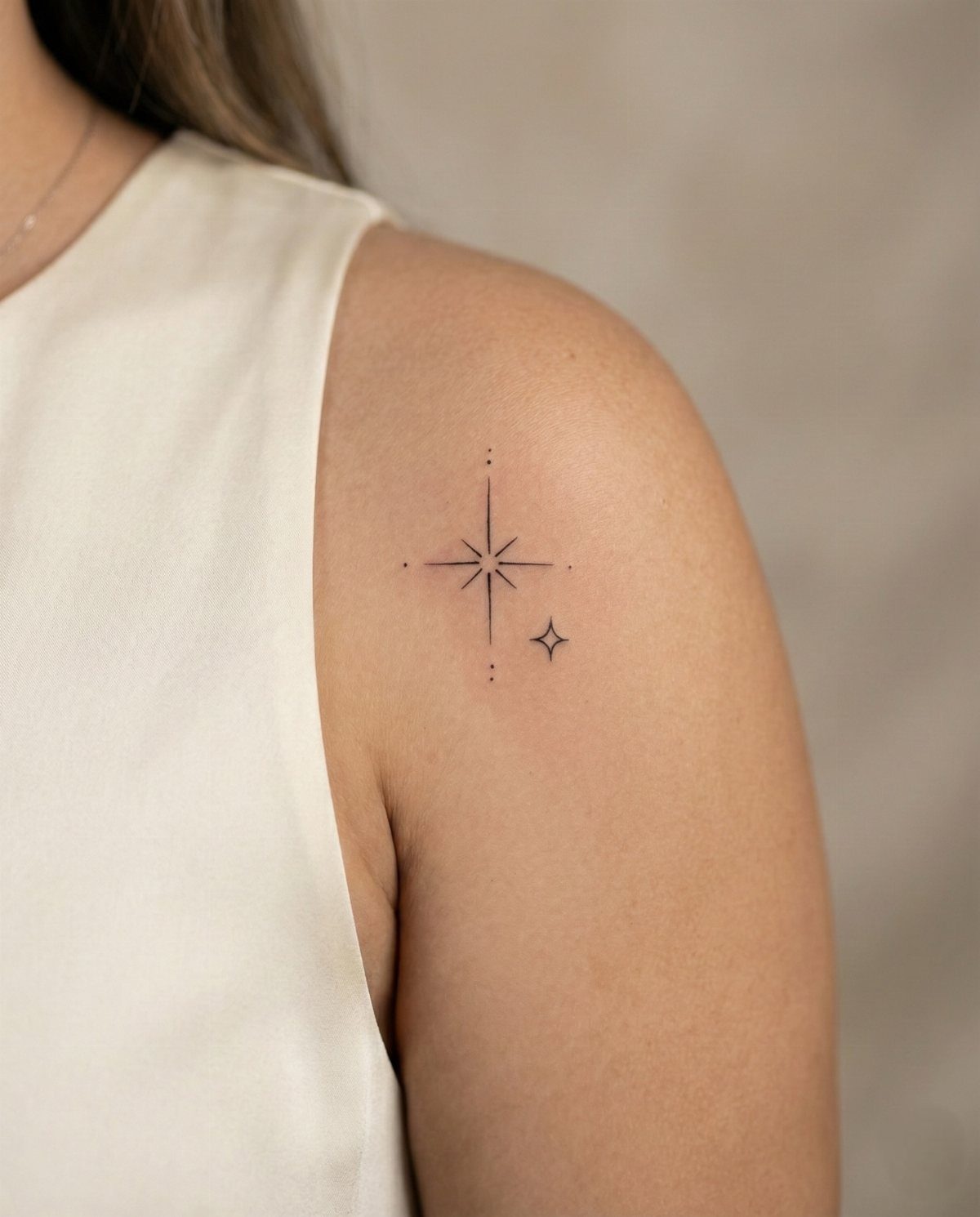
Dot accents around a star do the actual work of the "twinkle."
The center star stays simple, a four or five-point outline, so the dots can do their job.
Too much detail in the star itself and the eye has nowhere to rest. Your artist can map the dot density to follow muscle shape, denser toward the bone and lighter as the skin stretches.
This version suits anywhere with a flat plane, the shoulder, the upper arm, the thigh. Curved placements need the dot placement adjusted or the radiating lines read as uneven.
4. Twinkle Twinkle Little Star Text with Stars
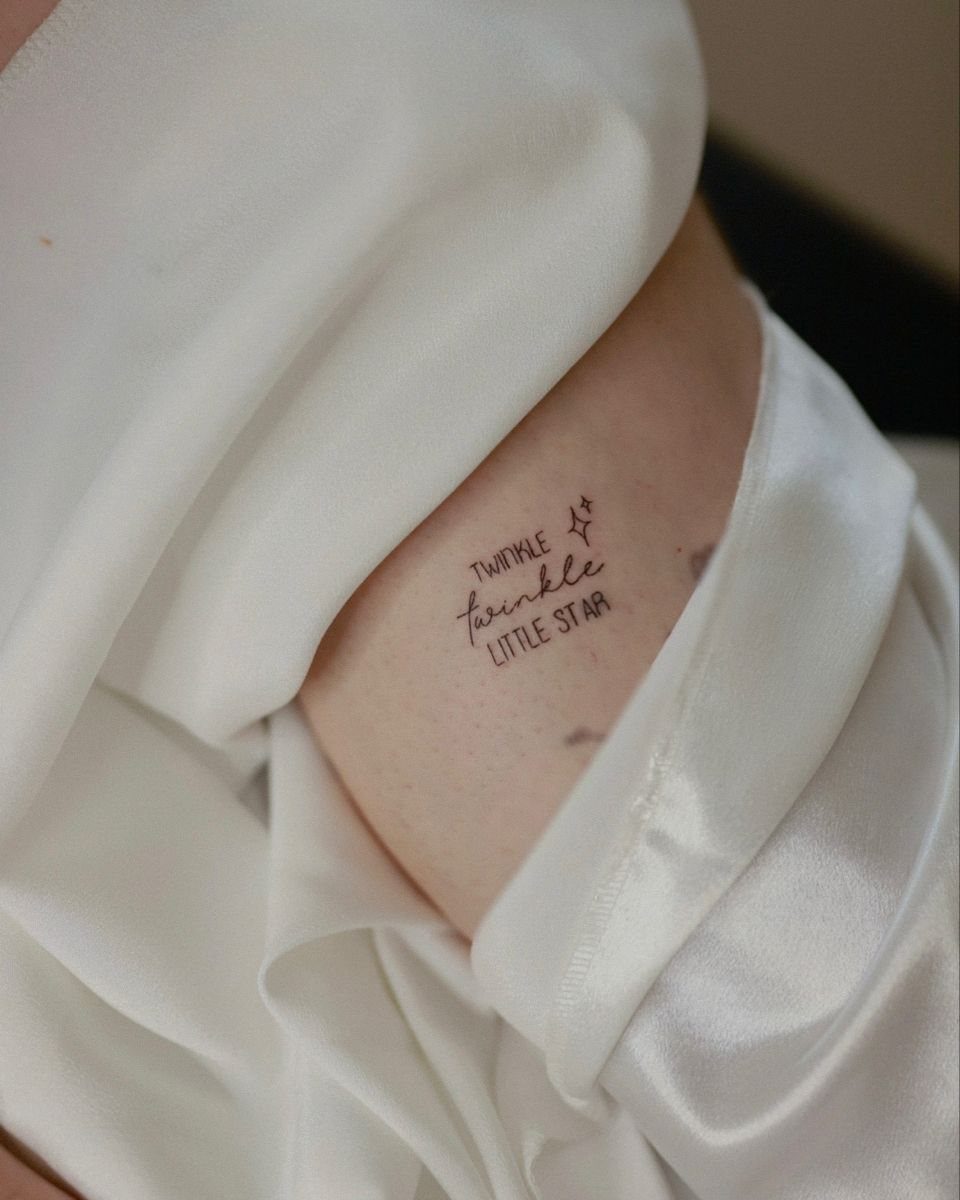
2 small stars punctuate the end rather than crowding the words.
Cursive reads softer, print sharper.
Either way, the lettering needs to be sized so every word stays legible as the skin shifts. A line of words that long plus symbols wants straight or gently curved space long enough that the letters do not crush together.
The ribcage, where the photo sits on white satin, gives that room but moves with breath, so expect some settling of the ink over the first year.
5. Starburst Cluster Behind the Ear
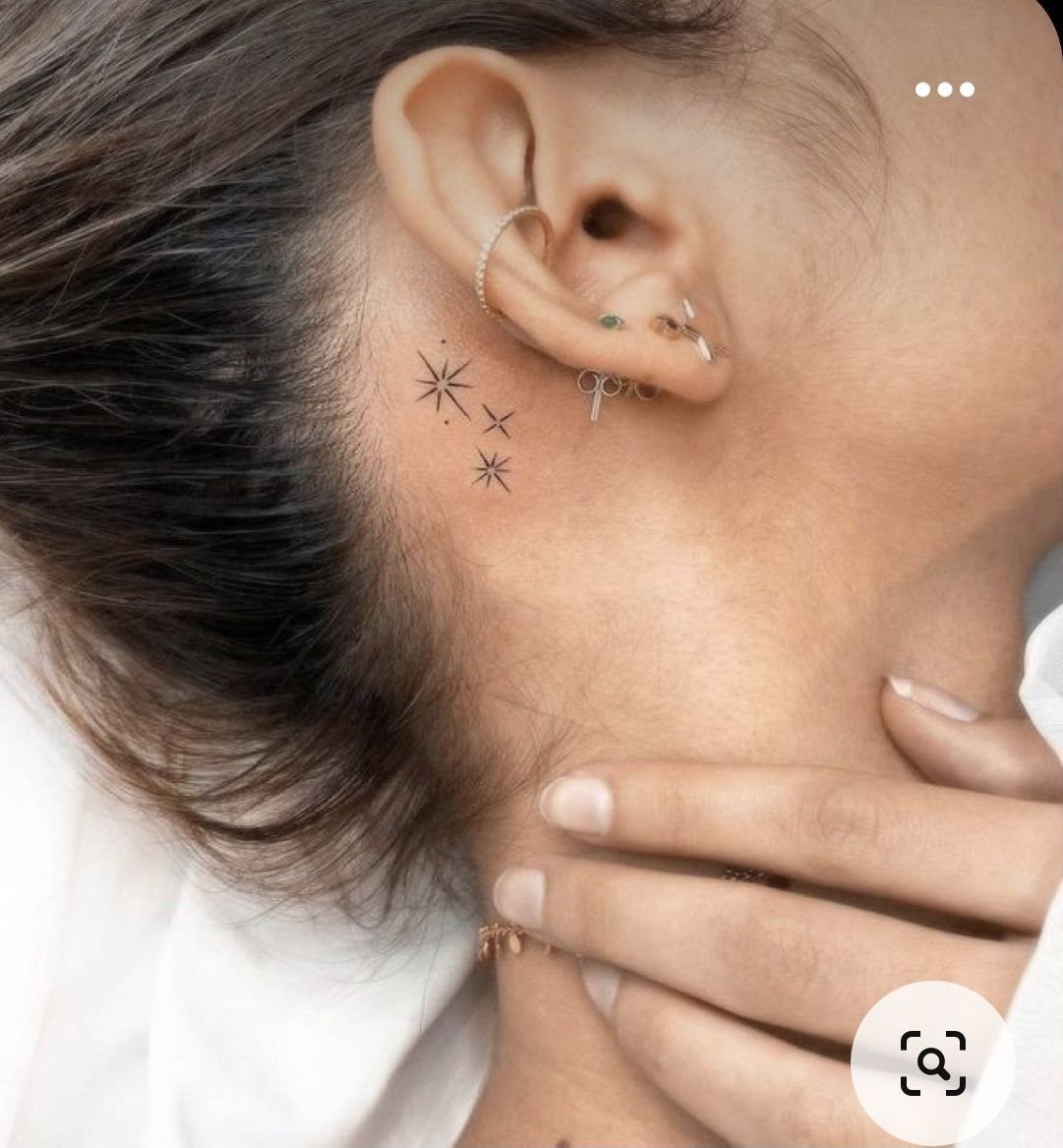
Behind the ear, the skin is thin and the bone close, so a design with some open space will age cleaner than solid fill.
3 starbursts in a diagonal cluster, smallest high and largest low, follow the neck’s natural line and draw the eye without shouting.
The area is small enough that cost stays low, but the proximity to the hairline means touch-ups if your cut changes.
Ask for the top star to sit at least a finger’s width below where your hair usually falls, and check the placement with your hair both up and down before the stencil goes on.
Sleep on the opposite side for the first week. The pressure from a pillow will blur fine lines faster here than almost anywhere else.
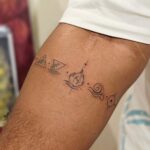
6. Flowing Cosmic Trail of Stars and Dots
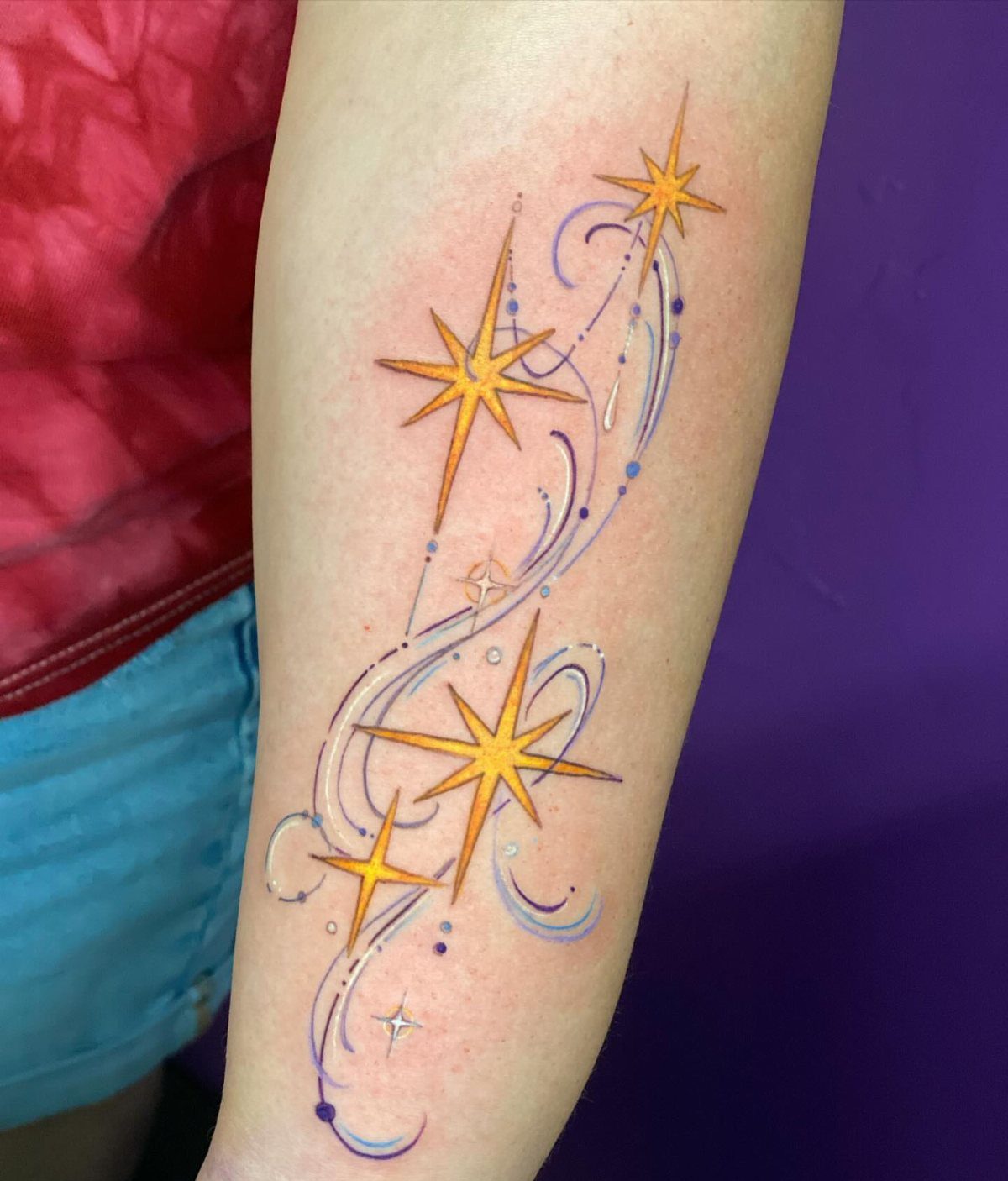
A flowing trail needs a long flat canvas. Purple and yellow ink on fair skin gives the contrast; on darker skin, the same layout works with black and gray, or with colors chosen for your undertone.
The dots here are smaller than the stars but more numerous, filling the gaps so the trail never looks empty. That density takes longer to ink than a sparse version, and shops charge for the session time.
Vertical arrangements on the arm read naturally when the stars graduate in size. Reverse the order, largest at the wrist, and the flow fights gravity.
Tattoo Placement Ideas
Wrist and hand placements are the ones you will see most, though the skin there turns over fast and fine lines need touch-up sooner than elsewhere.
The ankle bone sits close to the surface, so any star placement there should keep open space around it rather than packing fill against the bone.
The area above the heel, where the Achilles tendon runs, gives more forgiving skin but moves with every step you take.
Behind the ear, the pillow problem is real and ongoing, not just during healing. That placement demands sizing the design to hide under your usual hairline or committing to a style you can show at will.
Symbolism of Star Tattoos
A single star reads as guidance, the fixed point you orient by. Multiple stars shift that meaning toward a journey, the path between them mattering as much as any one point.
The symbolism of a twinkle star tattoo matters when you are choosing between a clean outline and one with dotwork around it.
Most star tattoos hold meaning around guidance, hope, or marking a personal journey; the specific number of points is less documented than the broader symbolism.
Four points mapped to the compass or the seasons; five points to the human figure, head and limbs.
A tattoo artist working in fine line can render either, but the meaning you want should settle the choice before the stencil goes up.
Frequently Asked Questions
What does a star tattoo on the elbow symbolize?
An elbow placement carries its own logic: the joint is where direction changes, so a star there often reads as the point where someone turned toward a new path.
Guidance, hope, or a fixed point to orient by still applies; the elbow just adds symbolism about turning points and direction changes.
How long do sparkle tattoos last?
Real ink sits below the skin and stays; temporary sparkle tattoos rest on top and wash off within days.
A real twinkle star tattoo in fine line on the wrist or hand needs touch-up sooner than elsewhere because the skin there turns over fast.
What does a 2 star tattoo mean?
Two stars leave the meaning open to the wearer: some read them as start and end points, others as two fixed lights in a larger map.
A pair of stars can mark a specific relationship, a before-and-after, or 2 waypoints on the same path.