These wheat designs range from a single fine-line stalk to a full watercolor wash, so the deciding factor is how much symbolism you want visible versus how much room you have and what your artist can heal.
The list goes from a ribbon-wrapped bouquet and a flower pairing to the clean geometry of an infinity loop and a simple fine-line stalk, with watercolor and crossed-stalk versions if you want something bolder.
1. Wheat Bouquet with Ribbon
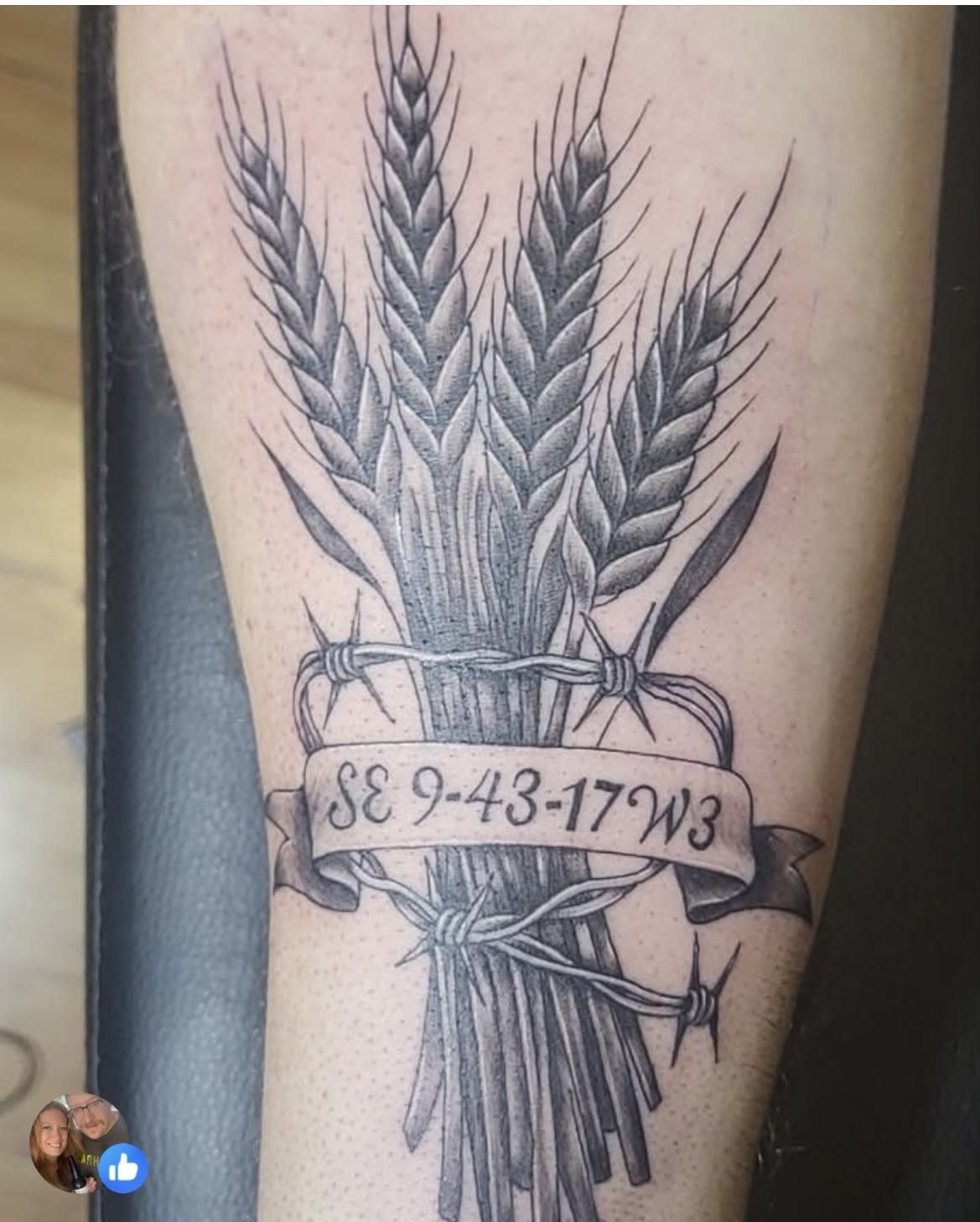
A wheat bouquet tattoo gathers several stalks and binds them, ribbon and all, into one composed piece.
It reads more like jewelry than a single plant study, which is exactly why it works for someone who wants her ink to feel finished and deliberate rather than spare.
Canadian prairie homesteaders marked their land with barbed wire and survey markers in exactly that code format, a memorial tradition that carries into some versions.
Most people choosing this design leave the wire off and keep the ribbon soft, in black and grey or with muted gold.
The stems need room to curve, so the inner upper arm or outer forearm gives the stalks space to breathe without distorting across a joint.
If your artist proposes adding extra elements, ask whether the bundle still reads as wheat first; too many sprigs and the grain gets lost among the filler.
2. Wheat and Flower Combination
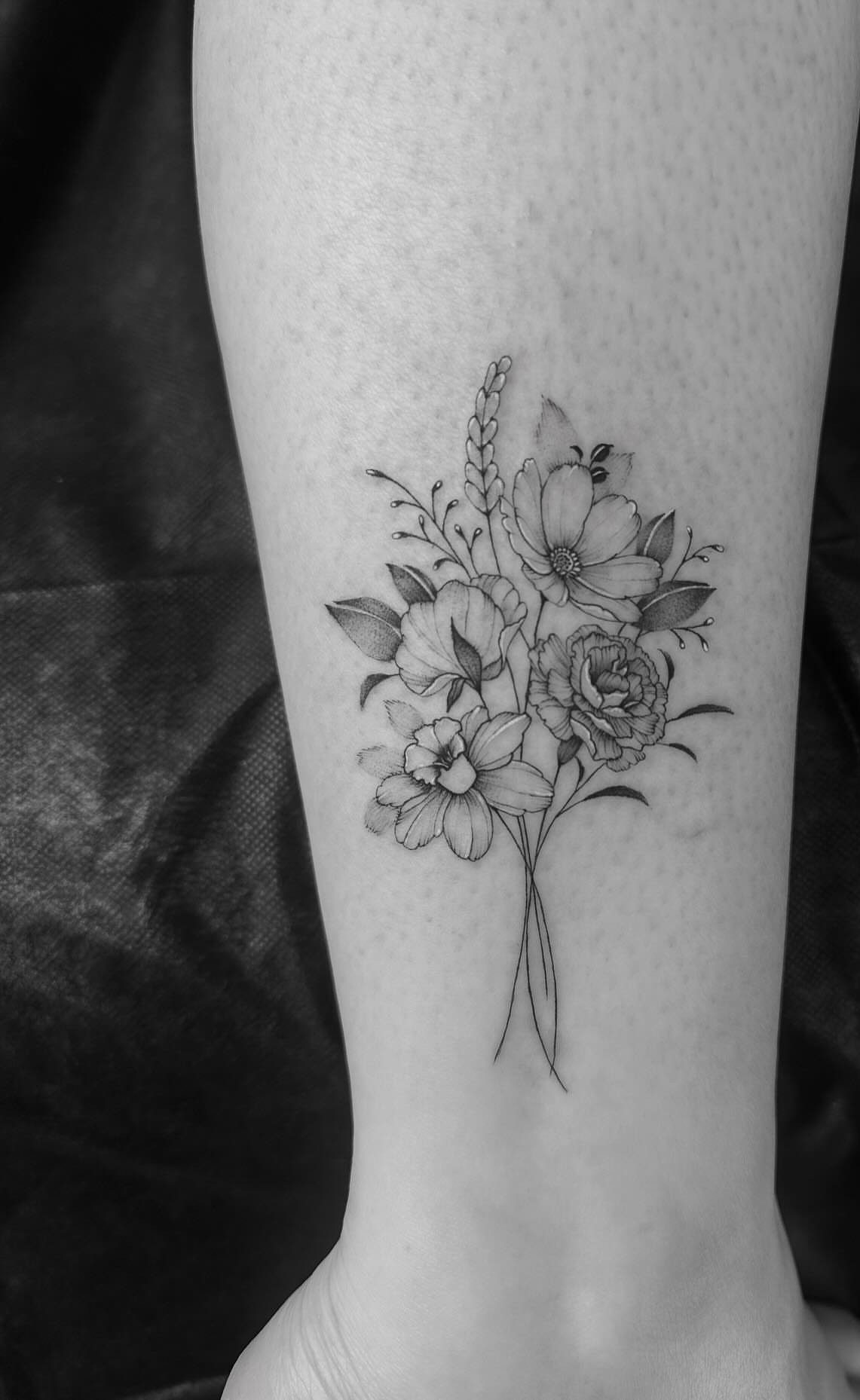
Putting wheat among flowers lets the grain do what it does in actual fields, which is stand slightly apart from brighter blooms without disappearing.
Poppies and daisies are the usual companions; poppies for the red shock against neutral stems, daisies for keeping the whole thing in a single muted register.
Geometric frames help when the tattoo needs to read as one contained image rather than a scattered bunch.
A circle or thin diamond behind the arrangement gives the eye a place to rest. The fine-line approach suits this combination especially well: the flowers stay soft, the wheat keeps its structural lines, and neither competes for attention.
On a lower leg, as in the visible example, the vertical growth habit of both plants follows the muscle line naturally.
3. Infinity Wheat Tattoo
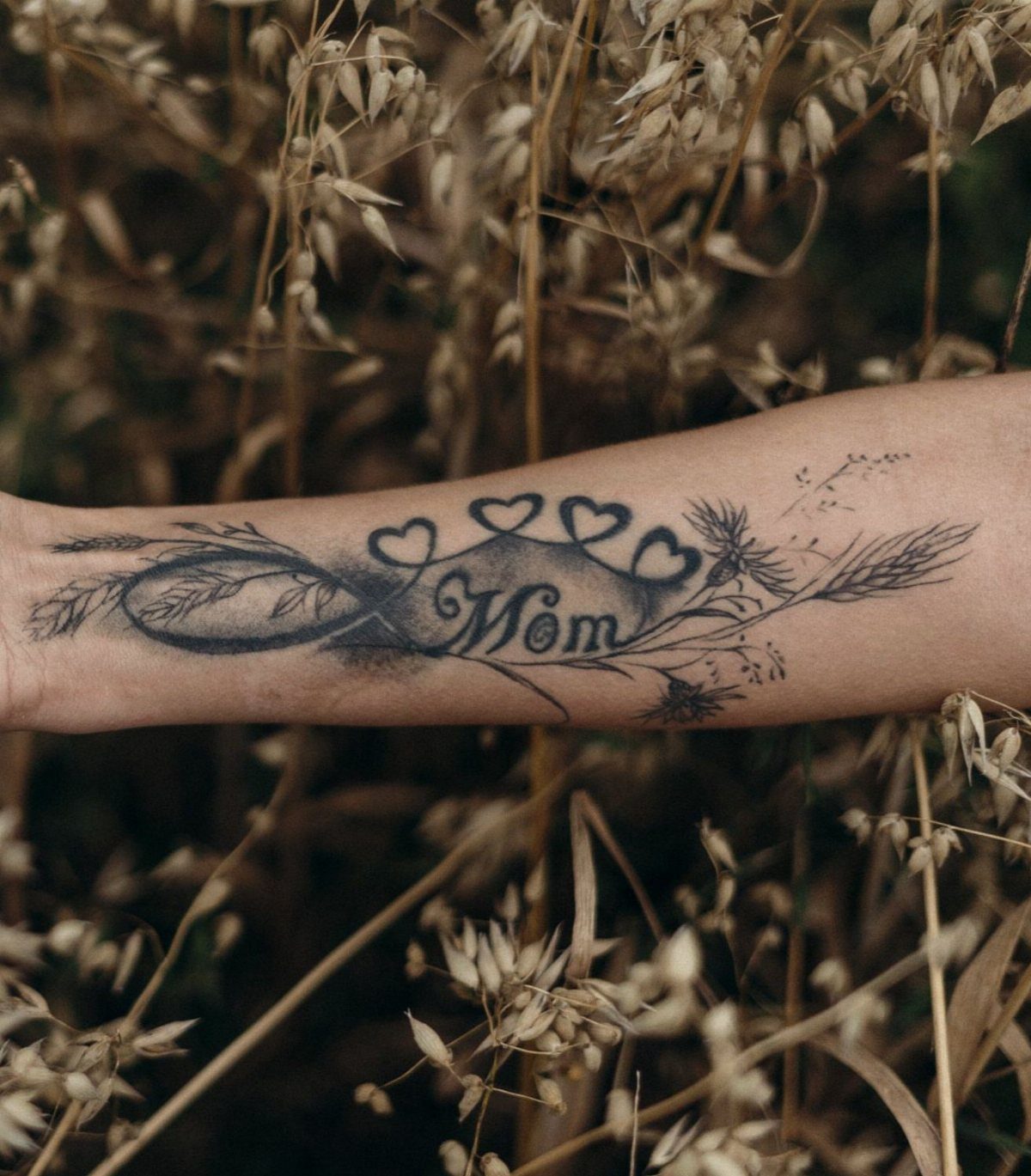
An infinity loop threaded through or formed by wheat stalks makes the symbolism explicit: cycles, inherited land, memory that keeps producing. The wrist and side are the usual placements, small enough that the symbol reads instantly at conversational distance.
Black ink keeps the focus on the shape itself. Color would split attention between the loop and the grain, and this design lives or dies on whether the integration looks intentional rather than pasted together.
One stalk growing naturally through the crossover point, with a second echoing the curve, does more than two complete loops would.
Some versions add names or dates inside the loops; the "Mom" worked into one example is direct enough that extra wording rarely helps.
4. Fine Line Wheat Stalk
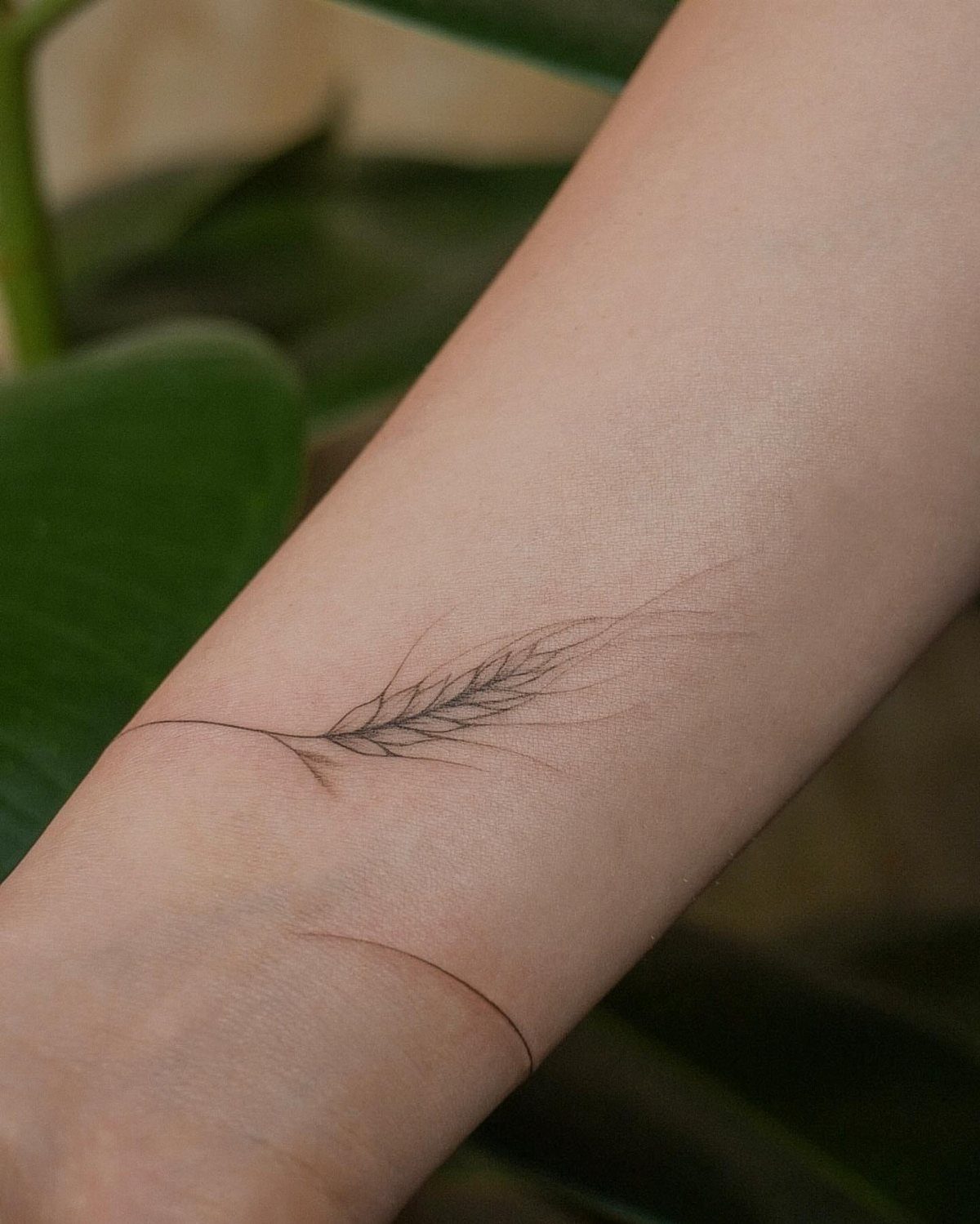
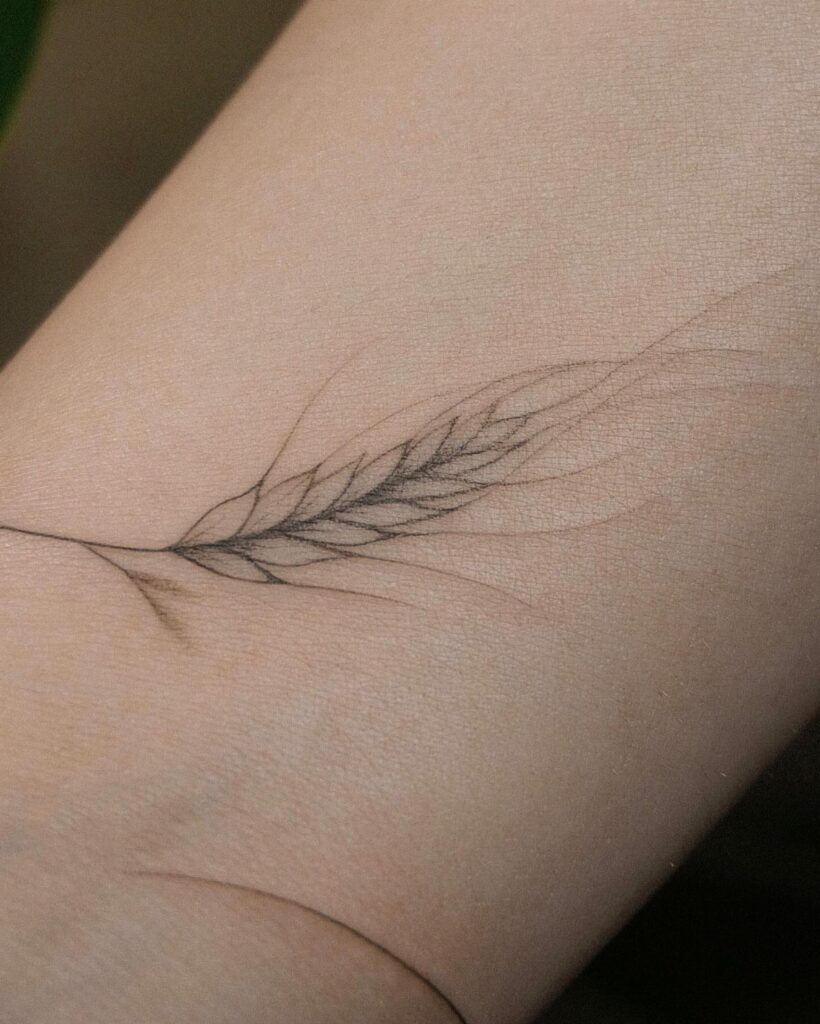
A single wheat stalk in fine line is the design I would choose if I wanted something I could look at long-term without the style overwhelming the subject.
The grain heads and stem are already elegant; extra decoration often subtracts from what is there.
Black ink, hairline weight, placed where the forearm or ankle offers a long flat plane.
The ankle especially suits the vertical growth: the stalk follows the bone, and a small hook of root or a single fallen grain at the base keeps it from looking clipped and arbitrary.
Two stalks work if they vary in height, three if one is clearly behind; identical copies of the same stalk read as pattern, not plant.
Check whether your artist builds tone with dots or with single-line crosshatching; the latter ages cleaner on this scale.
5. Crossed Wheat Stalks
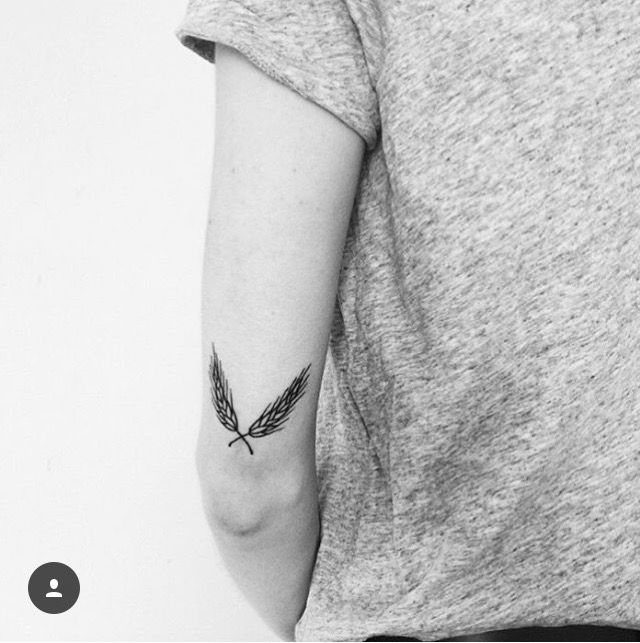
2 wheat stalks crossed in a V-shape carry old harvest symbolism without the literalness of a full bundle.
The symmetry matters: matched curve, matched fullness at the head, stems that meet cleanly without one sliding behind the other and breaking the line.
Upper arm placement, above the elbow with the point of the V toward the shoulder, uses the natural muscle curve to support the shape.
Black ink is almost standard here; the image needs contrast to read as emblem rather than accident.
Some artists tie the crossing point with a thin band or ribbon, which helps when the stems alone look like they might slide apart. Without that, the intersection needs to be precise enough to hold visually on its own.
This design compresses well, but at small sizes the grain heads become dots and the emblem turns generic.
6. Watercolor Wheat Tattoo
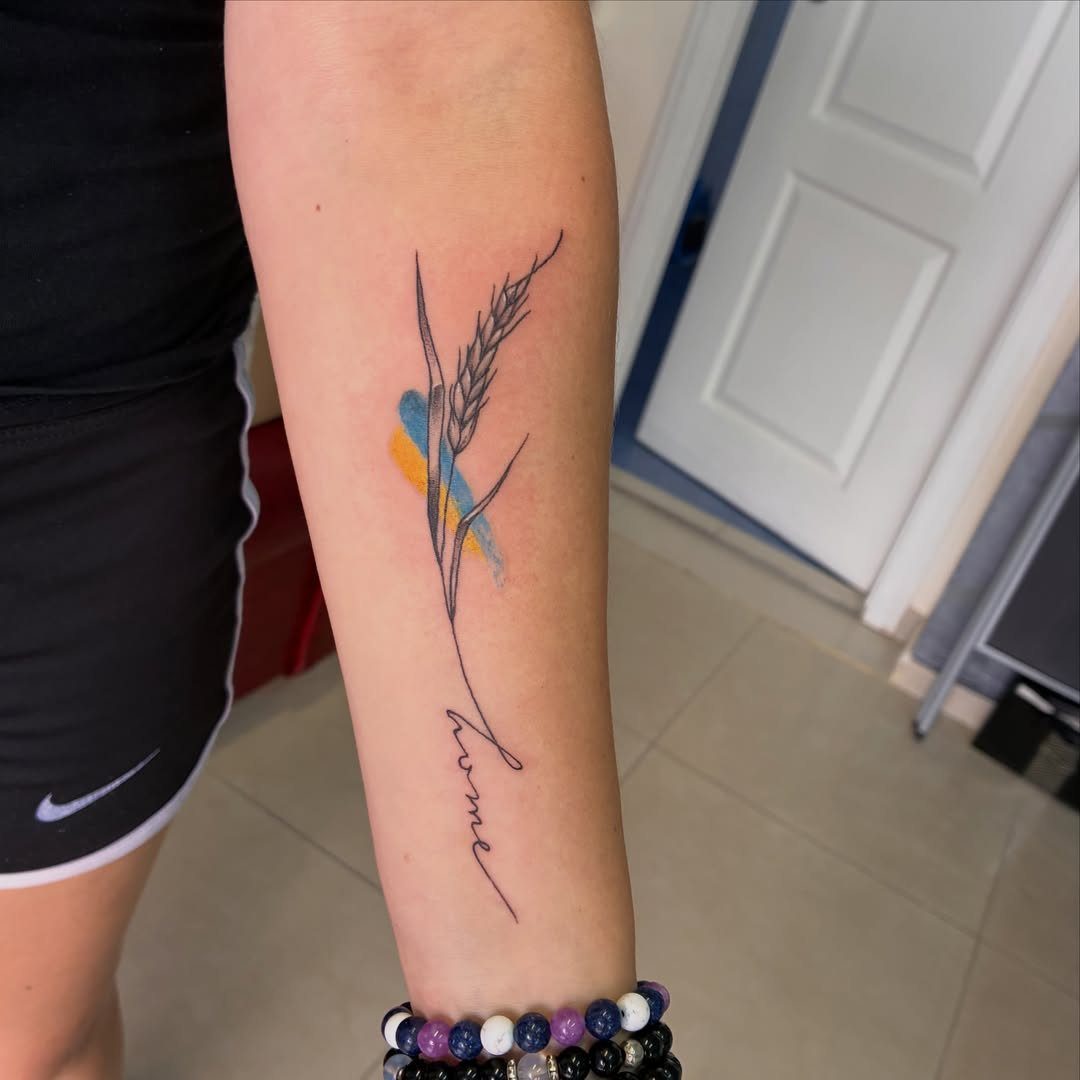
Watercolor behind a wheat outline borrows from botanical illustration: the plant stays accurate, the color suggests sky, soil, mood, without pinning any of them down.
Blue and grey behind gold wheat is the combination I have seen work most consistently; the cool recedes, the warm advances, and the grain stays what you notice first.
The technique requires an artist who understands how watercolor in skin differs from paper.
Too saturated and it becomes opaque poster paint; too diluted and it heals grey and muddy. The visible examples that hold their color keep the wash outside the black stem outline, never bleeding across it.
Script words like "home" can anchor the image to meaning, but they also date faster than the plant itself. I would consider placing any text separately or leaving it out entirely, letting the color do that work.
Placement Ideas for Wheat Tattoos
The forearm suits wheat tattoos because the long flat plane lets vertical stalks run naturally without wrapping around bone. Inner placement shields linework from sun, which matters for fine line that can drop out with exposure.
Ankle tattoos follow the bone line; a single stalk placed here reads like a deliberate accent rather than an attempt at coverage. The skin is thin and heals slowly, so aftercare needs more attention than on the forearm.
The collarbone offers horizontal display for a small bundle or crossed pair, visible in a neckline but easy to cover. The bone proximity means more vibration during the session and slightly more discomfort.
The upper arm above the elbow carries weight well: blackwork bundles or crossed stalks sit where muscle curve props the emblem shape. The inner surface hides easily; the outer rides into public view with a short sleeve.
Size should match the body part. A single fine-line stalk gets lost on a full upper arm; a dense blackwork bundle crowds an ankle.
Symbolism of Wheat Tattoos
Abundance is the oldest reading: harvest surplus meant survival, and wheat imagery keeps that association even for people generations removed from farming.
Resilience enters through the crop itself. Wheat bends in wind, rights itself after storms, and grows again each year from seed that farmers have kept and sown since the Fertile Crescent.
The plant does not read as fragile despite its slenderness; the hollow stem is structural, not weak.
Growth layers onto both: annual renewal from seed, the visible progression from green shoot to golden head. Tattoo clients often choose wheat during personal transitions, though the design works as well without that narrative.
Religious context appears in parable references, where wheat separates from chaff and signifies renewal or judgment.
Design Styles for Wheat Tattoos
Fine line keeps the botanical accuracy: each awn, each grain head, rendered at hairline weight.
The style ages to soft grey rather than blob, but only where the artist stays above a minimum needle diameter; below that, pigment falls out entirely.
Blackwork and ornamental approaches build wheat into pattern rather than specimen.
The stem becomes a vehicle for dense linework, dots, or geometric fills that read as decoration first, plant second. This suits clients who want the harvest reference without literalism.
Watercolor demands an artist who has healed examples to show. The technique looks effortless when fresh and muddy when wrong; pigment suspension in skin behaves differently than on paper, and the color shift during healing surprises first-timers.
Minimalist wheat reduces to two or three lines: a stem, a suggestive head, maybe a single leaf.
The risk is generic, a symbol rather than a species. The best versions keep one identifying detail, the bend of the awn or the slight droop of a ripe head.