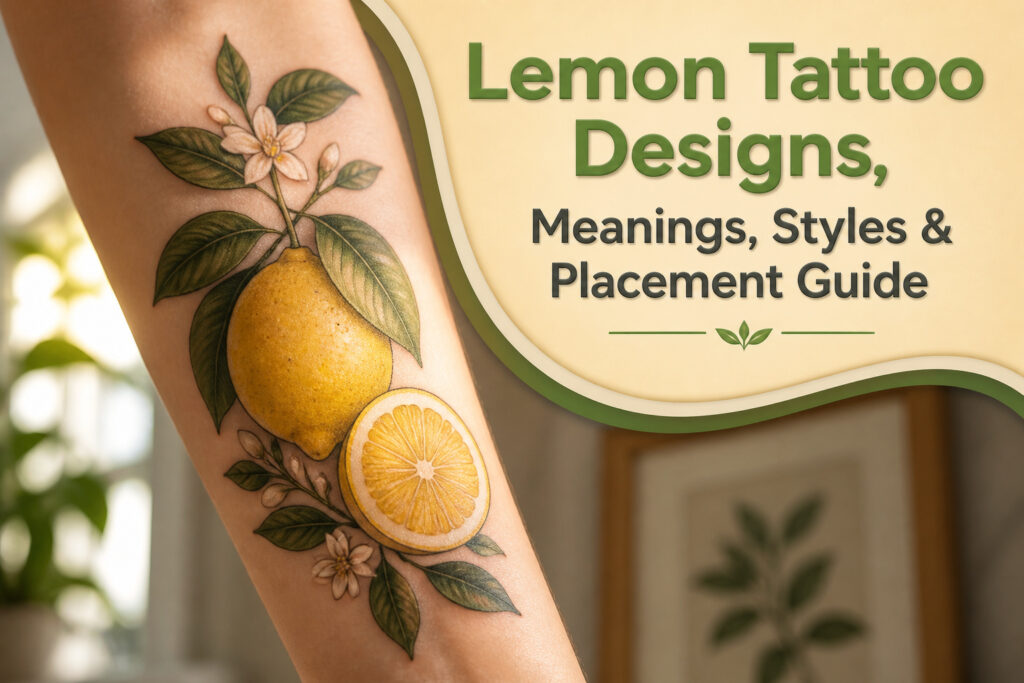
A lemon tattoo is a citrus design that carries meaning through both the fruit’s natural symbolism and the specific style you choose. What changes the message is whether the lemon appears whole, sliced, or on the branch, and whether the artist renders it in bright color or stripped-down black and gray. A realistic piece with pore-by-pore rind texture reads as quiet renewal, while a neo-traditional design with bold outlines and stippled dots pushes optimism to the front.
Lemon Tree Tattoo

A lemon tree tattoo carries weight that a single fruit does not. Where a lemon alone reads as happiness, the full tree stands for abundance and positivity, roots and all. That broader symbolism draws people who want something that feels settled rather than fleeting.
The tree also holds a place in Catholic tradition, where it is linked to the Virgin Mary as a sign of fidelity and love. That layer of meaning tends to resonate with people who want the design to mark something lasting, a marriage or a promise kept, without needing to spell it out in words.
Some wearers choose the lemon tree for its quieter associations too. The idea that it brings clarity to thought and guards love and friendship fits the same mood: protection that is steady rather than dramatic.

6 Unique Patterns: Stencils feature 6 distinct fruit patterns including whole and sliced lemon to refresh walls, furniture, or fabrics. Non-repetitive designs allow for diverse creations to be enjoyed

9Pcs Lemon Pattern Stencils: 9 different styles can meet your different needs, well made and fun to create craft projects for families and friends, offers endless possibilities for transforming your home decor

Clean, Flawless Transfers: Your artwork will look so clean once transferred to the skin with the Stencil Stuff gel! Gentle on the skin, Stencil Stuff transfer solution helps you achieve clear and sharp tattoo stencil transfers every time!
Lemon Slice Tattoo
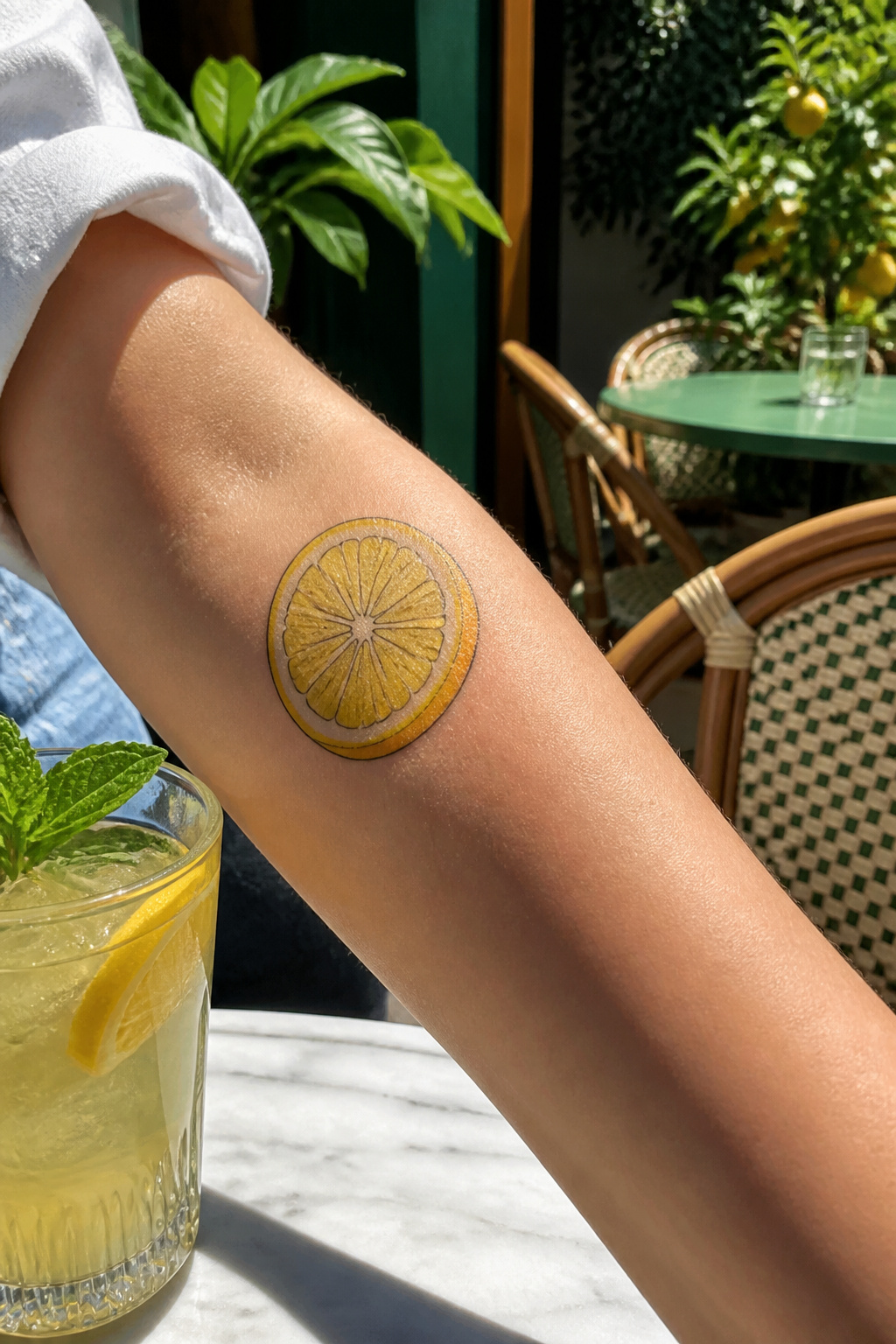
A lemon slice tattoo carries its meaning in the cut itself: the fruit has been opened, the segments exposed, and what was once whole is now offered up. The image works as a reminder that bitterness and sweetness share the same flesh. The rind still reads as tough and defensive, but the inside is arranged in orderly wedges, each one usable, each one bright.
Color does the heavy lifting in most designs. The pale yellow pith against the saturated fruit, the faint translucence where light would pass through a real slice, these details are what separate a generic citrus circle from a piece that reads as lived experience. Leaves sometimes frame the slice, though they can tip the design toward decoration if they crowd the cut surface that carries the story.
Placement changes how the metaphor lands. On a wrist or forearm, the slice faces outward, a declaration. On a rib or hip, it turns inward, more like a private note. The size needs to hold the segment lines; too small and the tattoo becomes a yellow disk without the architecture that makes it recognizable as half a lemon, split and shared.

FUN TATTOOS - Enjoy this fun sheet of temporary tattoos that can be applied on skin or used as a waterslide decal on a variety of surfaces. Temporary tattoos are great for party favors, events, costumes and dress-up, permanent tattoo testing or just for fun.

FUN TATTOOS - Enjoy this fun sheet of temporary tattoos that can be applied on skin or used as a waterslide decal on a variety of surfaces. Temporary tattoos are great for party favors, events, costumes and dress-up, permanent tattoo testing or just for fun.
Lemon Branch Tattoo
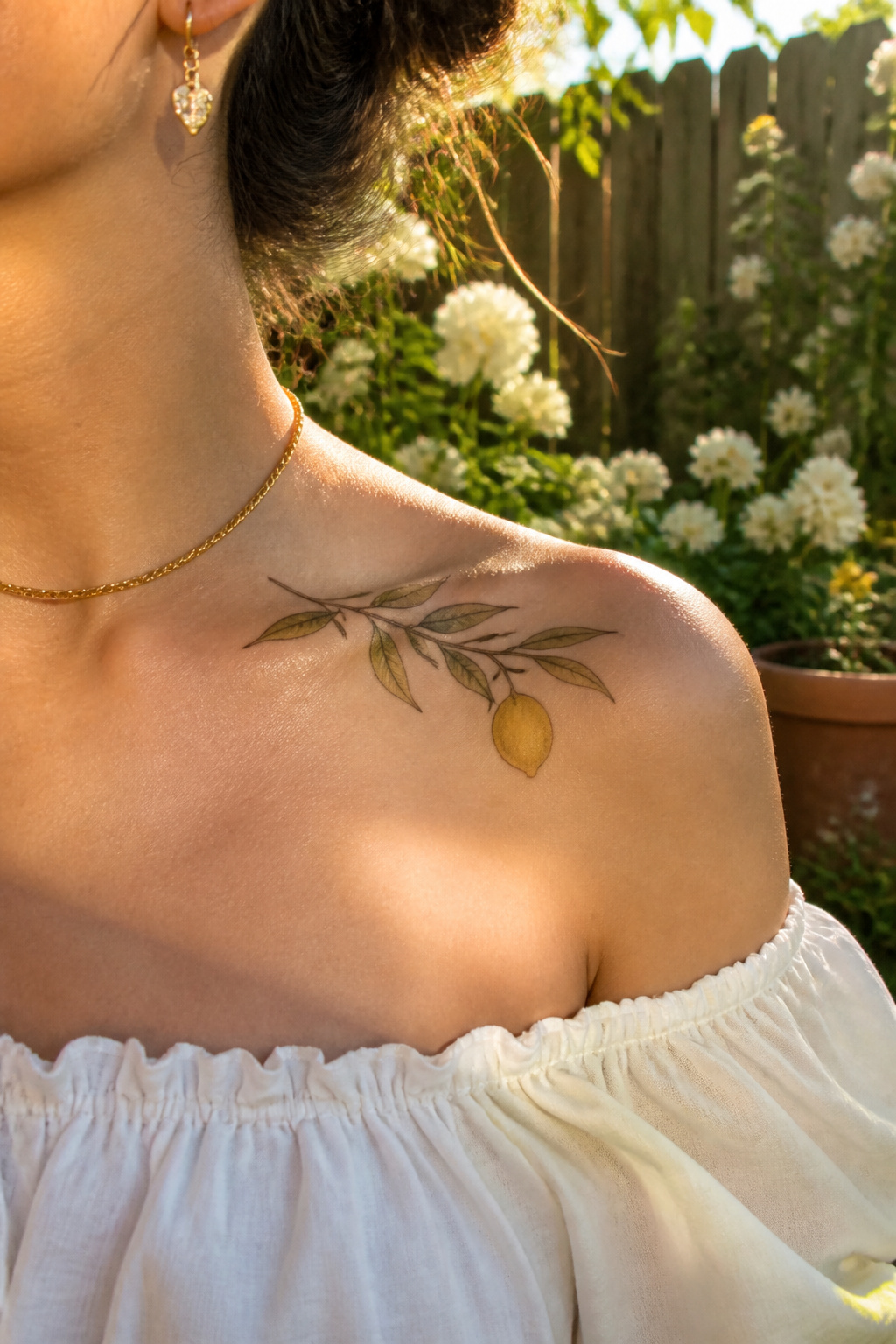
A lemon branch carries softer symbolism than the full tree. Its spreading form traces a path that feels more personal, less monumental. In China, Egypt, and Rome, wealthy families would decorate homes and gardens with lemon branches to display success and good fortune. That history gives the design its link to prosperity and longevity, while the branch’s natural arc suggests growth still in motion rather than arrival.
The shape matters for placement. A branch extends horizontally, diagonally, or in a gentle curve that follows a collarbone, ribs, or forearm more quietly than a tree’s vertical trunk and heavy canopy. Leaves and a single hanging fruit keep the detail light without losing meaning.
Healing sits in this imagery too. Where a sliced lemon speaks to recovery through pain, the intact branch on the body suggests ongoing restoration, something still living and producing. For a design that needs to read as hopeful without being loud, the branch is the stronger choice.


Olive tree art design. The simple, creative and beautiful design 2021 for everyone who loves olives. A branch of olives from an olive tree not only looks beautiful, but also shows that you love them and carry them on your chest close to your heart.
Black and Gray Lemon Tattoo
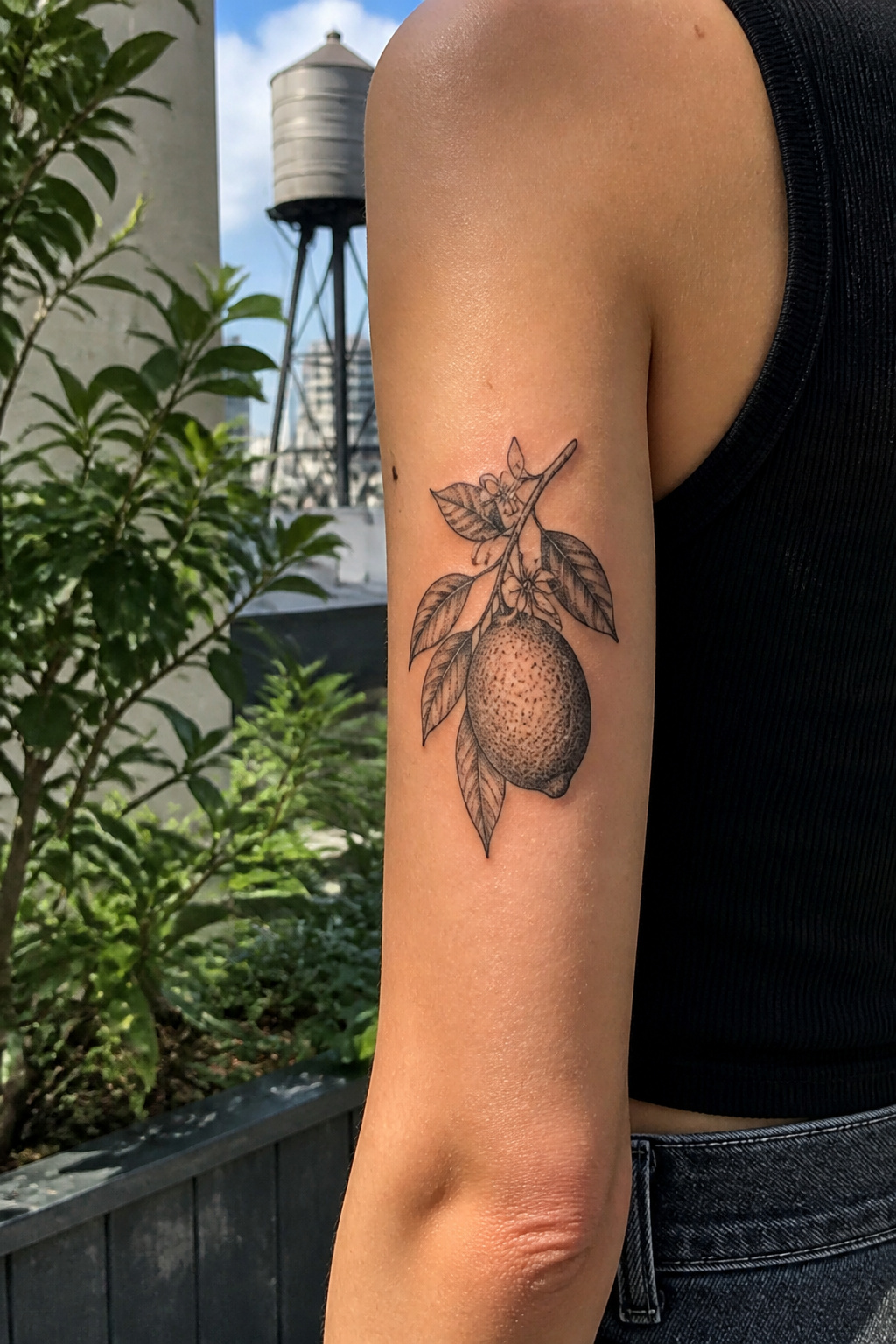
A black and gray lemon tattoo strips the fruit down to its essential shape, and that absence of color becomes part of the point. The design relies on crisp outlines and dotwork shading to build form from light and shadow rather than bright yellow ink, letting negative space stand in for the highlights you would expect on sunlit skin.
What drew me to this approach is how the meaning stays intact even when the palette goes quiet. A lemon still reads as a lemon through careful gradation, and the message of staying positive holds without the cheerful shortcut of citrus color. The wearer carries the same reminder: recovery and acceptance do not depend on brightness to be real.
The branch-and-leaf compositions work especially well here, where layered gray tones give leaves depth that flat color sometimes flattens further. Shading becomes the vocabulary; the tattoo speaks in values instead of hues, and the result feels more permanent somehow, less tied to the trend cycle of which colors look current.

What You Get: You'll receive a complete Lemon Themed Party Temporary Tattoo Sticker Set that includes 8 Lemon Themed Temporary Tattoo Stickers for a total of 200 + stickers! These temporary tattoos are a great way to show your personal happiness and a great way to spread the joy! You can show off your unique taste with these lemon temporary tattoos.(Tattoos are for adults 18 years and older only)

Package Includes: You can get 12 sheets capri lemon tattoo stickers in 6 various styles, in the package, each one has different capri lemon theme patterns on it, each sheet capri lemon tattoos for kid measures about 8 x 12 cm/ 3.1 x 4.7 inches, ample number can meet the needs of decoration for a variety of places.
![Savvi - 20 Black and Gray Temporary Tattoos: Skin-Safe Ink, Great for Parties and Everyday Wear, Gifts for Teens and Adults, Made in the USA [2 sheets, 20 count]](https://m.media-amazon.com/images/I/51JeeMcPcdL._SL500_.jpg)
BLACK AND WHITE FUN: Get ready to embrace the allure of monochrome mystique with Savvi's Black and Gray Flash Temporary Tattoo Pouch. This isn't just a pouch; it's a gateway to a world of sleek sophistication.
Lemon Wedge Tattoo
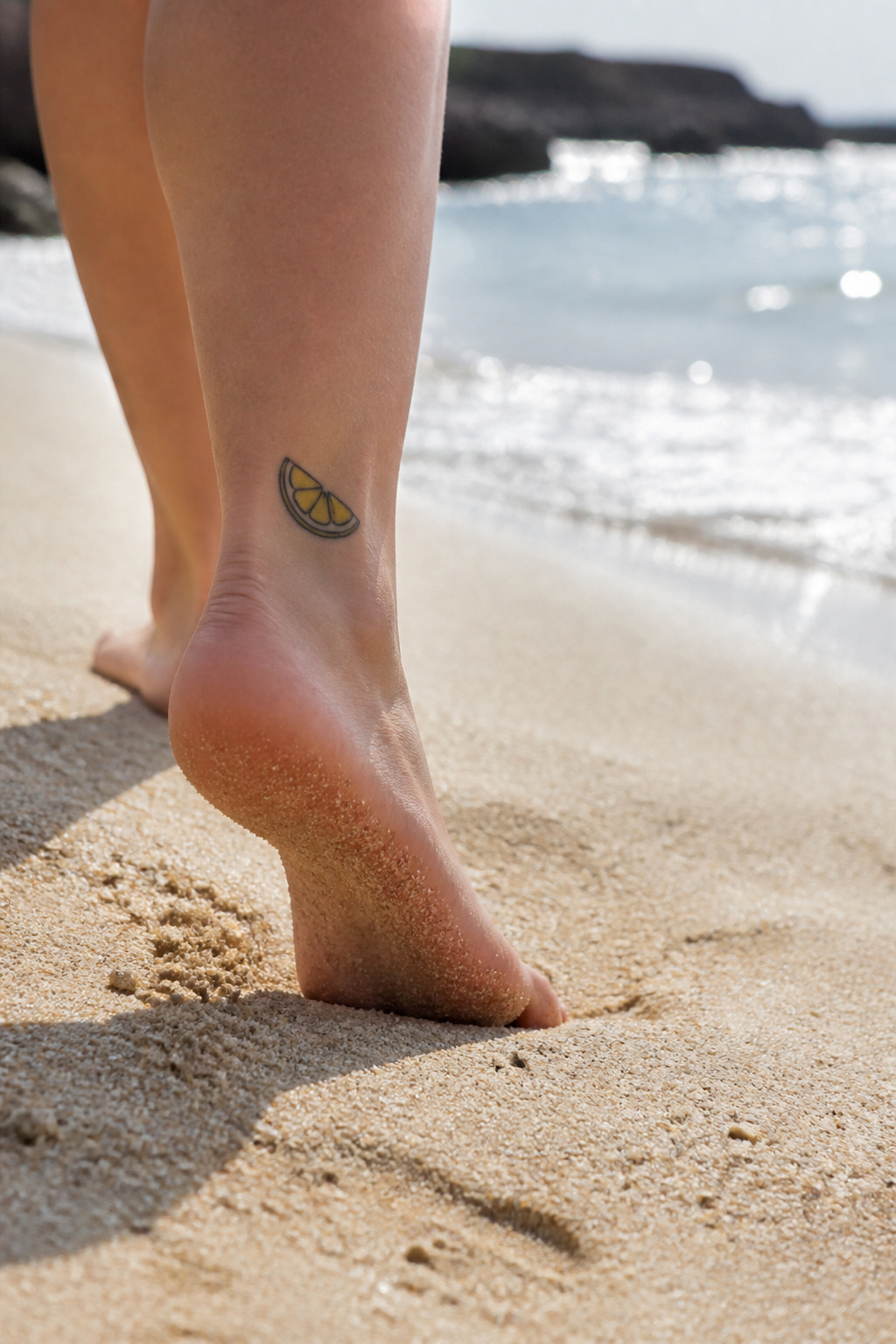
A lemon wedge tattoo carries its meaning in the geometry of the cut. The angled face and the rind’s curve are the whole design, usually small enough to sit casually on an ankle, a wrist, or behind an ear. That modest scale is part of the point. The wedge reads as spontaneous, the kind of mark someone gets on impulse and never regrets.
The visual weight falls on two elements: the exposed interior, where yellow tones can read as flesh or light depending on the artist’s hand, and the rim of rind that frames it. Some keep the rind thin and pale; others build it thicker, almost waxy, so the contrast does more work. The rind’s edge is what separates a readable wedge from a generic yellow triangle, and most artists who do this well spend their time there.
The attitude it signals is the devil-may-care kind, not the full fruit’s sourness but a lighter version. A whole lemon in the same piece, when it appears, balances that with something more grounded. The wedge alone is enough for most people, though. It sits where you can hide it or show it without much thought, which matches the mood it claims.

What You Get: A complete lemon themed party temporary tattoo sticker set featuring 8 sheets and over 200 stickers! These temporary tattoos are a fun way to express happiness and spread joy, showcasing your unique taste
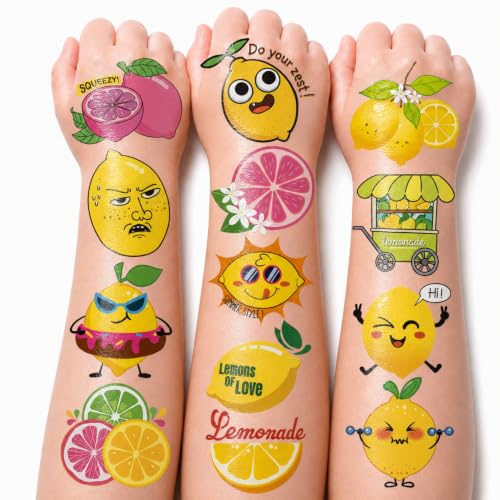
🍋 [60 PCS CUTE LEMON TATTOOS] Package includes 5 sheets of vibrant lemon and citrus-themed temporary tattoos. With 60 unique designs (Sheet size: 6.3 inch x 4.7 inch), there's enough fun for everyone at the party!

Measurement - Approx. 4.29"x 3.54" per sheet.30 sheets.
Botanical Lemon Tattoo
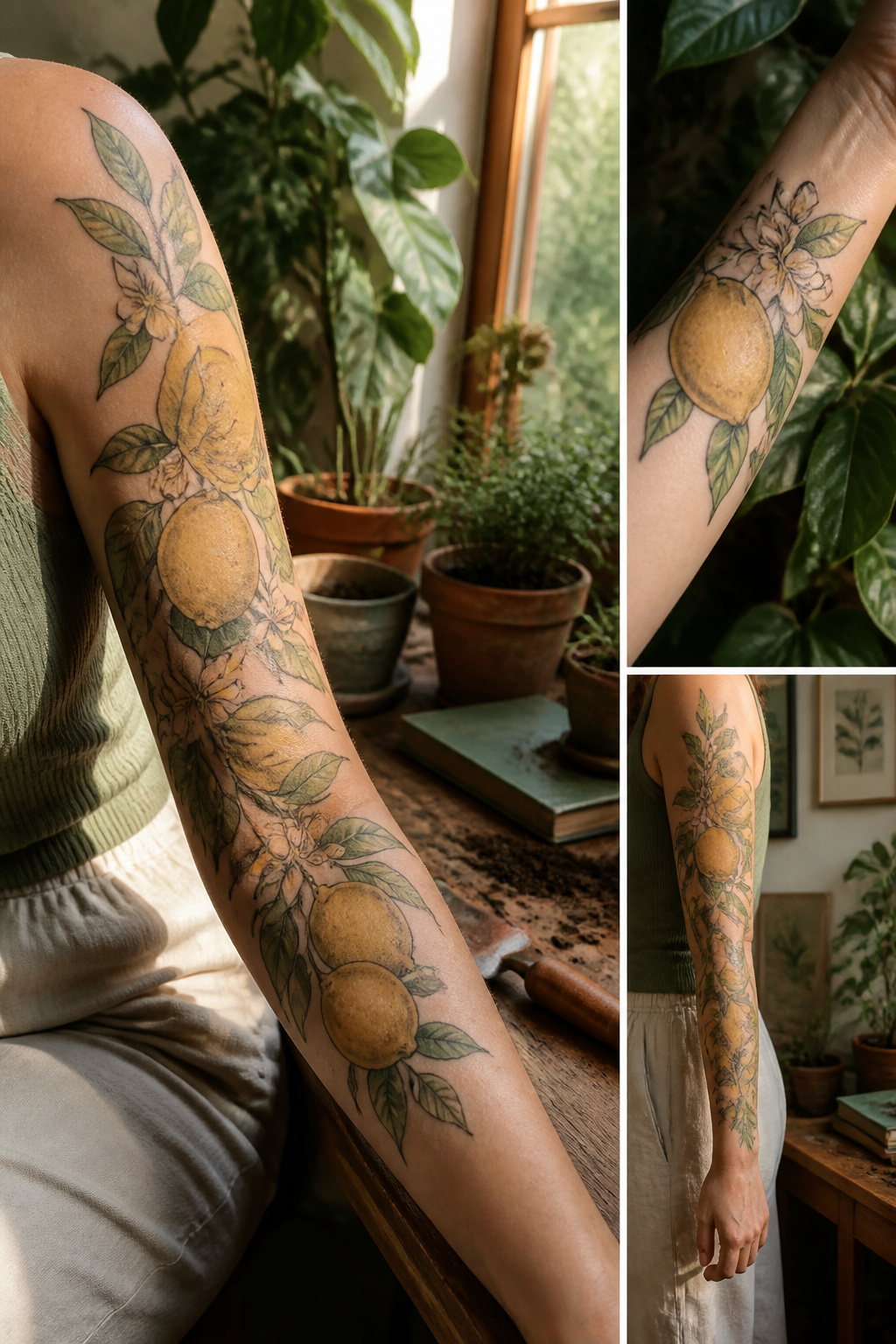
A botanical lemon tattoo wraps the fruit in leaves, blossoms, or stems so the design reads as a living thing still attached to its source. The black and gray tree with orangish lemons and flowers builds this directly: the fruit never floats alone, and the roots keep it honest. What draws me to this approach is how the surrounding growth turns a simple citrus image into something closer to a journal entry. The blossoms mark a phase, the leaves thicken or drop, and the lemon itself is just the current chapter.
Color handles the emotional load. Bright greens against that orangish fruit make the piece visible from across a room, but the botanical frame keeps it from reading as a grocery-store sticker. The leaves do the heavy lifting here: they signal continuation, the part of the plant that outlasts any single season.
Placement changes what the botanical elements can do. A stem that curves along a forearm or shoulder lets the vine follow the body’s own lines, which matters more than most people expect when they pick a flat image off a screen.
The meaning stays practical. This is a tattoo about not stopping growth when the situation turns difficult, carried by a plant that keeps producing fruit under rough conditions. The botanical details make that reminder feel observed rather than declared.

【 575+ Fun Assorted Tattoo Stencils 】-The ChurlChurl tattoo stencils collection includes 575 high quality stencils with multiple themes. enjoy cute trendy tattoo stencil designs like butterflies, words, flowers, symbols, totem, Egypt style patterns and more.

CREATE WITH CONFIDENCE – Whether you're a beginner or seasoned crafter, these reusable stencils make every project feel simple, fun, and rewarding. These are great reusable stencils for crafts.

⯁ 400+ Reusable Henna Stencils: Get 24 sheets of high-quality, self-adhesive hollow templates featuring over 400 unique patterns. These temporary tattoo stencils allow you to create stunning body art including mandalas, butterflies, and dragons. Perfect for practicing techniques without permanence
Realistic Lemon Tattoo
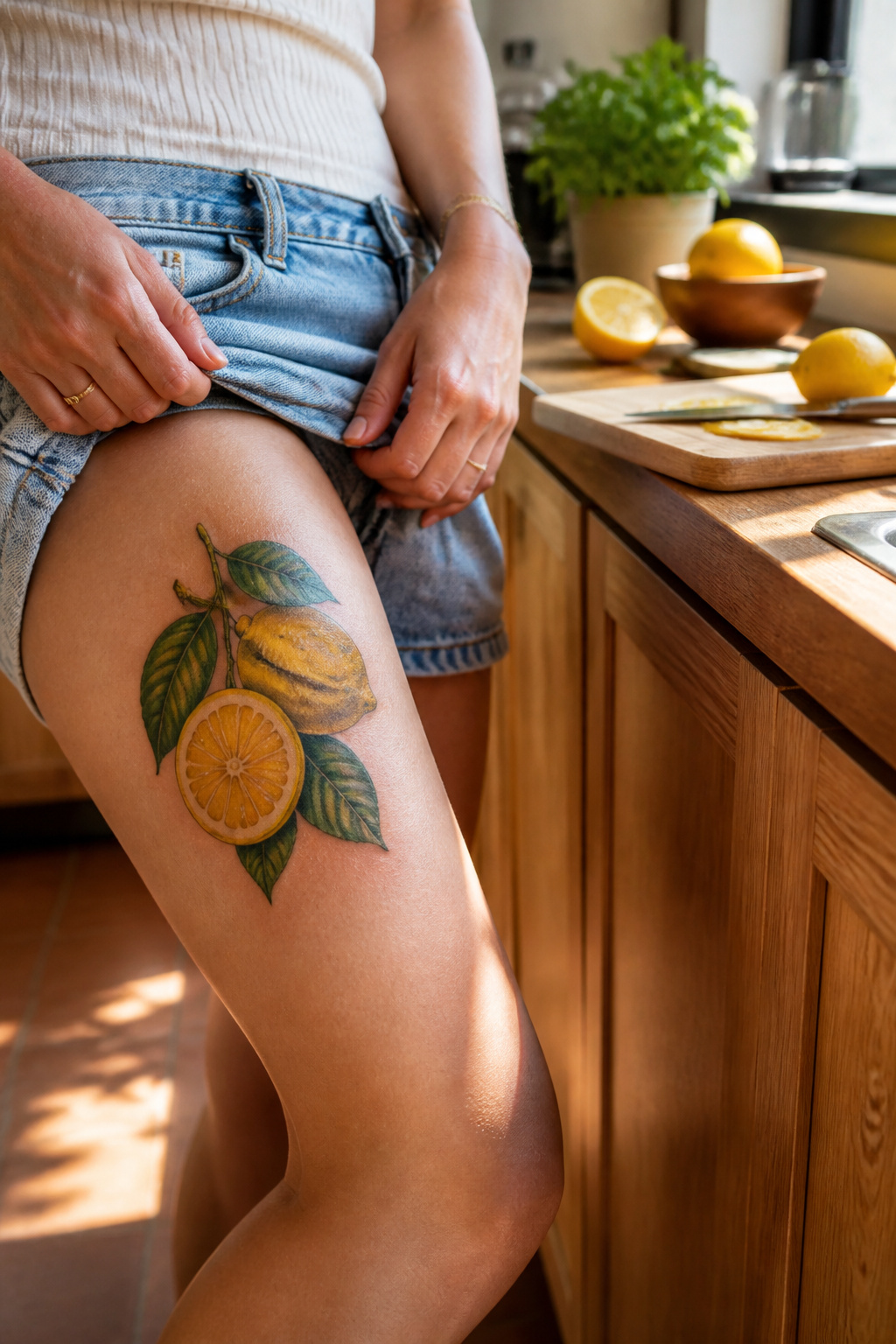
A realistic lemon tattoo lives or dies in the shading. The artist has to build the rind’s texture pore by pore, then drop in the kind of highlights that make the fruit look like you could roll it off the skin. Without that precision, you just get a yellow oval.
The meaning behind this style leans hard on renewal and freshness. A sliced lemon, rendered right, reads as a reset or a new chapter, something the flesh is actually opening into. The sour edge keeps it honest; it is not all sunshine and cleansing. The whole fruit and a single wedge together balance that out, the wedge standing in for a looser, risk-on attitude while the full lemon grounds it.
Color saturation matters more here than in most food tattoos. Bright tones are what pop the lemon from a distance, and the green of the leaves next to it sets the temperature of the whole piece. Go too muted and the realism flattens into something decorative, which is a different section entirely.

Retro mermaid flash tattoo inspired coastal seafood mediterranean food tinned sardine fish design. Vintage sardine tin design with Mediterranean coastal styling, canned fish artwork, olive branches, lemon slice, and retro seafood market style.
72-PIECE MEGA LEMON PARTY PACK: Includes 24 punch balloons (18-inch) in yellow, pink, and green plus 48 pre-cut temporary tattoos. Everything you need to fill goodie bags and keep kids entertained for hours

🍋 90 PCS MULTI-USE LEMON STICKERS: Includes 8 sheets of cute lemon and citrus themes. Perfect not only as temporary tattoos for skin but also as vibrant decals for cups, water bottles, and mugs at your summer party.
Neo-Traditional Lemon Tattoo
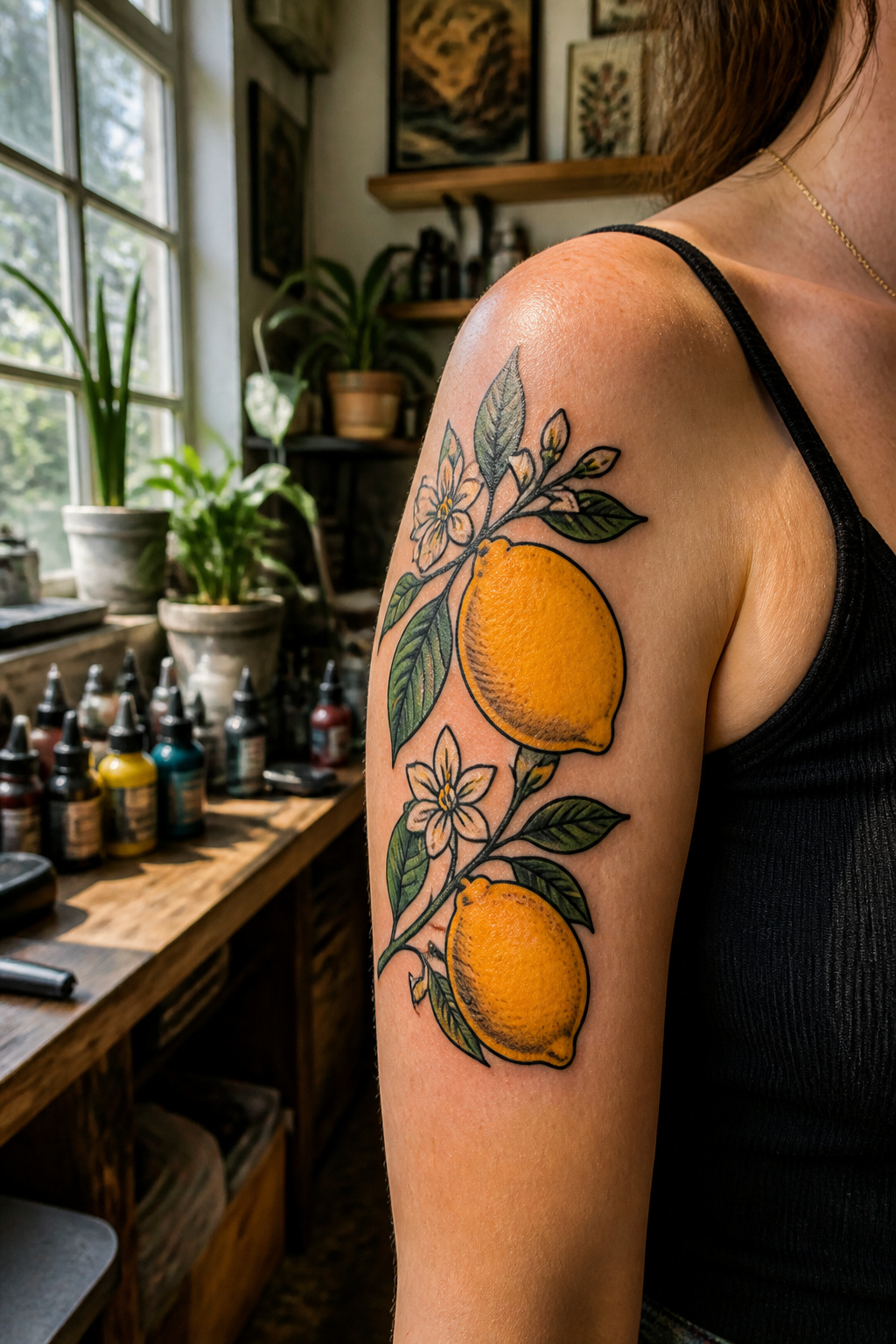
Bold outlines and saturated color blocks set the neo-traditional lemon apart from softer botanical styles. The design builds its lemon from thick black linework, then fills it with dense, unblended yellows and oranges that read clearly from across a room. Intricate detailing comes through stippled brownish-orange dots clustered tight at the lemon’s base, creating the textured surface that gives the fruit weight and dimension against the flat color fields.
Decorative leaves in dark green and small accent flowers in yellow or pink frame the central lemon, often with a ribbon or banner worked in for lettering. That ornamental framing is what pushes this style toward something almost jewelry-like on the skin. Shoulder placement handles the composition well; the curve of muscle lets the banner arc naturally and keeps the symmetry from looking pinned on.
The stippling on petals mirrors the lemon’s own texture, which ties the piece together more deliberately than a simple cluster of elements would. For anyone weighing neo-traditional against a cleaner botanical lemon, the tradeoff is this: the bold style reads as designed and permanent, where finer work can fade toward the decorative. The neo-traditional lemon commits to being a tattoo first, a fruit second.


What Lemon Tattoos Mean
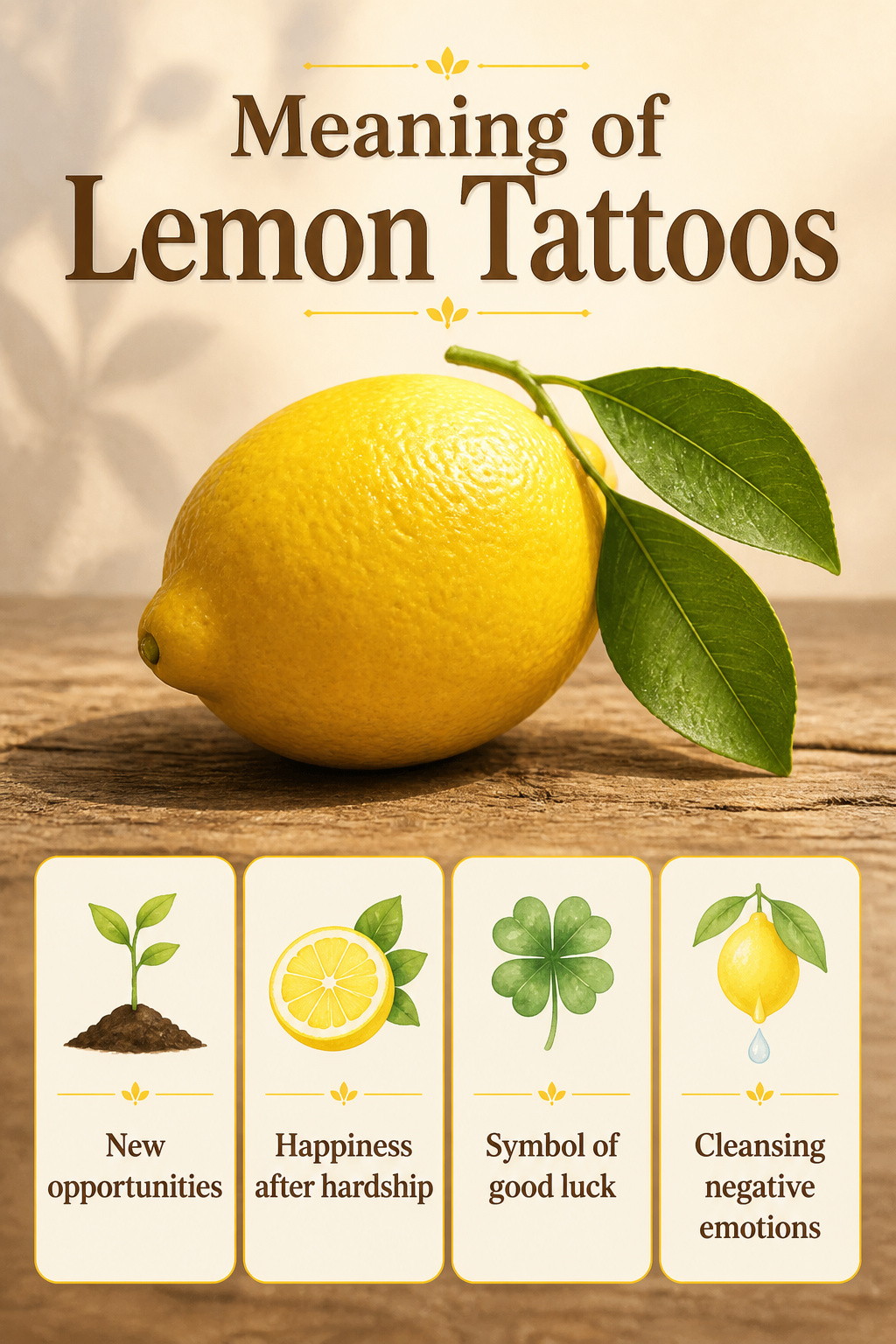
The bright yellow of a lemon carries its own message. In tattoo work, that color signals new opportunities and the happier moments that follow a hard stretch. The fruit’s familiar sourness might seem like an odd choice for body art, but the contrast is exactly the point: something sharp on the tongue still nourishes the body.
Ancient practice links lemons to good luck and to keeping harmful energy at a distance. A lemon tattoo can mark the detoxification of negative emotions, a way of saying the body and spirit have been cleaned out and reset. The meaning stays personal, though. For one person the image is vibrancy and optimism; for another it is the specific victory of getting through something that tasted bitter at the time. Either reading holds up because the fruit itself holds both qualities at once.

Clown Girl, Clown, Clown Lover, Jester, Jester Costume, Demon, Gothic Woman, Spooky, Halloween, Creepy, Pretty Girl, gothic fashion, goth girl, gothic girl, Halloween

Vibrant Colors and Long Lasting: Stop settling for dull tattoos. Our Amalfi Coast designs feature high-definition ink for ultra-vibrant blues and yellows. The premium waterproof material ensures your Mediterranean look stays perfect for 3-5 days, even at beach or pool parties

【Large American Traditional Black Tattoo Stickers】Tazimi original 12 sheets of super large classic black adult temporary tattoo stickers, old-fashioned traditional tattoo stickers are designed for adults. These retro traditional American elemental tattoos are creatively designed by our artists and are 4.72*9.06 inches in size. These waterproof fake tattoos look very realistic, artistic, eye-catching, and make you shine like a star. Enjoy expressing yourself with these American old tattoos!
Lemon Tattoo Styles
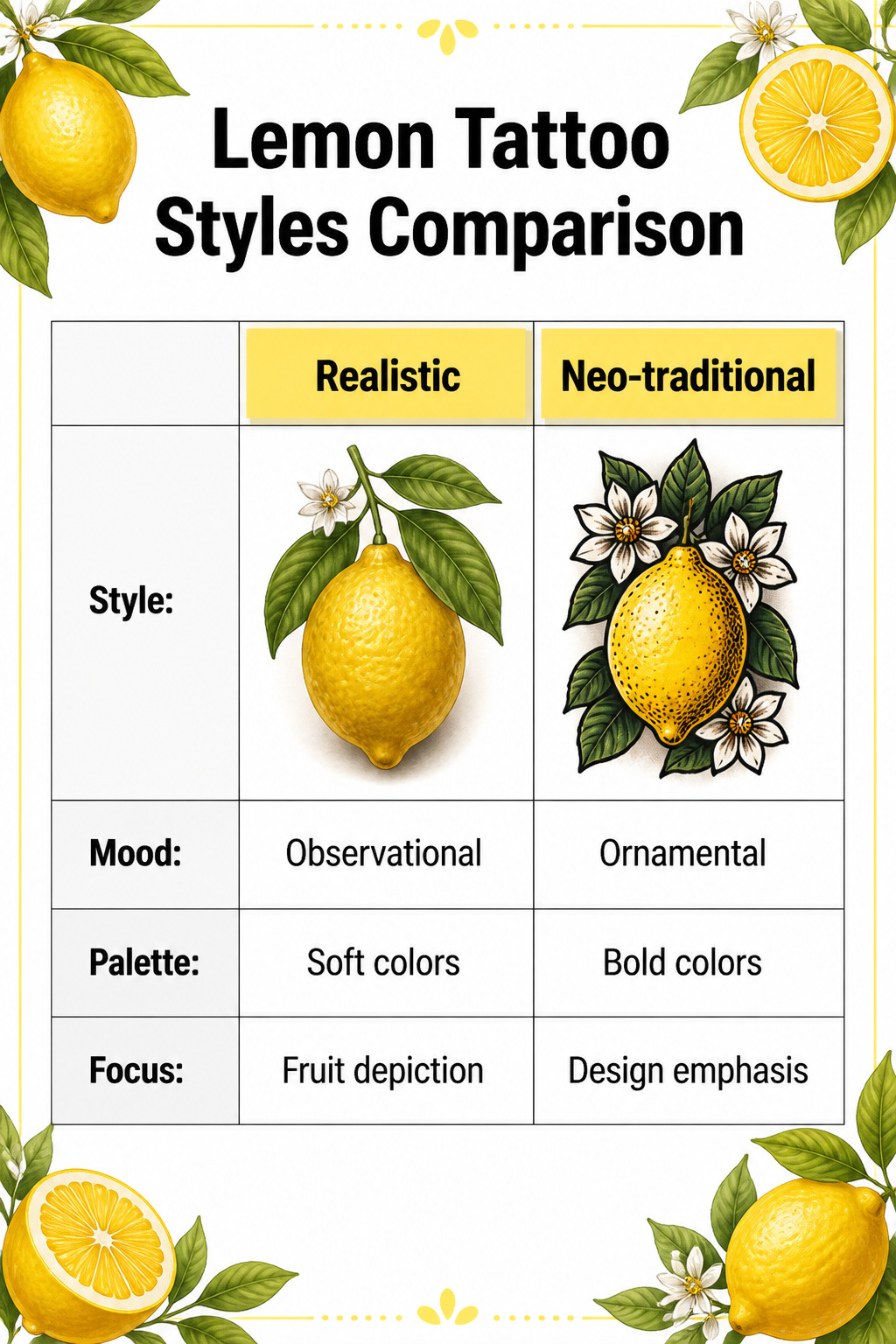
The style you choose for a lemon tattoo does more than change its look; it resets what the design emphasizes.
- Realistic lemon tattoos rely on smooth color gradations and careful attention to how light hits the fruit’s porous skin. The mood stays quiet and observational, closer to a still-life painting than a symbol. This approach works best when the lemon itself, not what it represents, is the point.
- Neo-traditional designs use bold outlines, a vibrant palette, and stippled texture to make the lemon read as ornamental. Dark green leaves and framing flowers balance the composition. The result feels deliberate and decorative, with the symbolism of optimism and sunshine pushed to the front.
- Black and gray strips the color away and lets negative space do the work of suggesting light. Crisp outlines and dotwork shading keep the image clean, but the mood turns more reflective. Without yellow to trigger immediate associations, the design leans into resilience and recovery rather than brightness.

Package Includes: You will receive 12 sheet of temporary tattoos, including 2 different sheet, one is let’s lemon party, the other is life is sweet, each sheet including 6 pieces, which can help you hold lemon theme bridal shower party or birthday party

FUN TATTOOS - Enjoy this fun sheet of temporary tattoos that can be applied on skin or used as a waterslide decal on a variety of surfaces. Temporary tattoos are great for party favors, events, costumes and dress-up, permanent tattoo testing or just for fun.
Where to Put a Lemon Tattoo
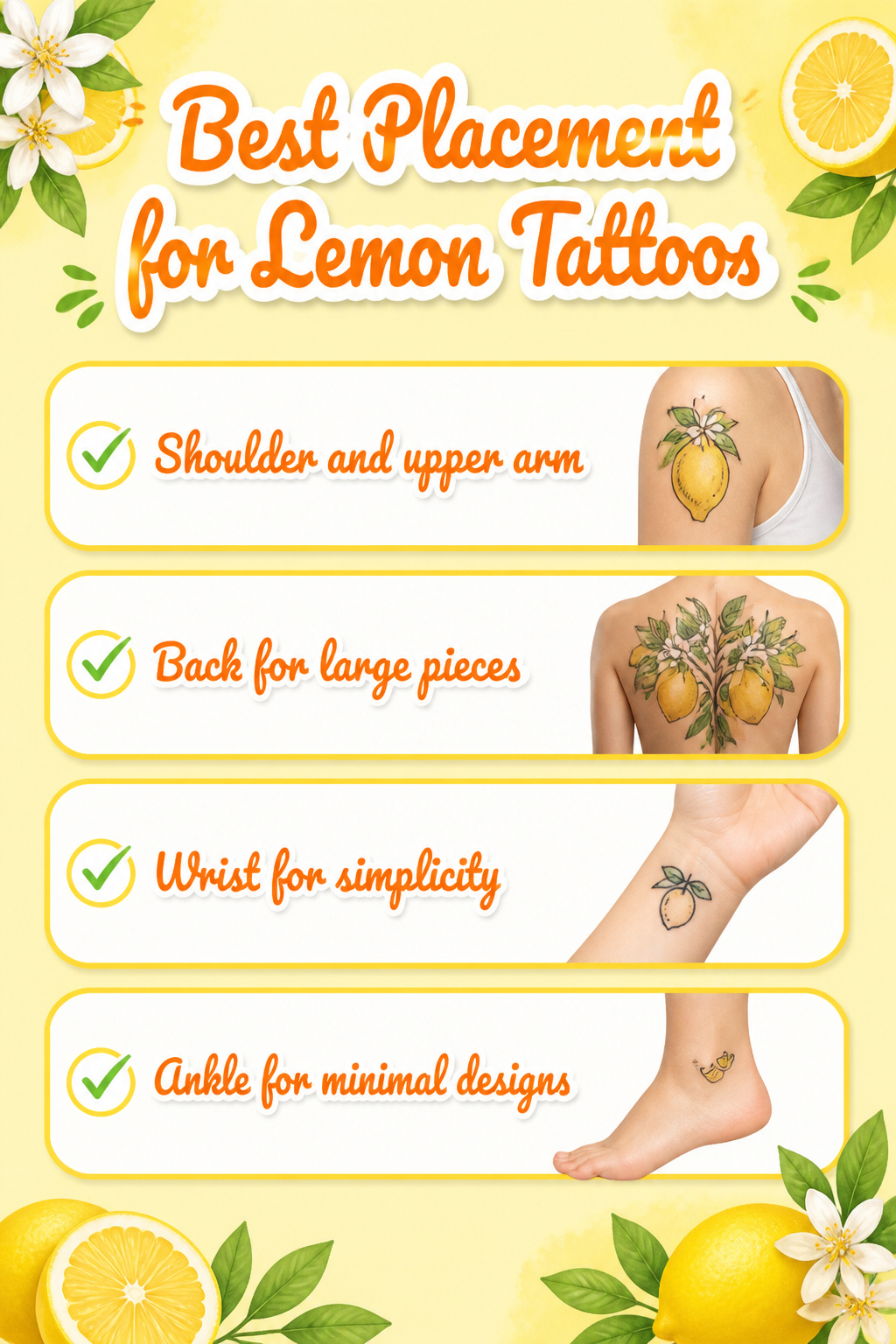
Where you place a lemon tattoo depends on how much detail you want and how much space the style needs. Here is how the pairings usually work out:
- Shoulder and upper arm are the default for most designs. The flat planes and gentle curves let an artist build in the slight texturing that makes a lemon read as real, and the spot is easy to show or cover.
- The back is the place for a big, sprawling piece. If you want branches, blossoms, multiple fruits, or a scene behind the lemon, this is where the real estate is.
- Wrist and ankle suit a stripped-down approach. A single lemon outline, a small wedge, or a few leaves work here; anything busier crowds the bone and blurs faster.
- Size and style should decide the spot, not the other way around. A design built for the wrist will look lost on a shoulder, and a back piece shrunk to an ankle turns into a smudge by year two.
Frequently Asked Questions
What does a lemon tattoo mean?
A lemon tattoo signals positivity, happiness, and the ability to get through hard stretches. The bright yellow color marks new opportunities and renewal, while the fruit’s natural sourness keeps the meaning honest: recovery does not erase the difficulty that came before it. Ancient practice also links lemons to good luck and keeping harmful energy away, so the design can stand for a fresh start after clearing out negativity.
What is the best placement for lemon tattoos?
The best placement depends on the size and style of your design. Shoulder and upper arm are the most common choices because the flat planes let an artist build the slight texturing that makes a lemon read as real. The back works for big, sprawling pieces with branches and blossoms, while wrist and ankle suit stripped-down designs like a single wedge or a small outline.