A Darth Vader tattoo is a portrait of the Star Wars villain that ranges from photorealistic helmet studies to minimalist line drawings.
The catch is that the style you choose determines whether the piece still reads as Vader in ten years or collapses into anonymous dark ink.
Realistic work, for instance, depends on getting the orange highlights right; without that reflected heat tone against the matte black shell, the helmet flattens into grayscale and loses the steel weight that makes it recognizable.
Realistic Darth Vader Tattoo
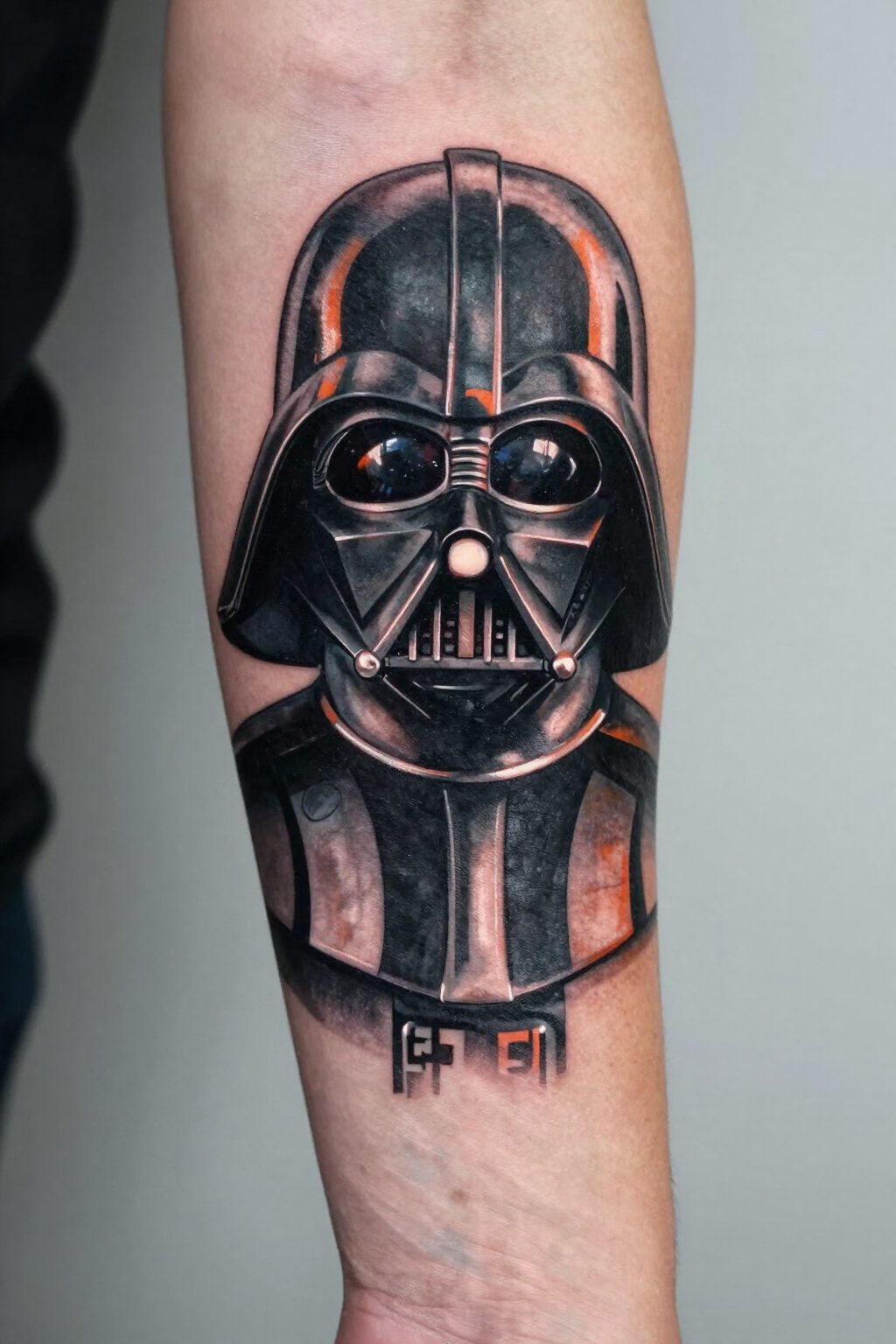
A realistic Darth Vader portrait lives or dies in the white, black, and orange balance that gives the helmet its steel-like texture.
The orange reads as reflected heat or battle light against the matte black shell, and without it the piece flattens into a grayscale graphic rather than something that seems to weigh actual pounds.
This style demands more technical precision than most character portraits. The helmet’s geometric planes have to read as rounded metal, not cardboard, which means the artist is working very soft edges inside very hard boundaries.
Skin tone becomes part of the palette; on lighter complexions, the white highlights need to be spare and strategic or they read as gaps rather than light sources.
On the forearm, where most people want this, the cylindrical surface actually helps the three-dimensional illusion, but the inner wrist curve can distort the jawline if the design isn’t adjusted for the body’s volume.
Placement above the elbow or on the outer calf gives the flat planes of the helmet more room to breathe.
The chest can work for scale, but the detail density that makes realism convincing tends to blur over time in areas with more movement.

Top quality foil will float for one week with helium
STAR WARS COSTUME ACCESSORY: Unleash the dark side for costumes, costume parties, or Halloween

Crenstone exclusive Star Wars temporary tattoos featuring iconic Star Wars characters: Yoda, Darth Vader, Chewbacca, and more!
Small Darth Vader Tattoo
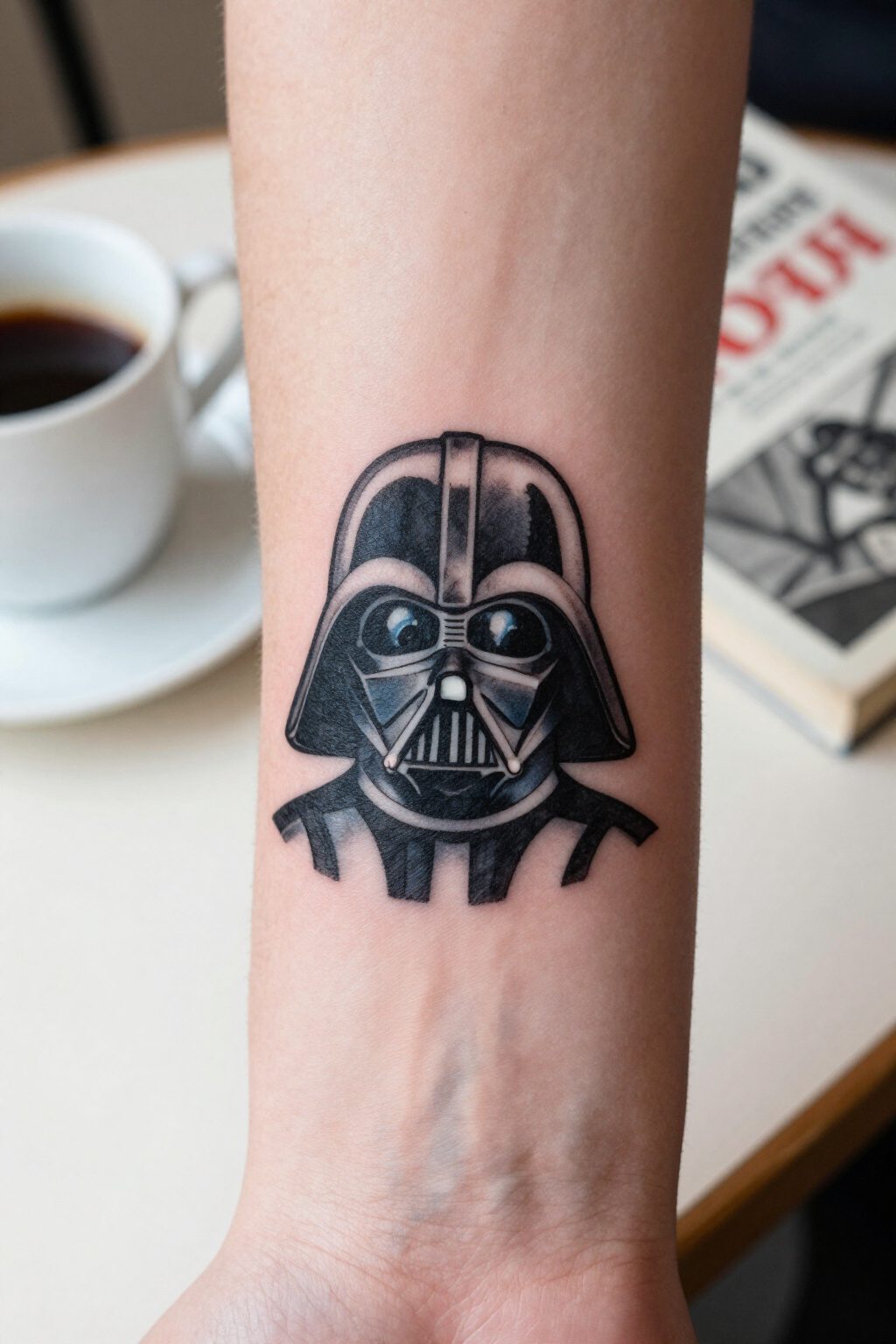
A small Darth Vader tattoo works best in black-and-white with subtle blue shading for depth, the restraint of the palette doing more work than a full-color piece at this scale.
The wrist or ankle both carry it well; the wrist keeps the image in your own sight line, while the ankle places it where someone else registers it only in motion.
At an inch or two, the helmet silhouette still reads instantly because the shape is that familiar, but adding the blue keeps it from flattening into a generic pop-culture stamp.
The fascination with Vader, his whole enigmatic pull, lives in those few controlled tones.
Anything busier and the small format turns to noise; anything simpler and you lose the character entirely. That middle ground, the disciplined middle, is where the tattoo earns its stay.

12 Unique 4"x4" StarWars-Inspired Designs: This stencil set features 12 iconic StarWars-inspired designs, perfect for fans looking to add a galactic touch to their DIY crafts. Whether you're working on home decor, art projects, or personalized gifts, these stencils will bring the beloved StarWars universe to life in your creations.

1. Set of 8 Starwars Trooper Helmet Designs Includes eight unique starwars‑inspired trooper helmet templates sized on 4x4 inch sheets. Perfect for painting, tracing, crafting, and creating themed décor on wood, canvas, walls, fabric, notebooks, and more with crisp, repeatable results.

Create bold sci‑fi‑inspired lettering with this Star-Wars‑style font stencil, crafted from durable reusable 10 mil mylar for crisp edges on wood, canvas, walls, fabric, paper, and more. Perfect for themed décor, posters, crafts, and DIY art projects.
Traditional Darth Vader Tattoo
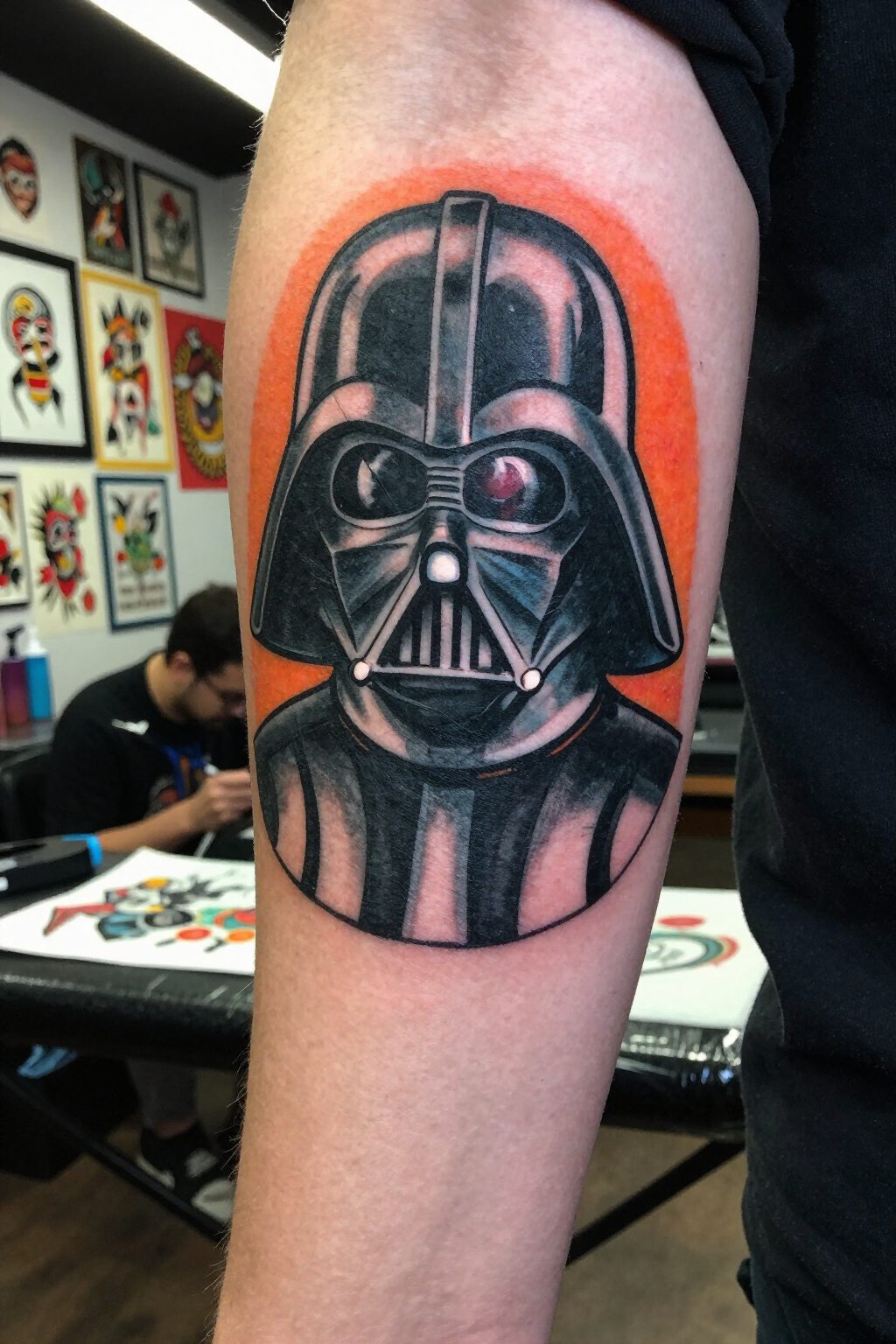
The traditional Darth Vader tattoo sets the helmet against an orange background with black, gray, and white shading, a color scheme that borrows straight from Sailor Jerry conventions.
Orange carries energy and power in that vocabulary, which lands oddly well on a space villain, the warmth of adventure pressed against cold mechanical menace.
Bold outlines are what buy this style its longevity. A 30-year-old flash sheet still reads from across a room because the line weight carried; fine detail on a dark helmet collapses faster than collectors like to admit.
The black fills stay dense, the gray shading gives the mask its dimension, and the white sits as deliberate highlight rather than afterthought.
On the outer arm, where most of these go, that contrast does the work of visibility without needing the viewer to step in close.
What the format sacrifices is subtlety. Darth Vader’s psychological weight, the father reveal, the redemption arc, none of that lives in a piece built for immediate graphic punch.
The trade is conscious: timeless readability against narrative depth. For collectors who want the icon first and the story second, the trade reads as fair.

MADE IN THE USA SINCE 1990: For over 30 years Dynamic Color has produced professional tattoo ink in the United States, an established American brand artists built their work on long before most imported labels existed.

MADE IN THE USA SINCE 1990: For over 30 years Dynamic Color has produced professional tattoo ink in the United States, an established American brand artists built their work on long before most imported labels existed.

MADE IN THE USA SINCE 1990: For over 30 years Dynamic Color has produced professional tattoo ink in the United States, an established American brand artists built their work on long before most imported labels existed.
Minimalist Darth Vader Tattoo
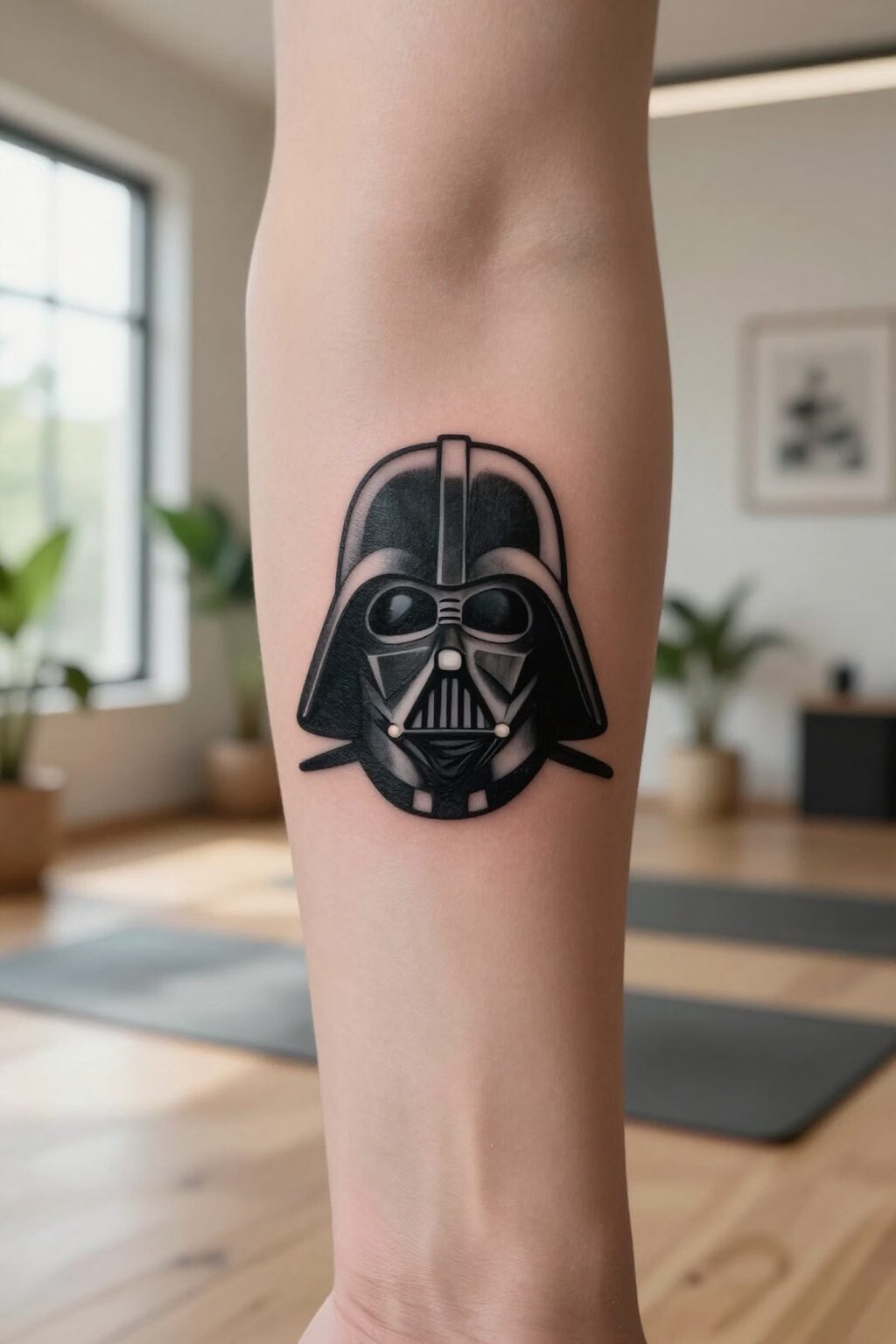
Minimalist Darth Vader tattoo work strips the character down to his absolute essentials: the dome curve, the triangular nose bridge, the flared cheek lines.
What remains must still read instantly as Vader, and that tension between restraint and recognition is where the design lives or dies.
The line weight carries almost the entire burden. Too thin, and the helmet collapses into a generic alien silhouette; too heavy, and the minimalism reads as clumsy rather than intentional.
A single-weight line throughout usually works best, though some artists will thicken just the dome’s outer edge to ground the shape.
The negative space inside the mask’s eye slots matters as much as the ink around them; that shape is what tells your brain "Darth Vader" before you consciously process anything else.
This is not the same as a small tattoo. A small Vader can still pack shading, helmet texture, battle damage, even a partial shoulder cape.
Minimalism actively rejects those details. The discipline is in what you leave out, and whether the remaining marks still carry the character’s weight.

Variety Pattern Selection: This set of body face paint stencils contains 192 pcs Halloween theme patterns in 12 sheets. Includes witches, skeletons, black cat, pumpkin, ghost, Mulled Wine, broom, vampires, jack-o-lanterns and the more allow children to give full play to their imagination and fill in patterns freely

171 PCS Different Styles Halloween Tattoos Stencil: Our hallloween temporary tattoo stencils sheet comes with 171 different hallloween design such as pumpkin lamps, black cats, skulls, wizards, witch hats, ghoost, witch, Spider Web, Skeleton more halloween Style in 12 sheets A5 size. Perfect for couple halloween party and decoration.

183PCS Different Styles Tattoos Stencil: Our temporary tattoo stencils forkids comes with 183 temporary tattoo stencils painting set design such as flowers, cats, hearts, skulls, dinosaurs, fruits, deer, scorpions, Hannah, unicorns, whales, cars, rainbows, telescopes, ships, too fast, astronauts, pirates, letters, stars and more Style in 12 sheets A5 size. Perfect for festivals, parties, or daily fashion.
Darth Vader Silhouette Tattoo
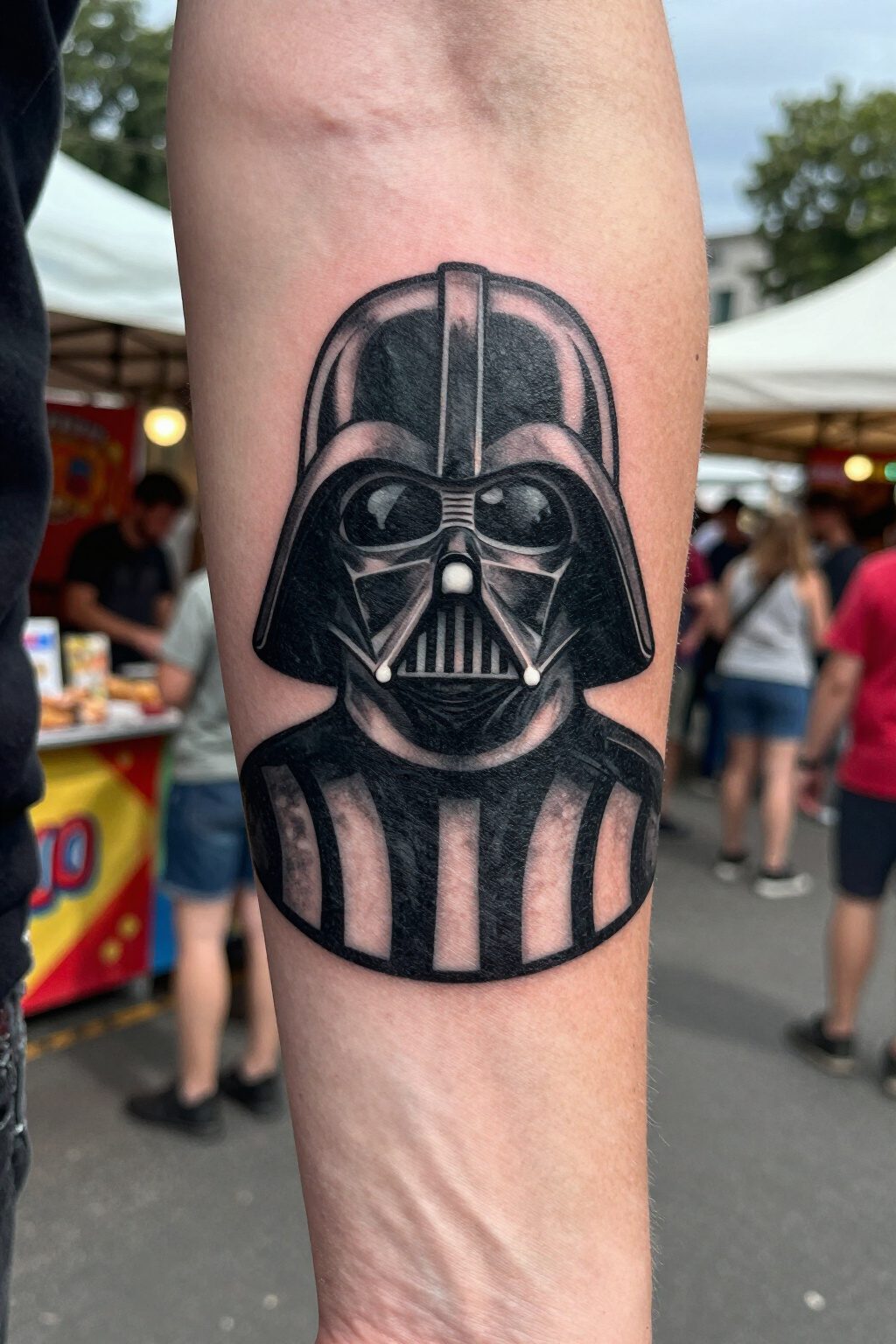
The helmet profile alone carries the full weight of recognition. No face, no cape, no lightsaber hilt needed.
That stark black shape against bare skin is enough to trigger the whole story in a glance, which is exactly why the silhouette format works so well for a darth vader tattoo you want readable from across a room.
The negative-space possibilities are what separate a decent silhouette from a striking one.
Leave the center of the helmet open, let the skin show through where the faceplate would sit, and the design becomes a literal void, a darkness defined by what surrounds it.
That incomplete edge reads as the struggle itself, the light still trying to push through.
The contrast stays sharp without needing shading or gray wash, though some artists will run a thin line of gray at the boundary to soften the edge against lighter skin tones.
Placement stays flexible because the shape is so compact. A two-inch profile behind the ear reads as clearly as a six-inch piece on the outer forearm.
The upper arm, where the natural curve meets the flat plane, gives the silhouette room to breathe without distortion. What you lose in detail you gain in longevity; black holds, and simple shapes age cleaner than intricate linework.
The duality the design represents, light against dark, good against evil, lands harder when the image itself is built from that same tension, solid ink against living skin.


Black and White Darth Vader Tattoo
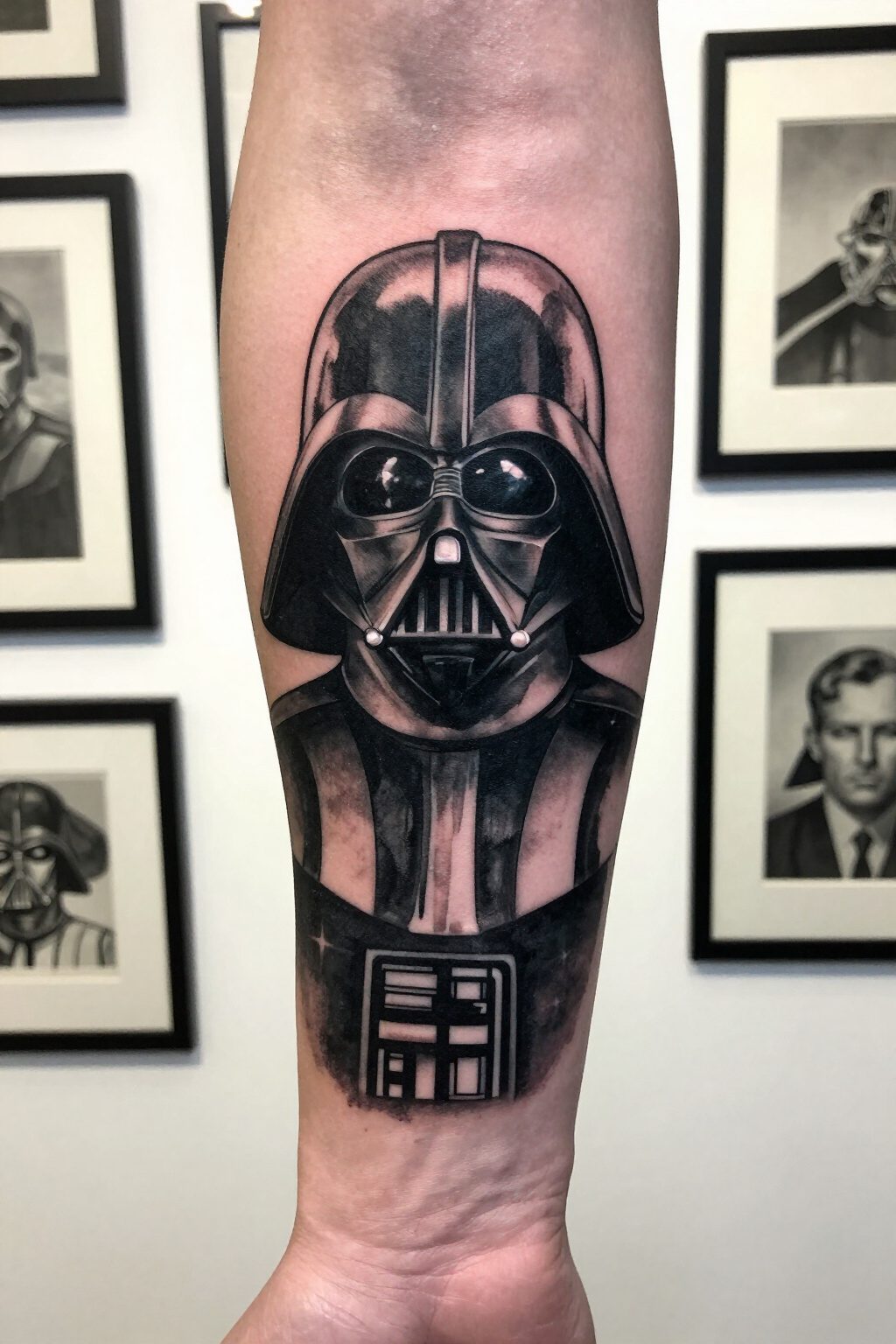
A black and white Darth Vader tattoo lives or dies on how the gray is handled.
True blackwork keeps the mask flat and graphic, all solid ink and negative space. Grayscale work does the opposite.
The midtones are what let the helmet read as rounded metal rather than a paper cutout, and the mask gives you natural landmarks for placing them. The eye lenses sit deepest, so they carry the darkest values.
The dome catches implied light, which means lighter gray or even bare skin at the high point. Get that transition wrong and the face looks padded instead of armored.
The monochromatic palette also carries meaning without clutter.
Light and dark sit against each other in the same image, which mirrors the character’s own split identity. The absence of color sharpens that contrast rather than softening it.
Subtle blue shading can add depth in smaller pieces, though on a larger design pure grayscale usually wins for coherence. Placement changes how the gradient reads.
A forearm piece gets more natural light across it, so the midtones can stay quieter. A chest or back piece with less direct light needs bolder value shifts to keep the form from flattening out.

High Quality Latex Ink Sticker

Measures 5.5" Wide x 5" Tall

【24 Sheets, 8 Unique Star Wars Designs】 - Each pack contains 24 make-a-face sticker sheets with 8 iconic Star Wars characters (Yoda, Darth Vader, Mandalorian, Stormtrooper, Chewbacca, and more), 3 sheets per design. Teens can mix and match parts to create endless unique combinations!
Darth Vader Flower Tattoo
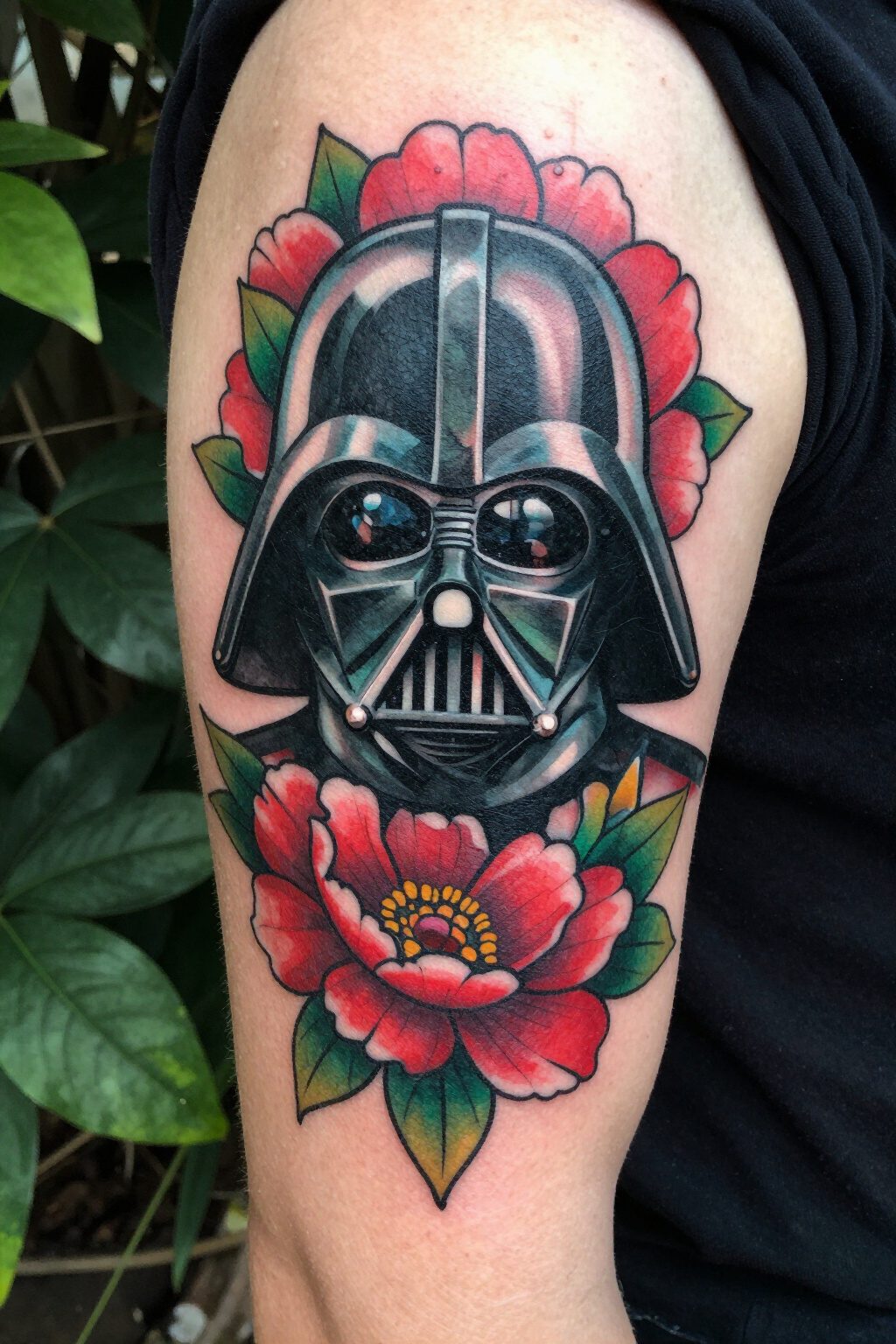
A Darth Vader flower tattoo works because the flowers do not soften the helmet so much as complicate it. Peaches and reds, with green leaves set low, turn the mask from pure threat into something alive and growing.
The contrast is the point: the same face that choked a captain on a bridge now sits among petals, and the tension between those two readings is what keeps the eye.
The most effective versions keep the helmet intact. Artists who pair Vader with roses or wildflowers usually leave the mask itself unaltered, letting the natural forms do the interpretive work around it.
The flowers stand for life and change, which reframes the darkness without denying it. The result reads less like redemption and more like coexistence, power and fragility held in the same image.
Placement tends to carry the personal weight here. The design needs room for both the hard geometry of the helmet and the organic spill of the botanical elements, so the composition often stretches larger than a standalone portrait would.
What the wearer wants remembered is the balance itself: beauty that does not cancel darkness, growth that does not pretend the soil was never burned.

The dimensions shown are the overall stencil sheet size. The graphic fits inside the sheet and is slightly smaller than the overall sheet size

The dimensions shown are the overall stencil sheet size. The graphic fits inside the sheet and is slightly smaller than the overall sheet size

Iconic Predator Mask Design — Features the unmistakable alien hunter mask silhouette with mandibles and dread‑style tendrils. Perfect for sci‑fi décor, cosplay builds, wood signs, canvas art, gaming rooms, and bold DIY craft projects.
Pixel Darth Vader Tattoo
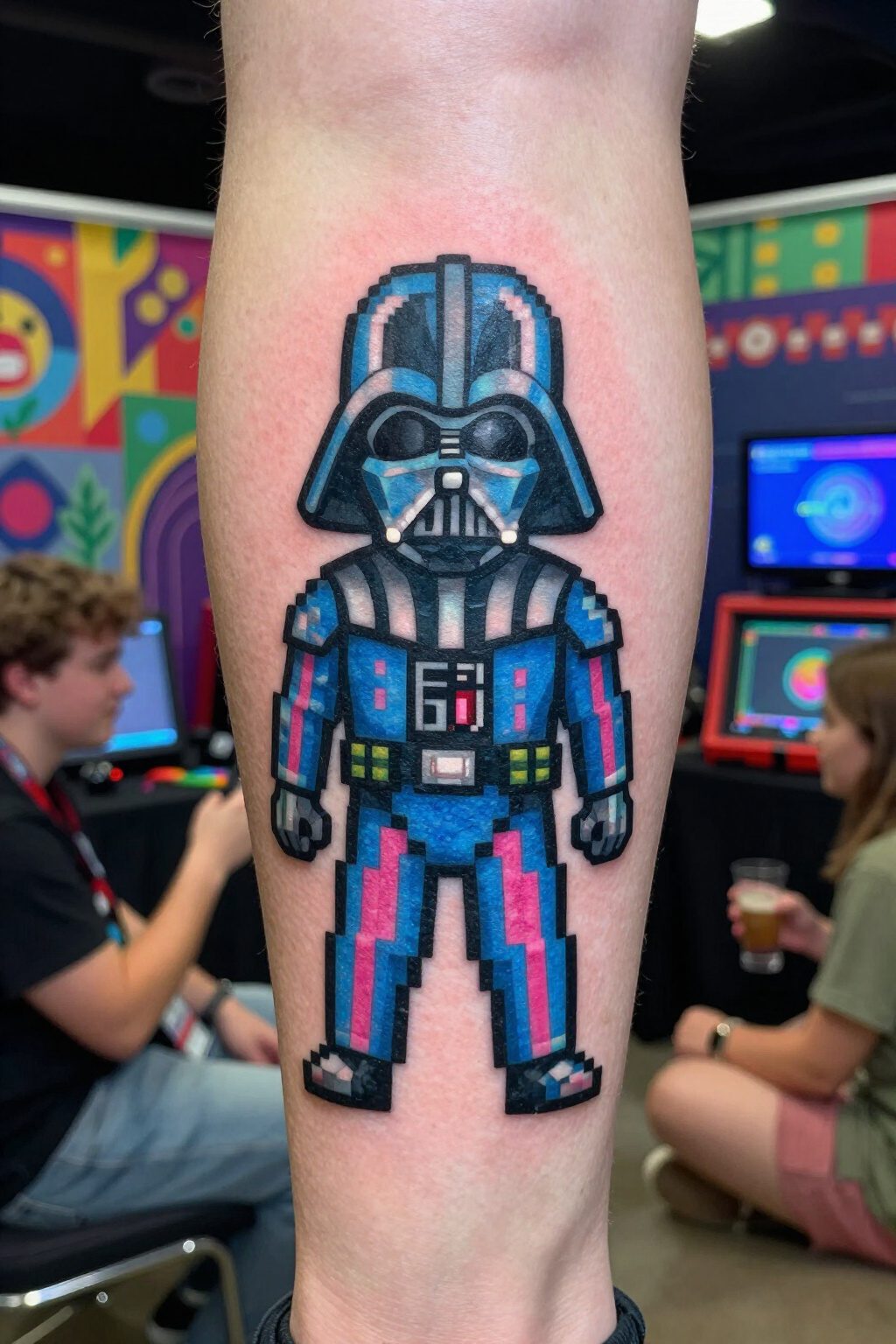
A pixel Darth Vader tattoo trades the character’s usual menace for something closer to a Saturday morning with a Nintendo controller.
The squares are the point: hard-edged blocks in blue and pink, maybe, arranged so the helmet reads instantly even at low resolution.
That nostalgia for 8-bit graphics carries its own meaning, a signal that your fandom runs back to childhood rather than starting with the prequels.
The real problem is time. Skin shifts.
Lines blur. A design built from precise squares depends on edges staying sharp, and tattoo ink spreads slightly even under ideal healing.
A pixel that looks crisp at twenty-five may read as a soft checkerboard by forty-five, especially on areas that see a lot of movement.
The artist has to leave the squares slightly oversized, accounting for that bleed, or the whole grid collapses into mud.
Placement matters more here than with most styles.
A forearm or calf, where the skin stays relatively stable, holds the geometry better than a shoulder or ribcage that flexes and stretches. The bright colors help visibility as aging starts, but the squares themselves are what age first.

Triple Blackout Tattoo Ink - Strengthen your shading with Triple Blackout, the boldest black designed for greater dimension in your tattoos. With a glycerin free formulation, this professional tattoo ink inserts smoothly into the skin for excellent distribution and shading.

Ultra-Thin Black Ink - This all-around black tattoo ink delivers the thinnest consistency without glycerin, offering super-smooth flow and rapid saturation for high-speed precision during lining and shading.

100% new brand and high quality. Favored among professional tattoo technicians.
Darth Vader’s Mask
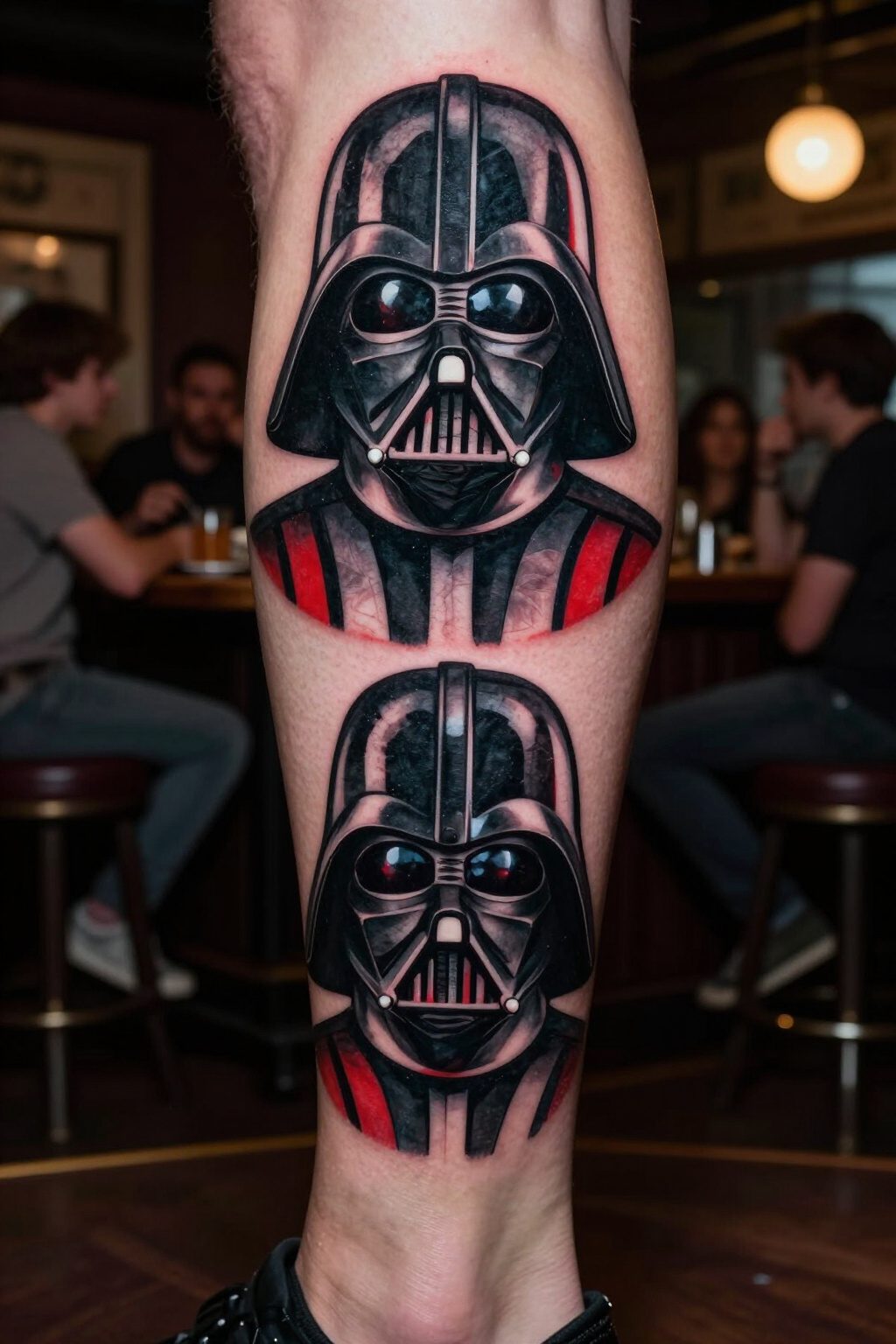
A Darth Vader tattoo that isolates just the mask does something the full figure cannot. The complete character invites backstory: the fall, the redemption, the father behind the armor.
Strip that away and what remains is pure symbol. The face becomes an icon the way a flag or a warning label functions, immediate and unnegotiable.
The bold black and red pieces work this hardest. Black carries the void already, and red laid against it reads as hazard before it reads as color.
One calf piece I kept returning to while researching this used exactly that pairing: the mask alone, scaled large enough that the wearer’s leg became a surface for something almost architectural.
The danger and power sit there without apology because the narrative has been removed. There is no Anakin to complicate the read, no narrative arc to soften the threat.
Isolating the mask shifts the tattoo from character study to warning.
The wearer is not saying they relate to Darth Vader. They are borrowing the face as a sigil, the way a biker might run a skull that does not ask to be understood as a person.
The forearm placements function similarly, though smaller: a constant visual anchor that draws on the same menace without the explanatory weight of the full body.
Steel textures and orange highlights can push this toward industrial severity, but the black and red pairing stays the most direct route to the effect.

Glitter Team Tattoo Stickers: you will receive 180 pieces orange series cool team spirit temporary tattoos in 9 styles, each corresponding to 2 sizes, each sizes of 10 pieces, fully meet your needs; Making them ideal for groups of fans to show their support for their team

RICH TEMPORARY TATTOO KIT - Contains rich tattoos pattern templates ,4 tattoo inks in 4 colors (Maroon,Black,Cherry red,Green),4 disposable gloves 1 pack of cleaning supplies,allowing you to easily create unique personalized tattoos

Package Includes: You will receive 20 sheets reusable tattoo stencils, enough quantity to meet your daily requirements. The mehndi stencils are suitable for airbrush painting, glitter tattoo, and so on.
Darth Vader and His Daughter
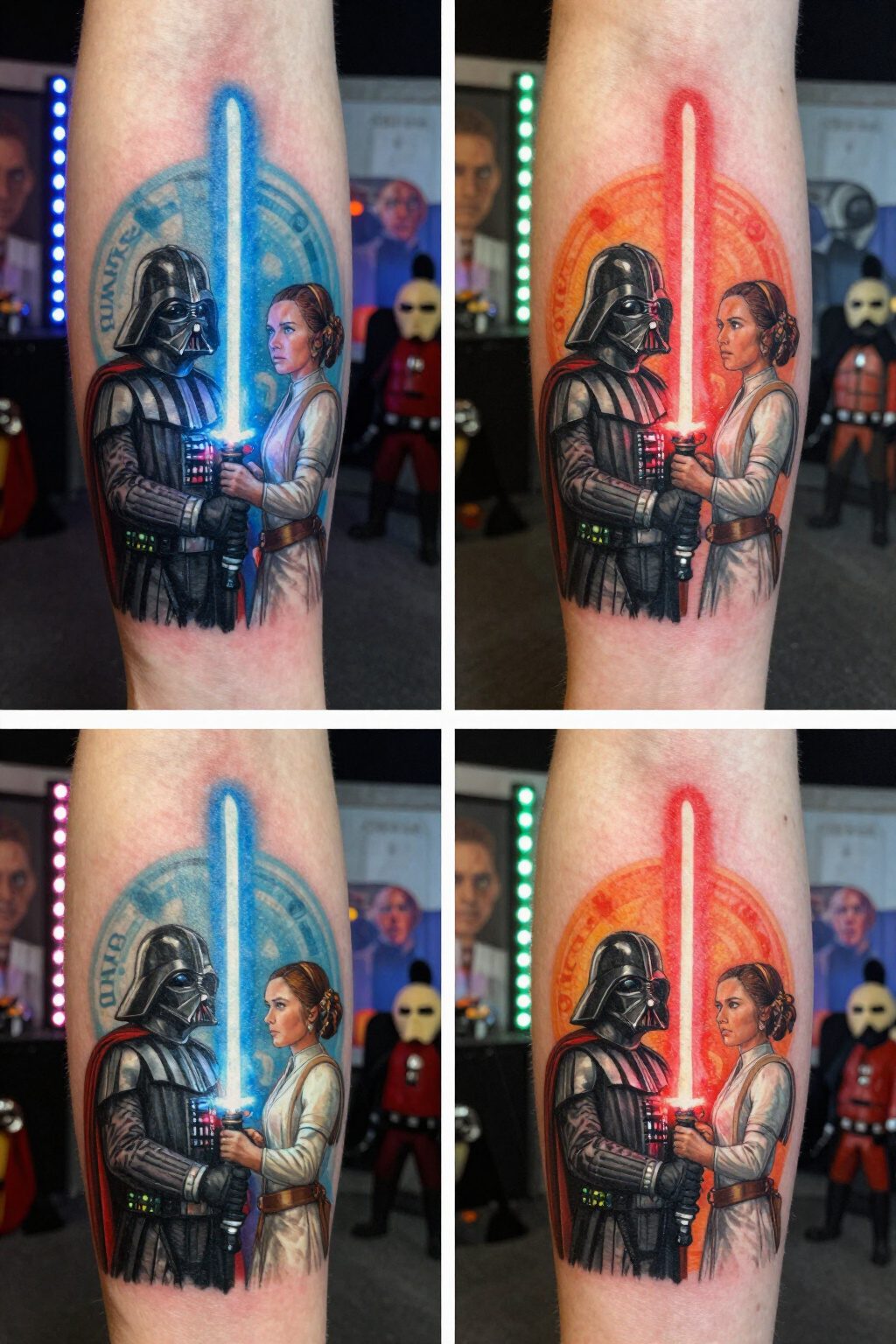
A vivid design shows Darth Vader and Princess Leia facing each other across a vertical lightsaber, the blade running between them like a wall of light.
What struck me, looking at this piece, is how the red glow reads as barrier rather than weapon once you notice Leia’s posture: she is not in combat stance but reaching, or stopped mid-step, as if the color itself were the thing keeping them apart.
The artist uses the full height of a forearm or calf to make that separation feel permanent, and the tragedy lands harder because the viewer already knows what Leia does not.
Vader’s helmet tilts slightly downward, a posture that suggests recognition rather than threat, so the design carries the saga’s full arc in a single frozen moment: father and daughter, empire and rebellion, the same blood on opposite sides of an energy field neither can cross.

Christian Warlich: Tattoo Flash Book


Darth Vader Sketch Tattoo
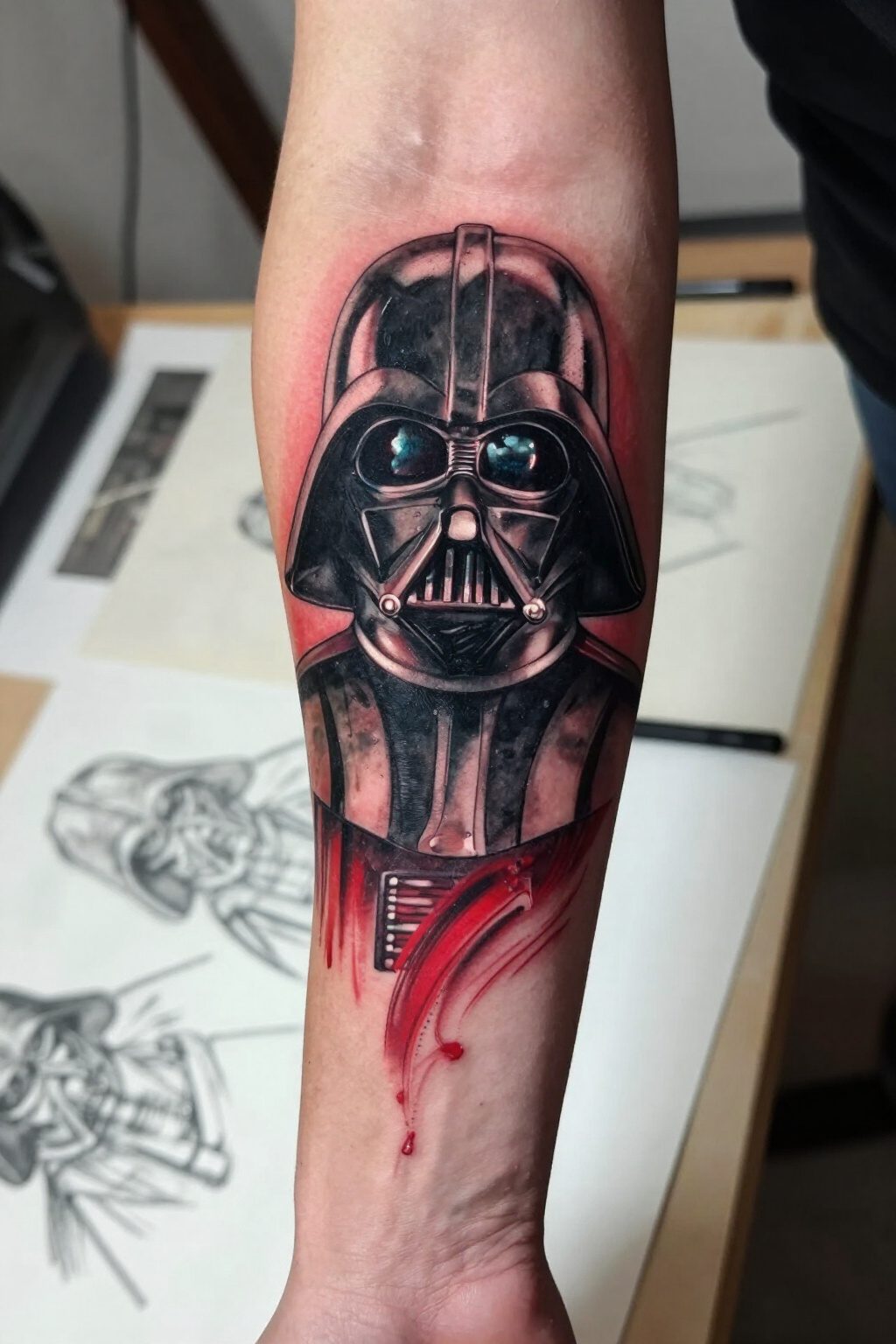
A blurry Darth Vader mask in red and black carries weight precisely because it refuses to finish the job.
The edges stay soft, the helmet dissolves into streaked pigment, and what registers first is motion: the figure turning, a memory catching rather than a portrait sitting still.
Red and black do the heavy lifting here. The red reads as violence or urgency, the black as the void the character already occupies, and where they bleed together the eye invents depth that strict linework would have pinned flat.
Intentional unfinishedness separates sketch tattoos from error when the blur lands in the right places. Vader’s mask is already mechanical, already inhuman; losing the crisp edge does not cost recognition.
What it adds is sequence, the sense that this image arrived from somewhere or is about to leave. The blur functions like shutter drag in photography, freezing action rather than form.
Placement matters for this effect.
A forearm or calf gives the blur room to breathe; too small and the red-black mix muddies into a single dark smear. The style asks for enough surface that the unfinished areas read as choice, not limitation.
Darth Vader Memoriam
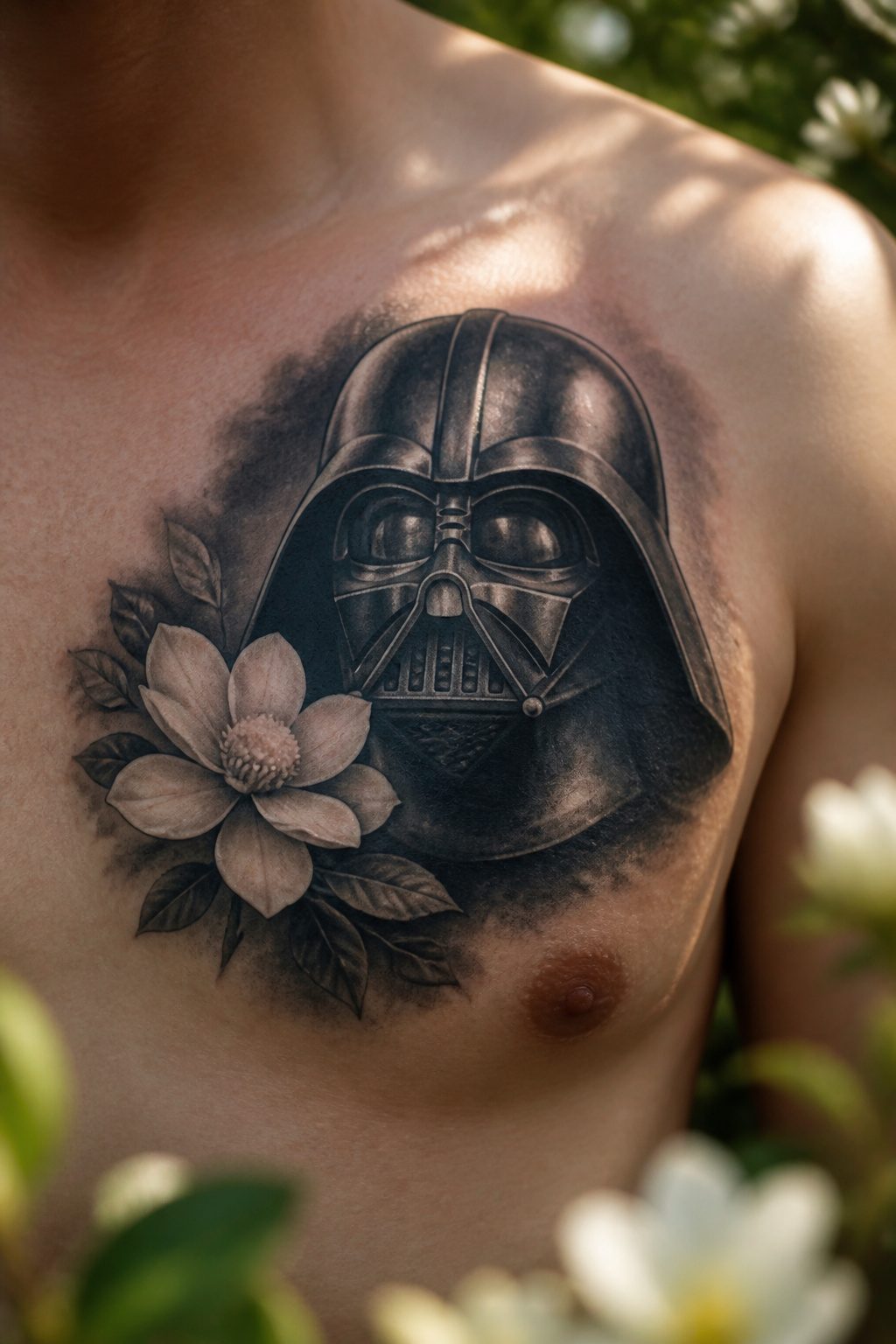
A single Darth Vader mask paired with a flower reads as memorial, not decoration.
The difference sits in placement and context. In a flower combination piece, blooms frame or soften the helmet as ornament; in the memoriam design, one flower rests beside the mask like something left at a grave.
The mask itself carries weight because Vader’s death in Return of the Jedi redefined him. The villain earned respect through the fuller story, and the flower acknowledges that shift.
A rose or lily tucked near the helmet, stem trailing below the chin, signals mourning for the man inside the machine rather than celebration of the armor.
Color choice changes the tone further.
A black and gray mask with a single white bloom keeps the funeral register; adding multiple colors or scattered petals drifts back toward decoration. The memoriam piece asks for restraint.
Placement on the body matters too.
A chest or upper arm position, close to the heart, reinforces the tribute reading. The same image on a forearm, rotated outward for display, loses some of that quietness.
For someone drawn to Vader’s redemption arc rather than his villainy, this approach separates the tattoo from the dozens of imperial portraits already out there.
Darth Vader in Battle
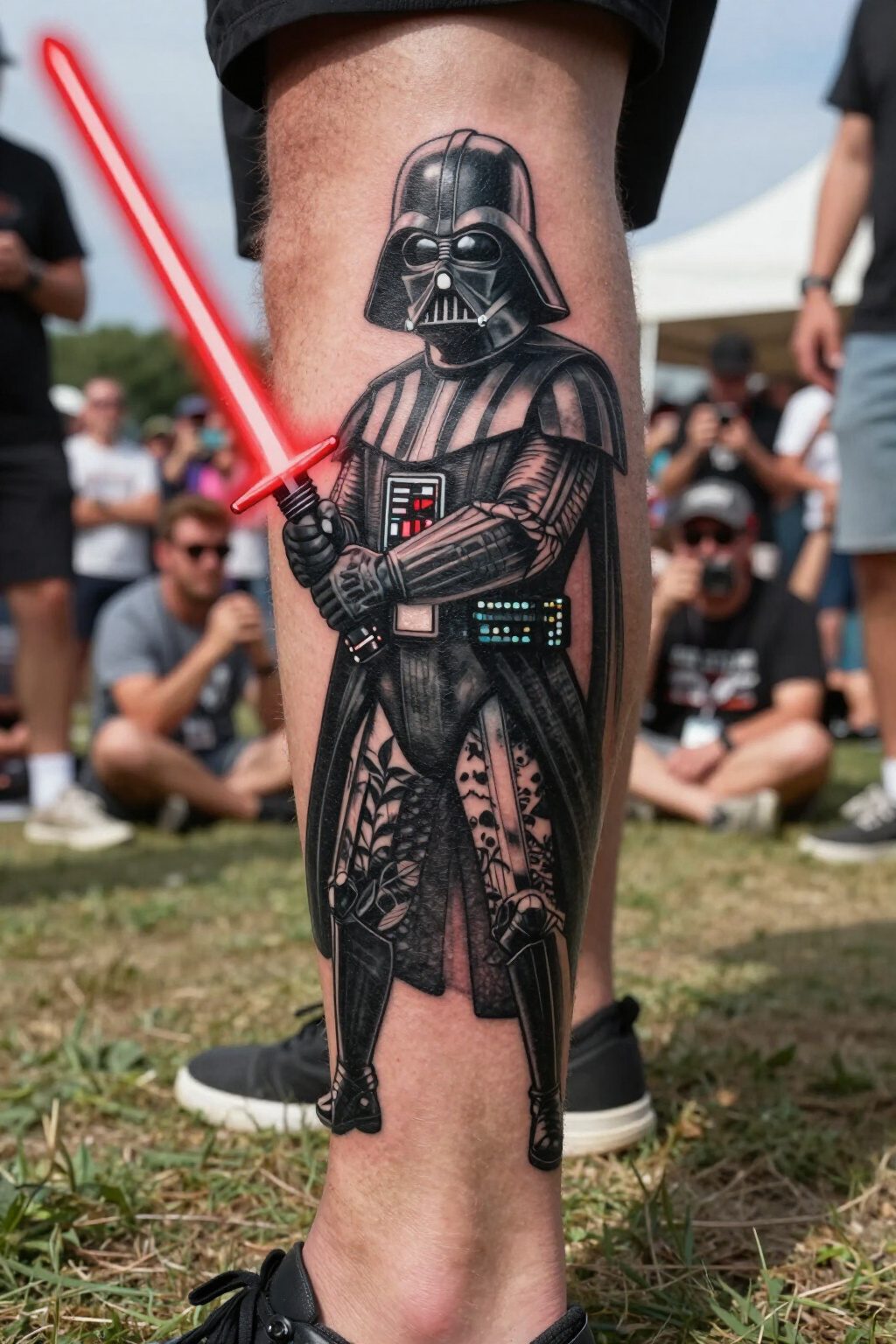
A leg sleeve demands composition that moves with the muscle, and a battle-posed Darth Vader answers that need directly. The figure works because the stance already carries motion: cape flare, weight shifted, the arm extended with the lightsaber.
That red blade becomes the single point of color in an otherwise black-ink piece, which solves the problem of where the eye rests first.
On a limb that long, without that anchor, the design risks becoming visual noise the viewer scans past.
The red does not merely contrast; it gives the whole sleeve a heartbeat, a place to return to after reading the detail in Vader’s armored suit.
Black ink alone can flatten across the calf’s curve. The red blade, held forward in fight pose, cuts against that flattening and gives the pose its direction.
For anyone committed to the full limb, this approach trades the safety of scattered small images for the risk of one coherent scene, and the risk pays out in impact.
Loose Sketch of Darth Vader
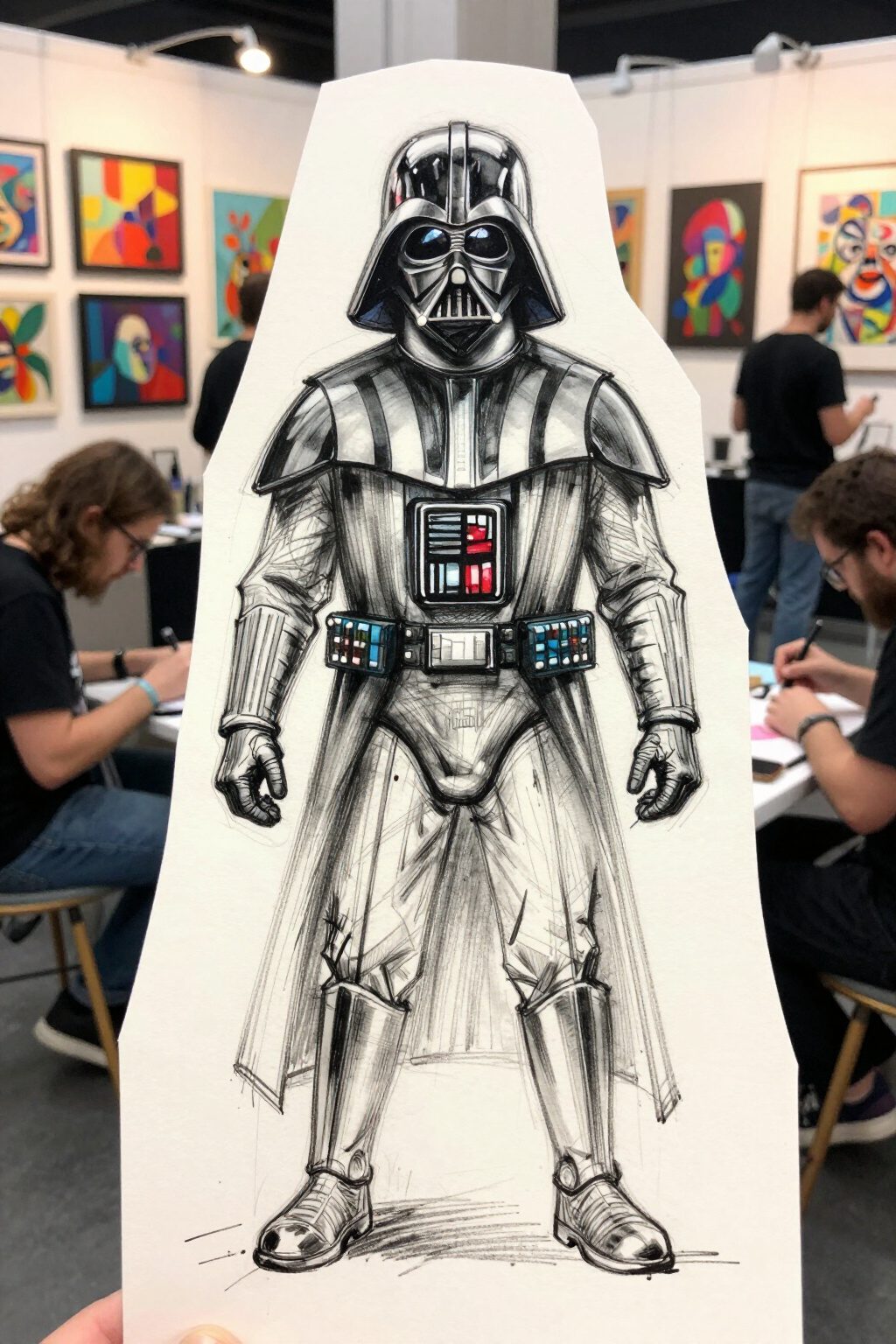
A loose sketch of Darth Vader lives or dies on the tension between a gestural outline and the tight interior it frames.
The mask reads instantly from across the room because the exterior lines stay quick and unfussed, almost like the artist’s first pass.
Step closer and the inside of that same helmet holds crosshatching, mechanical detail, or weathered texture that rewards inspection.
Two ways this plays out on skin. One keeps the sketch work on the outside, letting the dark fills and fine lines sit inside the silhouette so Vader looks like he’s dissolving at the edges, still solid at the core.
The other reverses it: a clean outer contour with loose, energetic marks contained within, as if the chaos is under the mask rather than escaping it.
The calf carries this well, enough flat muscle to let the contrast breathe without fighting the body’s curves.
The visual punch comes from that exact mismatch. A fully rendered tattoo asks you to look once and move on.
Here, the eye keeps traveling, unsure whether the piece is finished or caught mid-becoming. That uncertainty is the point.
Childish Darth Vader Sketch
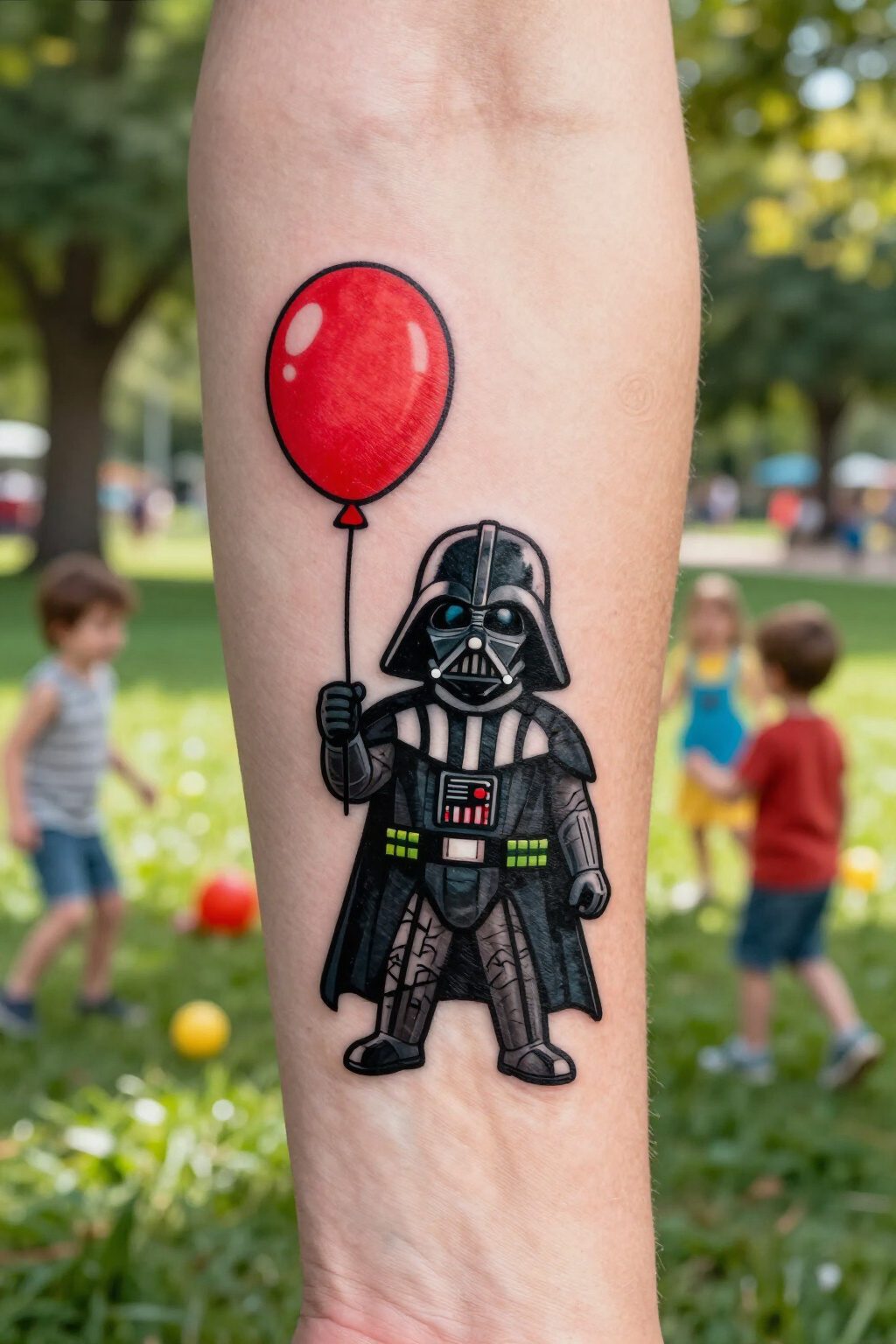
A child-like Darth Vader clutching a balloon turns the galaxy’s most feared enforcer into something small enough to pity. The image works because the contrast is absolute: the helmet stays, the cape shrinks, and the weapon becomes latex and string.
A red balloon reads as menace kept barely at bay, the color of the lightsaber reduced to a party trick.
A blue one tips toward innocence, as if the child underneath the mask might still be saved. Some artists draw the balloon itself as the Death Star, which layers the joke until it collapses into something almost sad.
This style lives or dies on restraint.
The linework stays spare, the shading minimal, because extra detail would age the figure back into threat. Bright colors carry the piece more than anatomy does.
What reads as "childish" in the final tattoo is actually harder to execute than a fully rendered portrait; every line earns its place, and a wobble in the wrong spot breaks the illusion entirely.
The result walks a narrow path between cute and unsettling, which is exactly where the best Star Wars ink tends to sit.
Darth Vader Adaptation
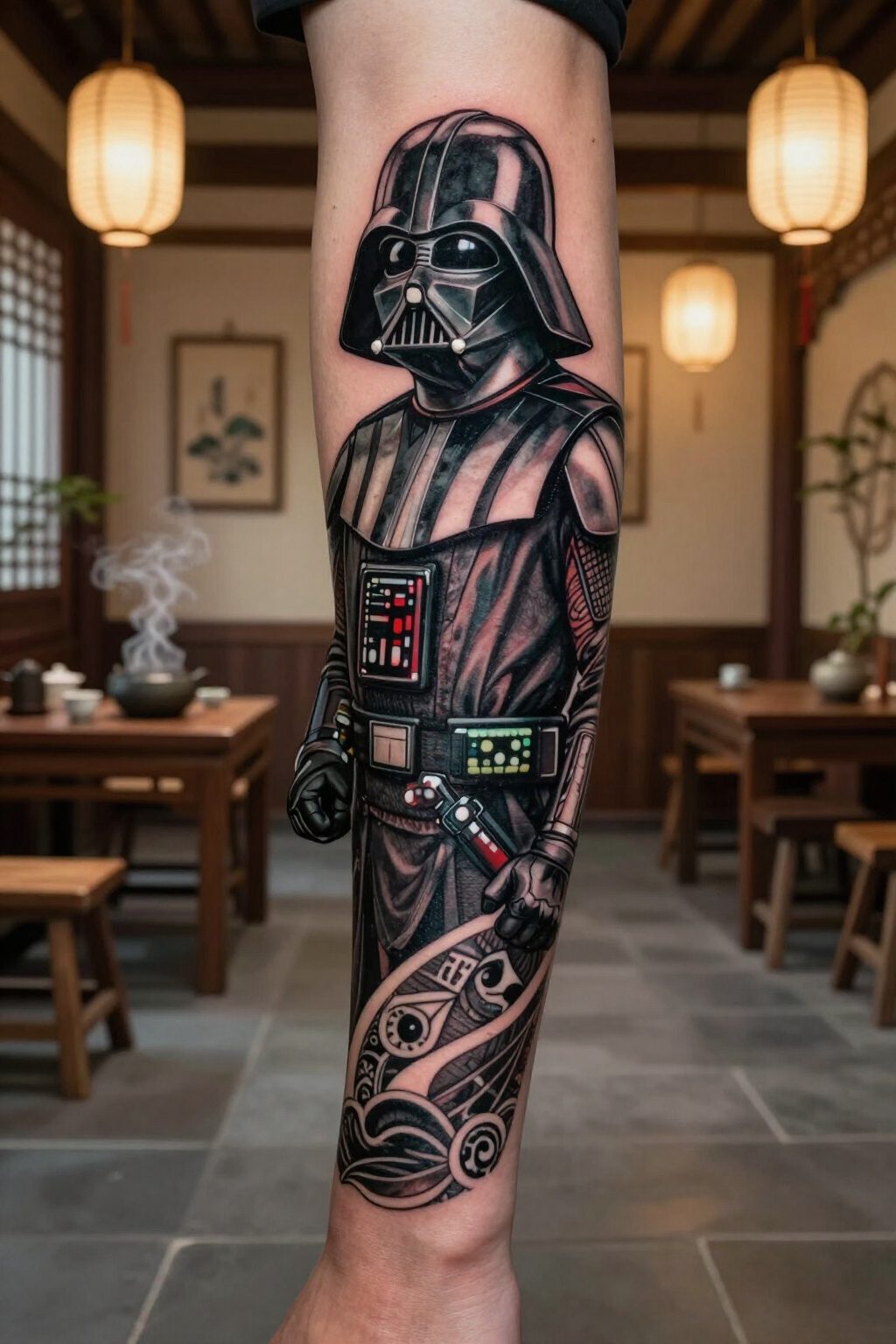
A Darth Vader tattoo redrawn as an ancient Chinese warrior works because the character himself is already a cultural blend.
George Lucas pulled from samurai film, European military dress, and Buddhist monastery robes when building the Sith lord. That layered DNA means the design holds up when you push it further east.
Armor details carry over better than you might expect.
The flared shoulder plates of Vader’s suit already echo the mountain-shaped pauldrons on Ming dynasty brigandine. The helmet’s faceless slit reads as a mengkui, the demon-mask visor on some Chinese ceremonial helmets, once you strip the sci-fi gloss.
The chest panel’s rigid geometry lines up with the rectangular armor plates, called shanwenjia, that officers layered over silk underrobes.
What shifts is the material language. Where Vader’s suit implies machined metal and synthetic leather, a Chinese warrior rendering uses lacquered leather cord, bronze rivet patterns, and the overlapping scale texture of mountain-pattern armor.
The cape becomes a fur-lined commander’s cloak, maybe with cloud collar embroidery framing the shoulders.
The artist who pulled this off, working under the name sacraparistattoo, kept the silhouette unmistakable while letting every surface detail translate. The result reads as Vader first, then as historical reconstruction second.
That sequencing matters. A tattoo that flips the order, historical figure with Vader hints, loses the character entirely and becomes a costume party mistake instead of a genuine cultural cross-reading.
What Darth Vader Tattoos Mean
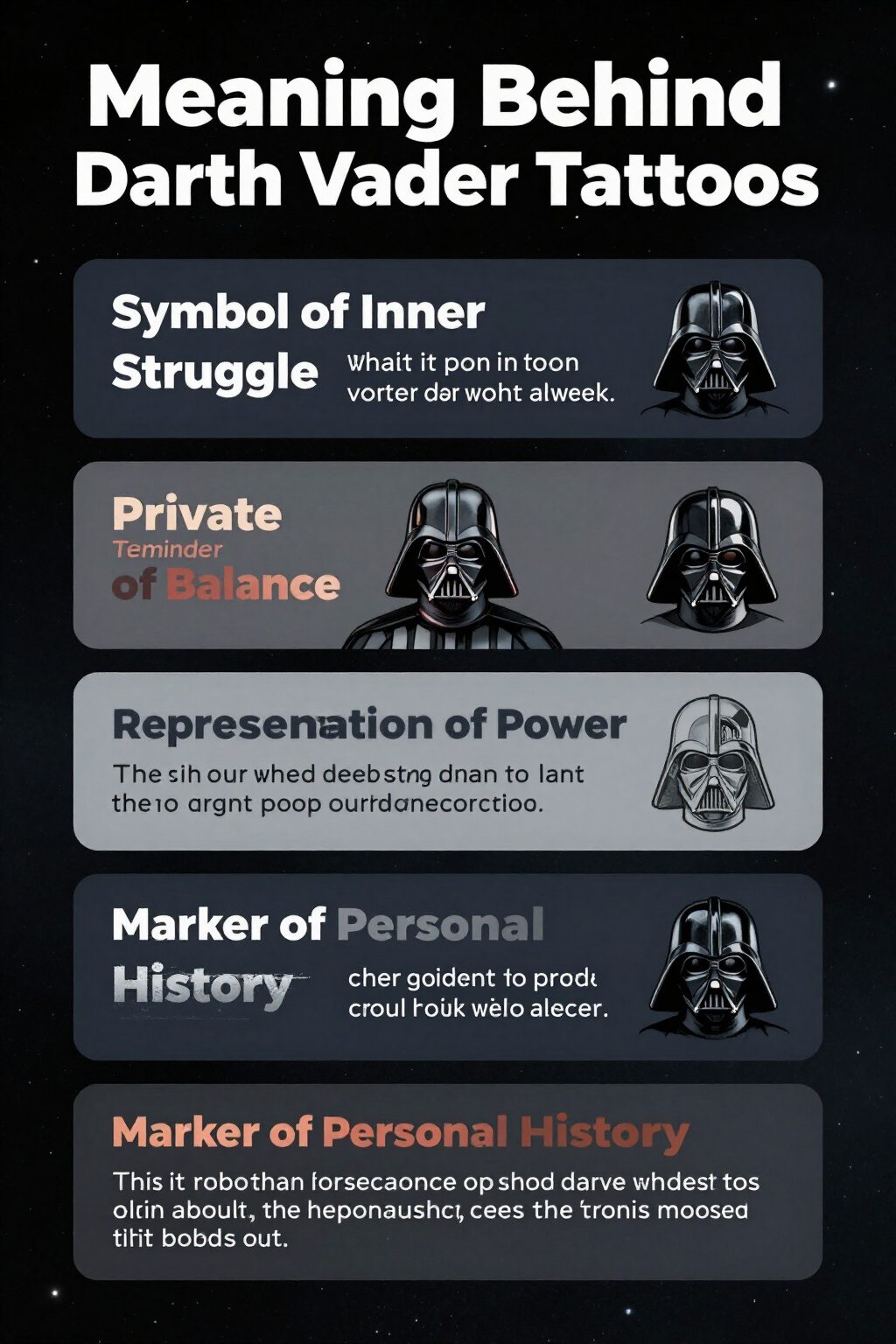
A Darth Vader tattoo carries weight that goes well past fandom. The character’s arc from Anakin Skywalker to Sith Lord maps onto something most people recognize: the struggle to keep darker impulses in check.
Inked on skin, that becomes a private reminder of balance rather than a public declaration of villain worship.
Power and resilience sit in the imagery too.
Vader’s presence is absolute, unyielding, and for some wearers that projects inner strength they want to call on. The mask itself adds a layer of mystery, the sense that what faces the world is not the whole self.
The duality reads strongest for me. Light against dark, choice against consequence, the person you were against the person you risk becoming.
A Darth Vader tattoo can mark a specific chapter where that tension felt real, or it can serve as ongoing warning. Either way, the meaning lives in the wearer’s own history, not George Lucas’s script.
How Design Style Changes the Message
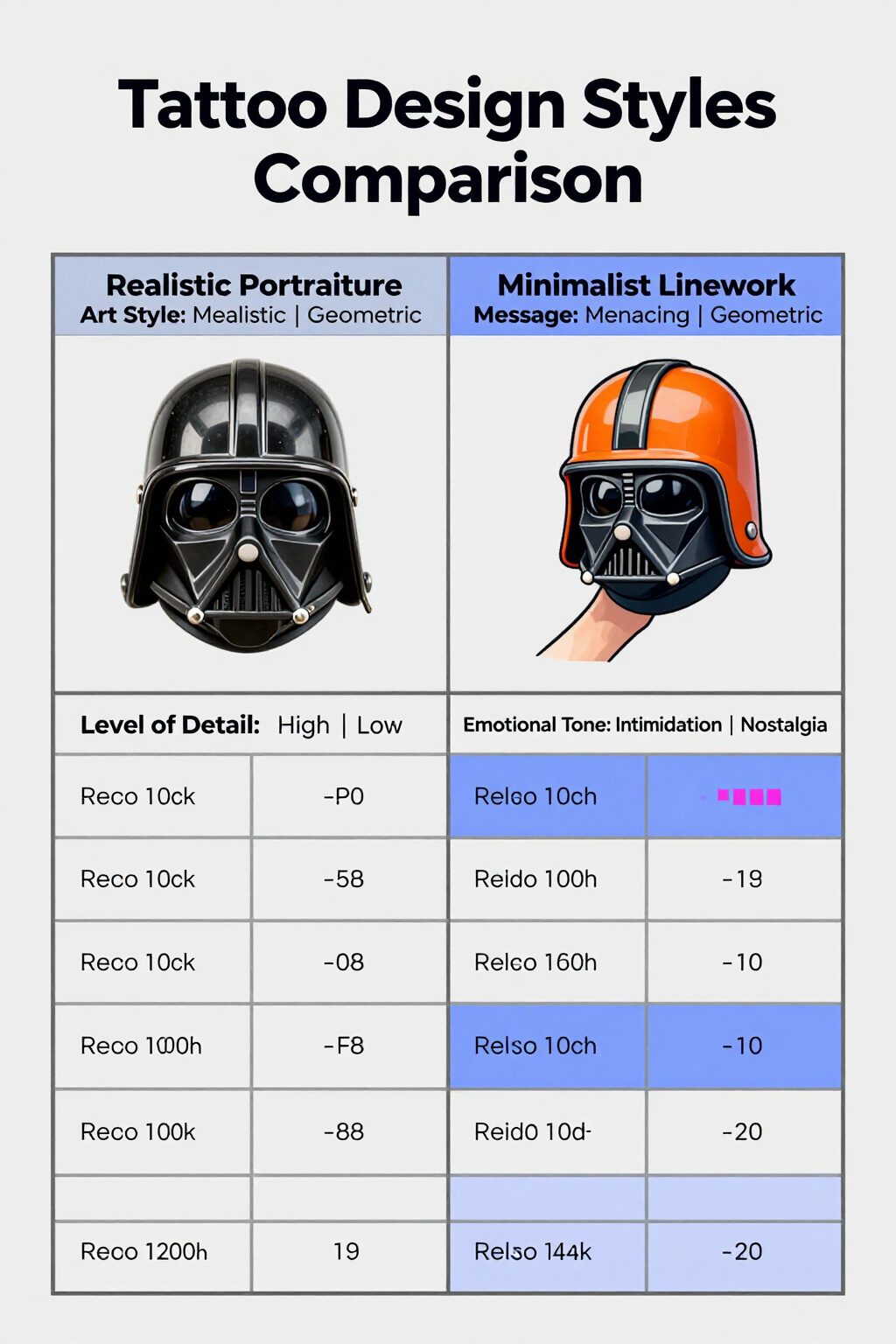
Realistic portraiture and minimalist linework pull opposite meanings from the same helmet.
A rendered faceplate with full shading plays up the menace, the breathing apparatus, the weight of the character; a single continuous outline reduces him to geometry and leaves the viewer to fill in the rest.
Traditional bold-line work sets the orange-backed, black-and-gray Vader on the outer arm as a piece of classic iconography, built for visibility from across a room.
Pixel art moves the other direction entirely, trading intimidation for nostalgia with its blue-and-pink 8-bit blocks, a reference that reads instantly to anyone who spent afternoons with a controller in hand.
The style you choose is the filter through which the rest of the tattoo is read.
A realistic Vader sleeve signals one kind of fan; a pixel thumbnail behind the ear signals another, and the gap between them is the point.
Why This Character Still Gets Inked
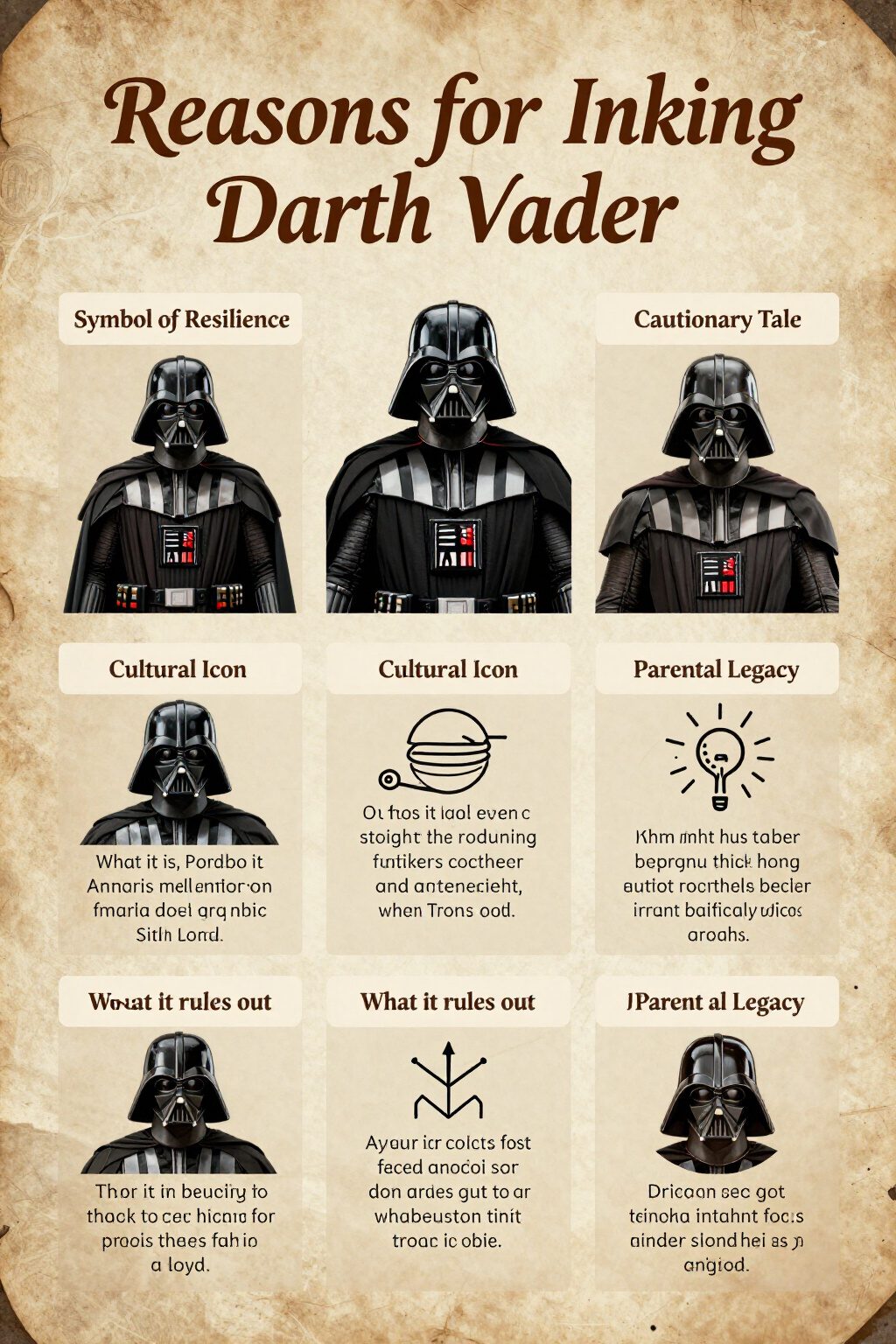
A Darth Vader tattoo still carries weight because the character himself never settled into simple villainy.
His arc from Anakin Skywalker to Sith Lord and back again mirrors something people actually live through: the struggle to keep darker emotions from taking the wheel, the damage done when they do, and the long road back from that.
The ink becomes a reminder to check your own balance, not a celebration of the dark side.
The cultural footprint helps too.
Vader is instantly readable across generations, which means the tattoo communicates something specific without needing explanation. For some wearers, the appeal sits in his power and mystery; for others, it’s the cautionary thread, the visible cost of anger and greed.
Either way, the choice tends to run deeper than fandom loyalty. The design functions as a personal symbol of resilience, a mark of having faced something and kept moving.
Frequently Asked Questions
What does a Darth Vader tattoo symbolize?
A Darth Vader tattoo usually marks the struggle to keep darker impulses in check, with the character’s fall and redemption mapping onto personal battles with balance.
Power and resilience sit in the imagery too, the mask projecting unyielding strength or the mystery of a hidden self. For most wearers, the meaning lives in their own history rather than in the films themselves.
What are the different styles of Darth Vader tattoos?
The main styles covered in the article include realistic portraits, small black-and-white designs with blue shading, traditional American with orange backgrounds, minimalist line work, silhouette, full black and white, floral combinations, pixel art, sketch work, and cultural adaptations like the Chinese warrior rendering.
Each style carries different technical demands and symbolic weight, from the immediate readability of traditional bold outlines to the nostalgic signal of 8-bit pixel blocks.
How can I care for my Darth Vader tattoo?
Keep the tattoo clean and moisturized while it heals, and shield it from direct sunlight and water splashes.
This basic aftercare matters especially for styles built on precise edges, like pixel or minimalist line work, where any blurring from poor healing will break the design faster than it would a fully shaded realistic piece.