The patterns below run from a single session on a flat scar to a full sleeve built across months of sittings, whether you need clouds and water flowing over old ink, a dragon scale texture hiding raised tissue, or solid blackwork swallowing pigment too dark to lighten.
Your own skin decides which one fits: flat old ink swallowed by a Japanese horimono sleeve, fully healed scar texture taken over by dragon scales or a needle-and-thread design, or pigment so dark it needs the black wall of solid blackwork or a skull motif to disappear.
Gakubori cloud and wind motifs, for example, swallow whole arm sleeves because the style was developed precisely for that scale of coverage.
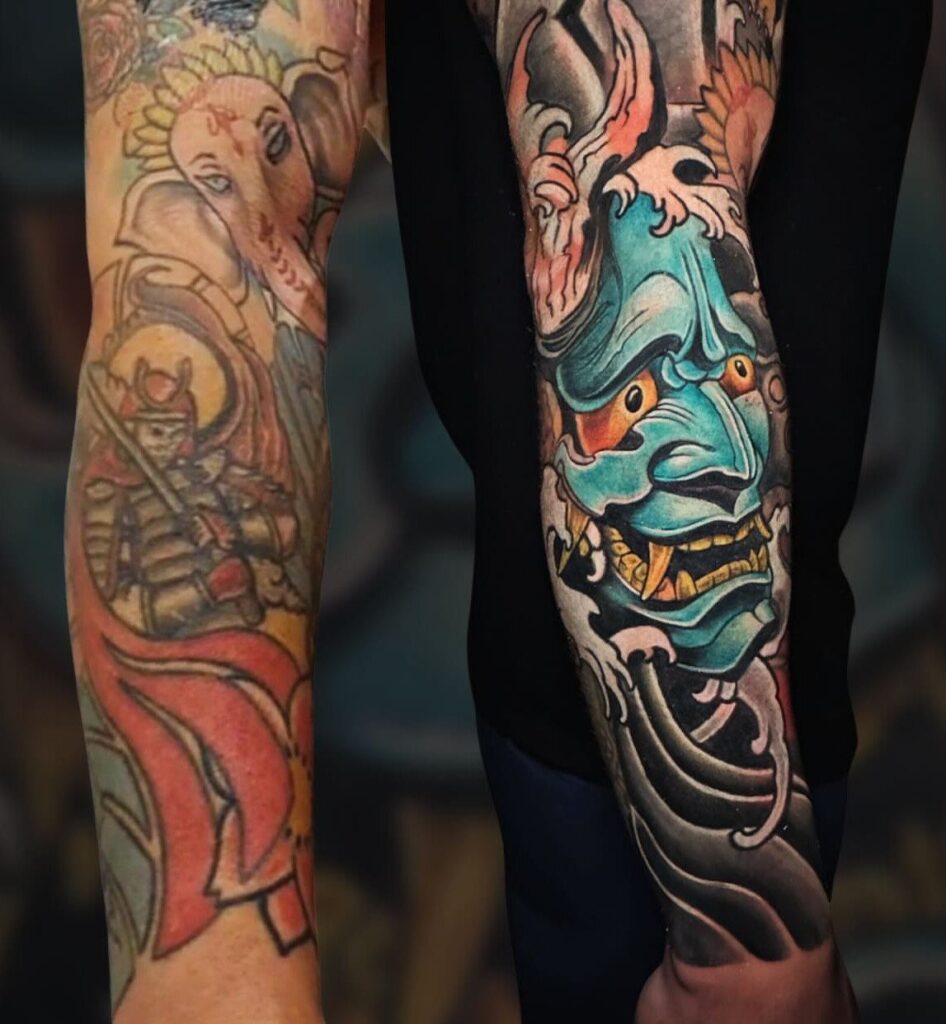
1. Japanese Horimono with Clouds and Water
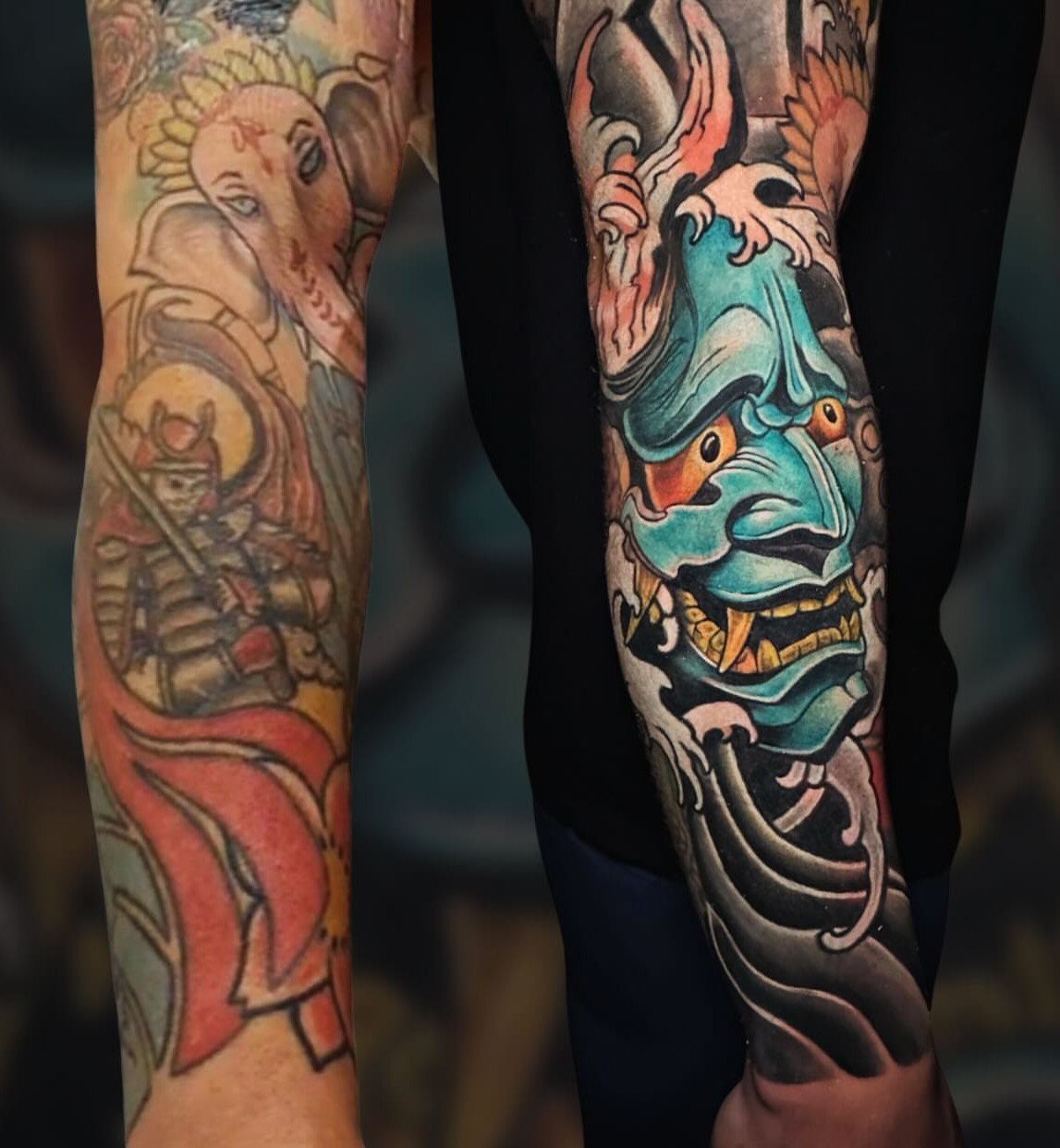
Deep blue waves and black smoke clouds give old ink somewhere to disappear.
The style builds a dark backdrop first, then layers a dragon, hannya mask, or koi on top; the eye goes to the detail and misses the ghost underneath.
Cloud, wind spiral, and water motifs are called Gakubori, and they are the reason this approach swallows whole sleeves of past mistakes. A full back or arm piece takes multiple sessions, so budget for the long haul.
2. Negative Space Tattoo Pattern
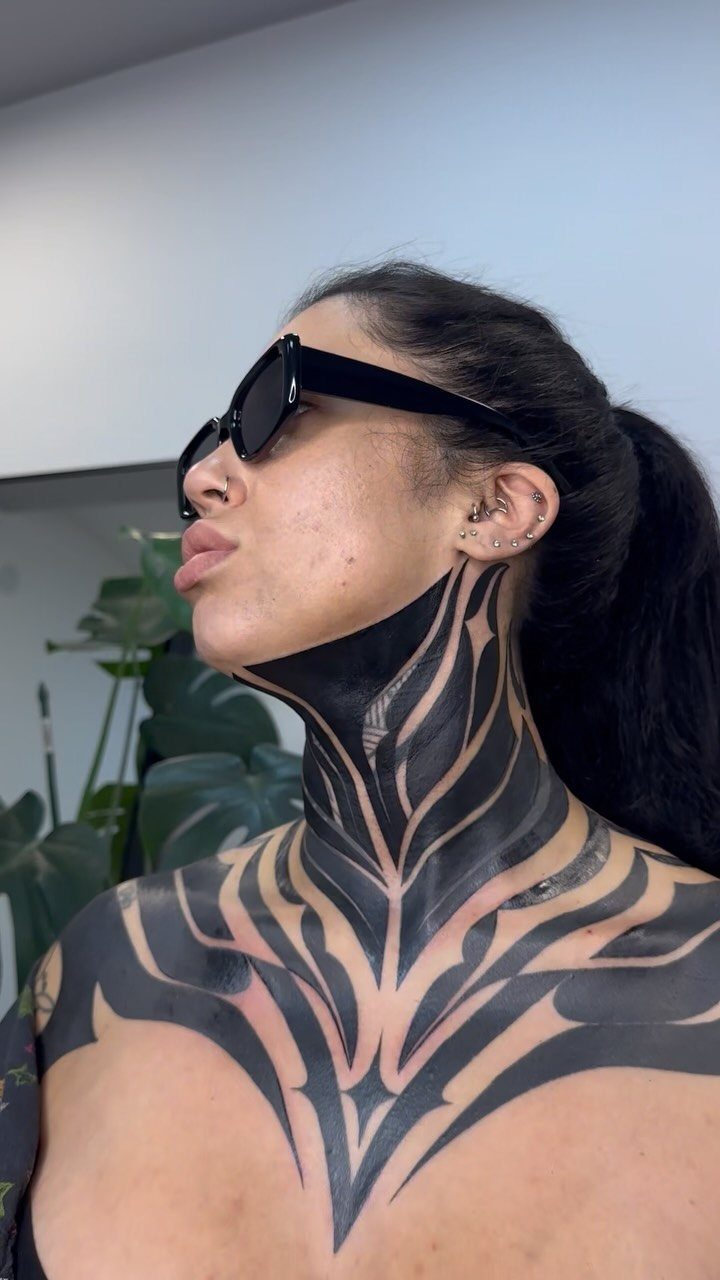
Solid black backgrounds read as bruise from across a room unless you leave skin showing. Leaving some skin untouched gives the pattern room to read as itself instead of one heavy block.
Mandala, honeycomb, or geometric lines cut through the black in light grey or bare skin.
Placement matters. Your darkest, most saturated ink should drop directly over what you are hiding, while the surrounding areas stay light and open.
Ask the artist to map this before the needle touches you; a cover-up that looks deliberate rather than desperate depends on that balance.
3. Dragon Scales Covering Scars Pattern
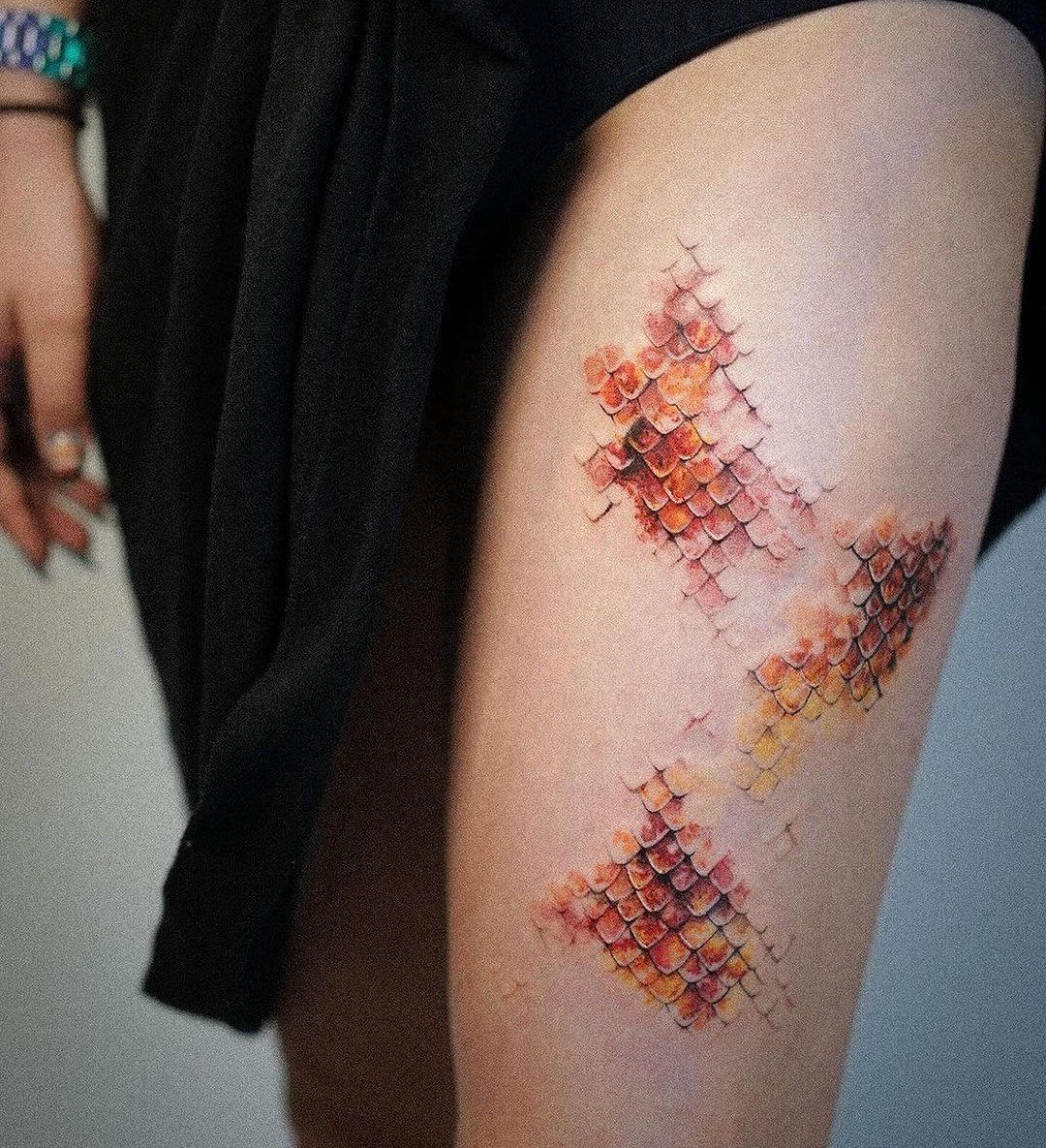
Raised scar tissue will not flatten under ink. A flat background looks even enough in the chair, but light catches on scar ridges later and the old work ghosts back through.
Dragon scales, or something with similar texture like tree bark, work with the bump instead of against it. Each scale catches light its own way, and the uneven surface becomes part of the design rather than a flaw.
Ask for an artist who has handled scar tissue before; the first pass on raised skin is unforgiving, and guessing at depth costs you a redo you cannot afford.
4. Solid Blackwork with Floral Outlines
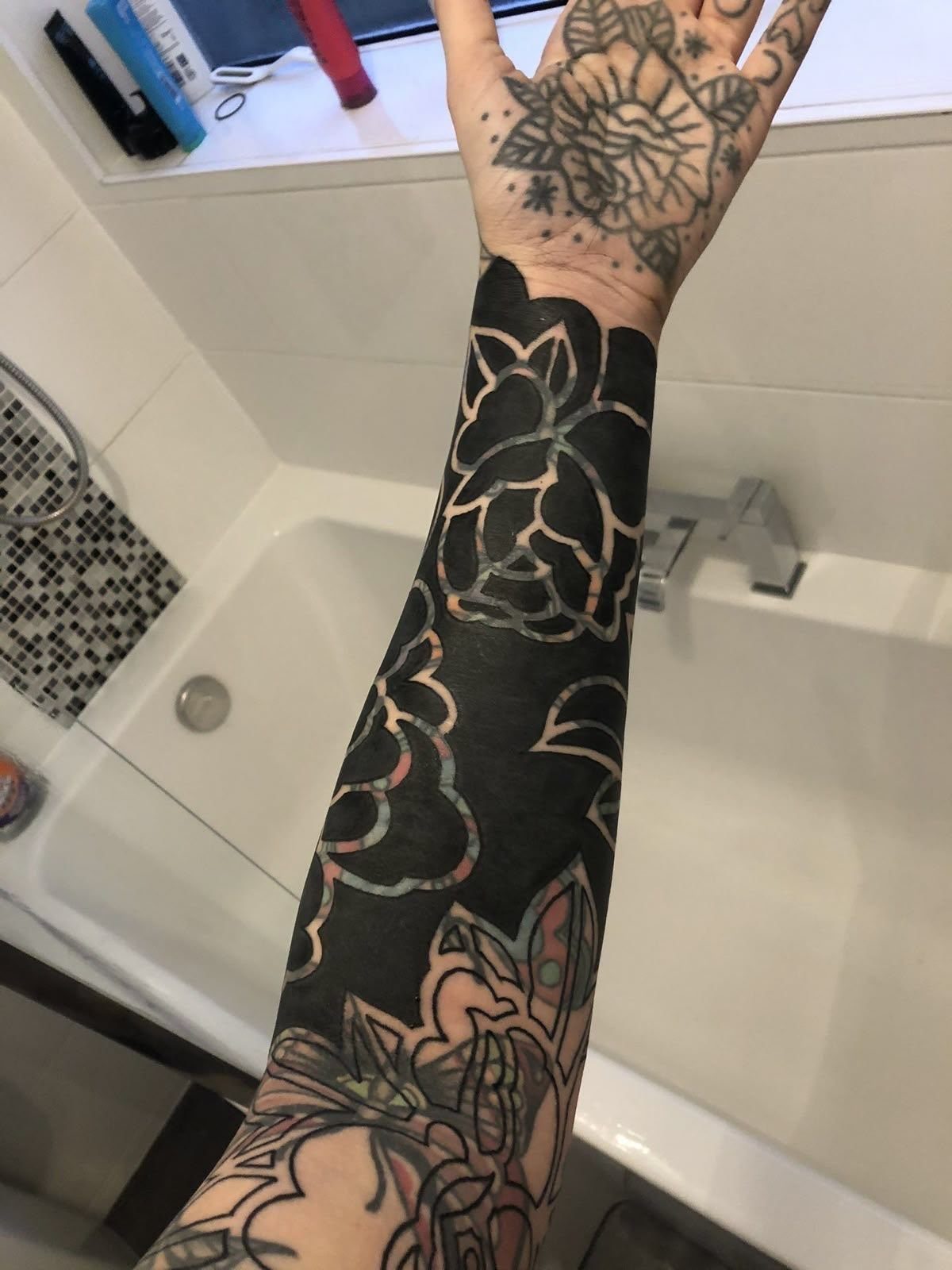
Solid Blackwork with Floral Outlines ===
Dense black erases what is underneath while floral lines traced in negative space keep the result from reading as a solid block.
Roses, leaves, or delicate stems grow out of the darkness toward the hand or wrist, so the cover looks chosen rather than enforced.
The blackwork itself needs saturation; patchy fill leaves the old tattoo visible in healed spots. Plan for touch-ups, and budget time for the full sleeve or forearm this usually becomes.
5. Dark Skull and Daisy Motif
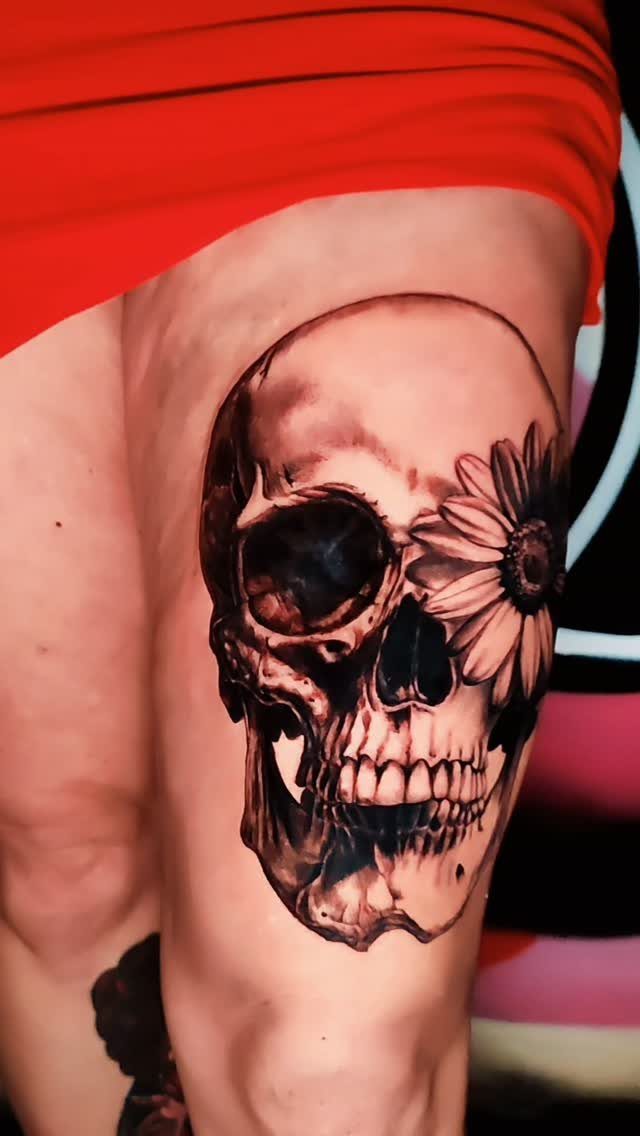
Heavy black and grey shading covers old pigment while the daisy over one eye socket gives the design a focal point that is not all darkness.
The skull’s depth comes from contrast, not color, so this keeps costs down compared to full color work.
Decide first how much of the thigh or arm you want claimed. A piece this dense draws attention; if your goal was quiet concealment, this is the opposite.
6. High-Contrast Abstract Flowing Pattern
High-Contrast Abstract Flowing Pattern ===
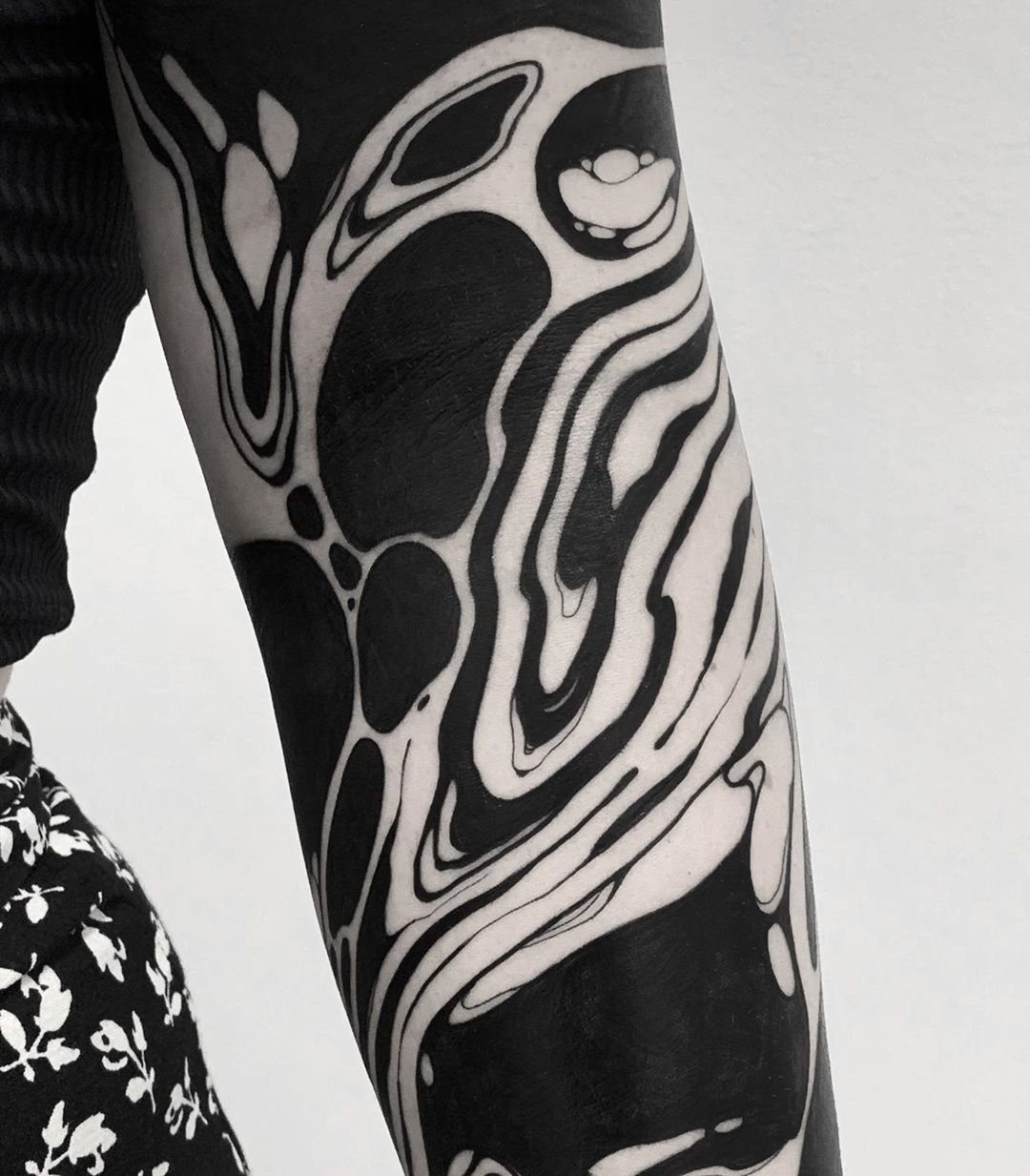
Organic black shapes with white outlines move across the arm like liquid, and the eye follows the flow instead of hunting for what hides beneath. Small circular accents break up the mass so the whole thing does not go flat.
This style lives or dies on the artist’s hand. The shapes are not symbols with agreed rules; they are pure composition, and a wrong curve turns the cover into a messy sleeve.
Look at healed photos, not just fresh work, and ask specifically about how the black holds over old ink.
7. Surgical Scar Needle and Thread
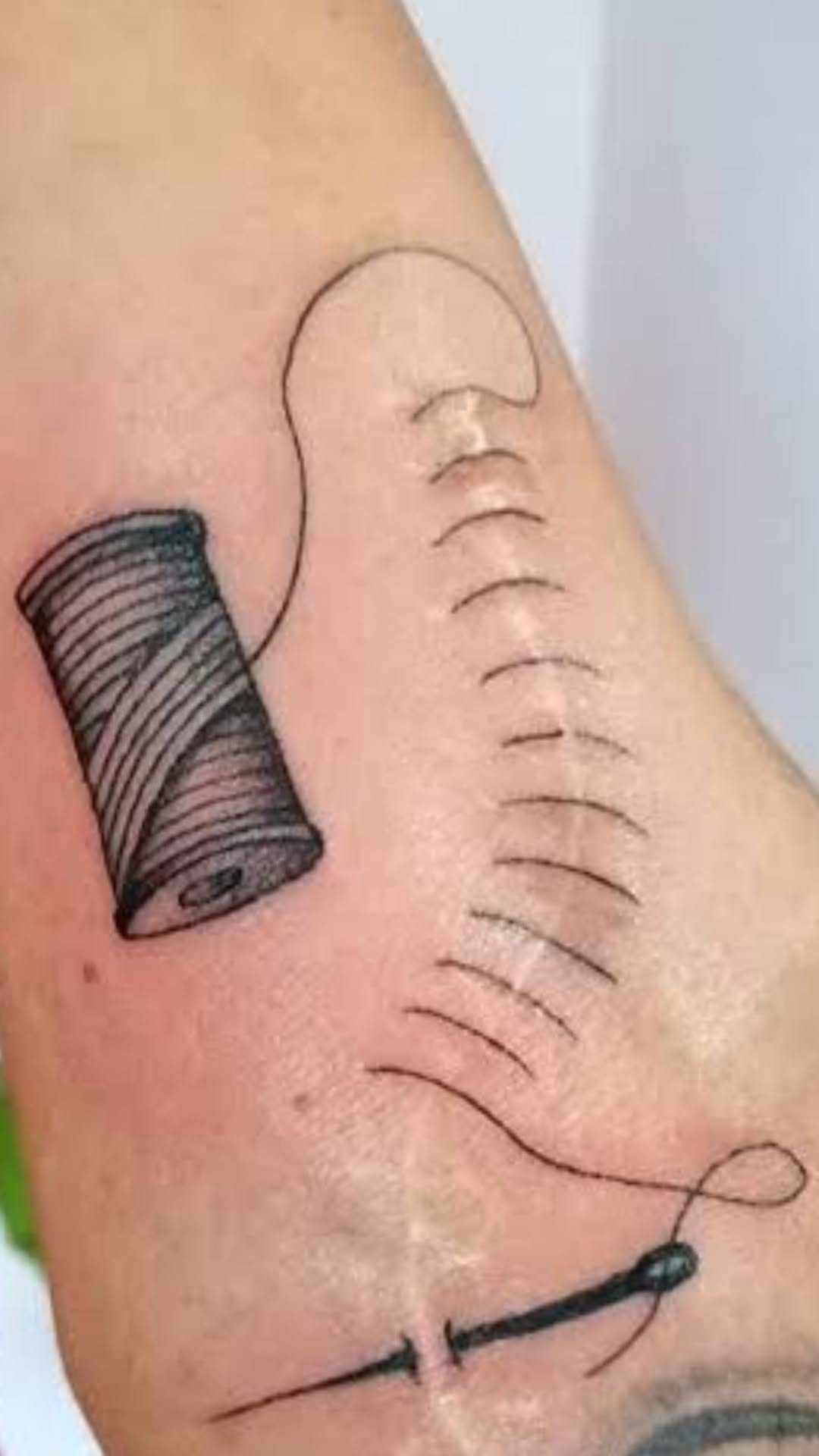
A spool of thread and a needle pulled through skin turn a surgical scar into part of the story. The stitches cross the line itself, so the eye reads the tattoo as craft rather than damage.
This works best when the scar is fully healed and flat; raised or fresh tissue will not hold ink evenly.
Ask the artist to place the needle entry points away from the thickest part of the scar line. The thread should read as continuous, so gaps in saturation break the illusion.
Decide first whether you want the scar visible as texture or gone entirely. This design keeps it present but reclaims it.
8. Geometric and Floral Combination Sleeve
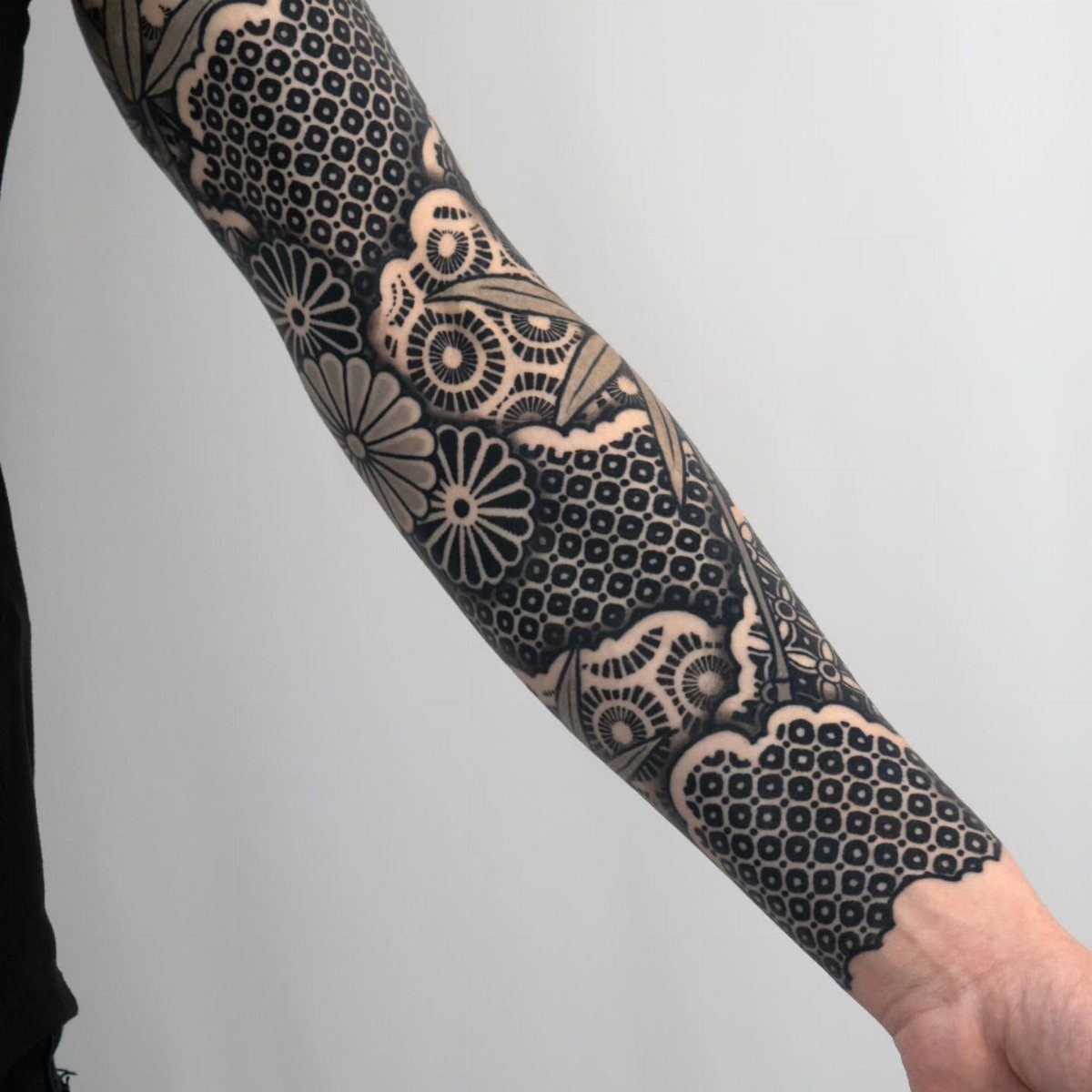
Honeycomb hexagons and chrysanthemum petals alternate across the arm in black and grey, and the density of the pattern leaves no room for old ink to surface.
Geometric repetition covers ground fast; floral breaks keep it from reading as pure armor.
The fish-scale sections need careful spacing.
Too tight and they blur together, too loose and the skin tone shows through. Ask for a stencil session to check the scale against your existing ink before the full session starts.
A sleeve this detailed runs long, so budget for multiple sittings. The grey wash heals lighter than it looks fresh; plan the final pass for tone correction after everything settles.
9. Dotwork Mandala Lotus Pattern
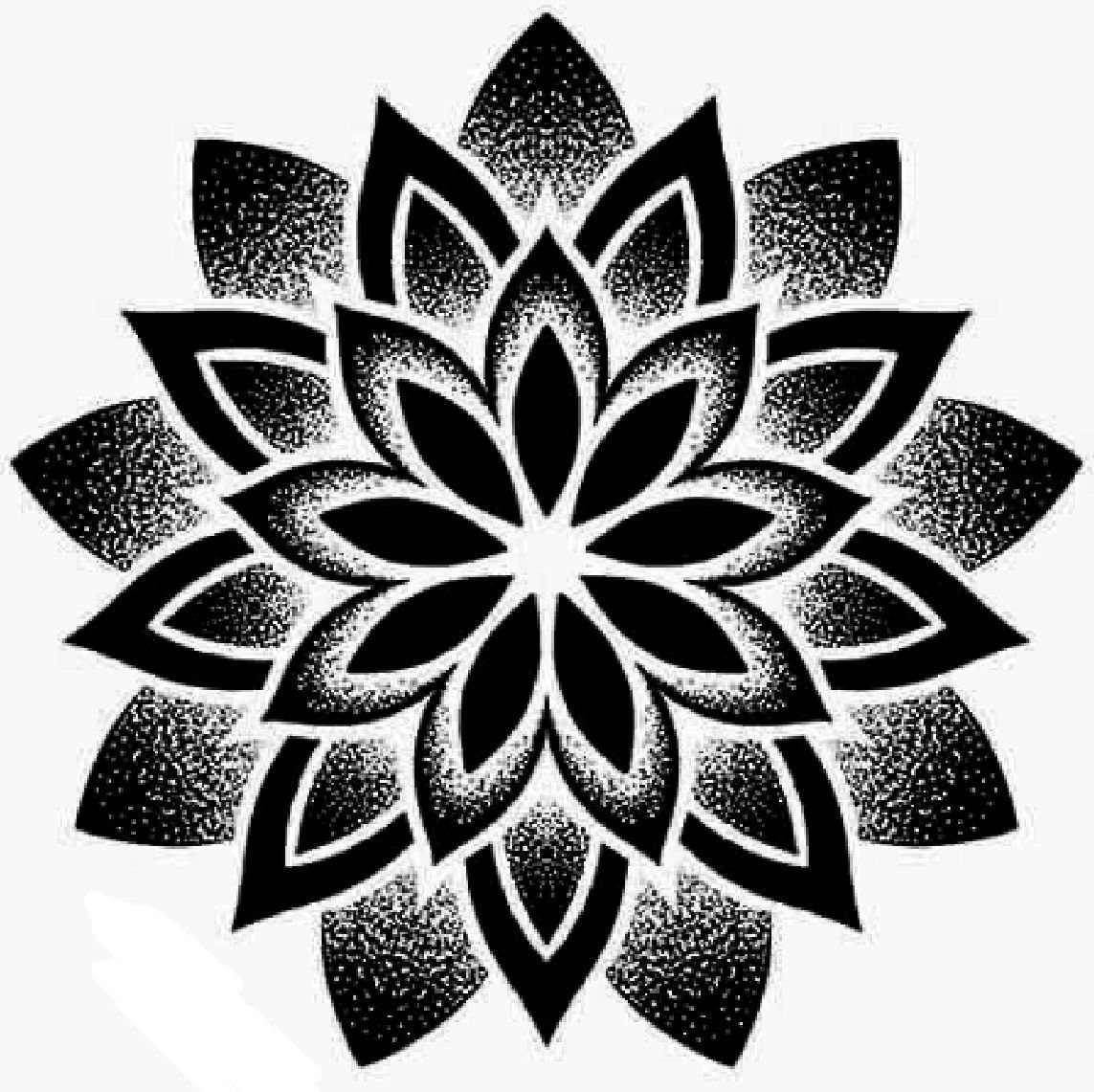
Stippled dots build the lotus petals from light to dark without solid blocks of black, and the mandala symmetry draws the eye outward from center.
The technique is slow; each dot is placed by hand, so a piece this dense takes hours.
Dotwork holds well over old ink because the pattern is already broken; a faded line underneath simply adds texture the design can absorb.
The lotus shape gives natural coverage: the outer petals spread wide enough to swallow most mistakes, while the center stays dark and saturated.
Ask to see healed stippling from your artist. Fresh dots look crisp; healed work shows whether they hold or spread into grey fog.