Tattoo styles in this list range from single-needle outlines to full sleeves that need multiple sessions, and the deciding factor is how much of a statement your daily life can already absorb.
A fine-line black ink rose behind the ear hides under hair, while a lace sleeve needs a workplace that is already tattoo-friendly, and a black band stays crisp only with sunscreen as maintenance, not an option.
1. Black Ink Line Art Roses
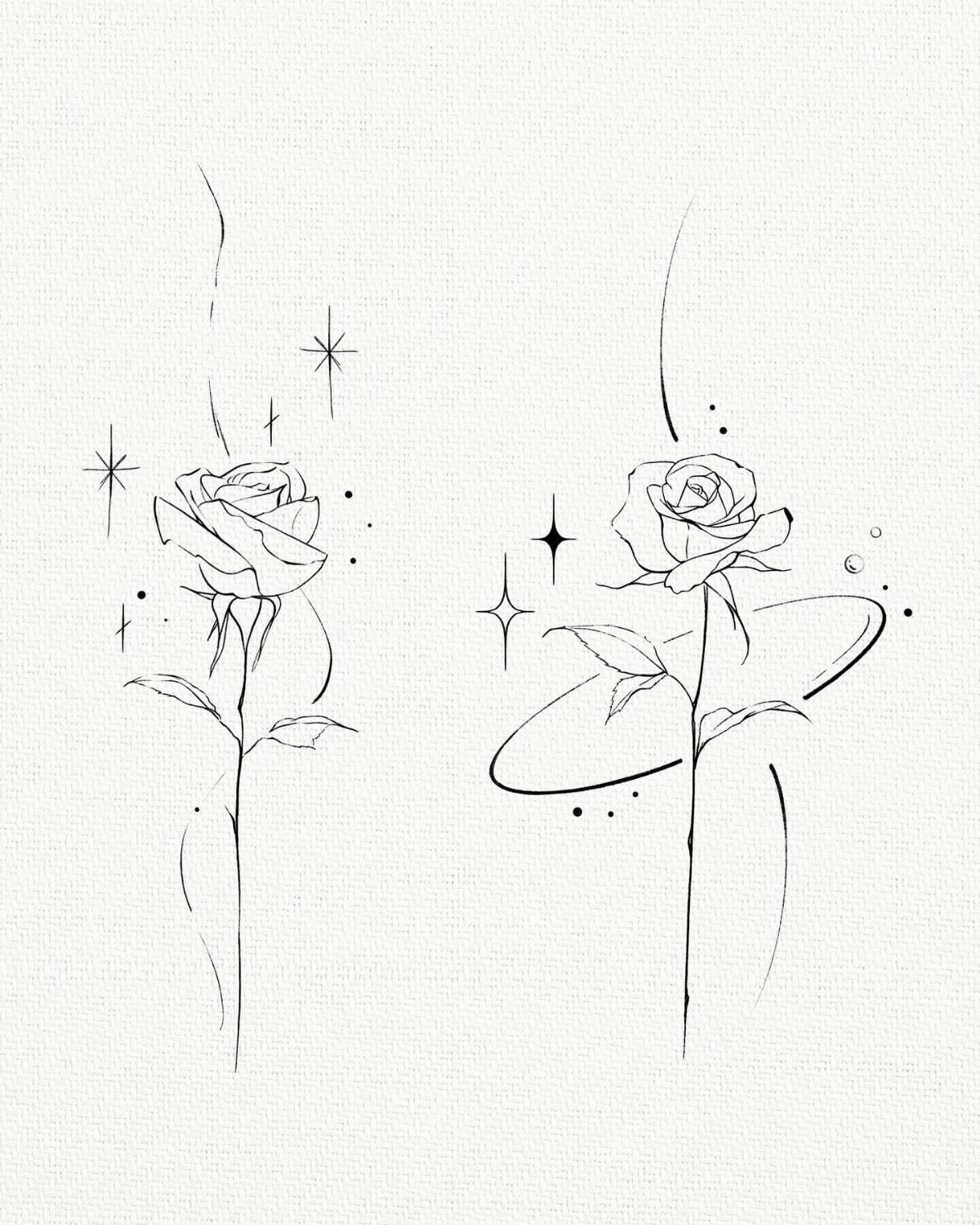
Fine line needles and single-pass stems leave the skin almost unbruised, which matters more on fingers or behind the ear than on a shoulder.
The style lives or dies on the artist’s linework: shaky hands show, and there is no shading to hide behind.
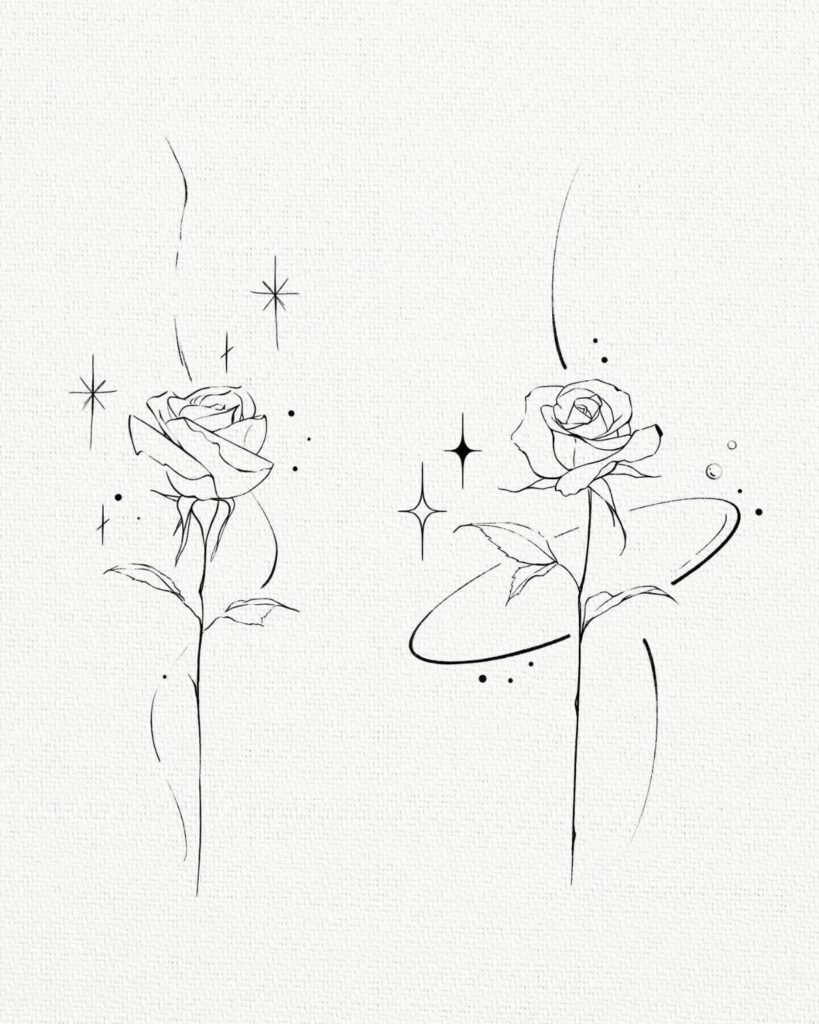
Stippled dots for texture and small wildflowers or a butterfly as secondary elements are common additions, but the core stays spare, a rose reduced to its outline and a few interior lines.
Sparkle marks and orbital curves in the drawing add movement without adding weight.
Best for a first tattoo or a matching set between friends, since the small scale keeps the time and the cost low, and the healing is usually straightforward.
2. Black and Grey Roses with Mandala
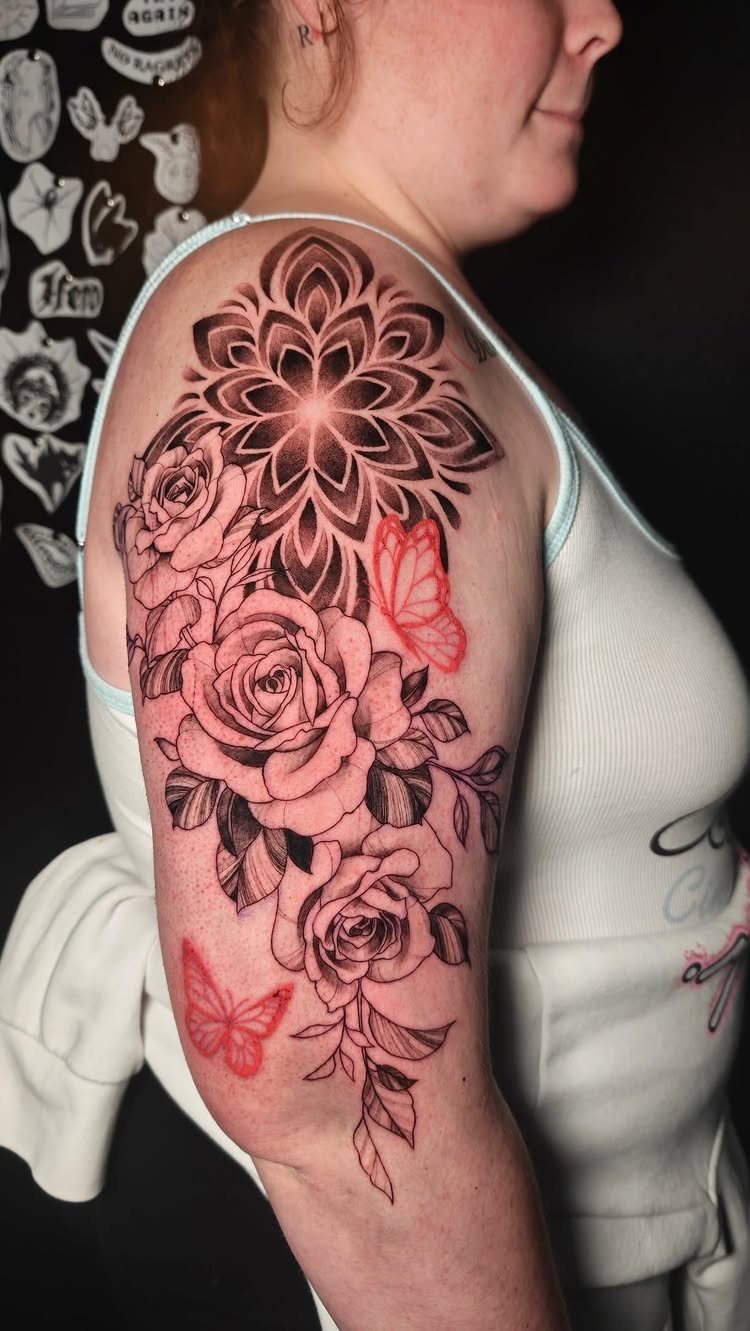
The mandala on the shoulder anchors a whole garden down the arm, with bead chains that hang like real jewelry.
Dotwork rewards a patient hand and a long chair session, and the texture it builds is something shading alone cannot achieve.
A mixed approach is possible: stippled mandala, soft grey leaves, two small red butterflies that draw the eye back to the center.
Best for someone who already knows they want a half sleeve or more; the shoulder placement lets the pattern spread without fighting the body’s folds.
3. Large Realistic Rose with Lace
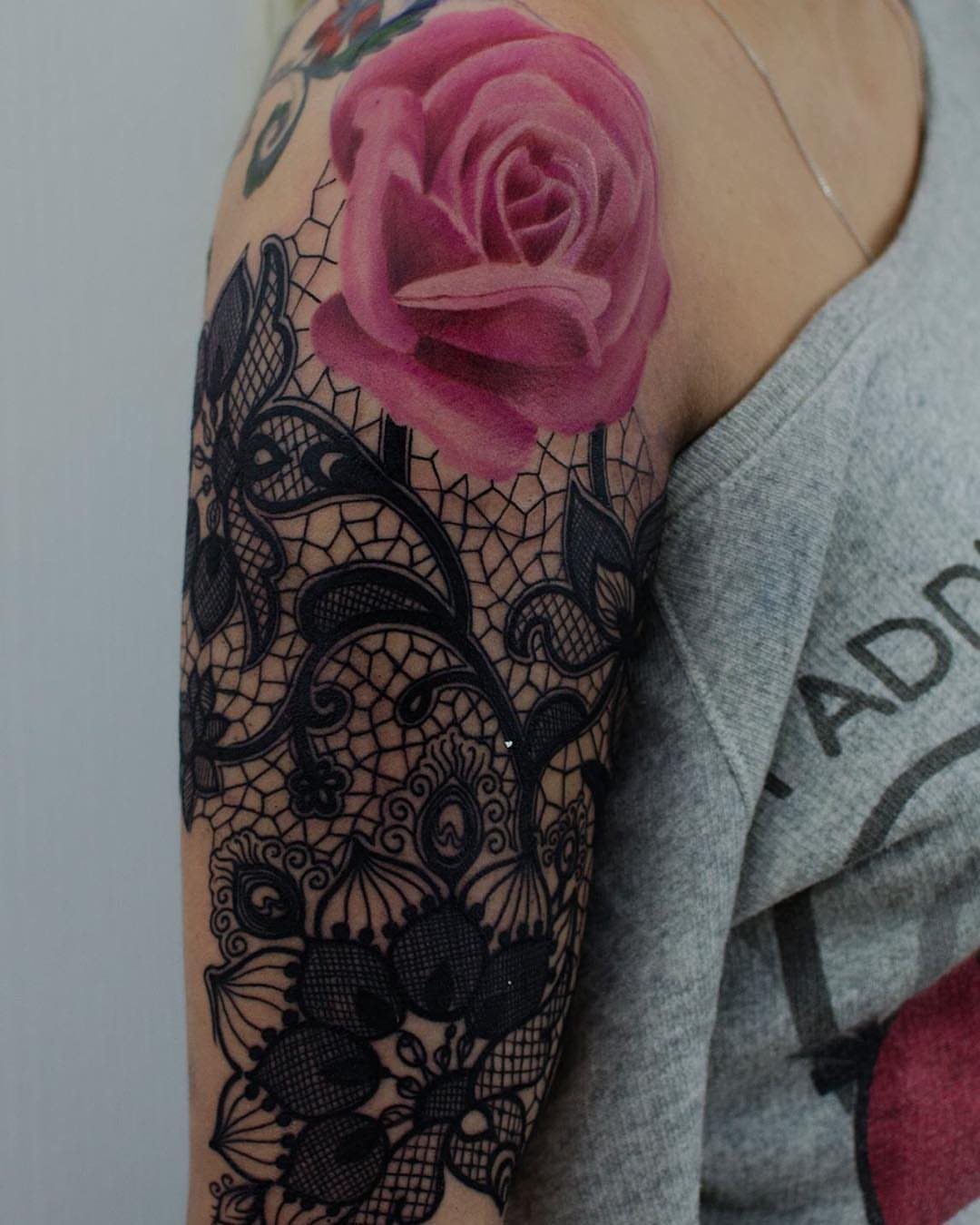
Lace tattooing borrows from the same craft as real fabric: negative space becomes the pattern, and the rose sits on top like a brooch pinned to a cuff.
Swirling filigree needs a steady hand and skin that will hold fine lines, which means checking how your artist’s healed work looks well after it has settled, not while it is still fresh.
The black and grey version reads as more traditional and ages more predictably.
This one trades mobility for coverage. The full sleeve of lace limits you to long sleeves at work unless your workplace is already tattoo-friendly, which is worth knowing before you commit to the hours in the chair.
4. Rose with Compass Design and Feathers
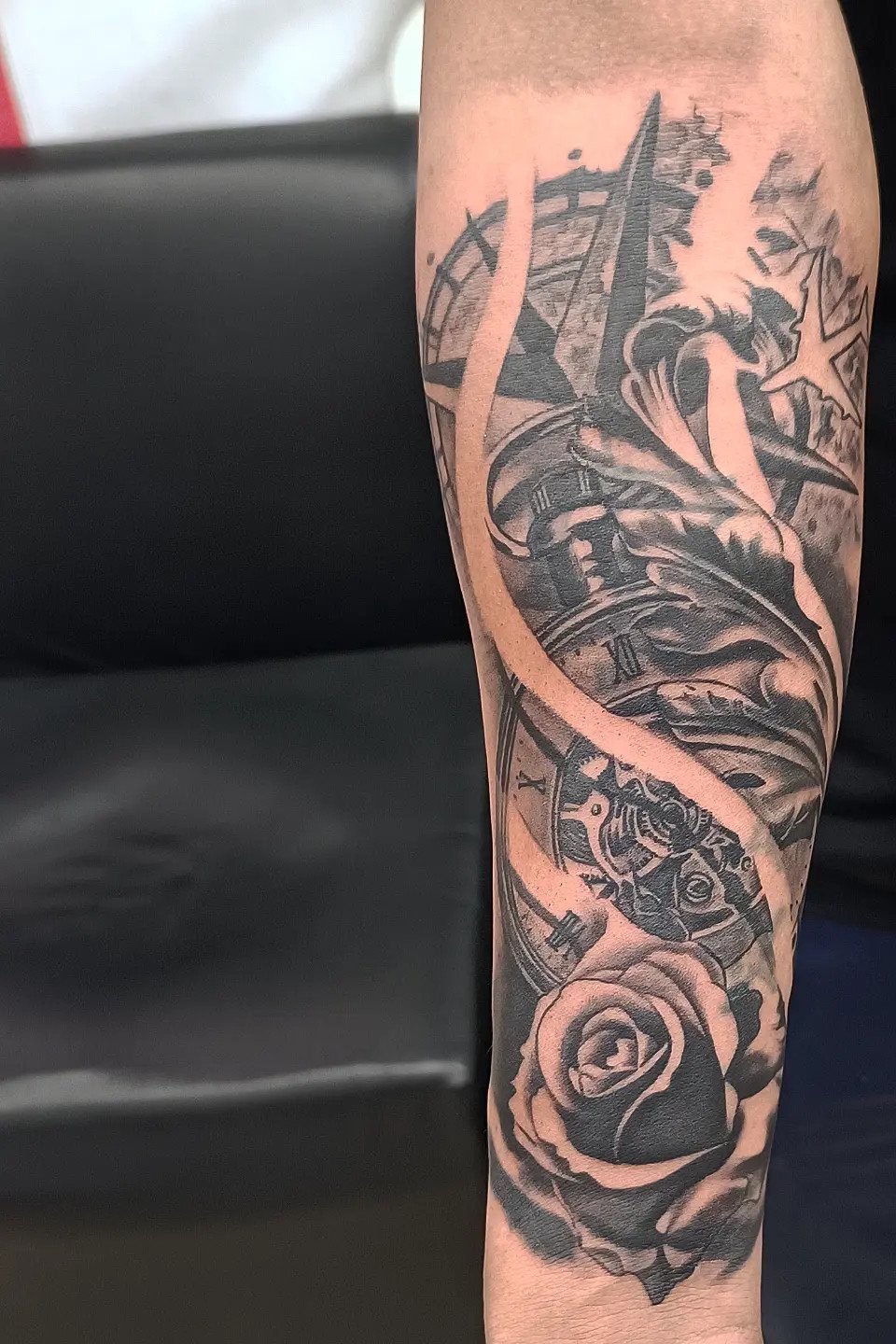
A compass rose with a real rose tucked at its base turns two separate ideas into one image that reads as travel and memory together.
Black and grey ink keeps the mechanical parts and the organic ones in the same visual language, and soft shading on the feathers stops the compass from looking too heavy.
A forearm placement needs a compass big enough that the directional markings stay crisp; too small and north, south, east, west blur together as the tattoo ages.
Without the clock element in the visible version, the design simplifies to three elements instead of four, which is easier to read at a glance and easier to expand later if you want to add.
5. Two Red Ink Blooming Roses with Stippling
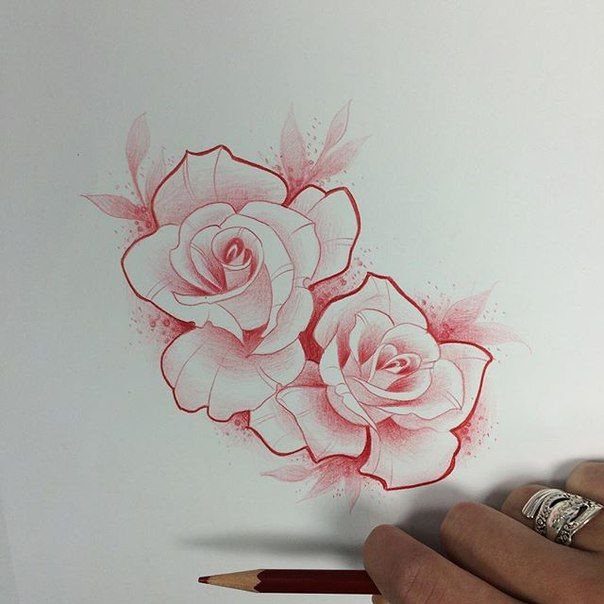
Red ink on roses is a specific choice: it reads as living and immediate where black ink reads as drawing or memory.
The stippling here is the texture, not the shading. Delicate leaves in red or black keep the focus on the 2 blooms, and the amount of negative space around them is part of what makes the design breathe.
On skin, that translates to placement where the surrounding skin is fairly clear, so the stippled dots have room to breathe.
Red ink fades faster than black, which is not a reason to avoid it but is a reason to plan for touch-ups and to choose an artist who has healed photos of red work, not just fresh.
6. Rose with Flowing Petals
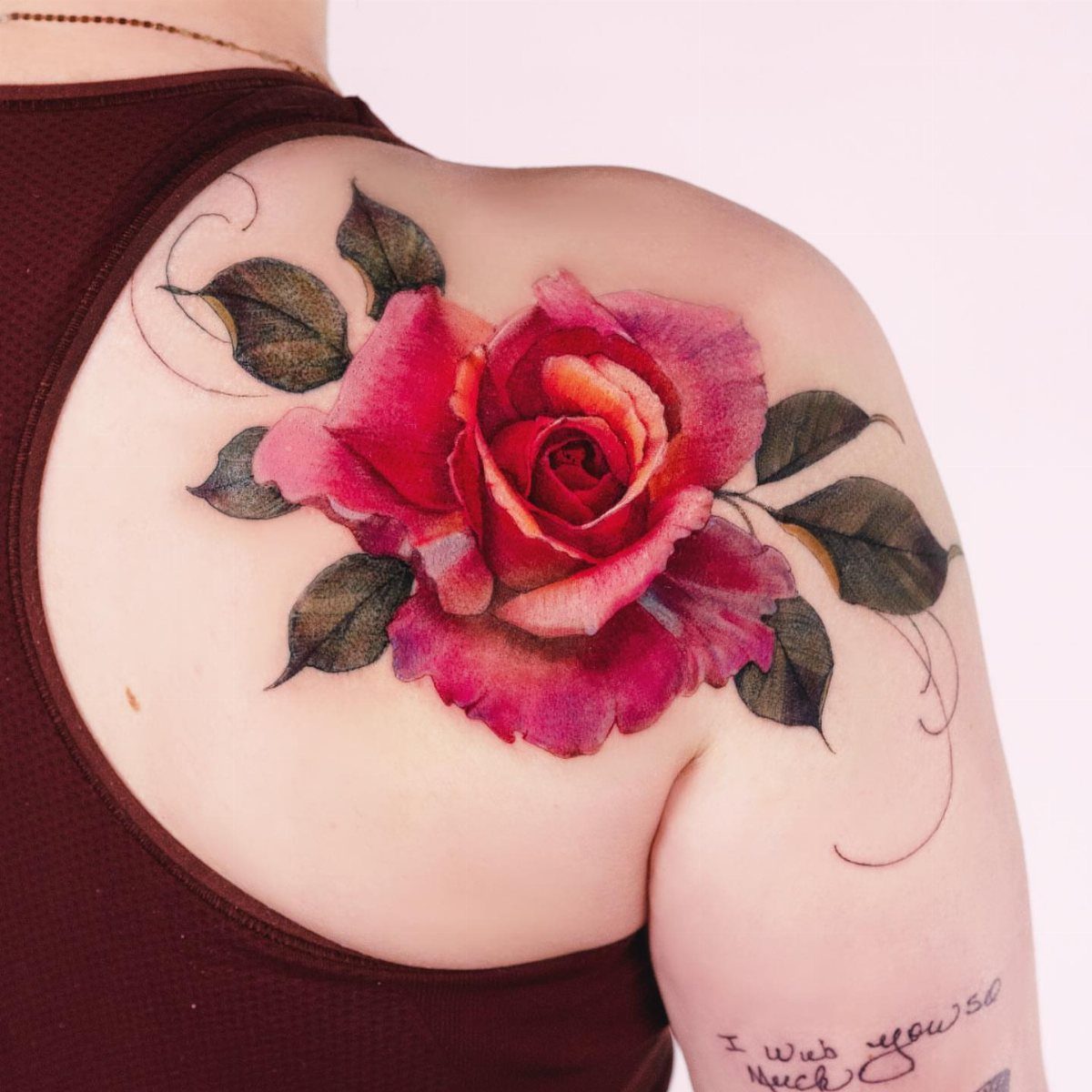
Flowing petals read as movement, which is hard in a static image and worth the effort when it works.
A black and grey take with stippled shading and fine line details carries the same sense of weightless edges. High-contrast black ink outlines the dark green leaves and sets off the red and pink petals without needing any additional color.
Fine line details are the ones that will soften first, so this design either accepts that gentle blurring as part of its look, or it needs someone willing to sit for the occasional refresh.
Stippled shading heals more evenly than solid black in some skin types, which is worth asking about if you know yours tends toward raised or patchy healing.
7. Rose with Black Band Pattern
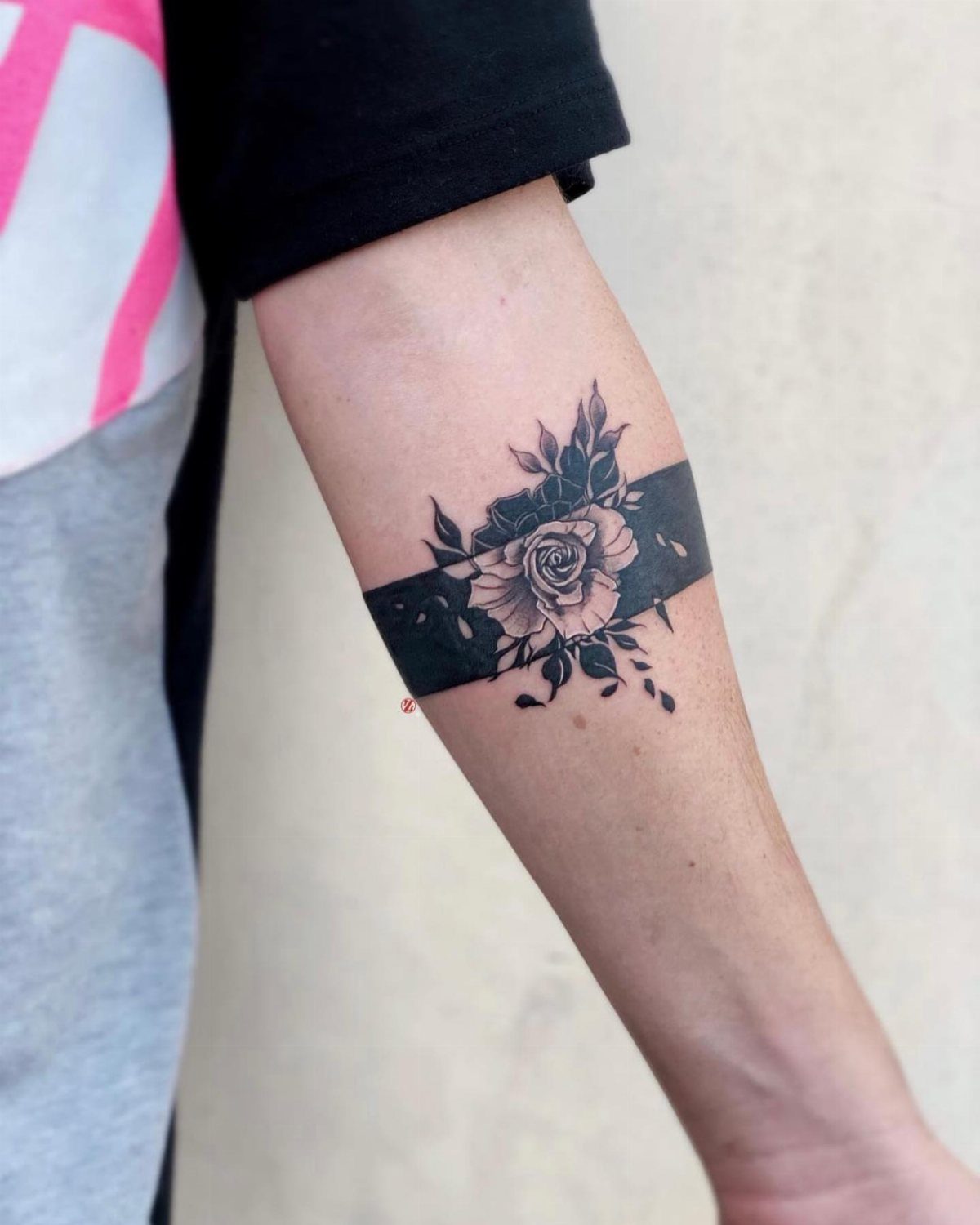
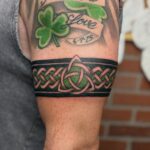
A black band behind a rose turns the armband tradition into something softer, where the flower reads as breaking through rather than sitting on top.
The solid black needs enough width that it does not blur into a murky stripe as it ages; 2 inches is the usual minimum for staying crisp.
A greywash rose with no color keeps the whole piece in one tonal family, which means less contrast but also less chance the ink will muddy where the two elements meet.
This is one of the quicker full designs to sit for if the band is filled solid, though the rose itself still takes its usual hours.
Worth planning for: the band will lighten unevenly if sun hits it, so sunscreen on that forearm is maintenance, not an option.
Symbolism of Rose Tattoos
Red roses carry the meaning most people reach for first: love, beauty, and passion. The color shifts the message.
Thorns add the part most people forget. The same stem that carries the flower also carries the defense, and a design that includes both is saying something about cost, not just gift.
Script lettering woven through the leaves, like the cursive integrated into one arrangement, lets the wearer name the specific person or moment.
Feathers at the base soften the mechanical element and keep the whole thing from reading as a map alone.
Styles of Rose Tattoos
Traditional and neo-traditional rose tattoos rely on bold outlines and limited color palettes, built to read clearly from a distance and to age with their lines intact.
Watercolor roses, by contrast, trade those outlines for color washes that mimic paint on paper; the style is newer and less predictable in how it heals, with the soft edges sometimes blurring faster than a collector expects.
Blackwork roses commit fully to solid black and negative space. The high-contrast shading in one black ink design above sits in this family, where every tone comes from how much ink is on the skin rather than from color.
Arabesque filigree and ornamental scrollwork, rendered in black ink with careful spacing, treat the rose as one element in a larger decorative system rather than the sole subject.
Placement Ideas for Rose Tattoos
The thigh offers enough flat surface for a large realistic rose to hold its detail without the distortion that comes from wrapping around a joint.
Lace patterns and swirling filigree settle well there, and the skin tends to stay more stable over time than on a forearm that sees daily sun.
The back of the arm, from shoulder to elbow, carries a different trade. The canvas is long and the muscle movement is constant, which means a rose with ornamental scrollwork will flex and shift with every reach.
Designs here need to be planned with the arm both straight and bent, or the composition breaks in one position.
The forearm band placement needs the 2 inch minimum width to stay crisp as it ages, and the rose that breaks through it reads as movement against restraint.
Frequently Asked Questions
What does a rose tattoo symbolize?
A single red rose still means love and beauty, but switch the color to black and the same shape reads as grief or farewell.
Thorns remind whoever sees it that beauty and protection grow from the same stem, so the full design carries weight as well as decoration.
A name or date worked into the leaves turns a general symbol into a private record of one person or one afternoon.
What is the best style of rose tattoo?
Old-school and neo-traditional pieces keep their bold outlines and flat color blocks so the shape still reads from across a room after years of sun.
Watercolor skips the outline and lets color run like wet paint, which looks alive at first but can heal into softer edges than you planned.
Blackwork builds every shadow from how thick the black is laid, with no color at all, only the contrast between inked skin and bare skin.
What is the prettiest flower to get tattooed?
Roses stay the first flower most people picture for a tattoo, and decades of practice have taught artists how to keep the petals recognizable even at small sizes.
The range of styles is part of why: a rose holds its identity whether drawn in a single fine line or built across a full sleeve of lace and filigree.
That flexibility means an artist can match the flower to the person’s skin and the amount of time they want to sit.
What is the meaning behind a flower pattern tattoo?
A pattern treats the rose as one element in a larger decorative system rather than the sole subject.
Arabesque filigree and ornamental scrollwork use the same approach, where the flower’s meaning stays present but shares space with the craft of the design itself.