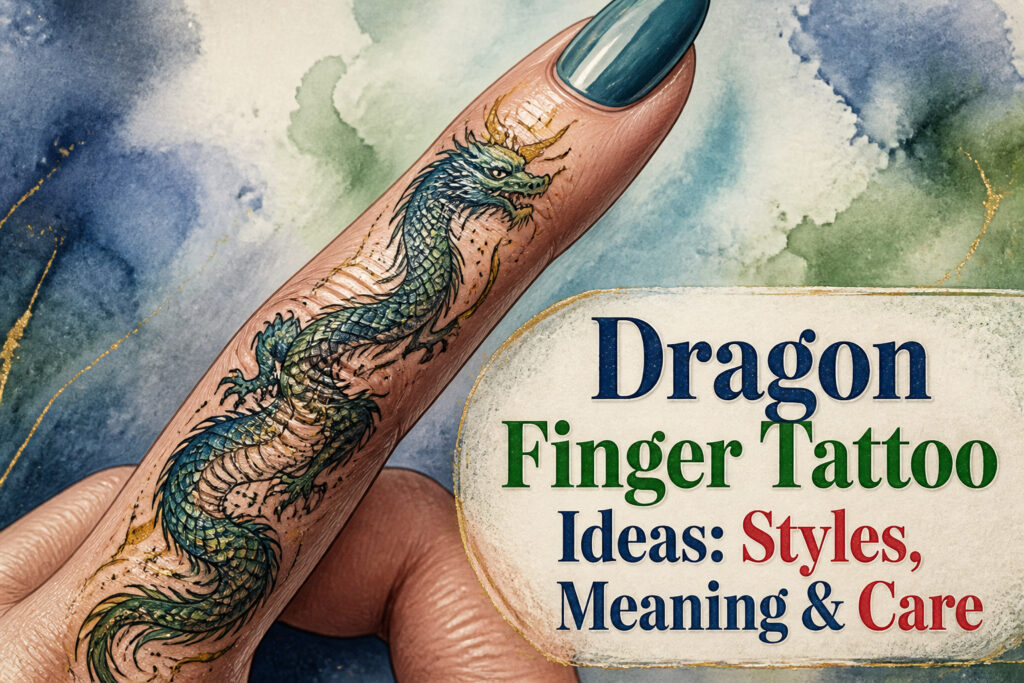
A dragon finger tattoo can read as fierce or wise across a room, or blur into a dark smudge by month three, and the difference is almost never the size. It is whether the artist knew to strip the creature down to line weight and four millimeters of brow ridge instead of trying to keep the smoke, the secondary limbs, the ornamental frame. That compression, not simplification, is what makes the small format work.
1. Small Dragon Tattoos
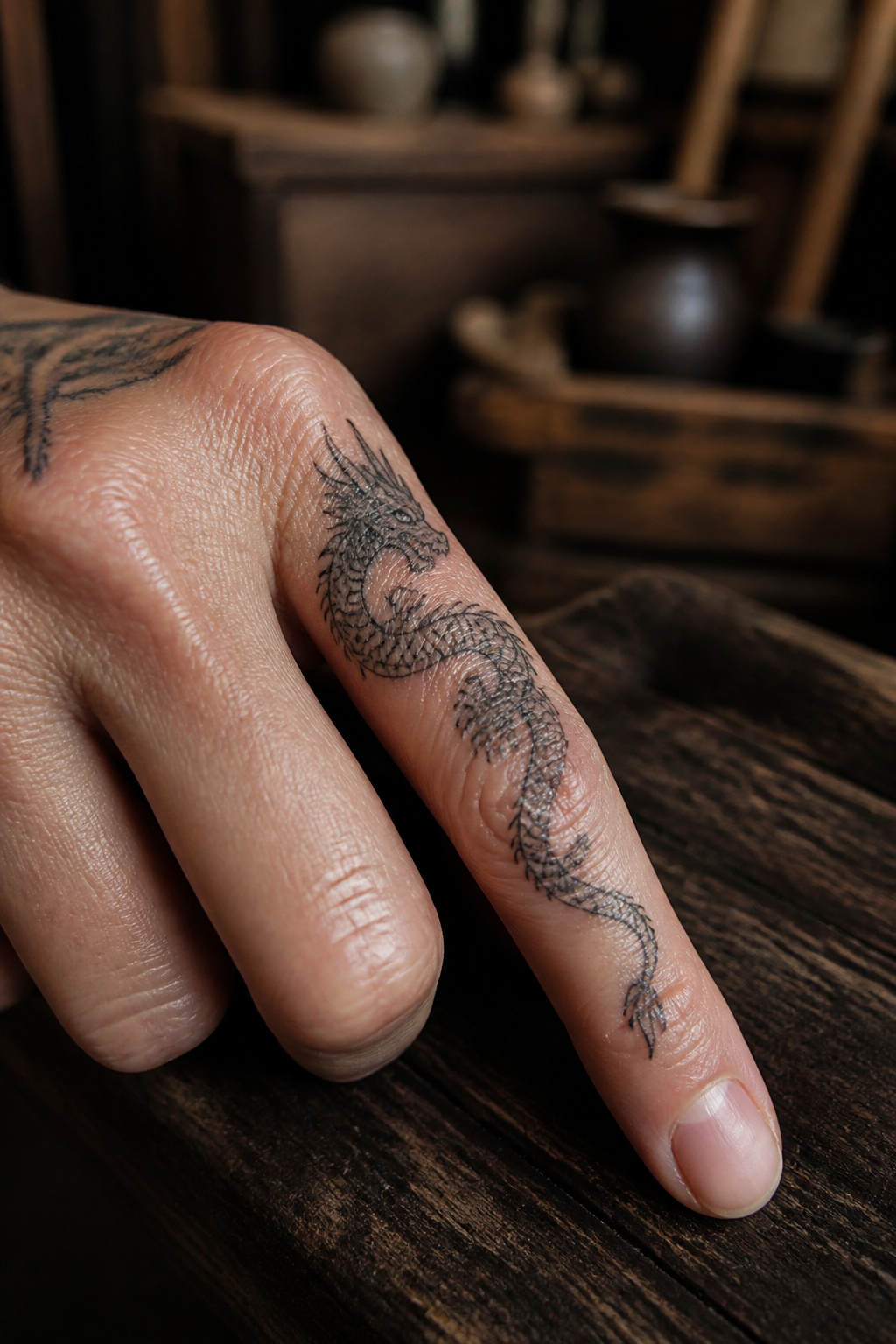
A small dragon finger tattoo carries the same visual weight as a sleeve piece when the artist knows how to use negative space. The tight curve between knuckles or the flat plane along a finger demands compression, not simplification, and that is where the work gets interesting.
Scaling down forces hard choices. The eye still needs to read scales, claws, the set of the jaw, the flare of nostril. What drops out is the surrounding smoke, the secondary limbs, the ornamental frame. The dragon itself stays intact, just stripped to what makes it recognizable at two inches. I have watched this go wrong when an artist tries to keep too much, and the whole thing blurs into a dark smear by month three.
The best small work relies on line weight variation more than shading. A single needle can lay down a scale ridge that catches light, while a slightly heavier pass defines the claw’s hook. The face is the make-or-break point: the eye slant and brow ridge give the creature its temper, and those two curves take up maybe four millimeters. Get them right, the dragon reads as fierce or wise or watchful. Flatten them, and you have a generic lizard.
Fingers move constantly, skin cell turnover is faster there, and the tattoo will soften sooner than work on a shoulder or thigh. That reality should shape the design from the first sketch rather than surprise you at the touch-up.

Gothic Dragon Thorn Band Design: This semi-permanent temporary tattoos pack holds two sheets with multiple flying dragon silhouettes and long barbed thorn armband strips with sharp angular linework. Dragons symbolize power, freedom and untamed spirit; barbed thorn bands stand for personal boundaries, resilience and bold self-expression.Ideal for fantasy gothic lovers and anyone seeking striking edgy body decor.

🐳[8 Sheets Black Dragon Tattoos in One Package!] - Original Brand of TASROI 3D imperial loong Tribal Dragon Temporary Tattoos For Women Men and Adults. Tattoos Temporary Contains 8 Large Sheets Water Transfer Animals Dragon Floral Flower Rose Moon Serpent Totem Armband Etc.

🐳[200+ PCS 20 Sheets Small Tattoos in One Package!] - Original Brand of TASROI 3D Small Cute Tiny Bulk Hand Finger Temporary Tattoos For Women Men Adults Hand Finger Tattoos Temporary Contains 20 Sheets Water Transfer Cute Small Geometric Arrow Crescent Moon Sun Leaf Dots Chians Jewelry Pendant Tattoos For Finger Hands Ear Neck Tattoo Sticker.
2. Finger Tattoos with Dragon Designs
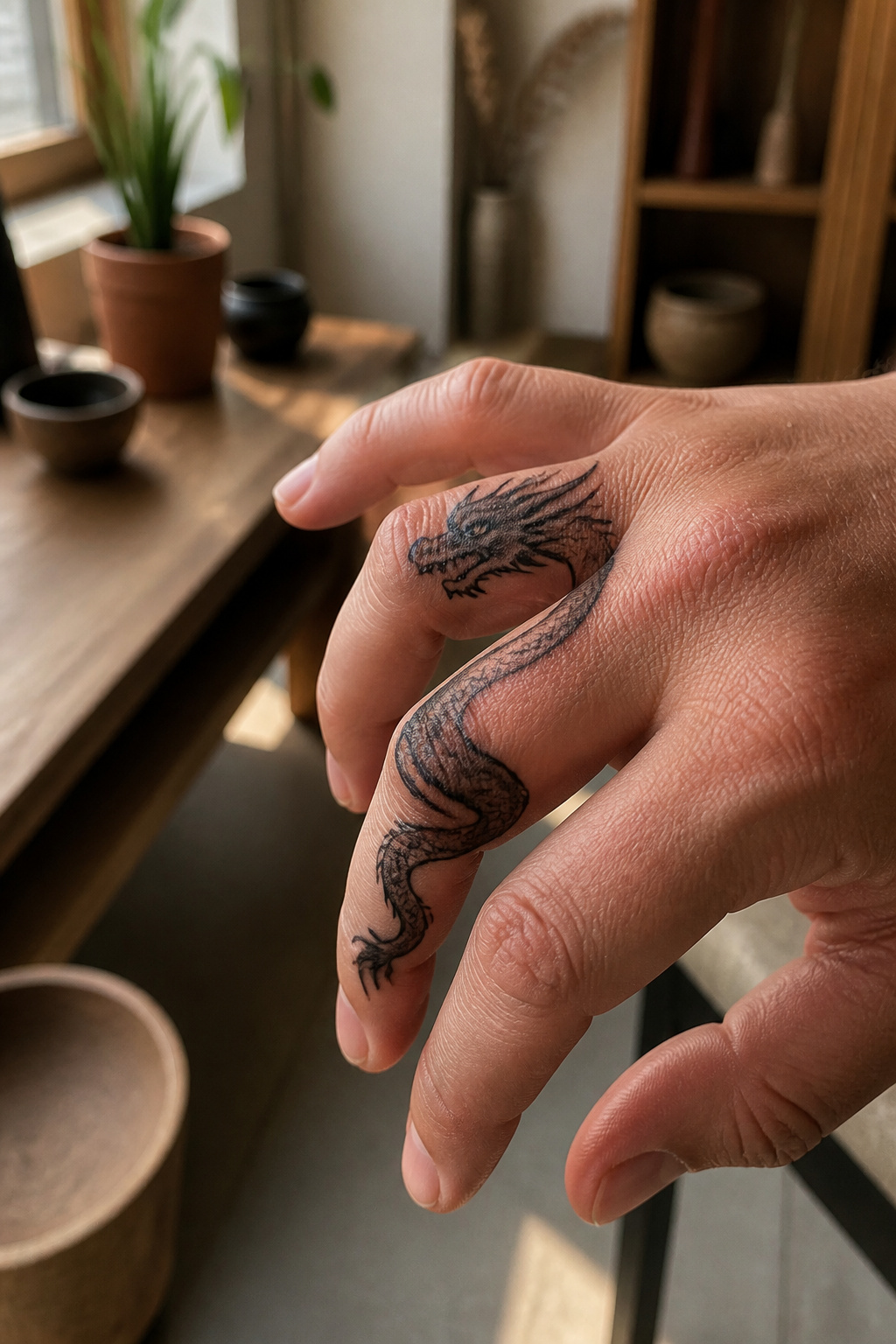
A dragon finger tattoo never sits still. The hand moves constantly, and that motion brings the design to life in a way a back or thigh piece never manages. The dragon coils around the digit or stretches flat across the knuckles, and every gesture changes what the viewer sees.
That visibility cuts both ways. The fingers are almost impossible to hide, which makes the statement bold but also commits the wearer fully. The skin here regenerates faster and takes more abuse than the torso or upper arm, so ink fades quicker and lines blur sooner. Touch-ups become part of the long-term cost in a way they aren’t for a bicep or shoulder piece.
The wrap of the design matters enormously on such a narrow canvas. A dragon that spirals the finger reads as continuous motion; one that sits flat across the top can look stamped on if the proportions are even slightly off. The artist needs to account for how the image distorts when the finger bends, not just how it looks in a stencil on a flat surface.

Dragonhawk Tattoo Needles: High-quality tattoo needles, manufactured under the trusted Dragonhawk brand, are perfect for all-purpose work. With a polished, long taper design, these needles ensure reliable performance and excellent control.

【PRECISION ROUND LINER PERFORMANCE】Designed for artists who focus on crisp outlines, lettering, fine details, and clean linework. The Round Liner configuration helps create controlled, consistent lines while maintaining excellent visibility during tattooing. Ideal for script work, geometric designs, and detailed illustrations where precision matters.

Package: 50pcs mixed tattoo cartridge needles, includes 10pcs each of 1203RL, 1205RL, 1207RL, 1209RL, 1211RL.
3. Dragon Tattoos with Symbolic Meanings
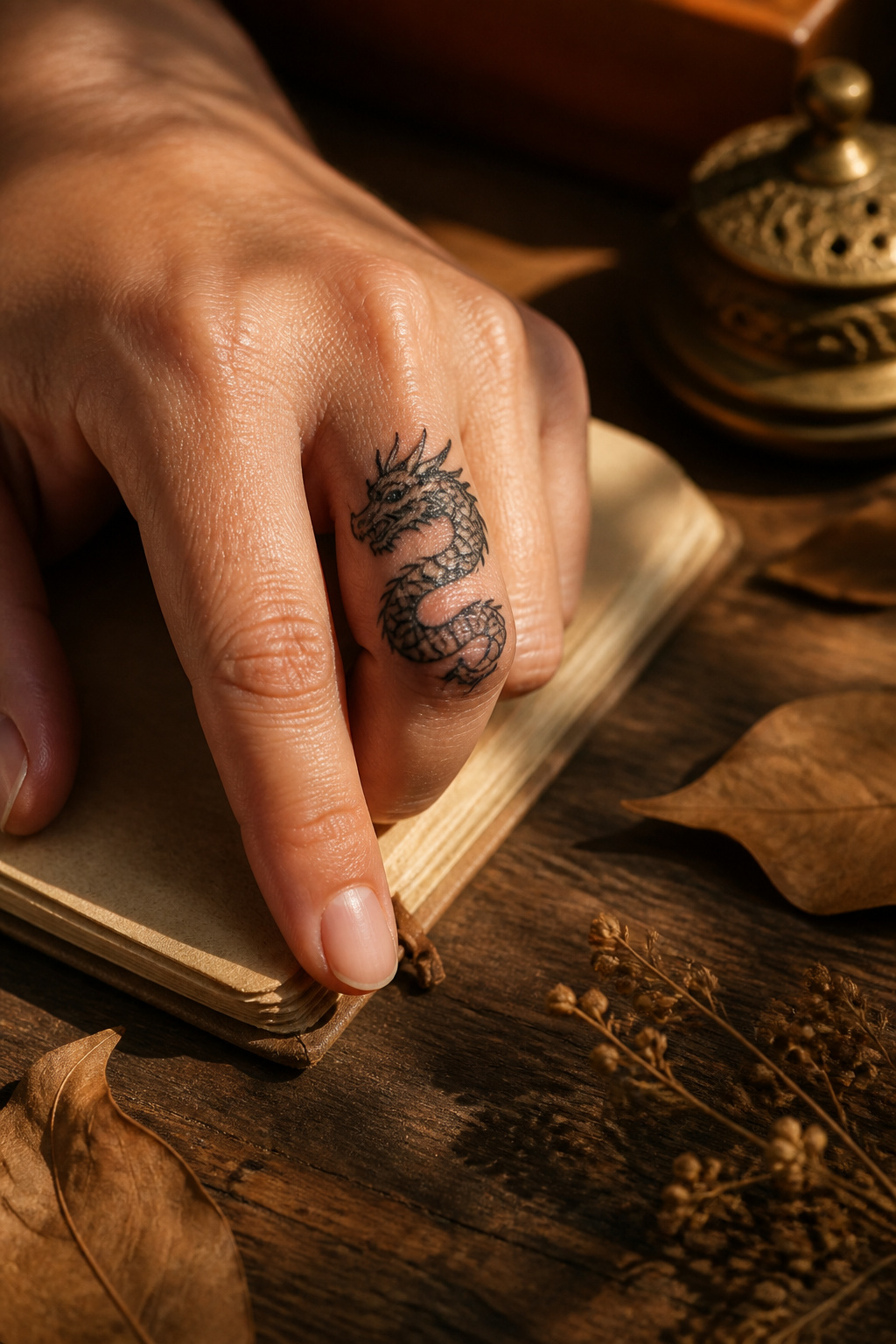
A dragon carries weight before the needle ever touches skin. In Eastern traditions, the creature moves through clouds and water as a benevolent force of wisdom and rainfall, not a villain to slay. Chinese and Japanese lore treat dragons as guardians of rivers and bringers of abundance, which changes what it means to wear one on your hand. Western medieval stories took the opposite path: dragons hoarded gold, demanded conquest, and symbolized the brute force a knight had to overcome. Either reading can anchor a finger tattoo, but placement matters for how the meaning lands. A small dragon curled around a knuckle reads as personal armor to the person who chose it, regardless of which hemisphere’s stories they know. The cultural default is a starting point, not a rule. What convinced me, reading through the backstories people attach to these pieces, is that the strongest dragon finger tattoos come from mixing the two traditions or ignoring them entirely. Someone might pick the Eastern water-dragon for a grandfather who fished, or the Western hoard-guardian as a warning about guarding their own boundaries. The symbol only works when it outgrows the dictionary definition.
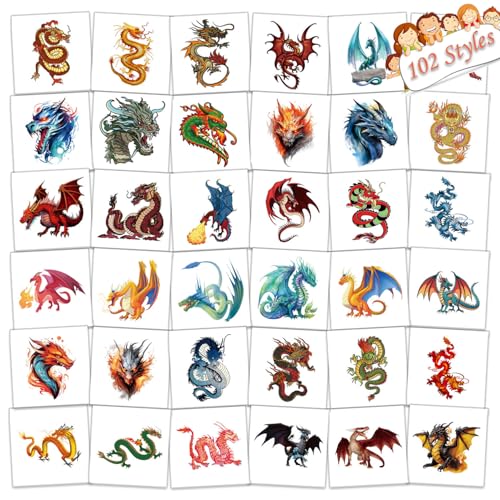
【 UNIQUELY DESIGNED DRAGON TATTOOS 】:You will get 102 Styles uniquely designed dragon temporary tattoos for kids, measuring 1.6 inches long and 1.6 inches wide.Put your child in a great mood with these dragon tattoos for kids! erfect for playdates, birthday parties, and family gatherings.

1 BIG SHEET: Cut up to 5 patches any shape.

8 sheets body tattoo sticker as picture shows. Each sheets size about:21 x 12 cm / 8.27 x 4.72 inch
4. Popular Styles of Dragon Tattoos
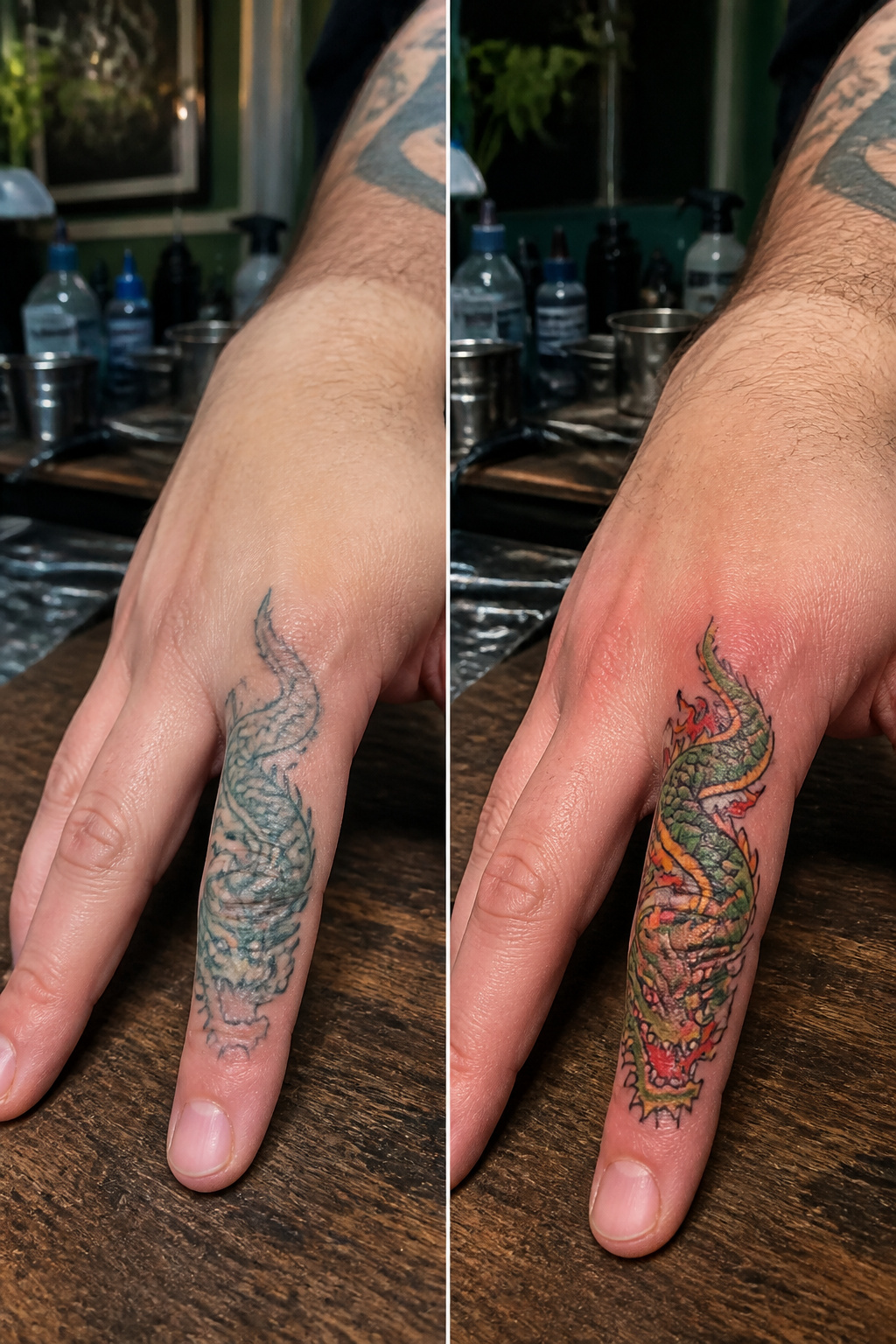
Three style families dominate dragon finger tattoos, and the gap between them is wider than most people expect until they sit down with a portfolio.
Minimalist work runs on restraint. A single unbroken line might form the full body, or sparse blackwork places a claw, an eye, and a tail tip with nothing connecting them but the skin between. The finger’s narrow canvas rewards this economy; every millimeter speaks, so emptiness becomes part of the design.
Traditional pieces demand the opposite commitment. Saturated color, heavy outlines, and enough density that the dragon reads from across a room. Japanese influence shows in the serpentine body and specific scale patterns, while Americana leans into bold greens and reds with a blockier silhouette. Either way, the finger fights back: color here fades fast, and touch-ups are not optional.
Abstract approaches split the difference through trickery. Geometric fragmentation breaks the dragon into triangles or polygons that suggest movement without illustrating it. Watercolor washes let pigment bleed past the outline like smoke. Negative-space work carves the dragon out of black fill, so the skin itself becomes the scales. The technique matters more than the likeness, which divides clients cleanly: some find it brilliant, others unfinished.
Each family asks for a different pain tolerance and a different budget for maintenance. Choose based on which problem you would rather own: the minimalist’s risk of looking like a stray mark, the traditional’s commitment to chair time, or the abstract’s gamble on whether the artist’s vision matches yours.

Premium Quality 1.5mm Silicone Material – Crafted from premium 1.5mm thick silicone, this tattoo skin offers a true-to-life feel with excellent durability and a smooth surface for effortless needle movement during practice.

Package: Paint stencils for painting on wood include 10 pieces 6 x 6 inches stencils and 10 pieces 6 x 5 inches stencils

The original face painting stencils - Made in the USA
5. Cultural Significance of Dragon Tattoos

Dragon imagery carries weight in three separate traditions, and contemporary tattooing treats them as a single palette. East Asian lineages cast the dragon as a water-associated force, benevolent and imperial. Celtic work coils the creature into knotwork, earthbound and protective. Slavic folklore keeps its dragons closer to weather and threshold guardians, neither fully evil nor tame. A dragon finger tattoo that borrows scales from one tradition and posture from another can read as inventive or careless, depending on whether the wearer knows which parts came from where.
Some artists train in a specific lineage for years before touching mythic imagery. Others build hybrid creatures by instinct. The difference shows in the details: claw count, horn curvature, whether the body moves like a serpent or a lizard. Flattening these into generic "tribal" or "oriental" labels strips the symbol down to decoration. If the meaning matters to you, ask the artist which tradition they studied and how they handle mixed references. The honest ones will name their teachers and their limits.

COMPLETE AFTERCARE KIT FOR NEW & EXISTING TATTOOS: This Tattoo Aftercare Kit brings together 3 essentials, Antimicrobial Soap, Tattoo Balm, and Tattoo Lotion, to help cleanse, protect, and moisturize fresh ink. Useful after tattoo sessions and throughout healing, it supports vibrant color and skin comfort for dedicated ink enthusiasts and artists

Nourishes Healing Ink for Vibrant Color: Tattoo Goo supports healing tattoos & maintains vibrancy on healed ink with a lightweight formula rich in olive oil, lavender oil, cocoa butter, and beeswax. It absorbs quickly, moisturizes deeply, and helps reduce dryness, itch and tightness so your tattoo looks and feels comfortable through everyday routines

Nourishes Healing Ink for Vibrant Color: Tattoo Goo supports healing tattoos & maintains vibrancy on healed ink with a lightweight formula rich in olive oil, lavender oil, cocoa butter, and beeswax. It absorbs quickly, moisturizes deeply, and helps reduce dryness, itch and tightness so your tattoo looks and feels comfortable through everyday routines
Historical Context
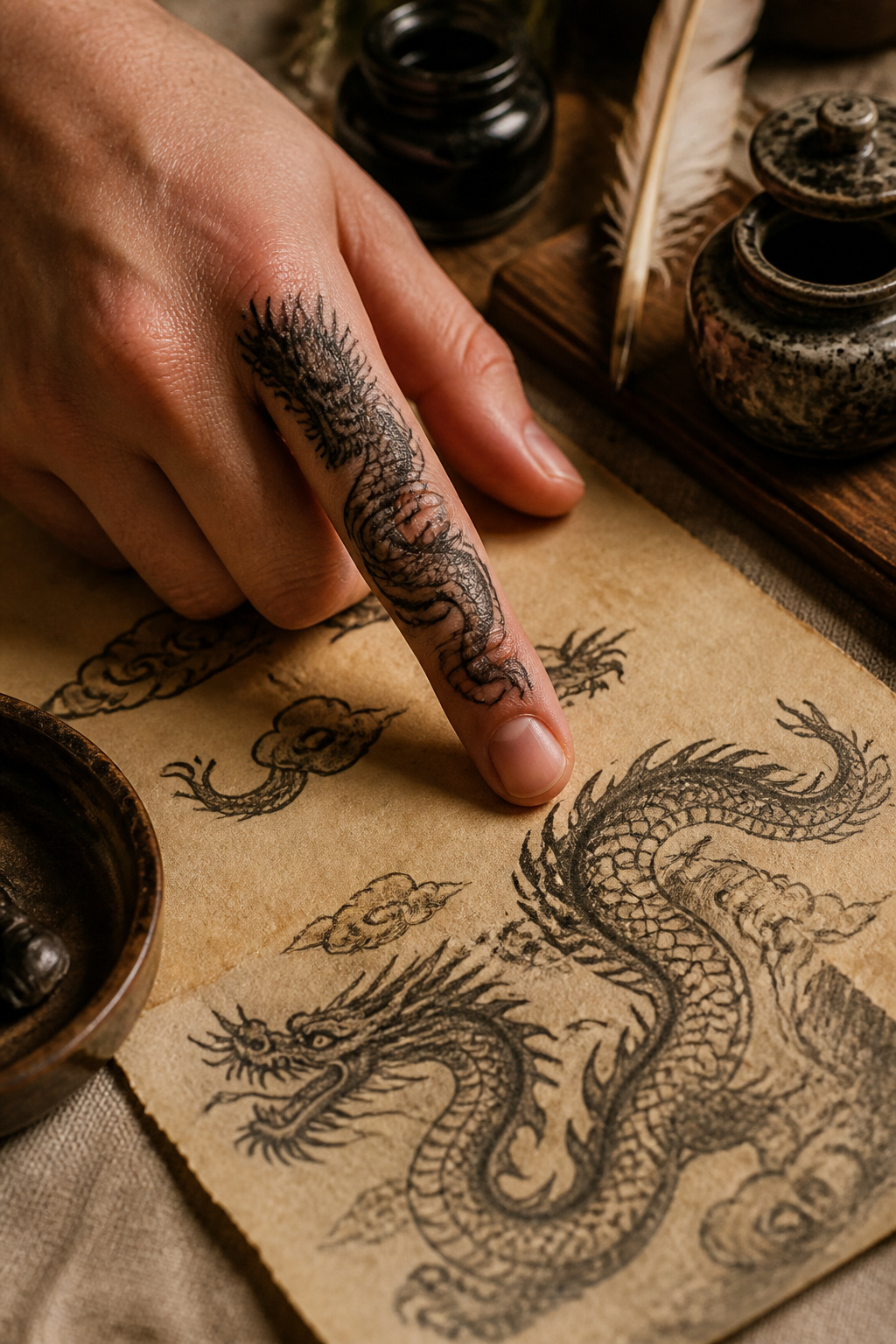
Dragons entered skin art through three doors that still shape what shows up on fingers today. In imperial China, the five-clawed dragon marked rank and was painted on the bodies of rain-makers who called storms down to dry fields; that same creature now coils around index knuckles as a symbol of personal power rather than imperial permission. Japanese tattooing owes its flowing lines to Edo-period woodblock prints, where dragons twisted through clouds with exactly the serpentine motion that makes a small finger piece read as movement instead of static emblem. European heraldic dragons carried a different charge entirely: stiff-legged, winged, guarding treasure or faith, and that visual DNA still turns up in Western tattoo shops where clients want something medieval and armored rather than fluid. The gap between the Eastern swimming body and the European planted stance is worth noticing before you commit to a design, because a finger’s narrow canvas forces you to choose which lineage you’re drawing from; there is not room to mix them gracefully.
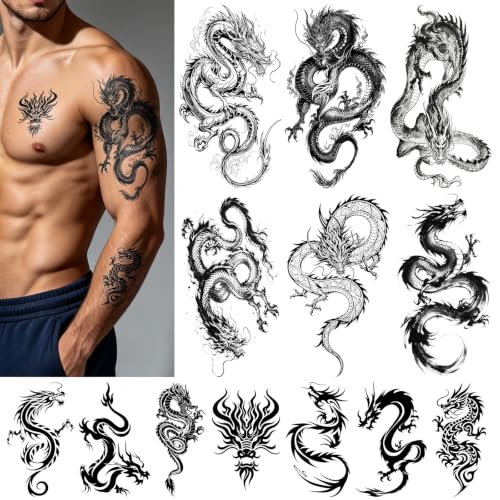
🐉 Mutiple Realistic Dragon Tattoo Designs | 23 unique dragon temporary tattoo sheets featuring realistic black dragon, oriental dragon, and traditional totem designs. Perfect for creating a bold and mysterious tattoo style without the commitment of permanent ink.

🔥 SPARKLY DRAGON TATTOOS FOR EPIC ADVENTURES : This set includes 108 glitter temporary tattoos featuring powerful dragons, fire-breathing beasts, dragon eggs, shields, swords, castles, and fantasy-inspired designs. Eye-catching glitter details make every dragon shine, adding an exciting and legendary touch that boys will love.

🎡【Package Includes:】 76 Sheets Black Dragon Temporary Tattoos For Women Men Adults Including 12 Sheets Half Arm Sleeve Tattoo Stickers and 64 Sheets Tiny Cute Small Fake Tattoos For Kids Boys Girls, 3D Gothic Tatoos Universe Planets Star Moon Spider Web Cross Birds Scorpion Bat Ghost Elephant Flower Floral Sailing Ship Pirate Compass Anchor Butterfly Skull Skeleton Maori Totem Wolf Tiger Lion Dragon Eagle Owl Bear Crown Mountain Sea Wave Snake Tree infinity Letter Words Quotes Abstract ECG Feather Gangster Minimalism Coyote Feather Astronaut Whale Lotus Dreamcatcher.
Tattoo Care Tips
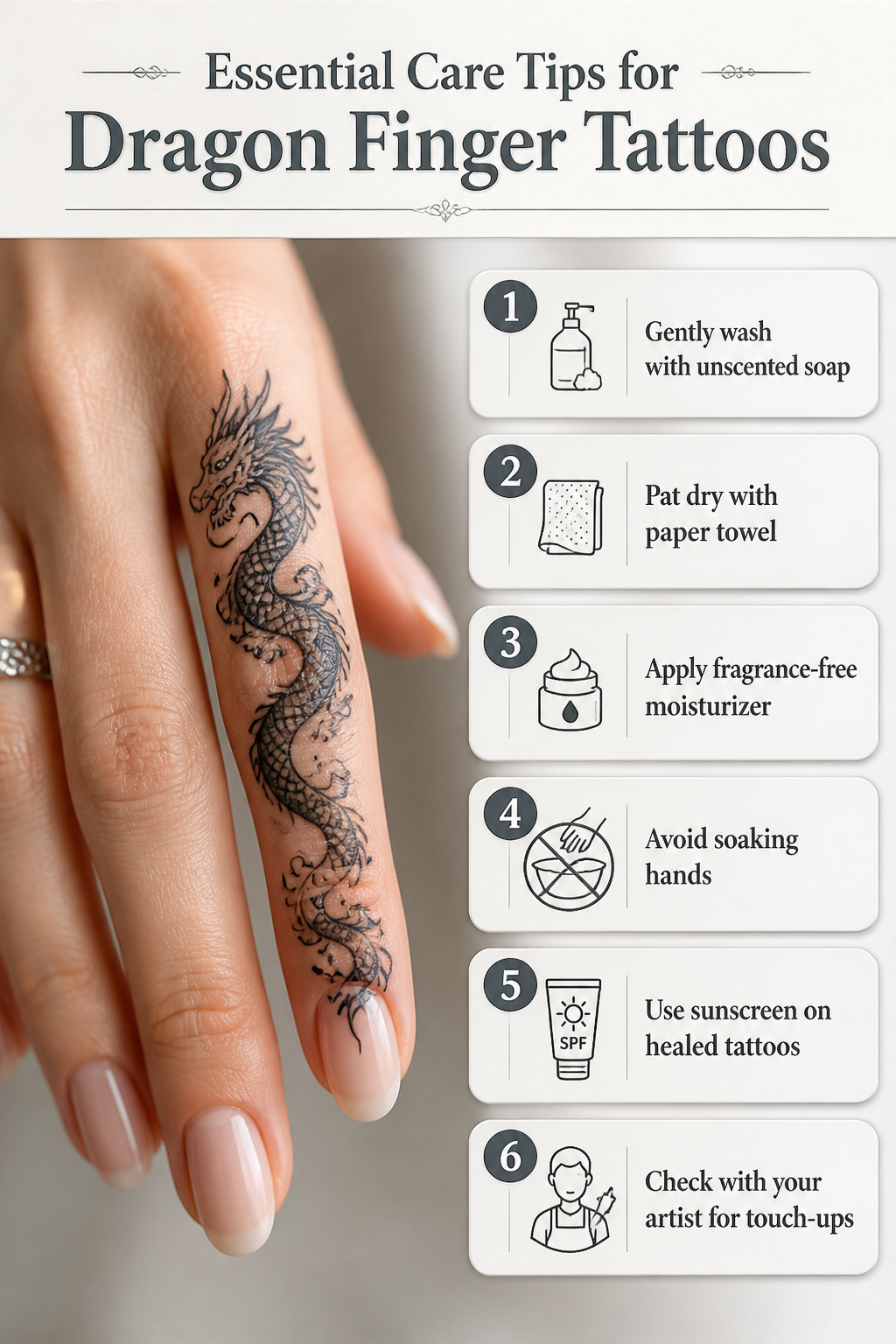
Finger skin sheds fast, and a dragon finger tattoo will blur sooner than ink on your shoulder or calf. That is not a flaw in the work; it is the territory. Expect at least one touch-up within the first year, maybe two, especially along the sides of the finger where the needle meets the most wear.
The first two weeks set the tone. Wash the area gently with unscented soap, pat dry with a paper towel rather than a cloth that holds bacteria, and keep a thin layer of moisturizer on it whenever the skin feels tight. Do not soak the hand. Dishes, baths, swimming pools, and hot tubs all pull ink out before it settles, so gloves or quick showers are the safer move.
Moisturization matters more here than on larger pieces because finger skin cracks easily, and cracks carry color away with them. A fragrance-free lotion applied several times daily keeps the surface supple without clogging the healing layer. Sunscreen on healed finger tattoos also slows fading, though most people forget to apply it to their hands until the lines have already softened.
Your artist will know their own work best, and many offer touch-ups at reduced cost or include one in the original session. Ask their policy before you book, not after the ink starts to feather.
Dragonhawk Tattoo Needles: High-quality tattoo needles, manufactured under the trusted Dragonhawk brand, are perfect for all-purpose work. With a polished, long taper design, these needles ensure reliable performance and excellent control.
Package includes 10 pieces of each size: 3RL, 5RL, 7RL, 9RL, 3RS, 5RS, 7RS, 9RS, 5M1, 7M1

COMPLETE LINING PACK: 20 individually sealed 3RL round liner cartridges for crisp outlines and fine lines. The 3-needle formation gives you control to lay clean, precise lines each session.
Frequently Asked Questions
What do dragon tattoos symbolize?
Dragon tattoos generally symbolize strength, power, and protection, though the exact meaning shifts by culture. Eastern traditions treat dragons as water-linked forces of wisdom, rainfall, and abundance, while Western lore casts them as hoard guardians or beasts of brute force to be conquered. On a finger, the design usually becomes personal armor, a boundary keeper, or a tribute to a specific person or memory.
What are some popular styles of dragon tattoos?
Minimalist, traditional, and abstract are the three main style families for dragon finger tattoos. Minimalist pieces use sparse lines and negative space; traditional work packs in saturated color, heavy outlines, and bold silhouettes; abstract designs split the dragon into geometry, watercolor washes, or negative-space carving. Each style asks for a different level of pain tolerance and long-term maintenance.
Where should I place a dragon tattoo?
Fingers and hands are common placements, and a dragon finger tattoo is especially bold because it is almost impossible to hide. The finger’s constant motion makes the dragon look alive, but the skin there sheds quickly, so ink fades and blurs faster than on a shoulder or thigh. Plan for at least one touch-up within the first year and choose a design that follows the finger’s curve.