The 7 telescope tattoos below range from a compact tripod piece in clean black lines to a full nebula sleeve where the instrument almost disappears into the gas cloud around it.
Size and placement matter most, since a small tripod design tucks behind the collarbone while a nebula back piece needs a shirt with a lower neckline to see anything at all.
Stippled star fields and 19th-century brass barrels both appear, but so does the James Webb honeycomb mirror mapped onto curved forearm muscle, which requires an artist who can hold geometric spacing on a surface that bends.
1. Small Telescope on a Tripod
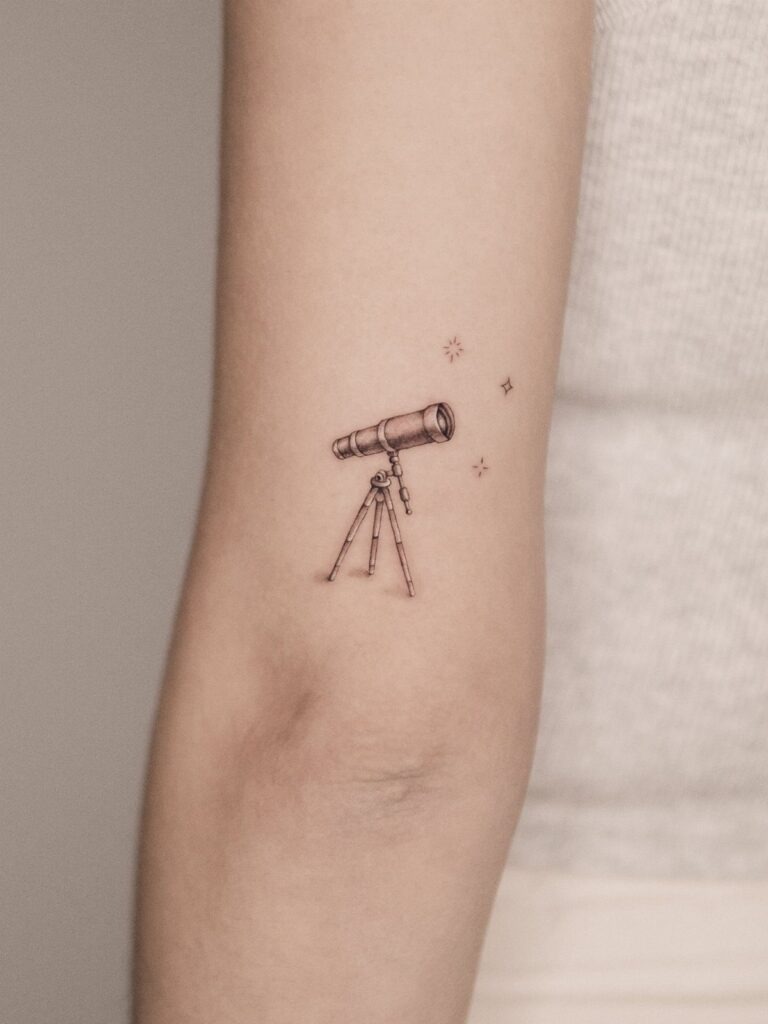
A small telescope on a tripod keeps its detail in a tight space, which matters when you are deciding between wrist, ankle, or behind the ear.
The tripod legs give the design a natural frame, so the tattoo holds its shape as it ages.
Line art in black ink keeps the session short, usually under an hour, and the cost manageable. I would ask the artist to keep the tripod legs thin; heavy lines blur faster on hands and feet.
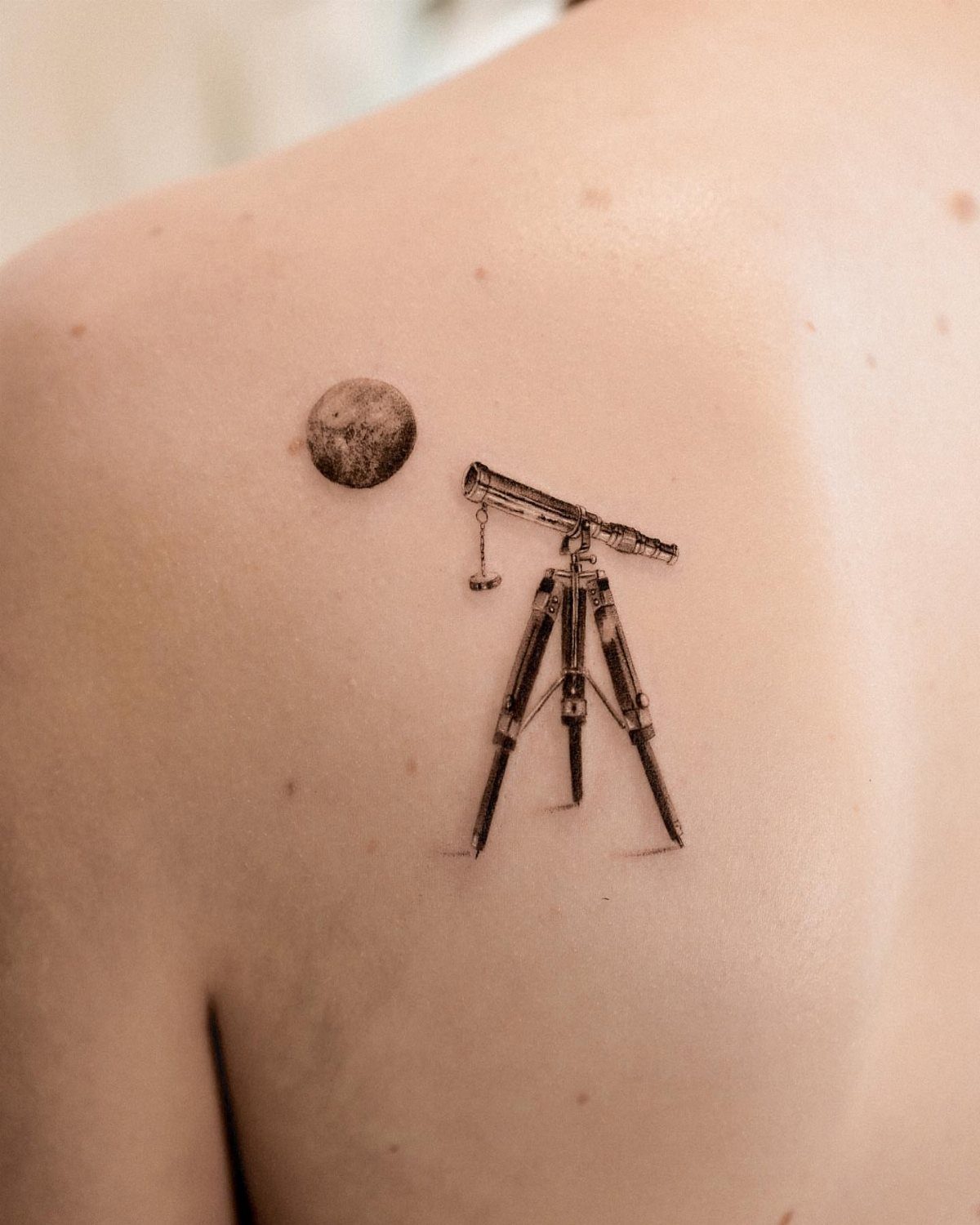
If you want more than the telescope alone, a tiny moon or four-point star above the barrel adds context without crowding the design.
2. Telescope with Stars
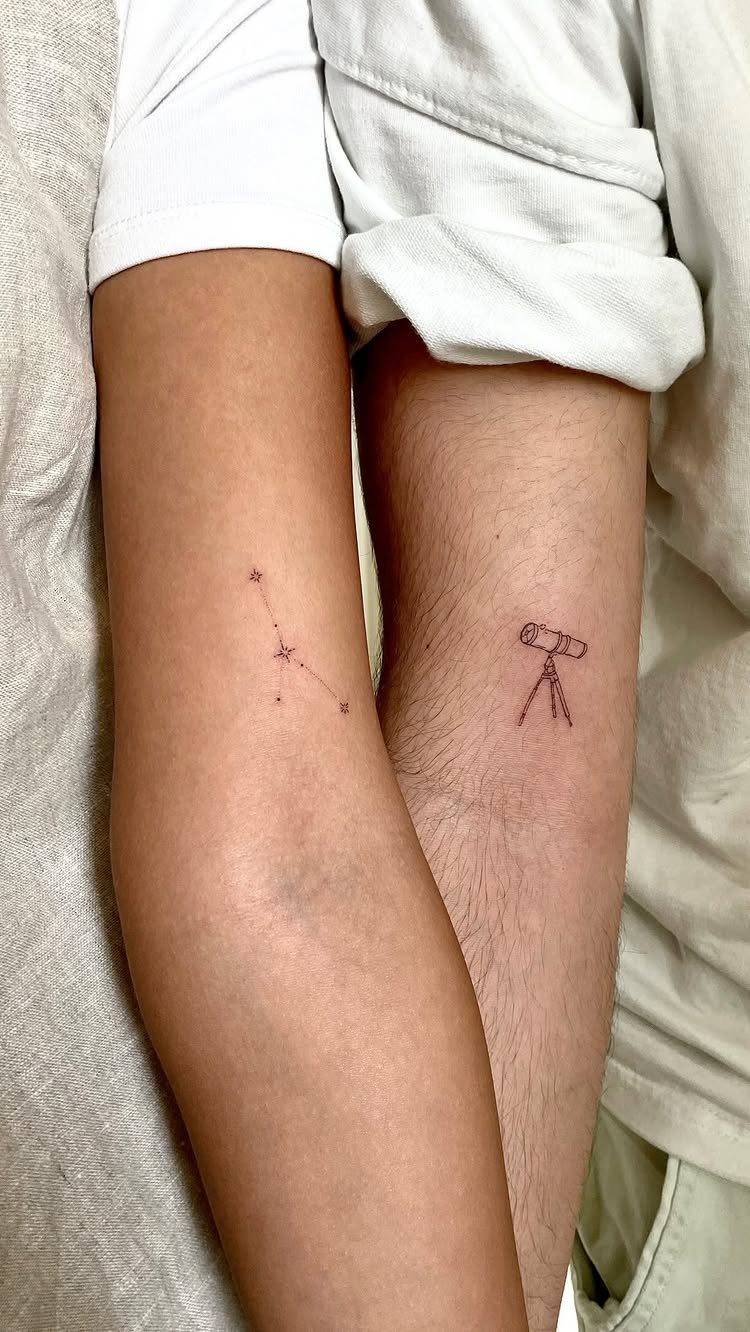
Stippling builds texture in a star field without the heavy pigment load that can blur over time on smaller tattoos.
The technique uses tiny dots to create depth, and a skilled artist can vary the density so the stars seem to recede behind the telescope barrel.
This pairing works best when the stars stay small and scattered; a dense constellation fights the telescope for attention. Stars placed above and to one side look as if the telescope has already found its target.
Ask to see healed stippling in the artist’s portfolio; fresh dots look darker and tighter than they settle.
3. Telescope with Planets
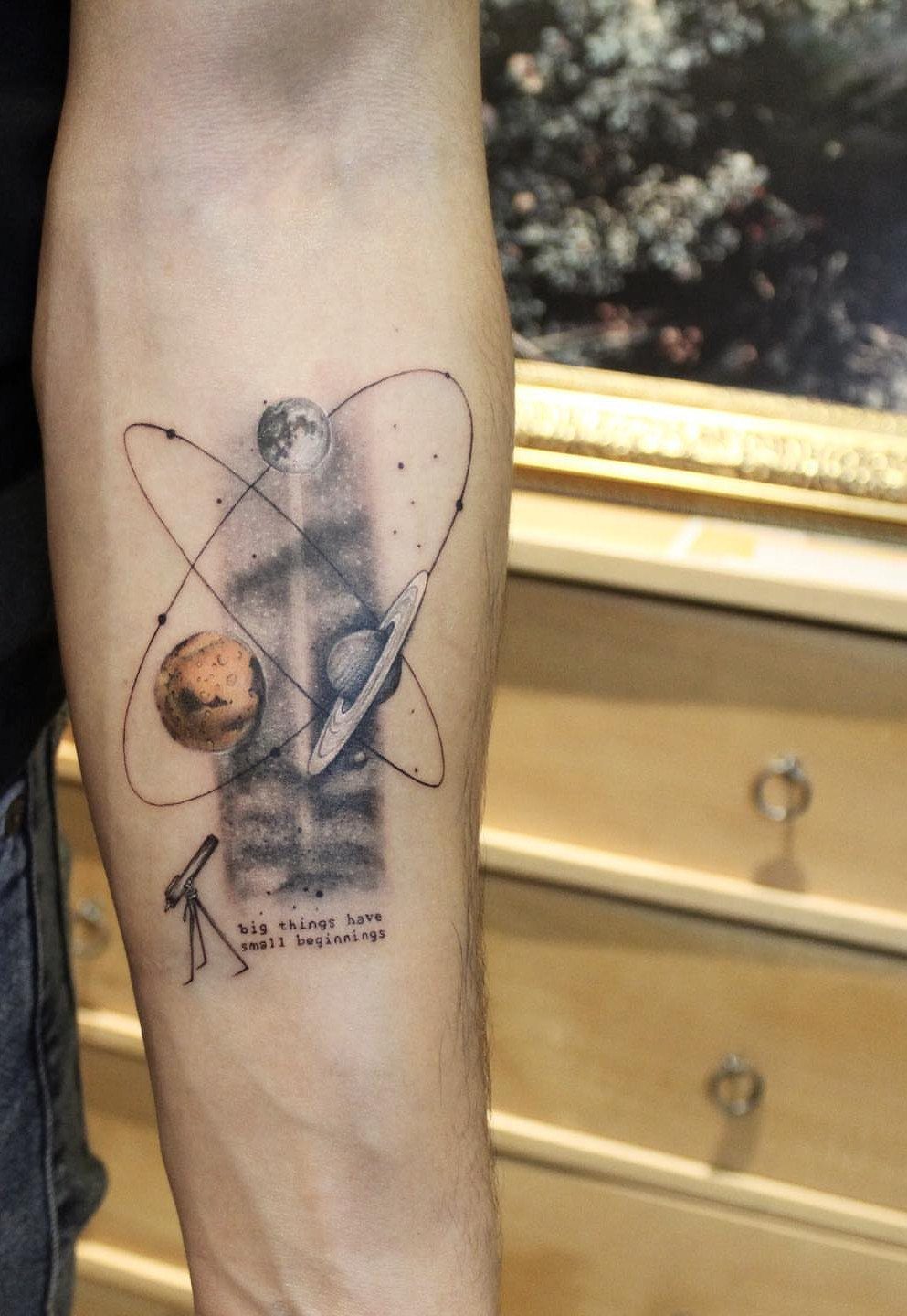
A ringed planet like Saturn gives the telescope something worth pointing at, and the rings read instantly even at small scale.
The forearm placement in the visible example leaves room for orbital lines and a nebula wash, though I would limit the background to one or two colors to keep the planet sharp.
If you do add words, place them where the skin moves least, below the elbow or above the wrist, so the lettering stays legible over time.
Color in the planets needs touch-ups more often than black and grey; budget for that.
4. Astronaut and Telescope
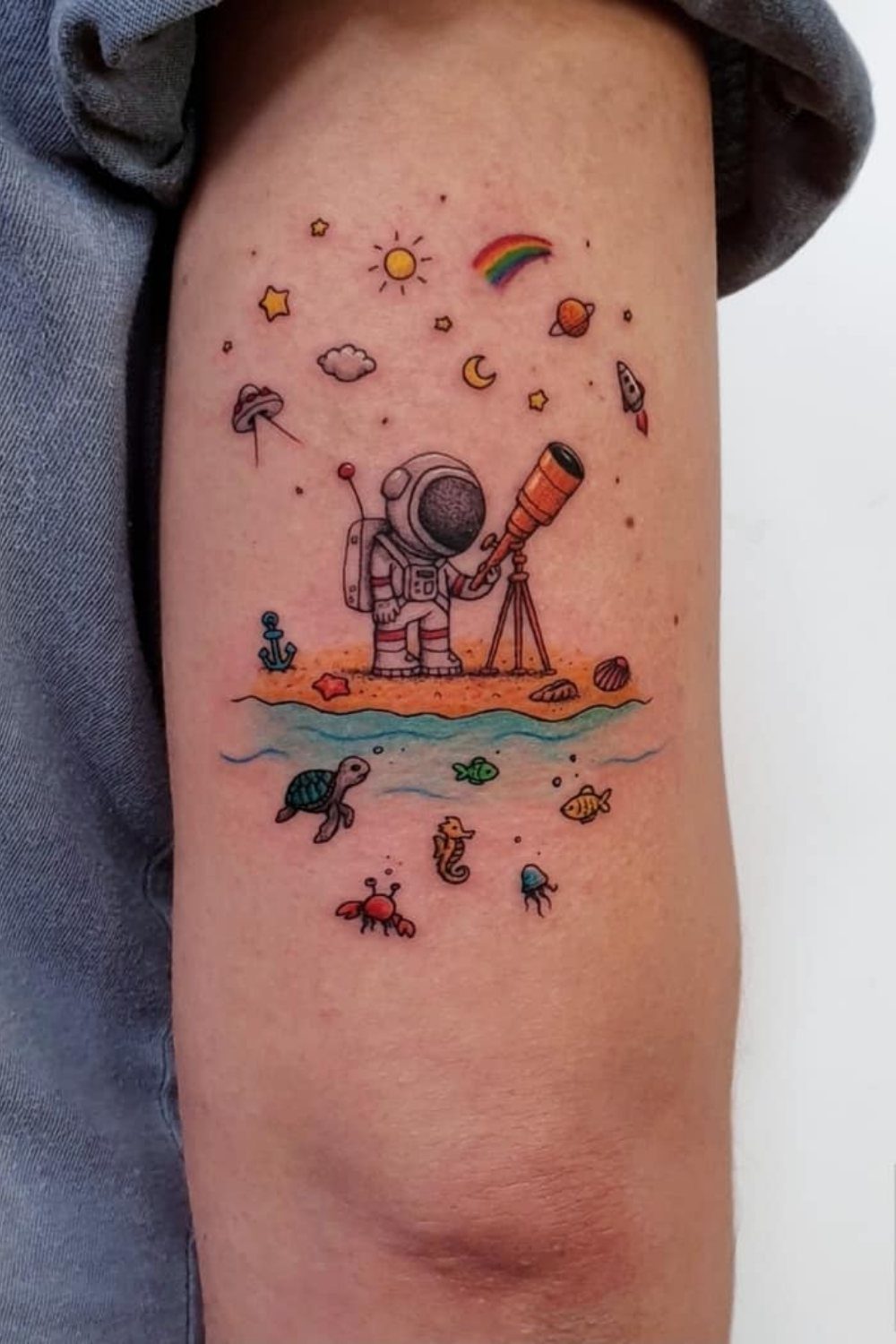
An astronaut with a telescope turns the design into a scene rather than an object, which suits a larger placement like a thigh or upper arm.
The whimsical style in the visible example, with sea creatures below and celestial doodles above, works because the astronaut anchors the composition; without a clear focal point, busy borders collapse into noise.
I would keep the astronaut’s suit simple, maybe even line-art, so the telescope remains readable. The beach setting is one option; a lunar surface or space station interior changes the mood without adding complexity.
This one takes longer and costs more than a standalone telescope, so plan for multiple sessions if color is involved.
5. Vintage Telescope Tattoo
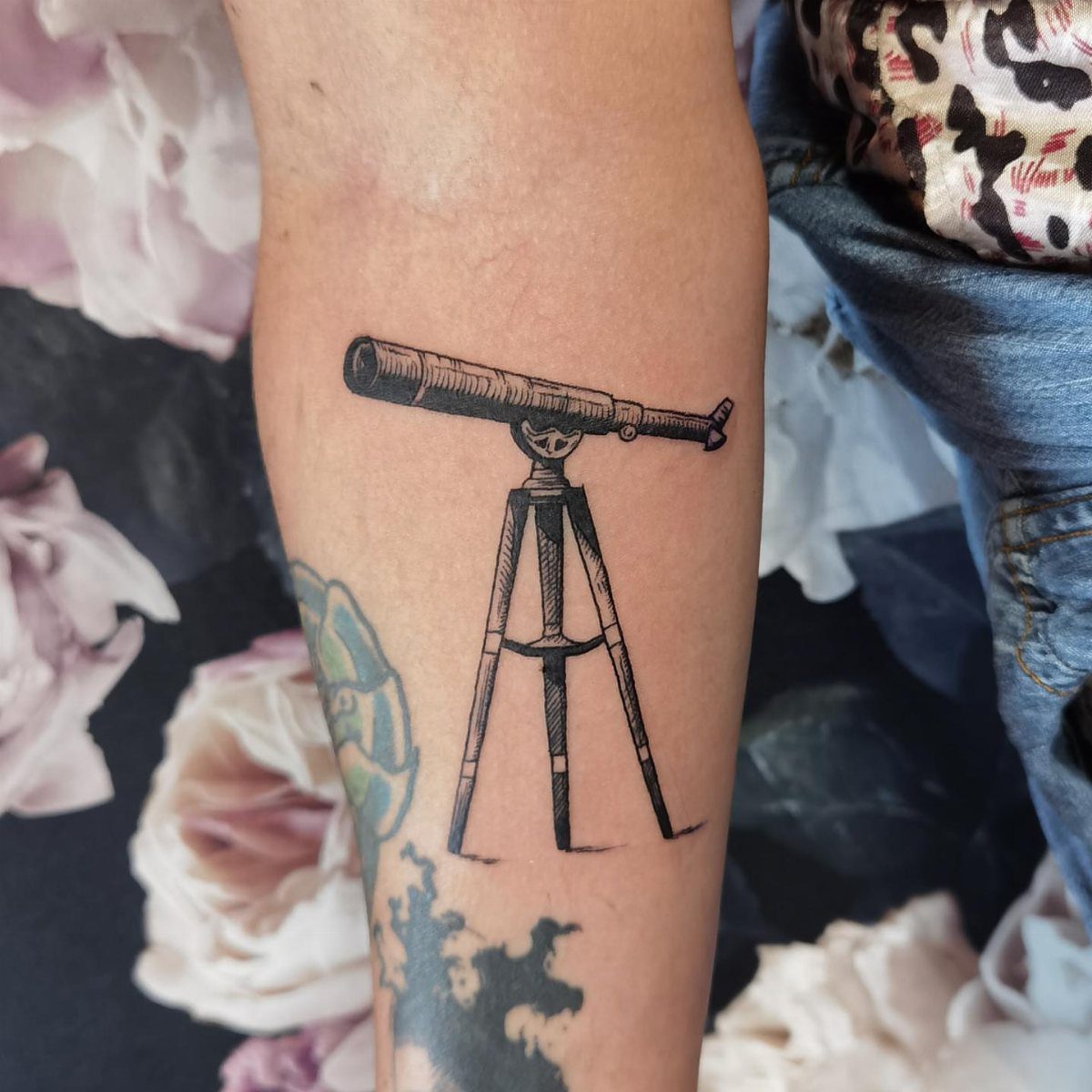
Brass and wood detailing in a vintage telescope tattoo age better than fine linework because the shading hides the softening edges.
A plain backdrop lets the telescope itself carry the design; the dark leaves and fabric pattern nearby echo old scientific illustrations without crowding the instrument.
Cross-hatching on the barrel suggests antique scientific instruments, but it requires an artist comfortable with tight, consistent spacing. I would bring reference photos of actual 19th-century telescopes, not just other tattoos, since the real proportions differ from stylized versions.
Black and grey keeps the vintage tone; color risks making brass look like gold jewelry.
6. Space Telescope in Nebula
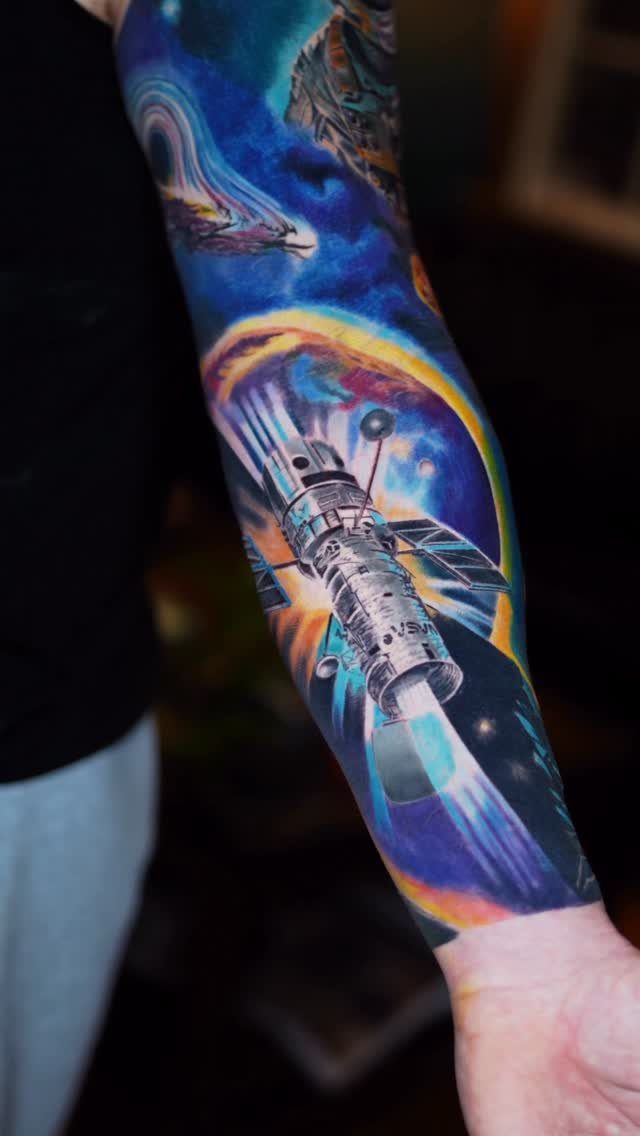
A space telescope floating in nebula demands a sleeve or a large forearm panel, and the color range in the visible example, blue into orange into purple, needs an artist who understands how those hues heal.
Nebulae settle duller than the fresh tattoo; discuss that shift before the first session.
The Hubble-style telescope itself reads as technology against organic clouds, which is the point, but I would keep its structure crisp so it does not dissolve into the background.
Plan for multiple sessions, with the telescope outlined first and color added after healing if the artist works that way.
This is not a first tattoo, and not for someone who needs to hide ink for work.
7. Geometric Galaxy and Telescope
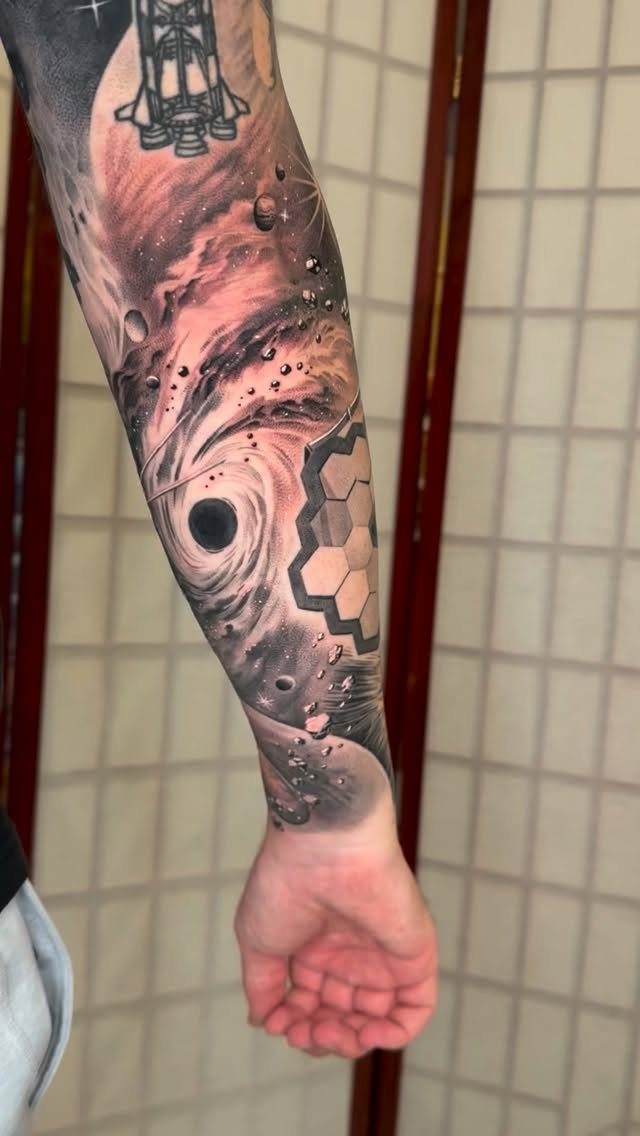
Hexagonal mirror segments from a space telescope, rendered in black and grey, give a forearm tattoo structure without hard borders; the geometry holds together even as the galaxy swirls around it.
The visible example uses the James Webb-style honeycomb as a frame for a black hole and orbital paths, which keeps the science accurate without needing color to separate elements.
I would ask the artist to vary the line weight so the hexagons read as dimensional, not flat; too uniform and they look like floor tile.
A vortex or accretion disk in the center draws the eye inward, which matters on a long, narrow placement like the forearm.
This one needs an artist who can map geometric spacing onto curved muscle; bring photos of the actual telescope mirror, not just tattoo references, since the real angles are precise.