
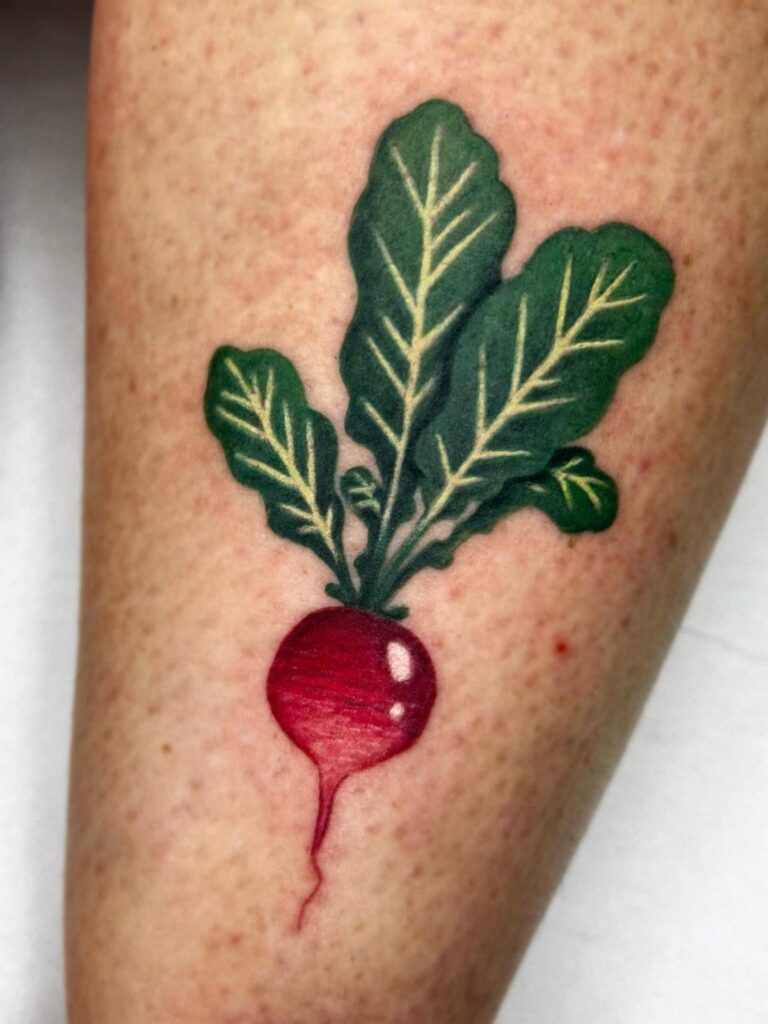
The 8 radish tattoos below run from restrained black ink to saturated color loud enough to pull the eye from across a room, and the right one depends on whether you want the plant read as botanical study or folk character.
A round radish with a human face, kept mysterious through fine line weight rather than cuteness, shows how far the form can stray from the vegetable patch while still holding its root.
1. Detailed Botanical Radish Tattoo
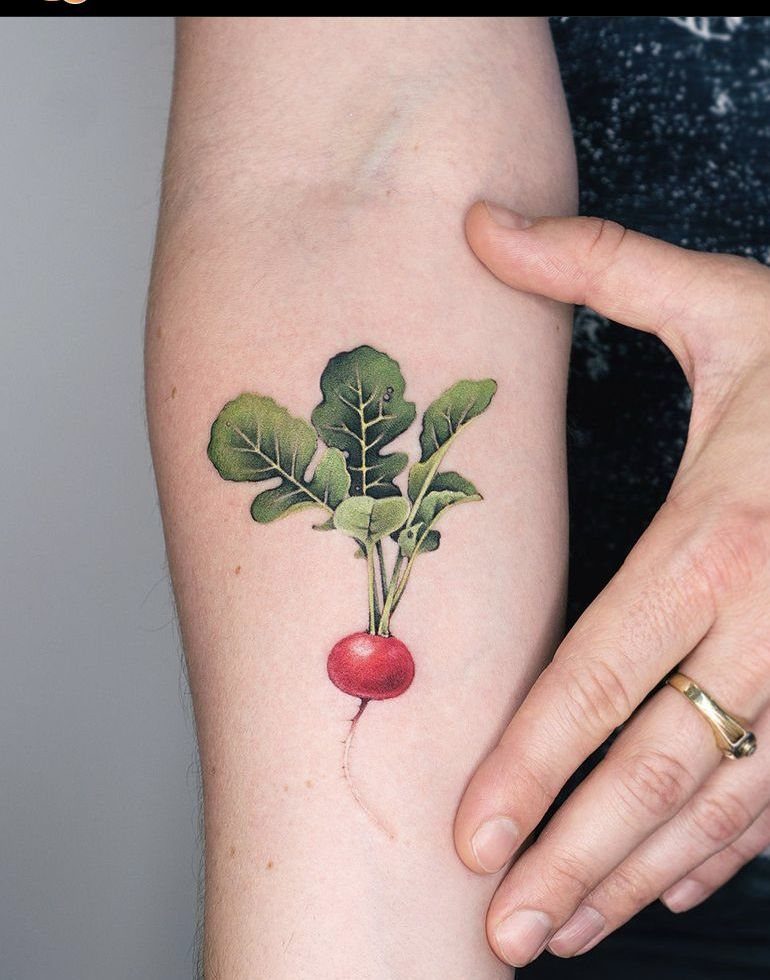
A detailed botanical radish tattoo works best when the leaves get as much attention as the bulb.
The artist builds the red root from layered washes to catch light the way a fresh-picked radish does, then draws each leaf vein so it lifts slightly off the skin.
This style suits someone who wants the plant recognized from across a room and studied up close.
The fine linework needs a steady hand and a portfolio of botanical work to match; ask to see healed photos of leaves the artist has done before committing.
2. Smiling Radish Character
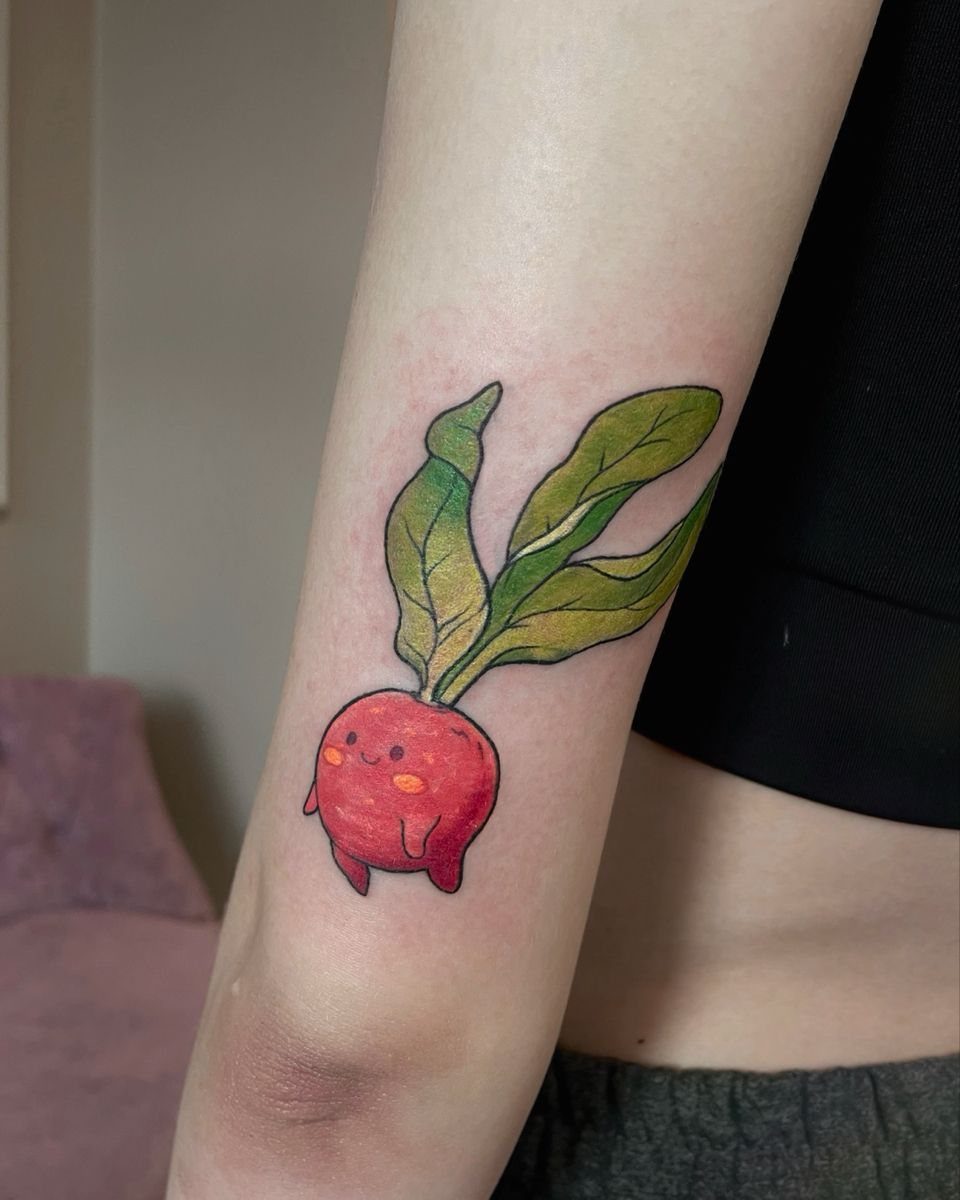
Small facial details on a vegetable walk a thin line between charming and cloying.
The smiling radish character keeps its appeal through restraint: the mouth is simple, the eyes are dots, and the limbs stay stubby enough to read as roots that grew curious.
Black outlines hold the color in place over years of fading.
I would place this somewhere the wearer sees it often, since the joke is partly for them. The leafy tops need enough green saturation to balance the red bulb, or the whole thing tilts top-heavy.
3. Round Radish with Face
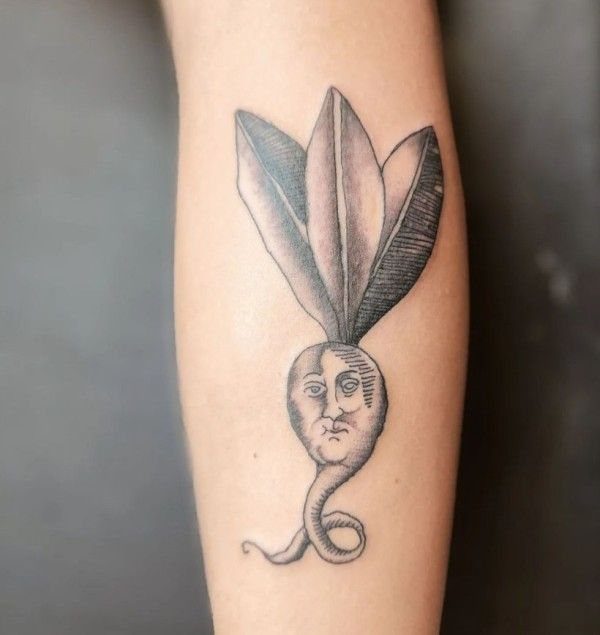
The human face on a round radish turns a kitchen staple into something stranger and older, closer to a folk talisman than a cartoon.
Fine line black ink keeps it from getting too cute; the large leafy greens above the bulb frame the face like a ruff collar.
The round body and small root keep the figure anchored to the skin in a way that still suggests movement.
This version reads more mysterious than friendly, which I prefer. Check that the artist’s line weight stays consistent at the small scale; wobble shows immediately in the facial features.
4. Botanical Illustration Radish
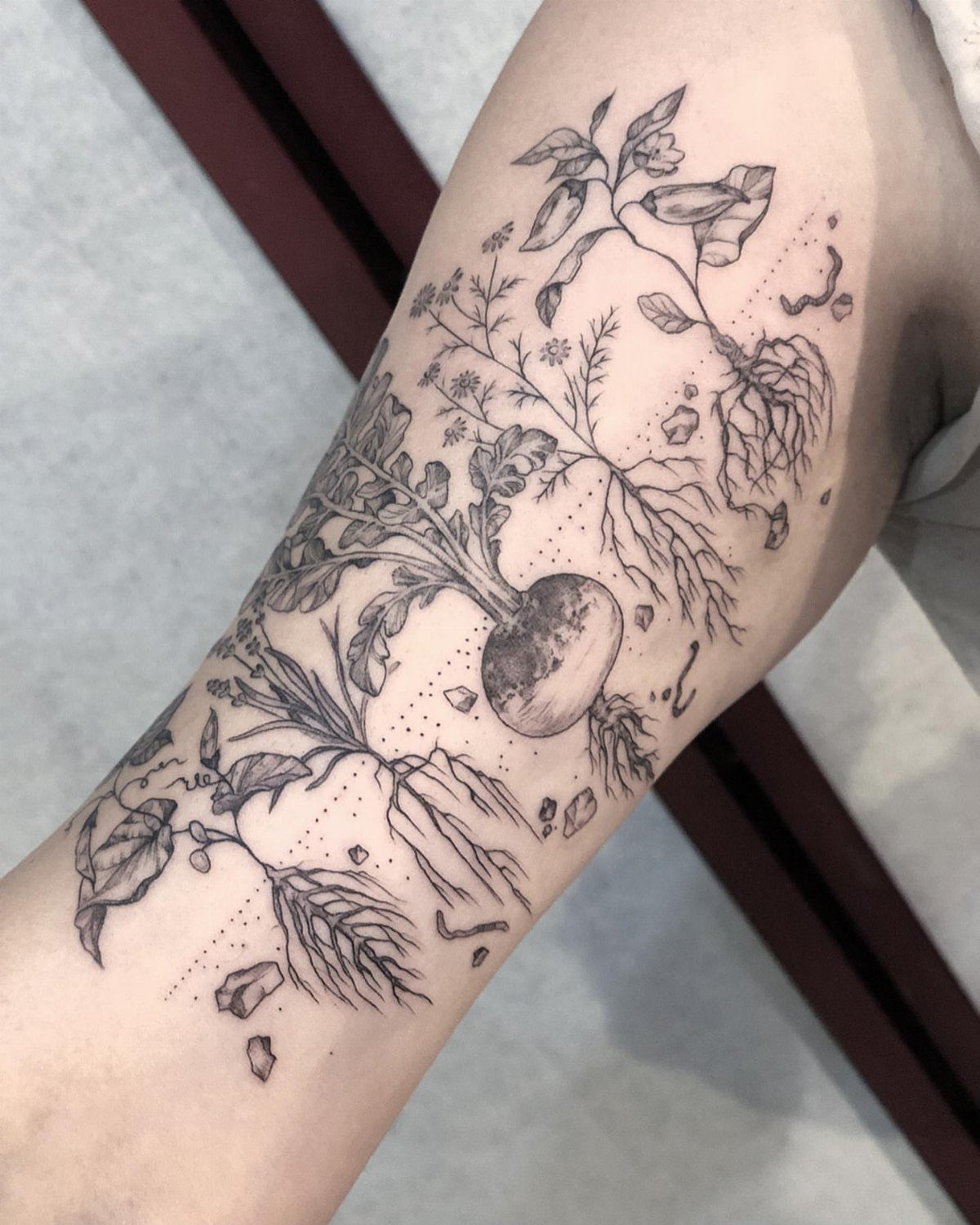
Black ink botanical illustration strips away color to focus on structure: the radish’s thin root, the way leaves split from the stem, the bulb’s curve where it meets soil.
Without red to carry the image, every line must earn its place.
The round bulb and detailed leaves rely on careful hatching for depth.
This style ages cleanly and suits placement where color might blur or fade unevenly. A thigh placement, as one version shows, gives the artist room to let the root extend and the leaves spread.
5. Whimsical Radish with Celestial Elements
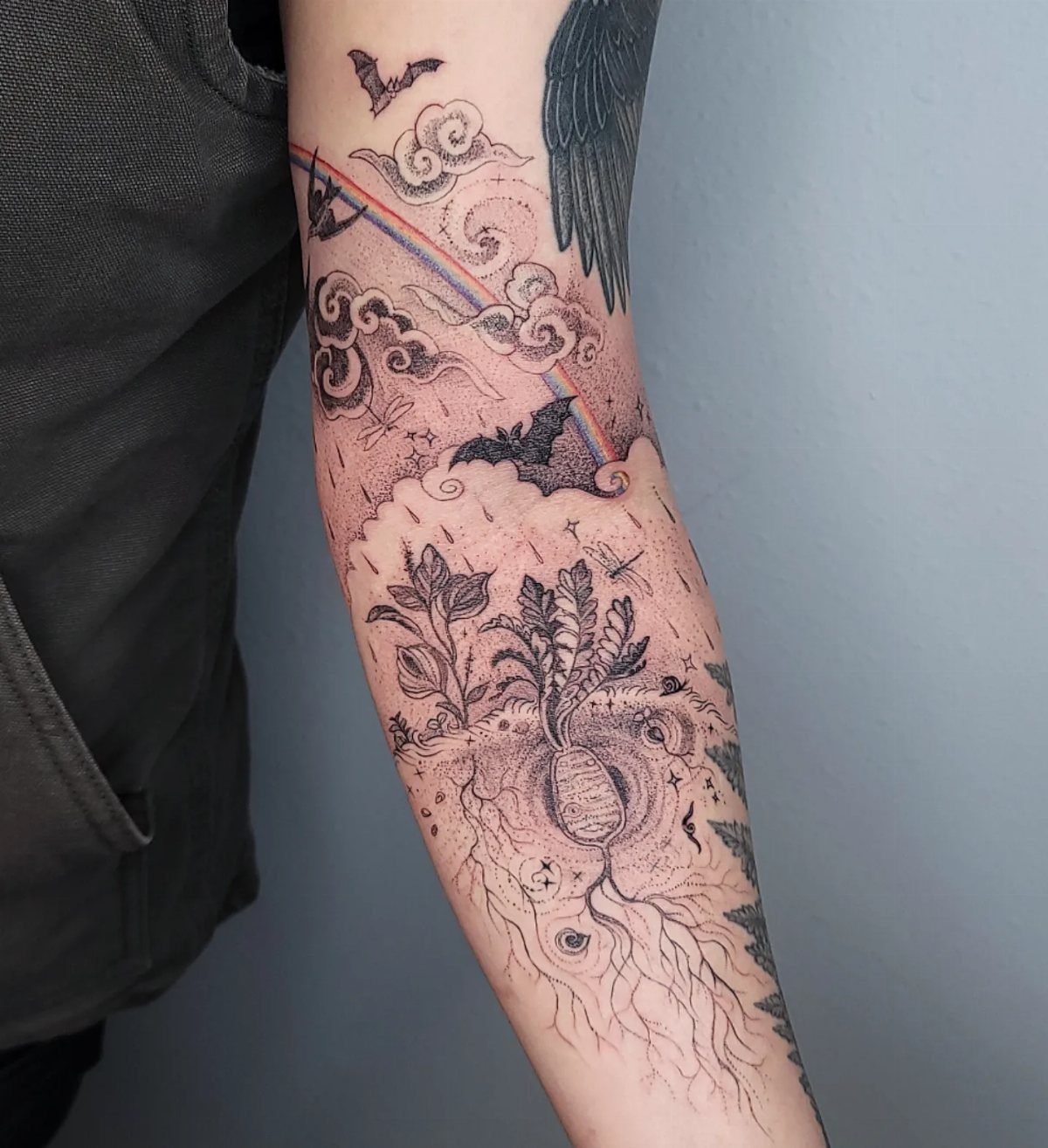
Clouds, bats, and a small rainbow around a growing radish turn a single vegetable into a scene with weather and time of day. The fine-line technique keeps all those elements from crowding; each gets its own breathing room.
I would decide early whether the rainbow stays soft or the artist punches it brighter, since that choice sets the mood for everything else.
The roots need enough detail to anchor the whimsy, or the floating elements drift too far from their source. This much narrative in one tattoo asks for an inner arm or calf with length to unfold.
6. Bold Colorful Radish Tattoo
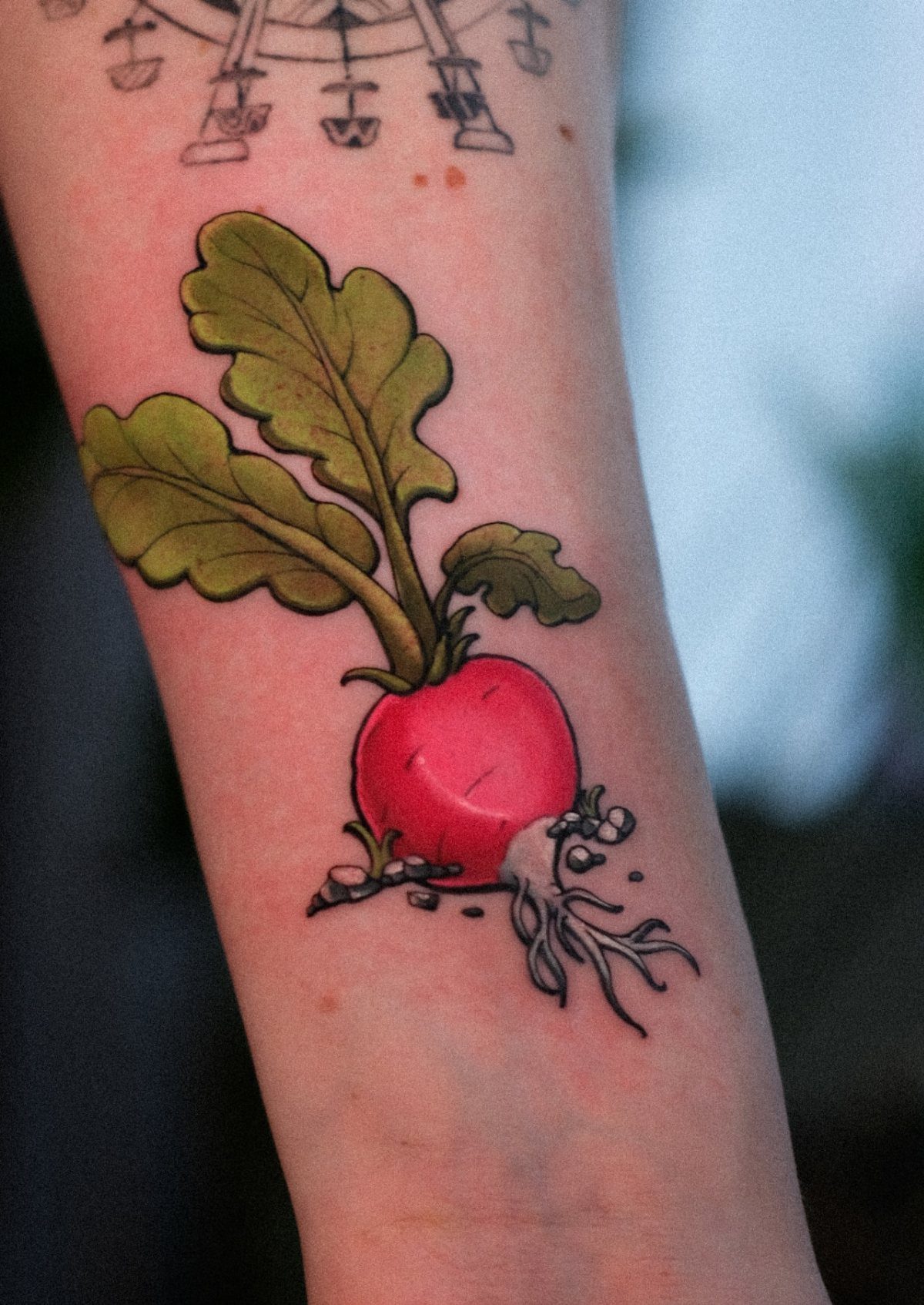
A red radish this saturated pulls the eye from across the room; only when you get closer do you notice the white root fading into pale stones beneath, and the green leaves worked in 2 different inks to catch the light differently.
The saturation matters more than the detail; this is a tattoo for color lovers who want their ink to stay loud.
The bold outlines protect the bright washes from bleeding together as they age. Stones underneath ground the image and give the eye a place to rest.
I would ask the artist how they handle the white, whether it is ink or reserved skin, since that root color decides if the radish reads as pulled from dark soil or clean supermarket stock.
7. Matching Carrot and Radish Tattoos
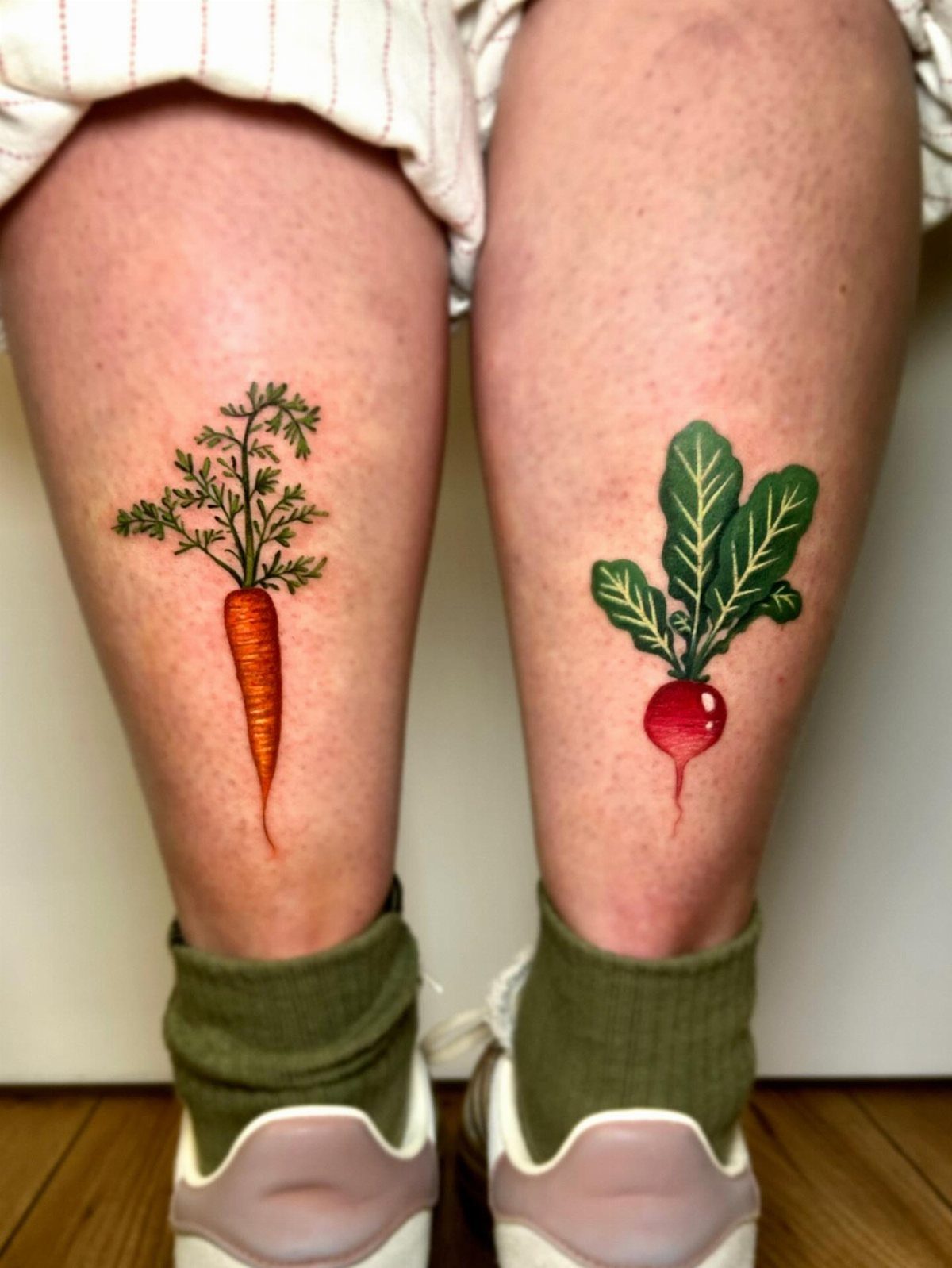
Matching vegetable tattoos on both legs only work if the 2 pieces share scale and style. The carrot needs the same line weight and color saturation as the radish, or one will look like an afterthought.
I would ask the artist to draw both at once rather than booking separate sessions.
The green tops should read as a matched pair; two different leaf treatments break the set. Calf placement keeps each vegetable visible without demanding perfectly matched poses, since legs stand parallel by default.
Check that your artist is comfortable with food subjects and not borrowing someone else’s flash. Vegetables this specific rarely appear in standard books.
8. Black and Grey Root Vegetables
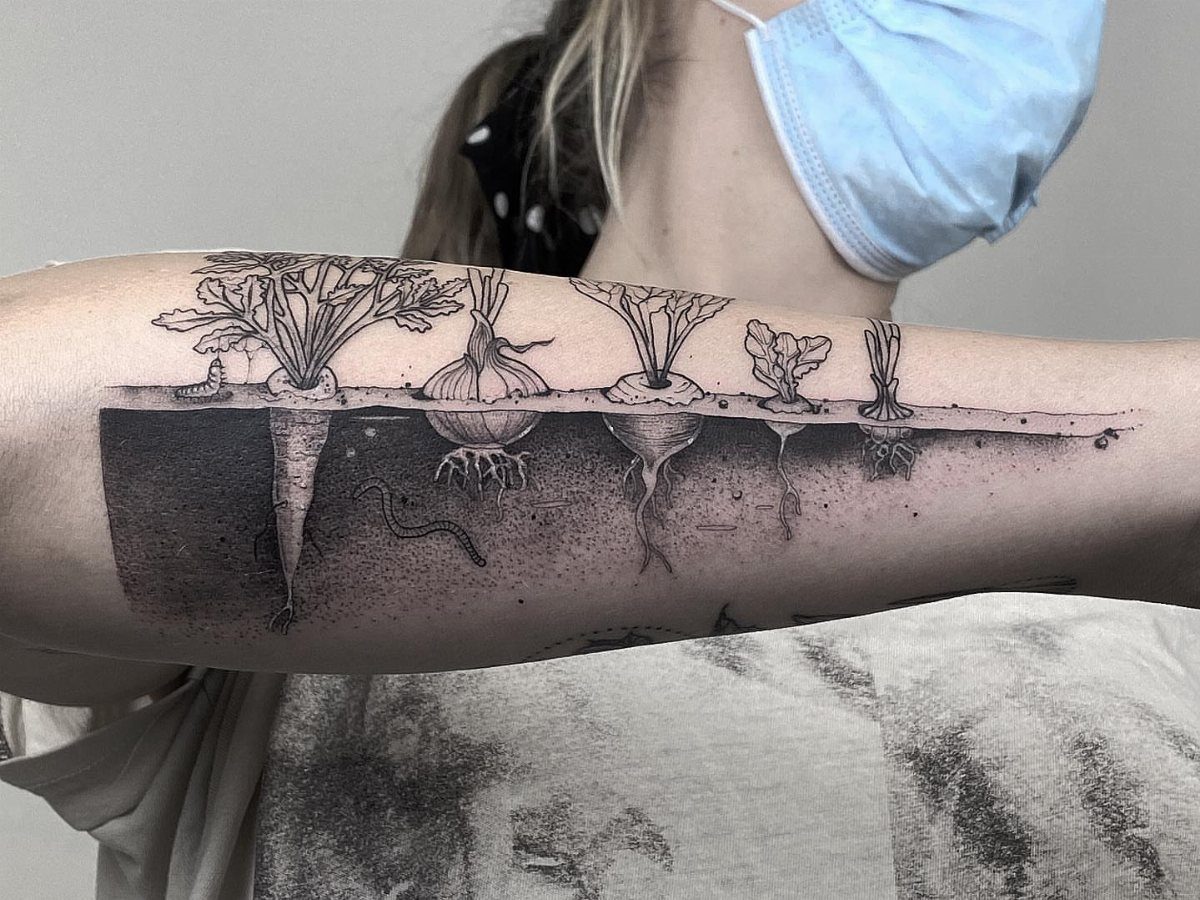
Underground scenes suit black and grey because soil, roots, and shadow all share one palette. The fine-line technique keeps the carrot, onion, and radish distinct without color coding; texture does the work instead.
A worm in the dirt signals that this is living soil, not just shading.
That detail raises the stakes for the artist’s hatching: too heavy and the worm disappears, too light and the ground reads empty. I would ask to see healed fine-line work before committing to this much detail in one piece.
Forearm placement gives the length the scene needs; root vegetables want room to grow downward.
Frequently Asked Questions
What is considered the most beautiful tattoo in the world?
Beauty in a tattoo depends on what the wearer wants to see every day. The most beautiful piece is the one that survives both the first glance and the thousandth.
What are the top tattoos to avoid?
Specific radish designs carry their own risks: a dark bulb placed too low on the calf can read as a bruise from a distance, and hyper-detailed roots often blur into gray smudges within 5 years.
In black and grey root scenes, too-heavy hatching buries the worm detail that signals living soil, while too-light hatching leaves the ground reading empty.